
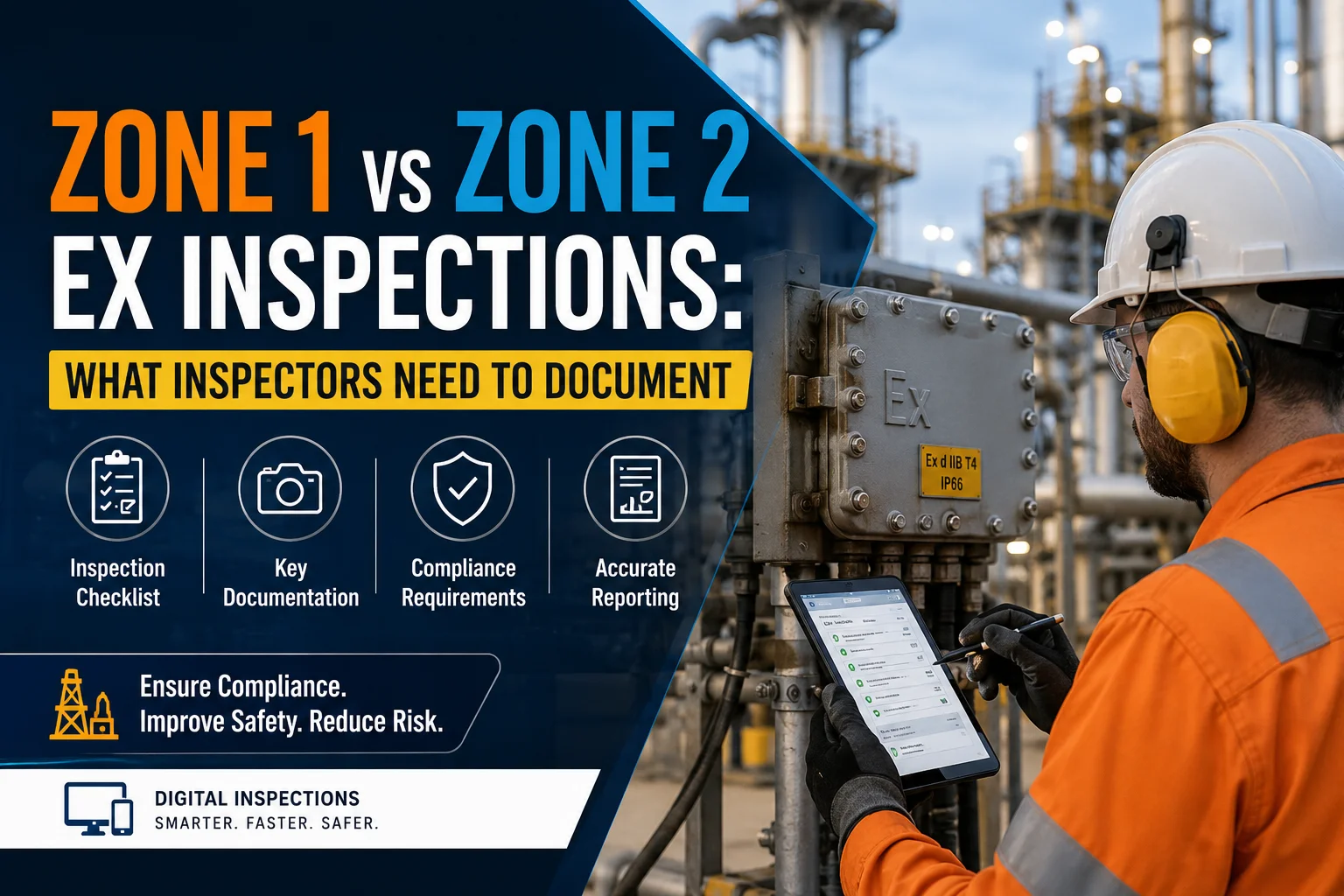
In hazardous environments, even a minor documentation mistake can lead to major safety risks, regulatory non-compliance, and costly operational downtime. Therefore, understanding the differences between Zone 1 vs Zone 2 Ex inspections is essential for inspectors, maintenance teams, and oil & gas operators.
Although both hazardous area classifications require regular inspections, the inspection scope, equipment criticality, documentation requirements, and inspection frequency often differ. Consequently, inspectors must know exactly what information should be recorded to demonstrate compliance with IECEx, ATEX, and IEC 60079 standards.
In this guide, you’ll learn:
Hazardous area classification identifies locations where explosive gas atmospheres may occur.
The classification determines the level of explosion protection required for electrical and mechanical equipment.
| Hazardous Zone | Likelihood of Explosive Gas Atmosphere | Risk Level |
|---|---|---|
| Zone 0 | Present continuously or for long periods | Extremely High |
| Zone 1 | Likely during normal operation | High |
| Zone 2 | Unlikely during normal operation and exists only briefly | Moderate |
Because the probability of an explosive atmosphere changes across zones, inspection requirements also vary.
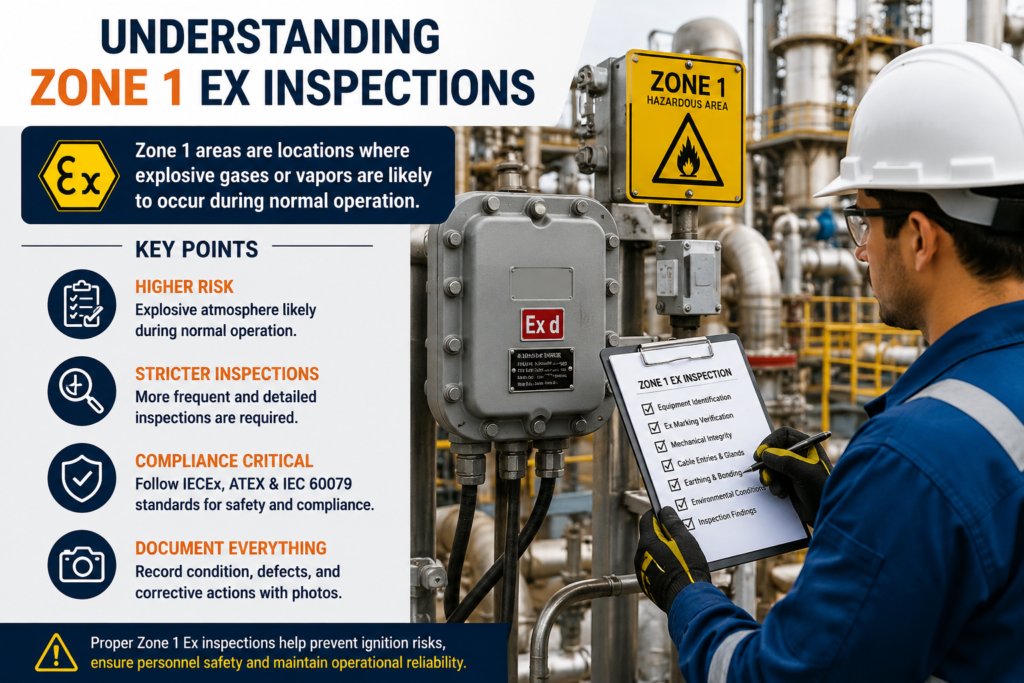
Zone 1 is an area where explosive gases or vapors are likely to occur during normal operating conditions.
Examples include:
Since ignition risks are higher, equipment installed in Zone 1 requires stricter inspection and maintenance procedures.
During a Zone 1 inspection, inspectors should record:
Document:
Verify that equipment markings remain legible.
Typical markings include:
Inspectors should also capture:
Inspect for:
Photographic evidence should accompany every defect.
Record:
Poor cable entries remain one of the most common Ex inspection findings.
Verify:
Document:
Every finding should include:
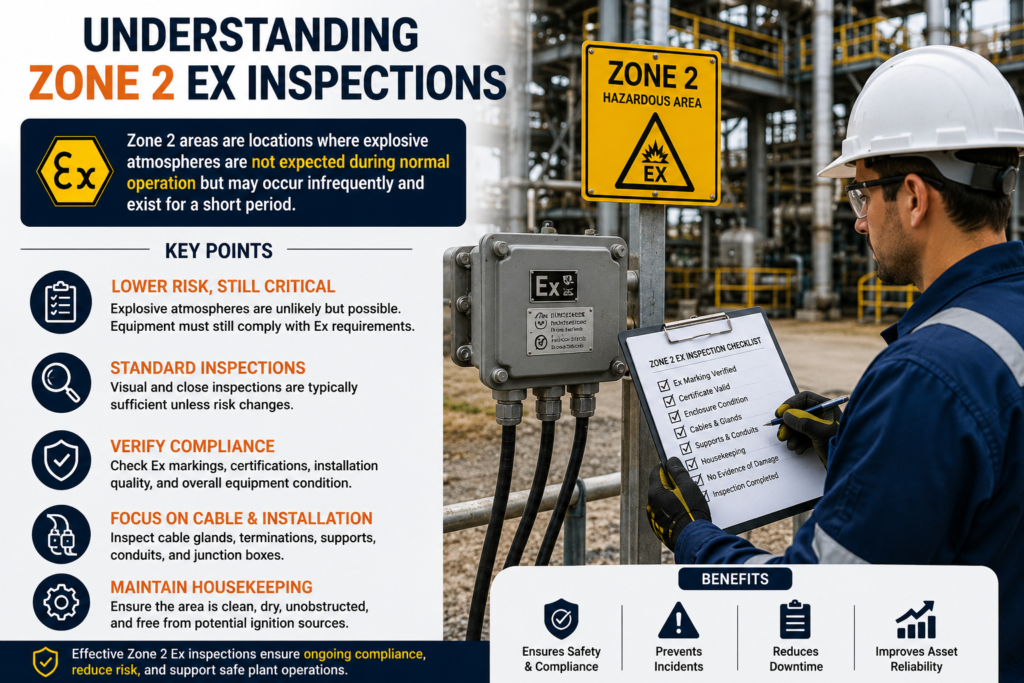
Zone 2 refers to areas where explosive atmospheres are not expected during normal operations. However, if they occur, they usually exist for only a short duration.
Examples include:
Although the risk is lower, equipment must still comply with hazardous area requirements.
Many documentation requirements remain similar, although inspection intensity may differ.
Inspectors should document:
Check for:
Record:
Inspect:
Document:
| Inspection Area | Zone 1 | Zone 2 |
|---|---|---|
| Explosion Risk | High | Moderate |
| Inspection Frequency | More frequent | Usually less frequent |
| Documentation Detail | Extensive | Moderate |
| Equipment Criticality | High | Medium |
| Defect Tolerance | Very Low | Low |
| Photographic Evidence | Strongly recommended | Recommended |
| Compliance Verification | Strict | Essential |
Regardless of zone classification, inspectors should document:
A standardized checklist helps ensure consistency across inspection teams while reducing the likelihood of missing critical information.
Many inspection reports fail compliance audits because inspectors overlook important details.
The most common mistakes include:
Fortunately, digital inspection software significantly reduces these errors.
Traditional paper inspections create several operational challenges.
These include:
By contrast, digital inspection software offers:
As a result, organizations can improve compliance while increasing inspector productivity.
To improve both safety and compliance, inspectors should follow these best practices:
For oil and gas companies, maintaining consistent and compliant Ex inspection records across multiple offshore and onshore assets can be challenging.
Inspections Track is purpose-built for the oil & gas inspection industry, helping organizations streamline hazardous area inspections while improving documentation accuracy.
Key capabilities include:
Replace paper-based inspections with customizable digital forms designed for hazardous area inspections.
Inspectors can complete inspections in remote offshore locations, even without internet connectivity. Data automatically syncs once a connection is restored.
Attach photographs directly to inspection records, providing visual proof of equipment condition and supporting audit requirements.
Generate professional inspection reports instantly, reducing administrative effort and accelerating client delivery.
Maintain a centralized asset register with complete inspection histories, certification records, and maintenance tracking.
Assign defects, monitor progress, and verify completion to ensure timely resolution of safety issues.
Store inspection records securely with digital signatures, timestamps, and version history to simplify regulatory audits.
By digitizing Ex inspections, Inspections Track helps operators improve compliance, reduce manual errors, and enhance operational efficiency across hazardous environments.
Read more : Mobile vs Desktop Inspection Apps: Which One Do Offshore Teams Actually Need
The primary difference lies in the likelihood of an explosive atmosphere. Zone 1 areas have a higher probability of hazardous gases during normal operations, requiring more rigorous inspection and documentation. Zone 2 areas present a lower risk but still require compliant inspections and accurate records.
An Ex inspection report should include equipment identification, Ex markings, certification details, inspection findings, photographs, corrective actions, inspector details, inspection dates, and digital signatures.
While requirements may vary by company procedures and applicable standards, photographs are strongly recommended. They provide objective evidence of equipment condition, support defect verification, and improve audit readiness.
Yes. Modern inspection software such as Inspections Track enables inspectors to perform inspections offline in remote locations. Inspection data is synchronized automatically when internet connectivity becomes available.
Accurate documentation is the foundation of safe and compliant hazardous area inspections. Although Zone 1 vs Zone 2 Ex inspections share many common requirements, the level of scrutiny and documentation detail often differs based on the risk of explosive atmospheres.
By using standardized digital checklists, capturing photographic evidence, and maintaining complete inspection records, inspectors can reduce compliance risks, improve operational safety, and streamline audit preparation.
For organizations operating in the oil and gas sector, Inspections Track provides an efficient, audit-ready solution for managing Ex inspections, asset records, corrective actions, and reporting from a single platform. Adopting a digital inspection workflow not only enhances documentation quality but also supports safer operations and long-term regulatory compliance.
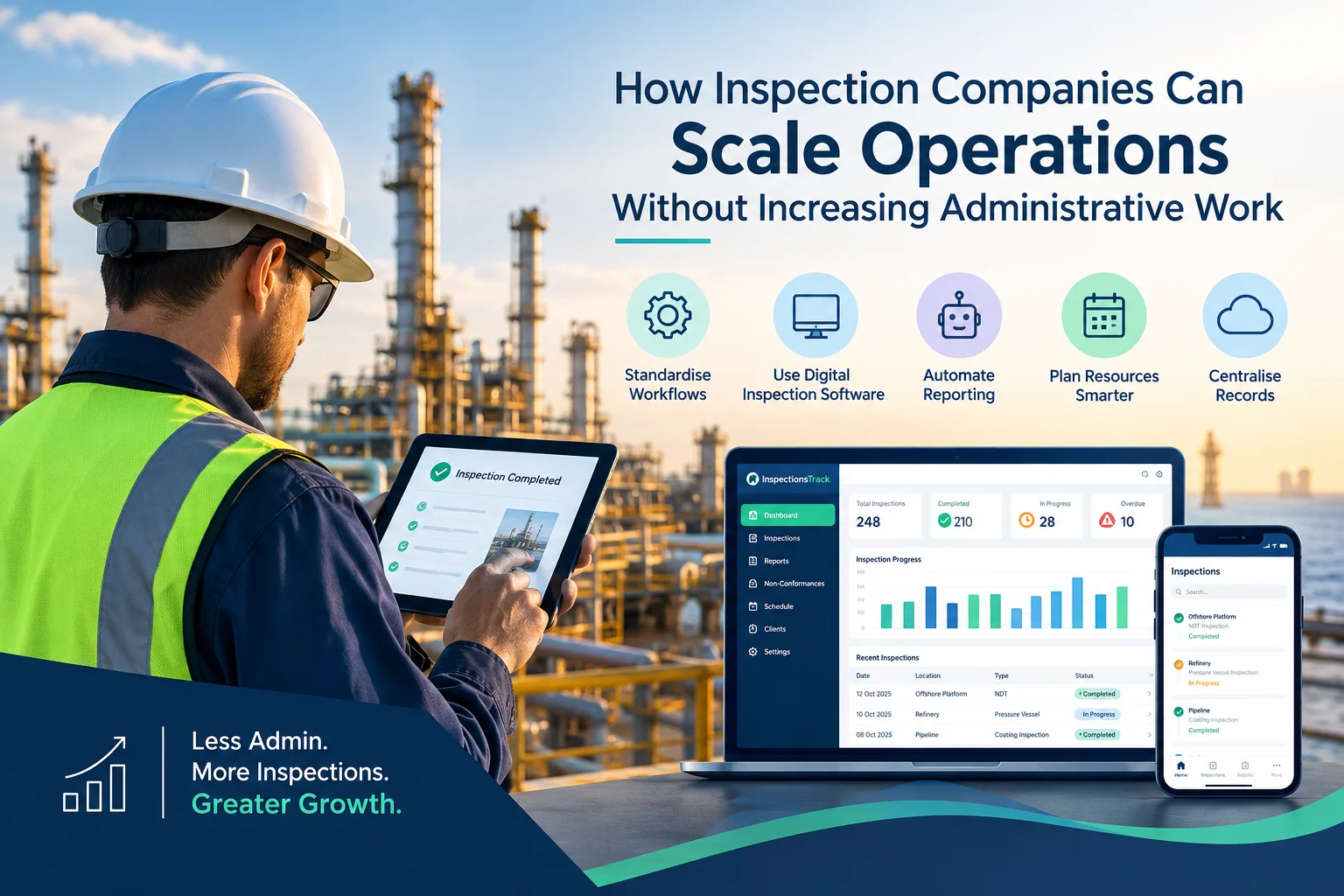
Inspection companies in the oil and gas industry face a common challenge: how to handle more inspections, manage larger projects, and meet client deadlines without increasing administrative workload. As businesses grow, inspection teams must manage…

Meeting client Service Level Agreements (SLAs) is essential for inspection companies working in demanding industries such as oil and gas, energy, and industrial maintenance. Clients expect inspections to be completed on time, reports to be…


