
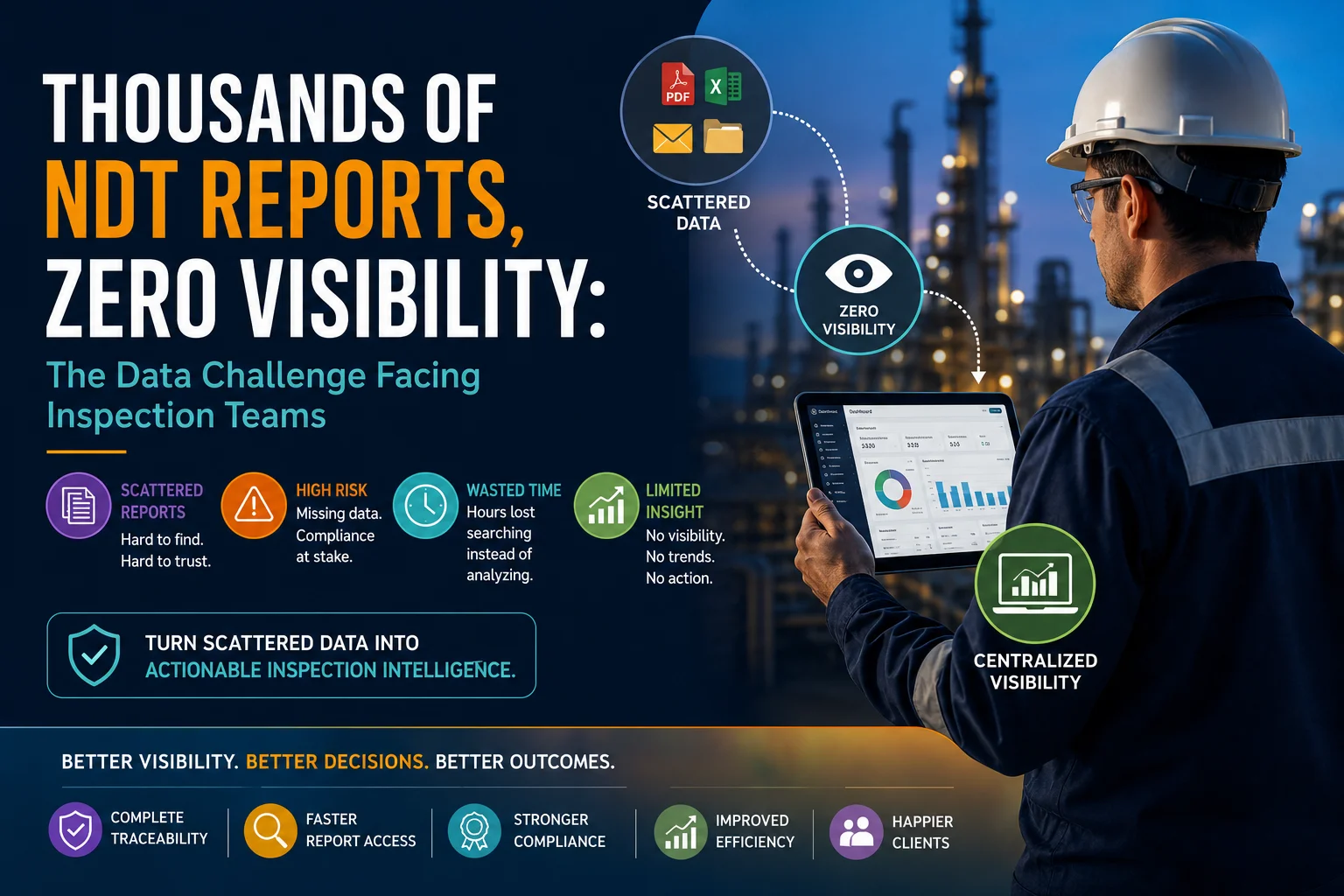
Every inspection creates valuable information. However, when inspection teams accumulate thousands of Non-Destructive Testing (NDT) reports across spreadsheets, PDFs, email attachments, and paper records, finding the right information becomes increasingly difficult.
As a result, inspection managers often spend more time searching for reports than analyzing inspection results. Consequently, critical asset history becomes fragmented, reporting slows down, and compliance risks continue to grow.
The challenge is no longer collecting inspection data.
The real challenge is making that data visible, searchable, and actionable.
This article explores why many oil and gas companies struggle with NDT data visibility and how digital inspection management software transforms scattered reports into valuable operational intelligence.
Every inspection tells a story about an asset.
Whether inspectors perform:
each report contributes to the complete lifecycle history of equipment.
However, when reports remain disconnected, organizations lose the ability to answer important questions such as:
Without visibility, decision-making becomes reactive rather than proactive.
Many inspection companies believe storing reports is enough.
Unfortunately, storage without organization creates new operational problems.
| Challenge | Operational Impact |
|---|---|
| Reports stored across multiple folders | Slow report retrieval |
| PDF-only documentation | Limited search capability |
| Manual naming conventions | Inconsistent record management |
| Duplicate inspection reports | Confusing asset history |
| Missing certificates | Compliance risks |
| Spreadsheet tracking | High manual effort |
| Email-based approvals | Delayed inspections |
| No centralized dashboard | Limited operational visibility |
Although each issue appears minor individually, together they significantly reduce inspection efficiency.
Inspection volumes continue increasing every year.
Meanwhile:
Therefore, manual document management simply cannot scale.
Teams struggle to locate:
Consequently, inspectors often begin work without complete asset history.
Inspectors may record findings on:
As a result, data becomes fragmented before the inspection is even complete.
Managers often spend hours:
Instead of analyzing inspection quality, they manage paperwork.
Poor report visibility affects more than administration.
It directly impacts operational performance.
When inspection history is difficult to access, maintenance decisions take longer.
As a result, equipment may remain in service longer than recommended.
Oil and gas operators must demonstrate inspection history during audits.
However, missing reports create unnecessary compliance issues.
Without centralized visibility, teams may inspect the same asset multiple times.
This increases:
Historical reports contain valuable insights.
However, scattered documents prevent organizations from identifying:
Clients expect inspection reports quickly.
Unfortunately, manual report compilation delays delivery.
Consequently, customer satisfaction decreases.
Rather than storing reports, organizations need connected inspection intelligence.
An effective inspection management platform should provide:
Every inspection should be stored within one searchable database.
Users should locate reports in seconds instead of hours.
Each asset should display:
Therefore, engineers can make informed maintenance decisions.
Users should search using:
This dramatically improves productivity.
Instead of manually creating reports, software should automatically generate:
As a result, reporting becomes faster and more consistent.
Modern inspection software doesn’t simply archive reports.
Instead, it transforms inspection records into business intelligence.
Consequently, management gains complete operational visibility.
Digital inspection management platforms eliminate information silos.
Instead of scattered files, they create a connected ecosystem where every inspection contributes to long-term asset intelligence.
InspectionsTrack is purpose-built for the oil and gas inspection industry, helping organizations centralize inspection data and improve operational visibility across every stage of the inspection lifecycle.
The platform supports a wide range of inspection disciplines, including:
With InspectionsTrack, inspection teams can:
As a result, organizations move from document management to intelligent inspection management.
Organizations should adopt the following strategies:
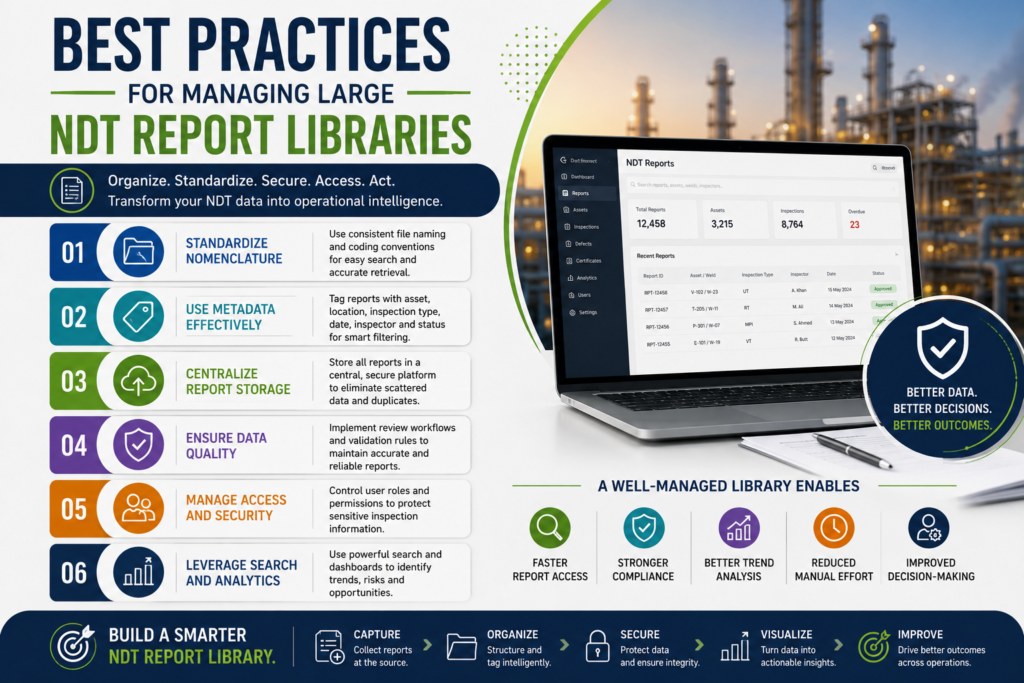
Use consistent asset IDs, inspection types, and job numbers.
Import legacy inspection records into a centralized system.
Reduce manual reporting wherever possible.
Link every report directly to the corresponding asset.
Monitor inspection status, compliance, and outstanding actions from a single interface.
Allow inspectors to submit reports directly from the field.
Ensure records remain accurate, complete, and searchable.
Organizations that modernize inspection data management typically experience:
| Benefit | Business Value |
|---|---|
| Faster report retrieval | Increased productivity |
| Complete asset history | Better maintenance planning |
| Improved compliance | Easier audits |
| Automated reporting | Reduced administrative work |
| Better trend analysis | Improved risk management |
| Centralized documentation | Higher operational efficiency |
| Digital workflows | Faster project completion |
| Real-time dashboards | Better business decisions |
It enables inspection teams to quickly access historical records, identify recurring defects, improve compliance, and make informed maintenance decisions.
The most common causes include paper records, disconnected spreadsheets, email attachments, inconsistent file naming, and decentralized document storage.
Digital software centralizes inspection data, automates report generation, tracks asset history, and provides searchable records with real-time dashboards.
Yes. Most modern inspection management platforms allow organizations to import historical inspection reports and associate them with existing assets.
Industries with strict inspection and compliance requirements benefit the most, including:
Read more : PRV Calibration Schedules: How Digital Tracking Prevents Compliance Gaps
Thousands of inspection reports should represent a strategic asset—not an operational burden. Yet without visibility, even the most detailed NDT records lose much of their value.
By centralizing inspection data, automating reporting, and connecting every report to the complete asset lifecycle, organizations can improve efficiency, strengthen compliance, and make faster, data-driven decisions.
For oil and gas inspection companies handling large volumes of NDT reports, adopting a purpose-built solution like InspectionsTrack is a practical step toward transforming scattered documentation into actionable intelligence. With searchable records, real-time dashboards, and complete asset traceability, inspection teams gain the visibility they need to work smarter, respond faster, and maintain the highest standards of quality and compliance.
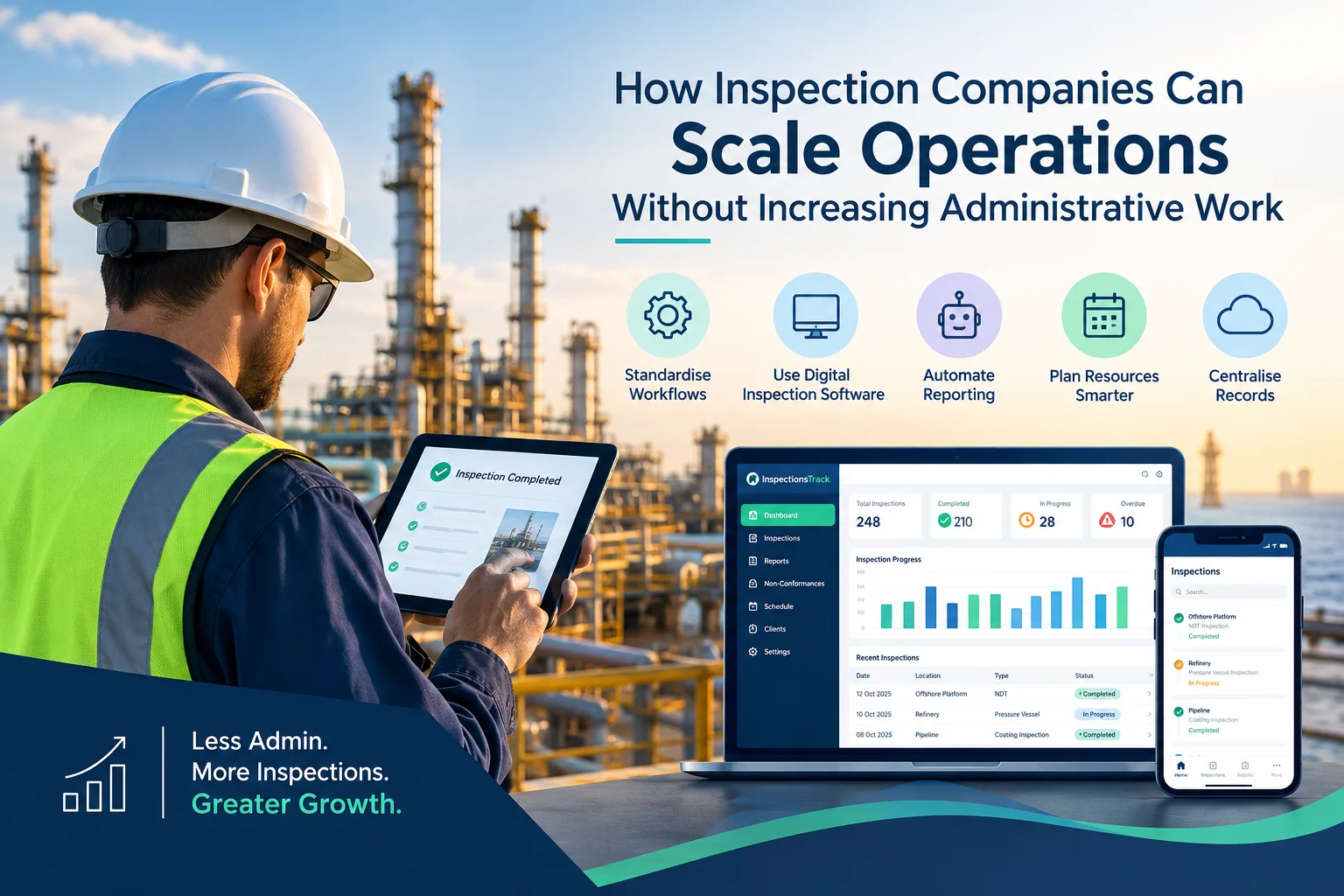
Inspection companies in the oil and gas industry face a common challenge: how to handle more inspections, manage larger projects, and meet client deadlines without increasing administrative workload. As businesses grow, inspection teams must manage…

Meeting client Service Level Agreements (SLAs) is essential for inspection companies working in demanding industries such as oil and gas, energy, and industrial maintenance. Clients expect inspections to be completed on time, reports to be…


