
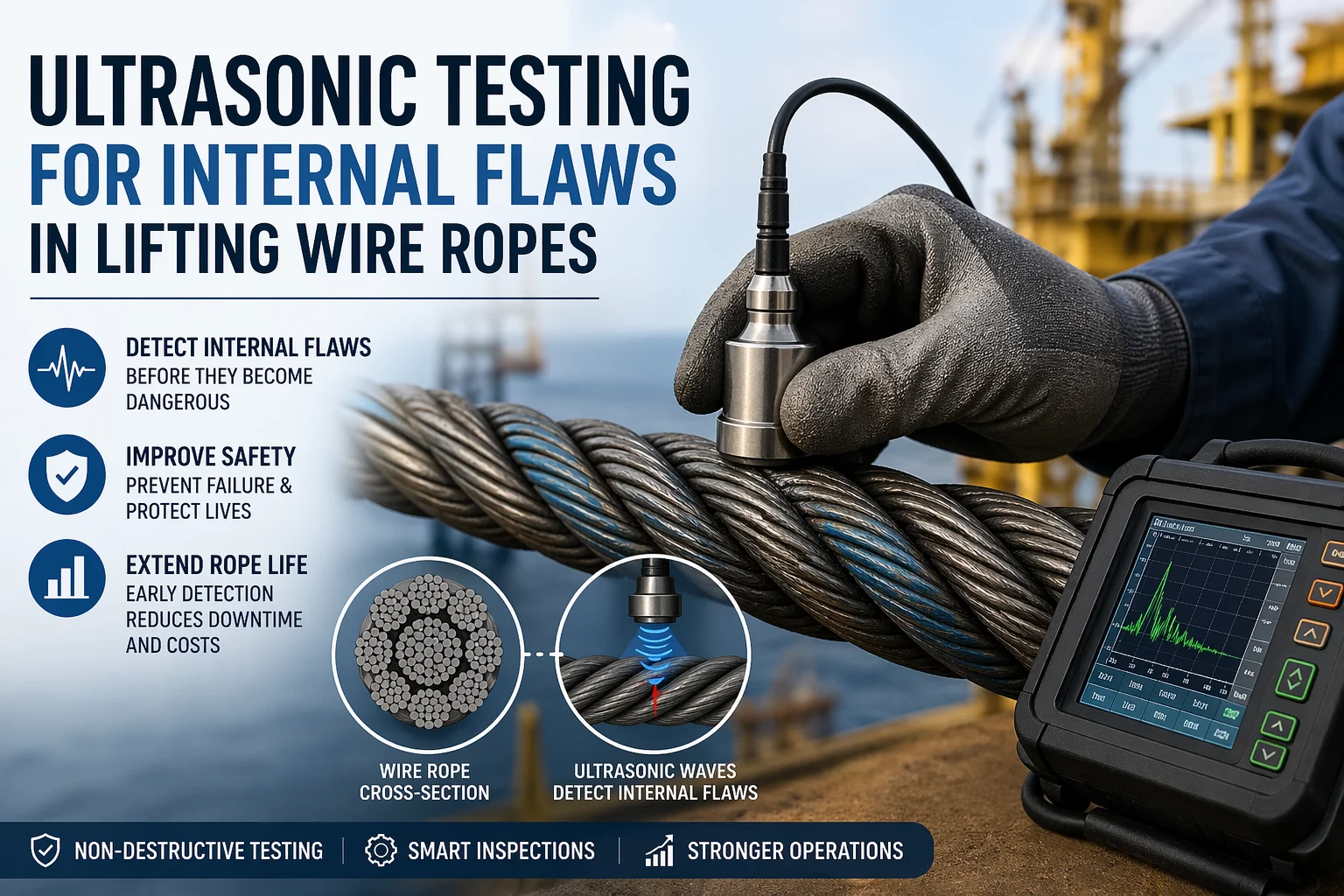
Lifting wire ropes are critical components in industries like oil & gas, construction, and marine operations. However, while external damage is often visible, internal flaws can go unnoticed leading to serious safety risks. That’s where ultrasonic testing (UT) becomes essential.
In this guide, we’ll break down how ultrasonic testing works for wire ropes, why it matters, and how modern digital tools like Inspectionstrack software can streamline inspection processes.
Ultrasonic Testing is a non-destructive testing (NDT) method that uses high-frequency sound waves to detect internal defects in materials. Unlike visual inspections, UT allows inspectors to “see inside” the wire rope without dismantling or damaging it.
Wire ropes operate under extreme stress. Therefore, internal damage can develop long before any external signs appear.
Ultrasonic testing helps detect a wide range of internal issues. Below is a quick overview:
| Flaw Type | Description | Risk Level |
|---|---|---|
| Internal Wire Breaks | Broken strands inside the rope | High |
| Corrosion | Rust forming within the core | High |
| Fatigue Damage | Micro-cracks due to repeated stress | Medium |
| Core Deterioration | Damage to fiber or steel core | High |
| Voids or Gaps | Manufacturing or wear-related defects | Medium |
Although several inspection techniques exist, ultrasonic testing offers unique advantages.
| Method | Detects Internal Flaws | Accuracy | Limitations |
|---|---|---|---|
| Visual Inspection | No | Low | Surface-only |
| Magnetic Testing | Limited | Medium | Requires magnetization |
| Ultrasonic Testing | Yes | High | Requires skilled operator |
As a result, UT is often considered the most reliable method for internal flaw detection.
To ensure accurate results, inspectors follow a structured process:
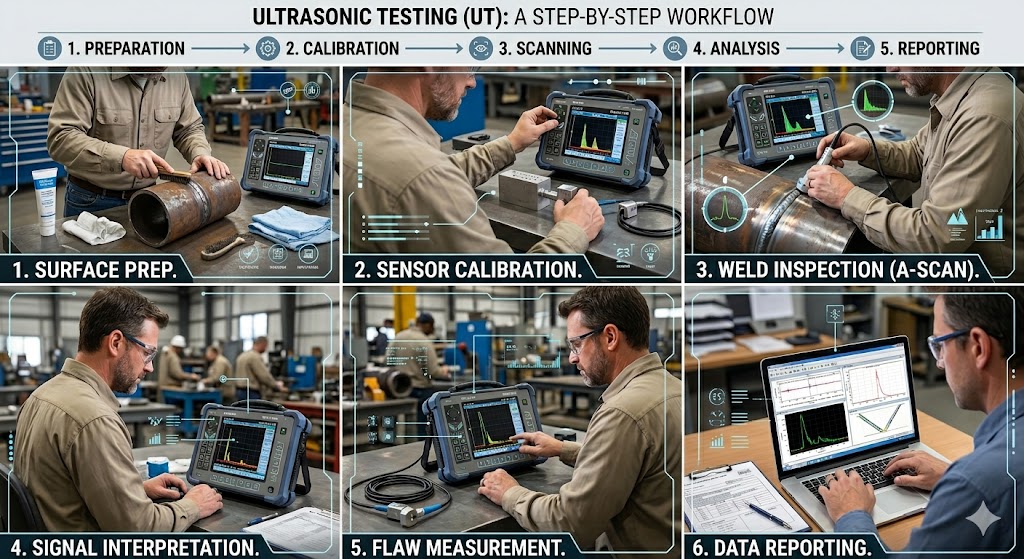
First, the rope is cleaned to remove dirt, grease, or debris.
Next, the UT device is calibrated using reference standards.
Then, the probe is moved along the rope to capture internal signals.
After that, the signals are analyzed to identify defects.
Finally, results are documented for maintenance decisions.
While UT is powerful, it does come with challenges:
However, these challenges can be effectively addressed with modern inspection software.
In today’s digital era, combining UT with smart inspection platforms significantly improves efficiency. Inspectionstrack software, designed for the oil & gas inspection industry, helps organizations manage inspections seamlessly.
As a result, inspection teams can make faster, data-driven decisions while reducing human error.
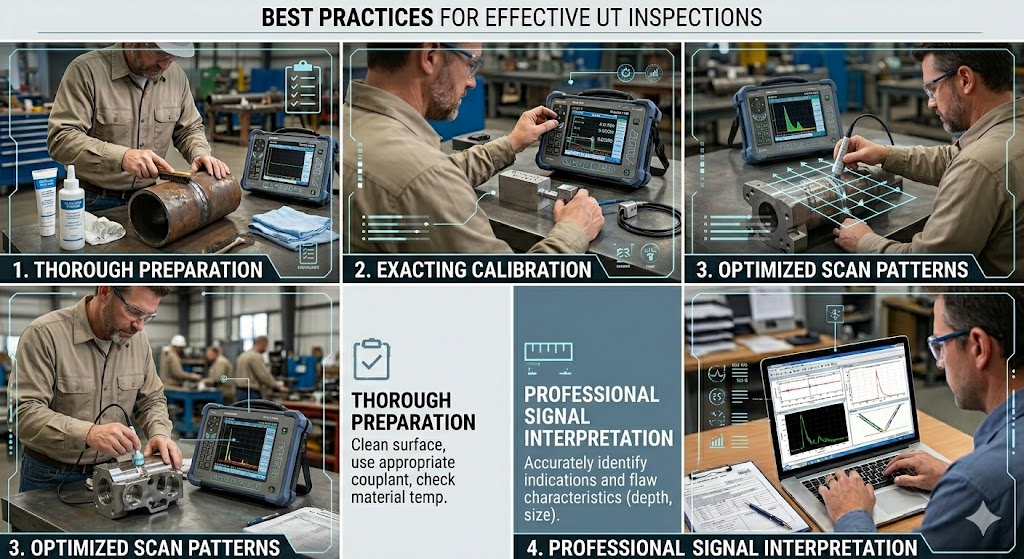
To maximize the benefits of ultrasonic testing, follow these best practices:
Looking ahead, the future of wire rope inspection lies in automation and AI-driven analytics. When ultrasonic testing is combined with advanced software, organizations gain deeper insights into asset health.
Consequently, predictive maintenance becomes more achievable, reducing both risks and operational costs.
Ultrasonic testing is a game-changer for detecting internal flaws in lifting wire ropes. Not only does it enhance safety, but it also improves operational efficiency and reduces long-term costs.
Moreover, when paired with powerful solutions like Inspectionstrack software, businesses in the oil & gas sector can transform their inspection workflows into fully digital, data-driven systems.
If you want to ensure safer lifting operations and smarter inspections, investing in ultrasonic testing and modern inspection tools is no longer optional it’s essential.
read more : magnetic flux leakage mfl tank floor inspection
Yes, it can detect most internal flaws such as corrosion and wire breaks, although surface defects may still require visual inspection.
The frequency depends on usage and industry standards, but regular inspections are recommended for high-risk operations.
Ultrasonic testing provides more accurate detection of internal flaws, making it a preferred choice for critical applications.
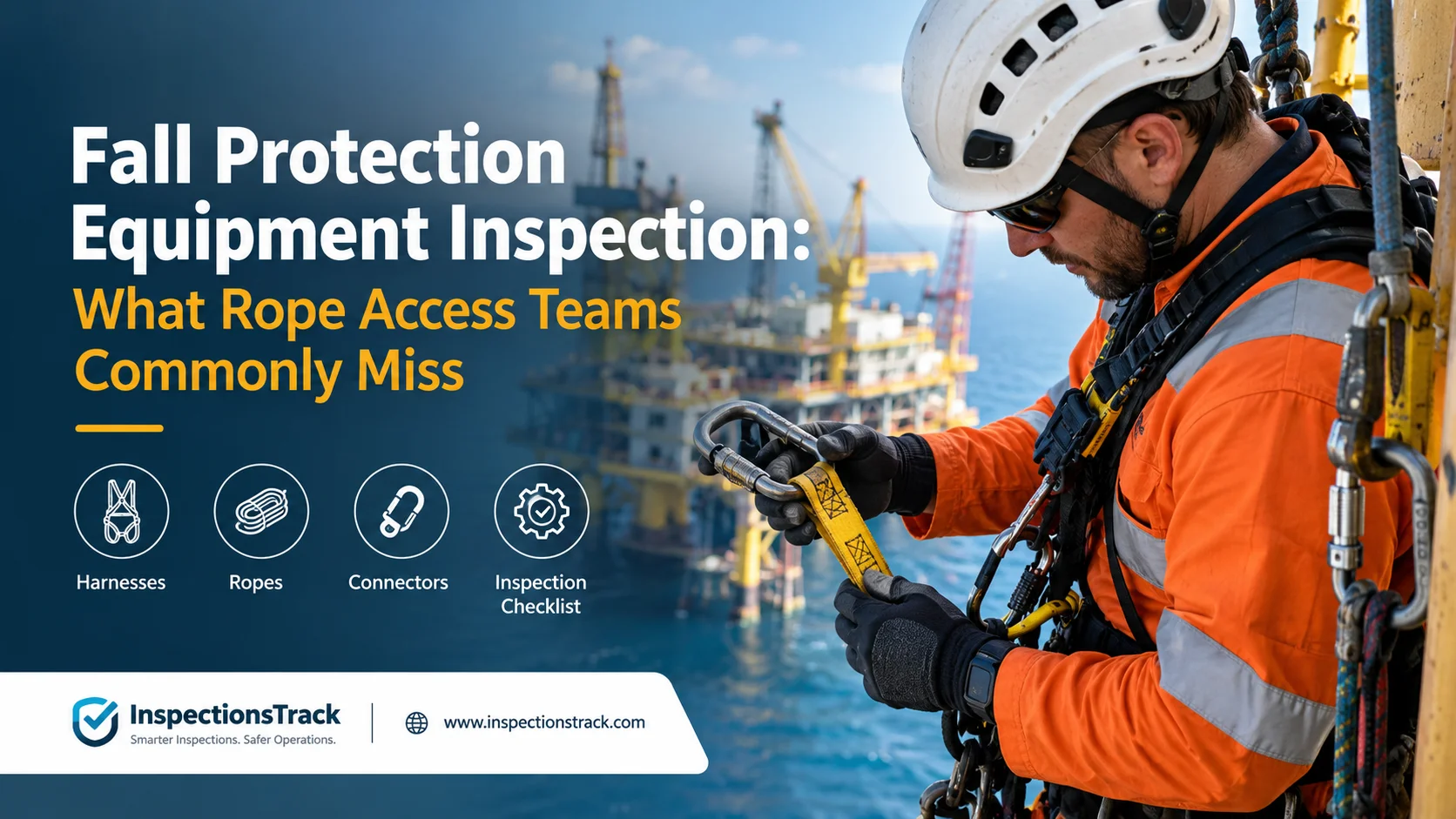
Working at height is one of the most demanding activities in industrial environments. For rope access teams, however, safety depends on more than having the right equipment. Fall protection equipment must also be inspected correctly,…
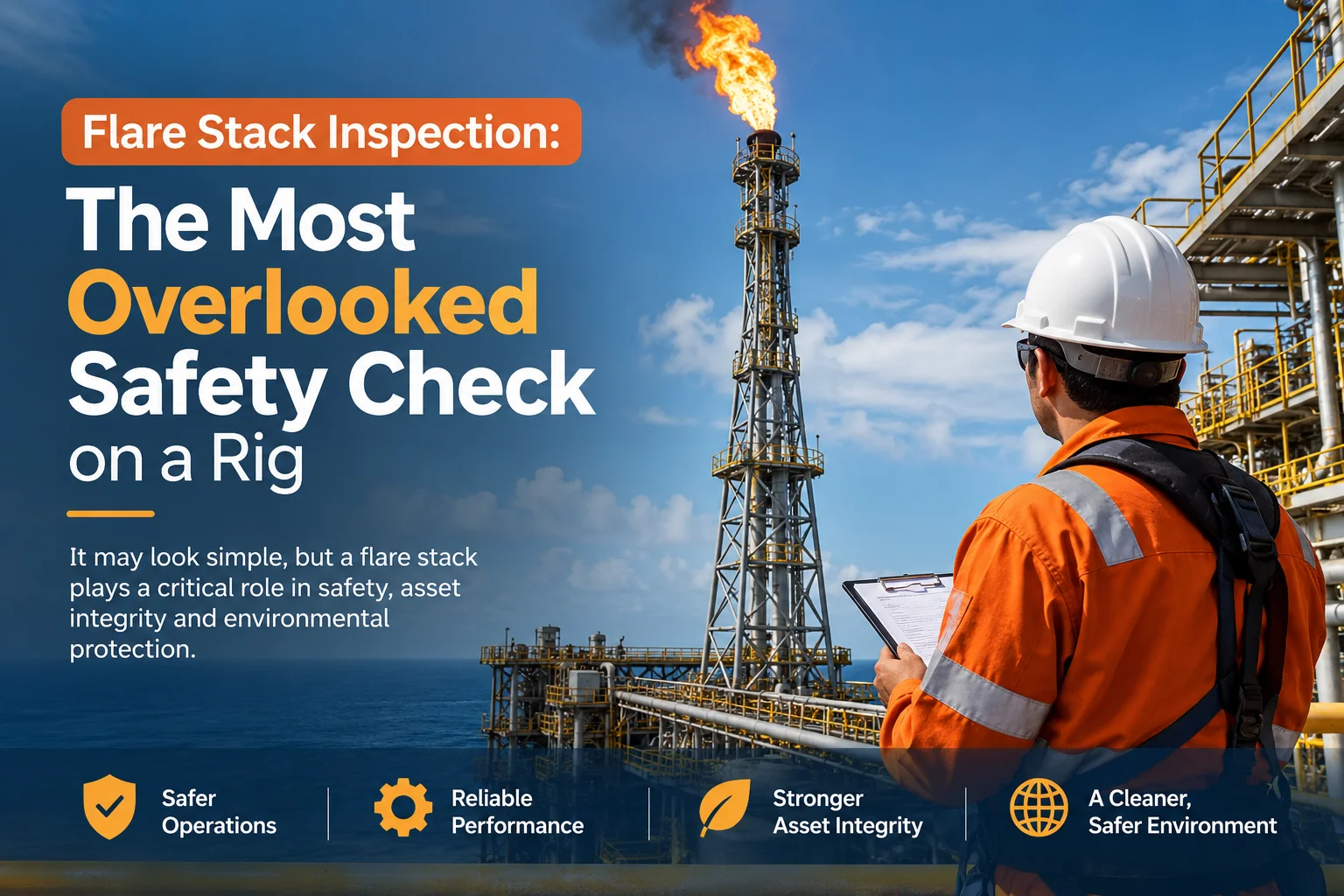
A flare stack may look like a simple vertical structure standing above a rig or production facility. In reality, it is one of the most important safety systems for handling flammable gases and relieving potentially…


