
In the oil and gas industry, a derrick is one of the most critical structural components on any drilling rig. It supports heavy loads, withstands constant vibration, and operates in harsh offshore and onshore environments. Consequently, even a minor defect can quickly develop into a serious safety incident if it goes unnoticed.
Therefore, one of the most common questions asked by drilling contractors, inspection companies, and asset integrity managers is:
How often should a derrick be inspected?
The answer depends on multiple factors, including regulatory standards, operating conditions, equipment age, and inspection history. However, understanding the recommended inspection intervals is essential for maintaining compliance, preventing costly downtime, and ensuring worker safety.
In this guide, we’ll explain regulatory timelines, inspection frequencies, applicable industry standards, and how digital inspection management software like Inspections Track helps companies stay inspection-ready.
A derrick experiences enormous structural loads every day. Over time, these loads cause fatigue, corrosion, loose connections, cracked welds, and structural deformation.
Without routine inspections, these defects can result in:
Because of these risks, industry standards require inspections throughout the equipment lifecycle instead of only after failures occur.
Several organizations establish inspection requirements for derricks. Although specific timelines may differ, they all emphasize routine inspections based on risk and operational exposure.
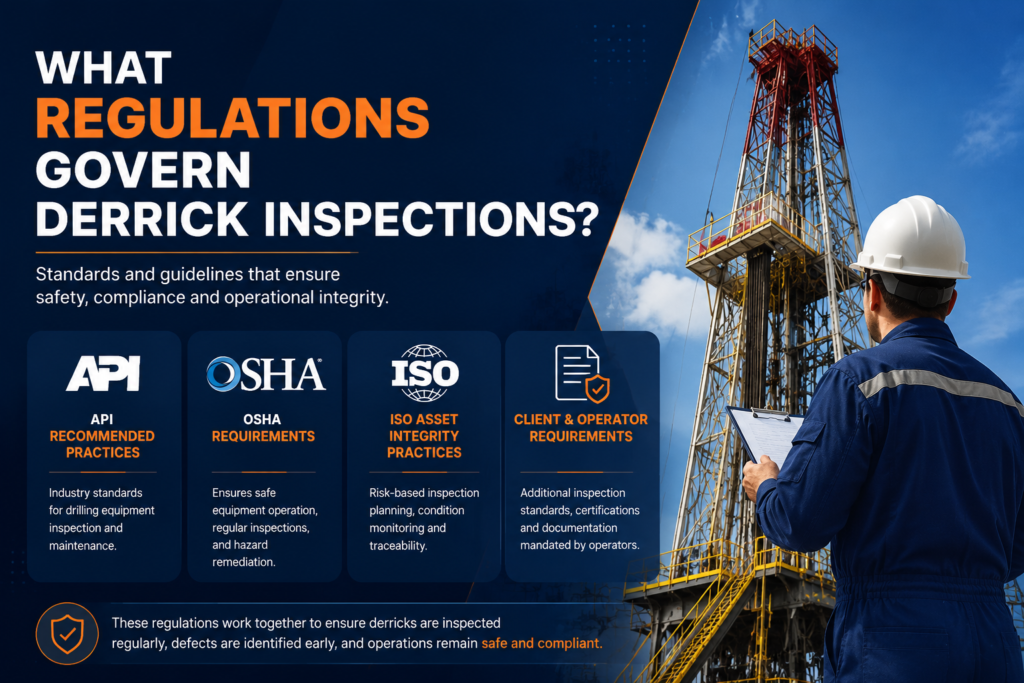
The American Petroleum Institute (API) provides guidance for drilling equipment inspection and maintenance.
Key objectives include:
OSHA requires employers to maintain equipment in safe operating condition and perform regular inspections.
Although OSHA may not specify exact calendar intervals for every derrick component, it expects employers to:
Many international operators follow ISO-based asset integrity management systems that require:
Major oil companies often enforce inspection schedules that exceed minimum regulatory requirements.
For example, operators may require:
Inspection frequency depends on operational risk. However, most companies follow multiple inspection intervals rather than relying on a single annual inspection.
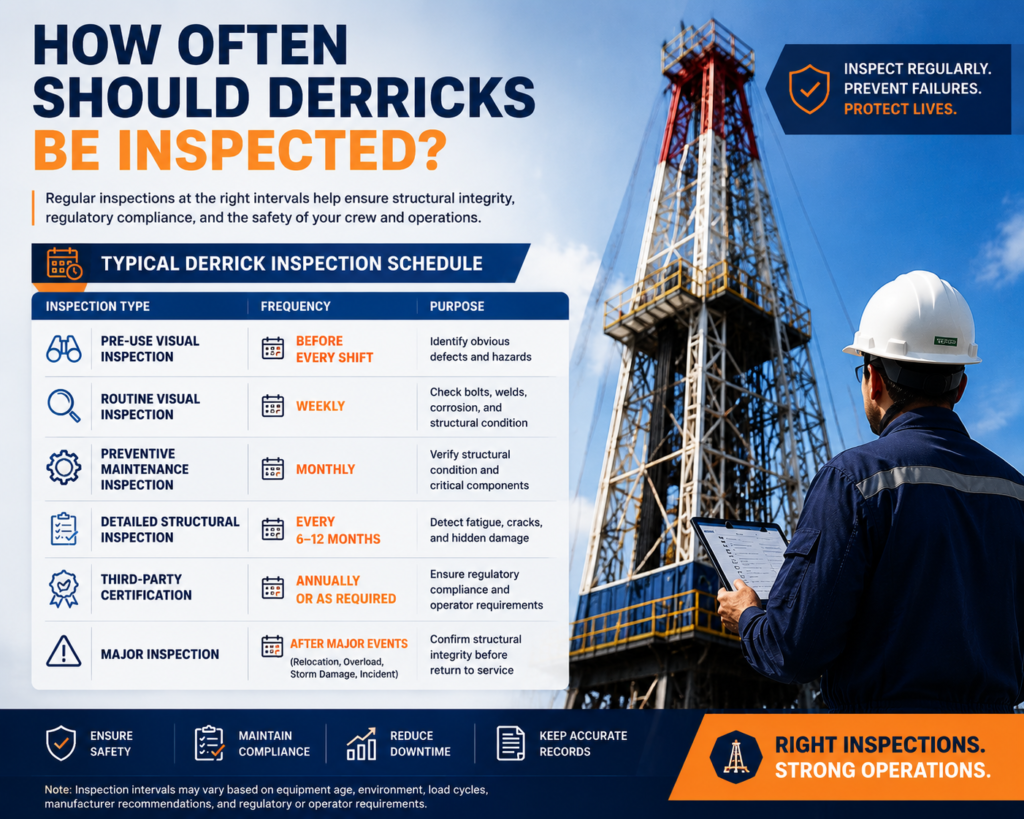
| Inspection Type | Typical Frequency | Purpose |
|---|---|---|
| Pre-use Visual Inspection | Before every shift | Identify obvious defects |
| Routine Visual Inspection | Weekly | Check bolts, welds, corrosion |
| Preventive Maintenance Inspection | Monthly | Verify structural condition |
| Detailed Structural Inspection | Every 6–12 months | Detect fatigue and hidden damage |
| Third-Party Certification | Annually or as required | Regulatory compliance |
| Major Inspection | After relocation, overload, storm damage, or incident | Confirm structural integrity |
These timelines may vary depending on:
Before drilling begins, operators should complete a quick visual inspection.
Typical checklist includes:
Although these inspections are brief, they often prevent major failures.
Weekly inspections provide a more detailed assessment.
Inspectors typically examine:
Inspectors look for:
Monthly inspections go beyond visual observations.
Common activities include:
Maintenance teams also compare findings with previous reports to identify developing trends.
Annual inspections are significantly more comprehensive.
Certified inspectors may perform:
These inspections typically produce certification reports required by operators and regulatory authorities.
Certain events require immediate inspections regardless of the planned schedule.
These include:
Skipping post-event inspections significantly increases operational risk.
Not every derrick requires the same inspection schedule.
Several conditions increase inspection frequency.
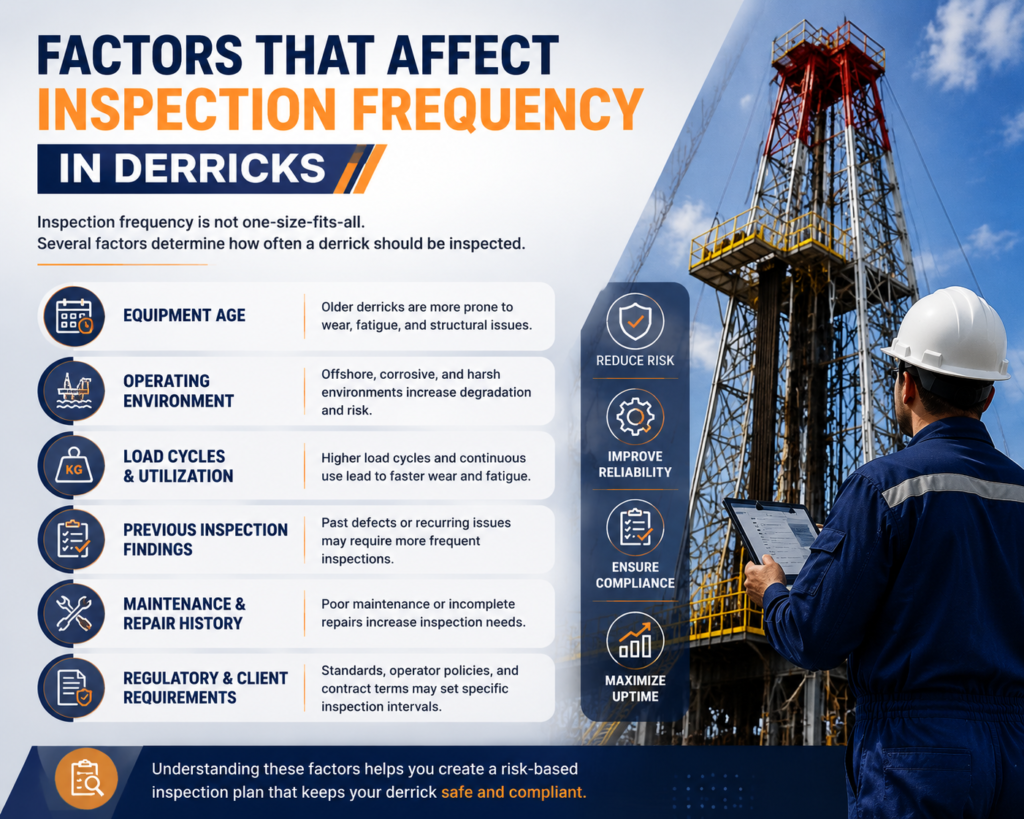
Saltwater accelerates corrosion.
Therefore, offshore rigs often require more frequent inspections than land-based equipment.
Derricks operating continuously experience:
Consequently, inspections should occur more often.
As structures age, fatigue becomes more likely.
Additional inspections help identify:
Extreme conditions accelerate deterioration.
Examples include:
Inspectors frequently discover issues before they become critical failures.
Typical findings include:
Early detection dramatically reduces repair costs.
Maintaining compliance involves much more than completing inspections.
Successful inspection programs include:
Every inspector follows the same process, reducing inconsistencies.
Automated reminders ensure inspections are never missed.
Inspection reports should include:
Historical inspection data enables trend analysis and supports regulatory audits.
Every defect should include:
Managing hundreds of derrick inspections manually is time-consuming and increases the risk of missed inspections, incomplete reports, and compliance gaps. Inspections Track is purpose-built for the oil and gas inspection industry, helping inspection companies, asset integrity teams, and drilling contractors digitize the entire inspection process.
With Inspections Track, organizations can:
Inspectors can complete standardized inspections on mobile devices, even in remote offshore environments.
As a result, inspection teams spend less time on paperwork and more time ensuring structural integrity.
Organizations that replace paper-based inspections with digital workflows often experience measurable improvements.
| Traditional Paper Process | Inspections Track Digital Workflow |
|---|---|
| Manual paperwork | Digital mobile inspections |
| Lost inspection records | Secure cloud storage |
| Delayed reporting | Instant report generation |
| Difficult audits | Complete inspection history |
| Missed inspection dates | Automated reminders |
| Limited visibility | Real-time dashboards |
| Duplicate data entry | Single-source asset records |
Most operators require pre-use visual inspections before each shift. While regulatory language may vary, daily inspections are considered an industry best practice for maintaining safety and identifying obvious defects before operations begin.
Retention periods vary depending on regulatory requirements, company policies, and contractual obligations. Many organizations maintain records for several years to support audits, incident investigations, and asset lifecycle management.
Yes. Digital inspection platforms like Inspections Track provide secure, searchable, and audit-ready records with electronic signatures, photos, and timestamps, making them a practical replacement for paper documentation.
The affected equipment should be removed from service until qualified personnel evaluate the issue, complete the necessary repairs, and verify that the derrick is safe to return to operation.
Regular derrick inspections are essential for protecting personnel, extending equipment life, and meeting regulatory obligations. Rather than relying solely on annual certifications, organizations should adopt a layered inspection strategy that includes daily visual checks, routine preventive inspections, detailed structural assessments, and immediate post-event evaluations.
Equally important, digital inspection management improves consistency, traceability, and reporting accuracy. By using a dedicated platform like Inspections Track, oil and gas inspection companies can automate scheduling, standardize checklists, generate professional reports, and maintain complete asset histories—all while reducing administrative effort and strengthening compliance.
Whether you manage offshore drilling rigs, land-based operations, or third-party inspection services, implementing a structured inspection program supported by modern inspection software is one of the most effective ways to enhance safety, minimize downtime, and ensure every derrick remains fit for service.
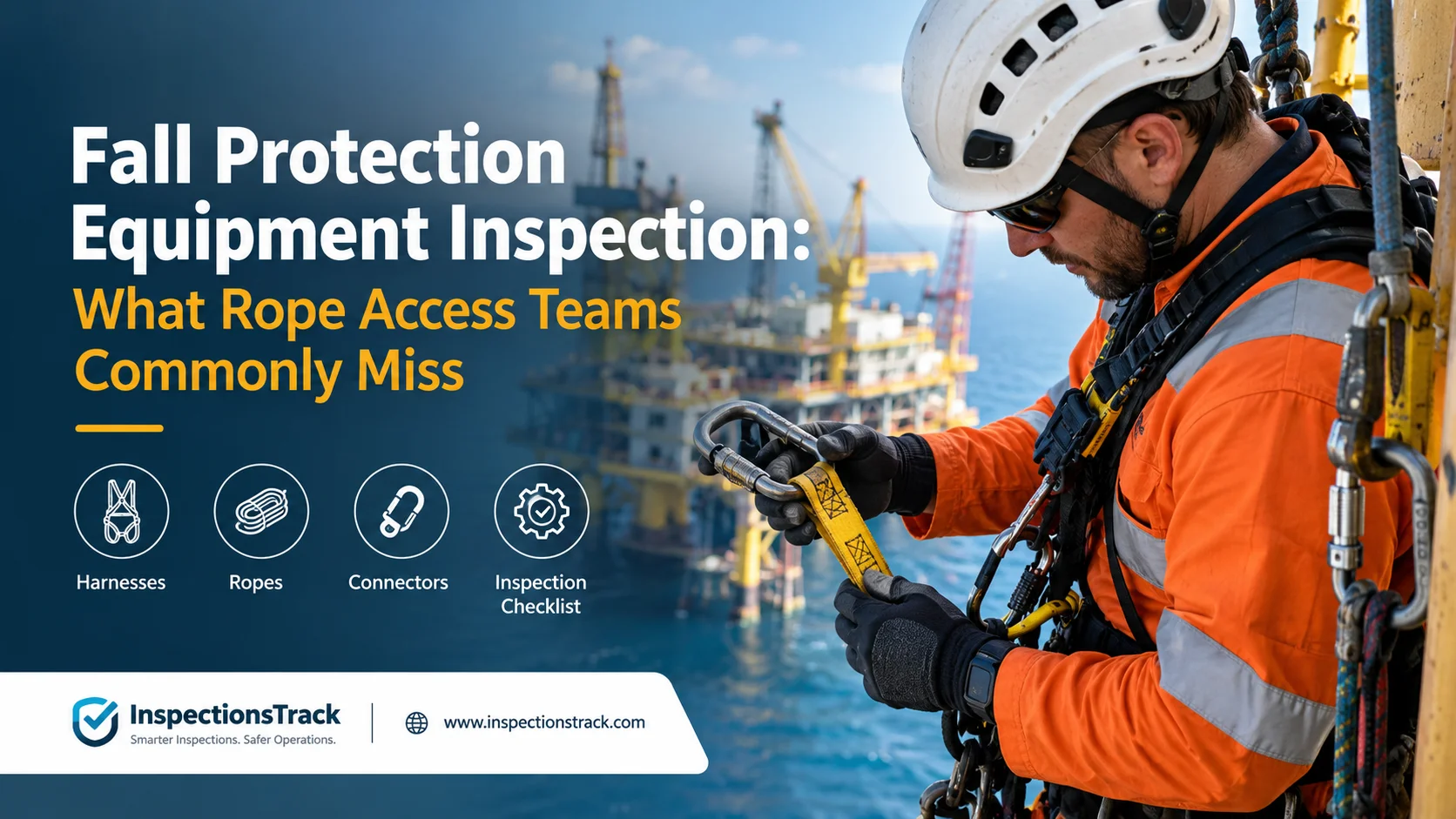
Working at height is one of the most demanding activities in industrial environments. For rope access teams, however, safety depends on more than having the right equipment. Fall protection equipment must also be inspected correctly,…
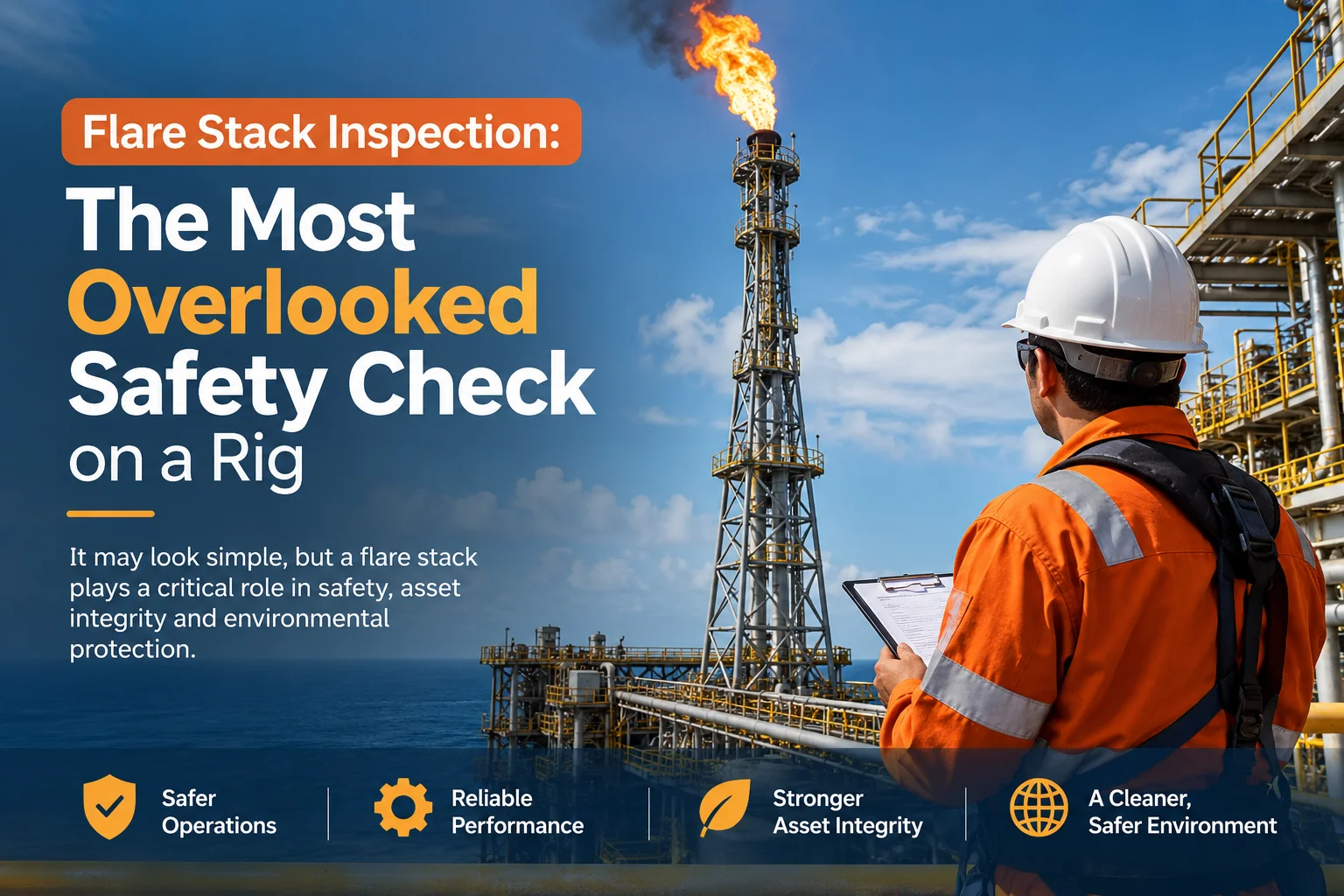
A flare stack may look like a simple vertical structure standing above a rig or production facility. In reality, it is one of the most important safety systems for handling flammable gases and relieving potentially…


