

For inspection companies in the oil and gas industry, improving inspector utilization is essential for increasing productivity, controlling operational costs, and meeting client deadlines. However, maximizing the number of inspections completed does not necessarily mean assigning more work to field teams.
When inspection workloads become excessive, inspectors may experience fatigue, reporting delays, and increased pressure to complete jobs quickly. As a result, inspection quality and safety can suffer.
The real challenge is to improve inspector utilization without increasing workloads to an unsustainable level. By improving inspection scheduling, reducing administrative tasks, and using digital inspection management software, companies can make better use of their existing workforce while maintaining quality and safety standards.
Inspector utilization measures how effectively inspection companies use their available workforce to complete productive inspection activities.
For example, an inspector’s working day may include:
Not all these activities can be eliminated. However, companies can reduce avoidable delays and administrative work to increase the time inspectors spend on productive, value-adding activities.
The goal is not to keep inspectors busy every minute. It is to ensure their time is allocated efficiently without compromising safety, inspection quality, or employee wellbeing.
As inspection companies grow, managing field teams becomes increasingly complex. Multiple projects, changing client requirements, and tight deadlines can make workforce planning difficult.
Several common issues contribute to poor inspector utilization.

When inspection assignments are managed through spreadsheets, emails, or phone calls, scheduling conflicts can easily occur.
For instance, an inspector may be assigned to a site without considering travel time, required certifications, equipment availability, or the expected duration of the inspection. Consequently, companies may experience unnecessary travel, missed appointments, and underused working hours.
Inspection work does not end when an inspector leaves the field. Teams often spend additional hours preparing reports, organizing photographs, updating spreadsheets, and submitting documentation.
Although these activities are necessary, repetitive manual processes reduce the time available for actual inspections.
Some inspectors may be overloaded with assignments while others have available capacity. This often happens when managers lack a clear view of current workloads, project schedules, and upcoming commitments.
Without accurate resource planning, companies risk employee burnout while still struggling to meet client deadlines.
When inspection data is scattered across different systems, managers may struggle to determine which jobs are completed, which reports remain outstanding, and where additional resources are needed.
As a result, they may assign new work without understanding the team’s actual capacity.
Improving utilization requires better planning, clearer visibility, and more efficient workflows. The following strategies can help inspection companies increase productivity without placing unnecessary pressure on field teams.
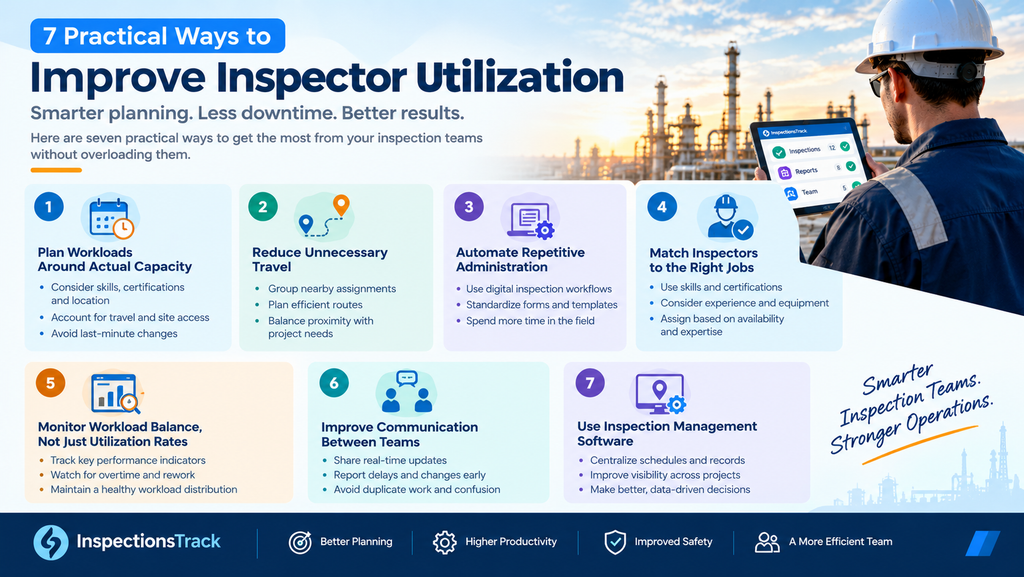
Before assigning new jobs, assess each inspector’s availability, qualifications, location, and existing commitments.
For example, an inspector who is already scheduled for several complex NDT inspections may not have the capacity to accept another assignment on the same day.
Instead of filling every available time slot, consider:
This approach helps managers build realistic schedules and reduces the need for last-minute changes.
Travel can consume a significant portion of an inspector’s working day, particularly when projects are spread across large industrial facilities or remote oil and gas locations.
Therefore, group nearby inspection assignments whenever practical.
For example, if an inspector needs to examine several assets at the same facility, scheduling these jobs together may reduce repeated journeys and site-access delays.
However, geographical proximity should not be the only consideration. Managers must also account for inspector qualifications, equipment requirements, inspection priorities, and client deadlines.
Manual reporting and data entry can reduce field productivity, especially when inspectors must complete the same documentation across multiple projects.
Digital inspection workflows can help teams record findings, attach photographs, update job statuses, and organize reports more efficiently.
Depending on the software and configuration, companies can also standardize inspection forms and reduce duplicate data entry.
As a result, inspectors spend less time managing paperwork and more time completing technical inspection work.
The key is to remove repetitive administration, not eliminate the documentation required for inspection quality, traceability, and compliance.
Not every inspector is qualified to perform every type of inspection. Oil and gas inspection projects may require specific NDT methods, certifications, equipment knowledge, or experience with particular assets.
Consequently, assigning jobs based only on availability can create delays or require reassignment later.
A better approach is to maintain an up-to-date view of each inspector’s:
This allows managers to assign the right person to the right job while making better use of specialist skills.
A high utilization rate does not automatically indicate an efficient operation.
If inspectors consistently work beyond reasonable capacity, report quality may decline and fatigue-related risks may increase. Meanwhile, other team members may remain underutilized because work is not distributed effectively.
Therefore, track utilization alongside other operational indicators, such as report turnaround time, overtime, inspection rework, missed deadlines, and employee workload.
The following table highlights useful measures.
| KPI | What It Measures | Why It Matters |
|---|---|---|
| Productive inspection hours | Time spent completing inspection activities | Shows how available working time is used |
| Travel time | Time spent travelling between assignments | Identifies opportunities to improve routing |
| Report turnaround time | Time between inspection completion and report submission | Highlights administrative bottlenecks |
| Schedule adherence | Whether inspections occur as planned | Measures scheduling effectiveness |
| Overtime hours | Work performed beyond scheduled hours | Helps identify sustained workload pressure |
| Rework rate | Inspections or reports requiring correction | Provides insight into quality issues |
| Workload distribution | How assignments are spread across inspectors | Helps identify overloading and unused capacity |
Review these indicators together rather than optimizing a single number. This provides a more realistic picture of operational performance.
Inspection schedules can change because of weather conditions, site-access restrictions, equipment issues, or urgent client requests.
If field inspectors and office coordinators do not share updates promptly, managers may continue planning work around outdated information.
To prevent this, establish a clear process for updating job status, reporting delays, and communicating changes.
For example, inspectors should be able to report when a job is completed, when additional work is required, or when a site is unavailable. Managers can then adjust schedules based on current information rather than assumptions.
Better communication also reduces unnecessary calls, duplicate assignments, and confusion over job priorities.
As inspection operations expand, managing workloads through disconnected spreadsheets and manual updates becomes increasingly difficult.
Inspection management software helps companies organize assignments, maintain inspection records, and improve visibility across ongoing projects. Depending on its capabilities, it can also support reporting workflows, scheduling, and operational performance monitoring.
For oil and gas inspection companies, InspectionsTrack provides a digital platform to support inspection management and improve visibility across inspection activities.
By centralizing relevant inspection information and reducing reliance on disconnected manual processes, inspection teams can make better-informed operational decisions.
For example, managers can use a more organized inspection workflow to identify outstanding jobs, monitor progress, and coordinate upcoming work. Meanwhile, digital records can help reduce the administrative burden associated with maintaining inspection documentation.
The objective is to make existing resources more effective, rather than simply increasing the number of assignments given to each inspector.
Explore InspectionsTrack to learn more about digital inspection management for the oil and gas industry.
The most effective approach combines realistic scheduling, reduced administrative effort, and continuous workload monitoring.
| Traditional Approach | More Effective Approach |
|---|---|
| Assigning as many jobs as possible | Allocating work according to capacity and complexity |
| Scheduling jobs without considering travel | Grouping suitable assignments by location |
| Preparing reports entirely through manual processes | Using standardized digital workflows |
| Tracking assignments through disconnected spreadsheets | Maintaining centralized inspection information |
| Measuring success through utilization alone | Monitoring utilization, quality, safety, and overtime |
| Reacting to scheduling problems after they occur | Reviewing workloads and upcoming commitments proactively |
These improvements can help companies increase productive inspection time while maintaining realistic workloads.
However, results depend on project requirements, workforce availability, and the effectiveness of the processes being introduced. Companies should review performance regularly and adjust their approach as operational needs change.
Read more : Inspection Software Integration: Connecting Operations, Reporting and Accounting
There is no single ideal utilization rate for every inspection company. The appropriate target depends on inspection complexity, travel requirements, reporting responsibilities, safety procedures, and the type of projects being handled.
Companies can reduce avoidable downtime by improving scheduling, coordinating site access in advance, checking equipment availability, grouping nearby jobs, and communicating schedule changes promptly.
Inspection software can help organize assignments, standardize documentation, centralize records, and reduce repetitive administrative work. Depending on the platform’s features, it may also support scheduling and performance monitoring.
These capabilities allow managers to identify bottlenecks and allocate resources more effectively.
Workload balance helps companies maintain inspection quality, manage deadlines, and reduce excessive overtime. It also helps prevent situations where some inspectors are consistently overloaded while others have available capacity.
A balanced approach supports sustainable productivity without compromising safety or technical standards.
Improving inspector utilization is not about assigning more work to field teams. It is about making better use of available time, reducing unnecessary administrative tasks, improving scheduling, and distributing assignments according to actual capacity.
For oil and gas inspection companies, these changes can improve operational visibility and help teams manage demanding project schedules more effectively.
By combining realistic workforce planning with digital inspection management, companies can reduce avoidable delays while protecting inspection quality and employee wellbeing.
InspectionsTrack can support this approach by helping inspection companies organize their inspection workflows and maintain better visibility across their operations. The result is a more structured way to manage resources, coordinate field activities, and improve productivity without placing unnecessary pressure on inspectors.

Inspection service companies need more than completed inspection reports to measure team productivity. They must also track inspection quality, job completion time, equipment utilization, safety compliance, and client satisfaction. However, when inspection data is scattered…
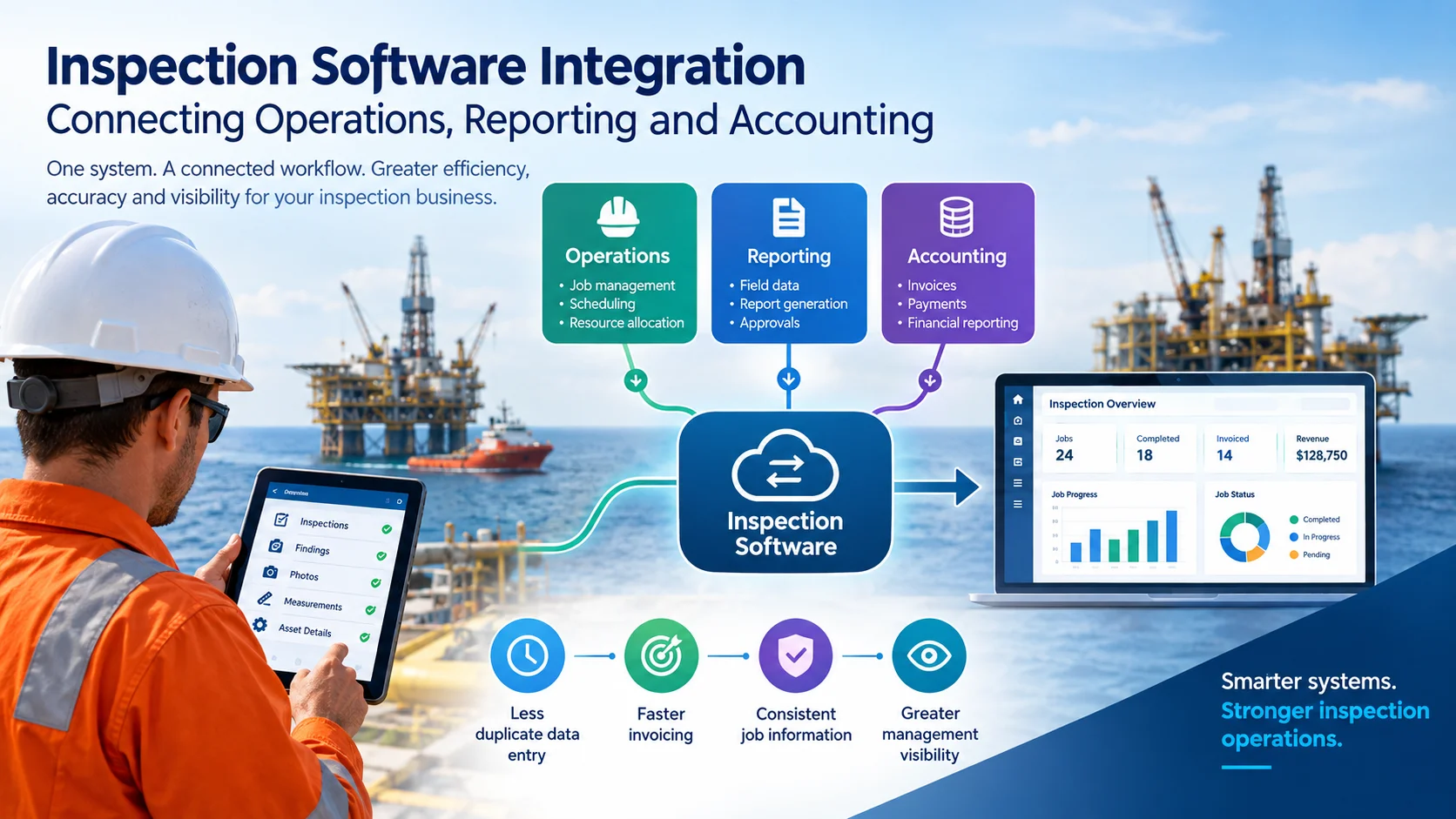
Inspection companies in the oil and gas industry manage much more than inspections. They also coordinate jobs, assign inspectors, track equipment, prepare technical reports, manage client approvals, and process invoices. When these activities run through…


Comment (1)
10 Inspection Team Productivity KPIs to Track - inspectionstrack
Oct 27, 2026[…] Read more : How to Improve Inspector Utilization Without Overloading Field Teams […]
Comments are closed.