
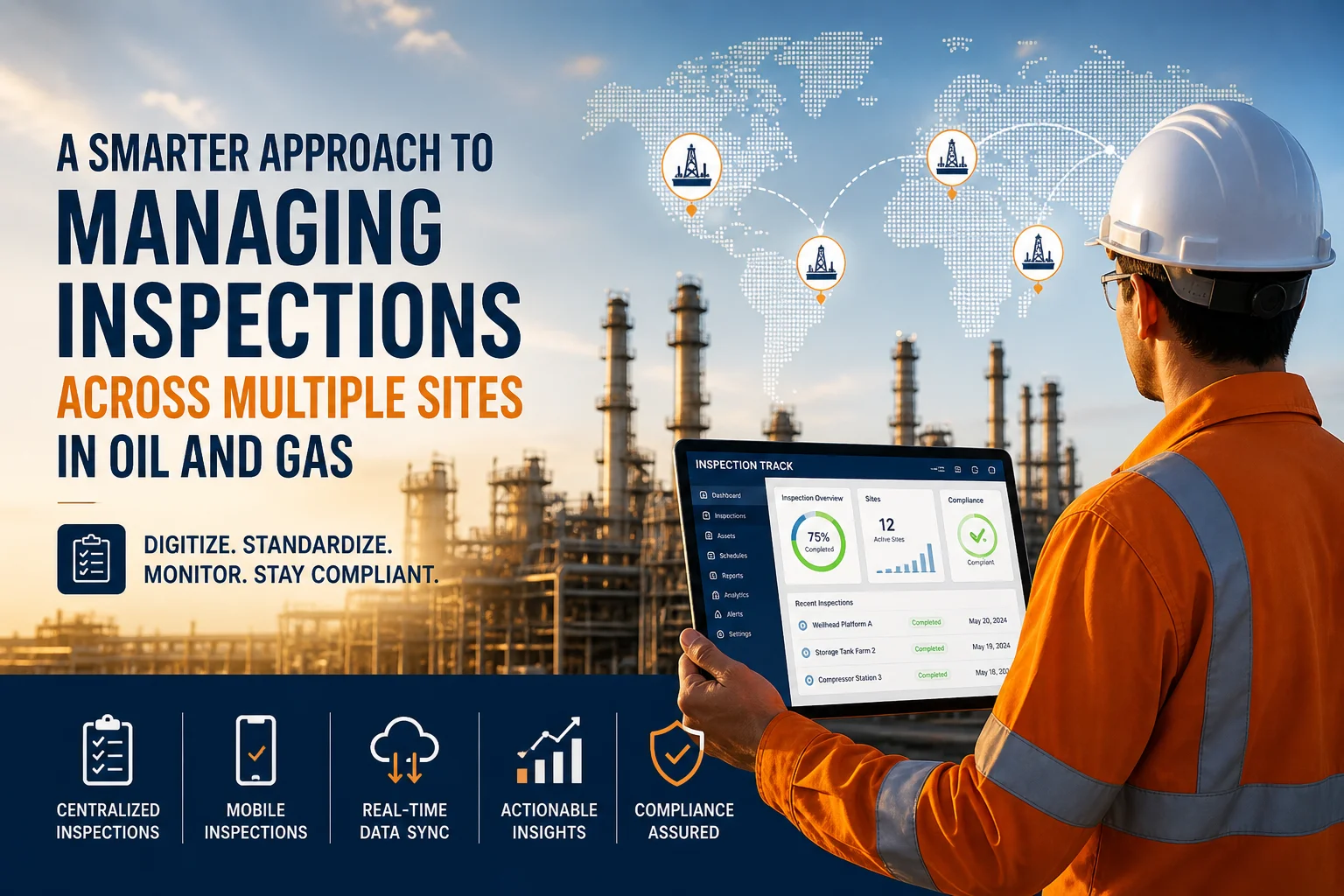
In the oil and gas industry, managing inspections across multiple sites is no longer a simple operational task. Instead, it has become a complex, data driven responsibility that directly impacts safety, compliance, and operational efficiency. However, many organizations still rely on fragmented systems, manual reporting, and disconnected workflows.
Therefore, a smarter approach is needed one that centralizes inspection data, automates workflows, and delivers real-time visibility across all sites. This is where modern digital solutions like Inspection Track Software for oil and gas inspections industry play a transformative role.
Across oil and gas operations, companies often manage assets in geographically dispersed locations. Consequently, inspection teams face several challenges that reduce efficiency and increase risk.
Moreover, these challenges are often interconnected, which further increases operational complexity.
In recent years, organizations have started shifting toward digital-first inspection strategies. This shift is driven by the need for accuracy, compliance, and faster decision-making.
In addition, regulatory bodies are becoming stricter, which means companies must ensure that inspection data is not only accurate but also easily auditable.
Therefore, smart inspection management focuses on:
Inspection Track Software for oil and gas inspections industry is a purpose-built digital platform designed to simplify and standardize inspection processes across multiple sites.
Rather than relying on spreadsheets or manual reporting, it enables organizations to digitize the entire inspection lifecycle from planning and execution to reporting and compliance tracking.
Moreover, data is stored securely and can be accessed instantly by stakeholders across different locations.
A smarter approach is built on integration, automation, and visibility. Let’s break it down step by step.
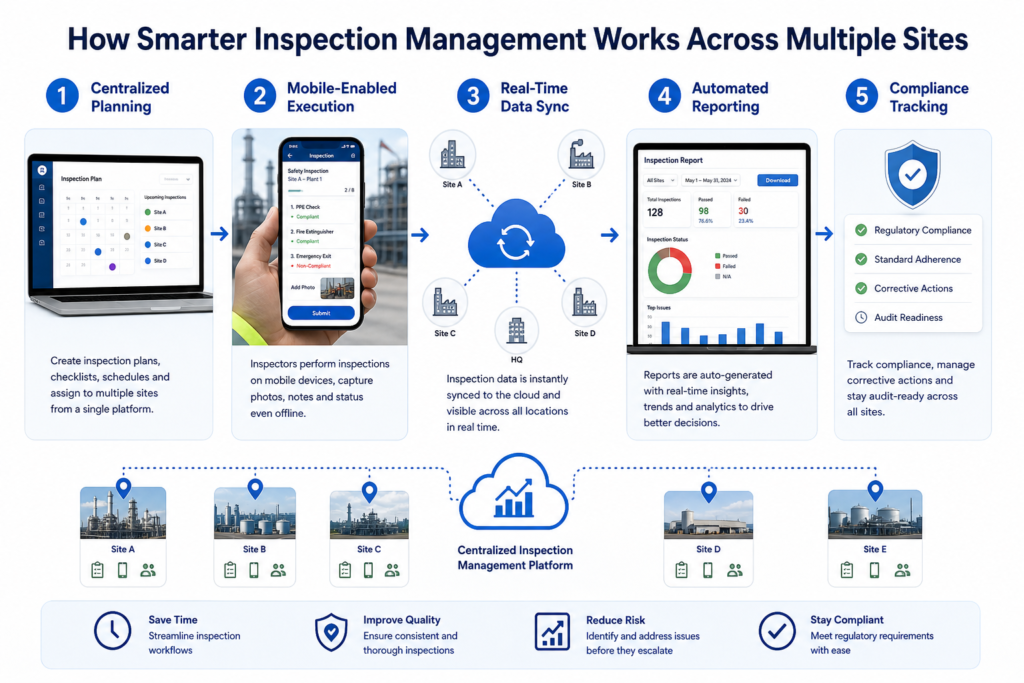
Firstly, all inspection activities are planned within a single system. As a result, managers can view schedules across multiple sites in one dashboard.
Secondly, inspectors use mobile devices to conduct inspections on site. Consequently, data is captured instantly, reducing delays and manual errors.
Moreover, inspection data is synchronized in real time. Therefore, decision-makers always have access to the latest information.
In addition, reports are generated automatically. This eliminates repetitive administrative work and improves reporting accuracy.
Finally, compliance requirements are continuously monitored. Thus, organizations can avoid penalties and ensure regulatory alignment.
To understand the value of modernization, let’s compare traditional methods with smart inspection systems.
| Feature | Manual Inspection System | Smart Inspection System (Inspection Track Software) |
|---|---|---|
| Data Management | Scattered spreadsheets | Centralized database |
| Reporting Time | Delayed | Real-time |
| Accuracy | Prone to human error | Highly accurate |
| Compliance Tracking | Difficult | Automated |
| Multi-Site Visibility | Limited | Full visibility |
| Workflow Efficiency | Slow | Optimized and automated |
Therefore, it becomes clear that digital transformation is no longer optional it is essential.
Organizations adopting modern inspection systems experience significant improvements in efficiency and safety.
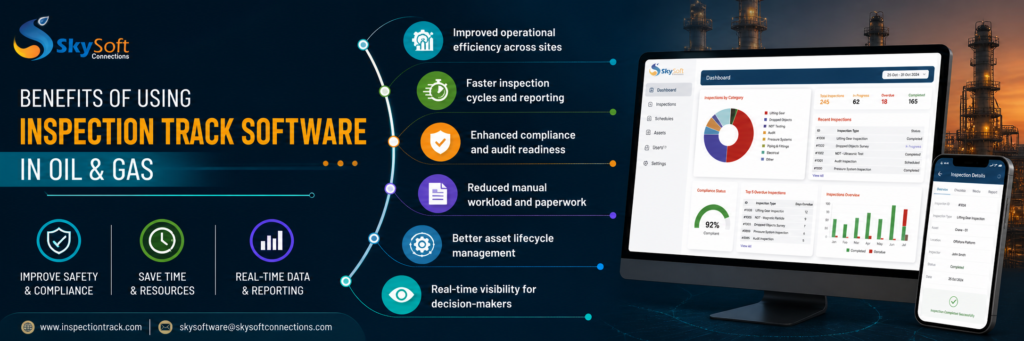
Moreover, these benefits collectively lead to cost savings and improved safety performance.
Data plays a crucial role in modern inspection strategies. However, raw data alone is not enough. It must be structured, analyzed, and converted into actionable insights.
With Inspection Track Software, organizations can:
In addition, dashboards and analytics tools help managers understand performance across all sites instantly.
When inspections are managed across multiple sites without a unified system, inconsistencies naturally occur. Consequently, this leads to operational inefficiencies and increased risk exposure.
However, a unified system ensures:
Therefore, organizations can maintain both scalability and control simultaneously.
The future of inspection management is moving toward automation, AI integration, and predictive analytics.
Moreover, technologies such as IoT sensors and machine learning are expected to further enhance inspection accuracy and predictive capabilities.
As a result, companies that adopt smart systems early will gain a significant competitive advantage.
To summarize:
Therefore, adopting a smarter inspection approach is not just an upgrade it is a necessity for modern industrial operations.
In conclusion, managing inspections across multiple sites in the oil and gas industry requires more than traditional methods. Instead, it demands a structured, intelligent, and automated system that ensures consistency, compliance, and efficiency.
Ultimately, Inspection Track Software for oil and gas inspections industry empowers organizations to move from reactive inspection processes to proactive, data-driven decision-making.
Consequently, businesses can reduce risk, improve productivity, and achieve long-term operational excellence.
Read more : How Data-Driven Inspections Are Reshaping the Oil & Gas Industry
It refers to the process of planning, executing, and tracking inspections across multiple operational locations using a centralized or coordinated system to ensure consistency, safety, and compliance.
Inspection Track Software for oil and gas inspections industry helps digitize inspection workflows, automate reporting, and provide real-time visibility across all sites, improving accuracy and efficiency.
Manual methods often lead to delayed reporting, inconsistent data, and human errors. Additionally, they make it difficult to track assets and maintain compliance across multiple sites.
Key benefits include improved efficiency, faster reporting, better compliance tracking, reduced paperwork, and enhanced decision-making through centralized data.
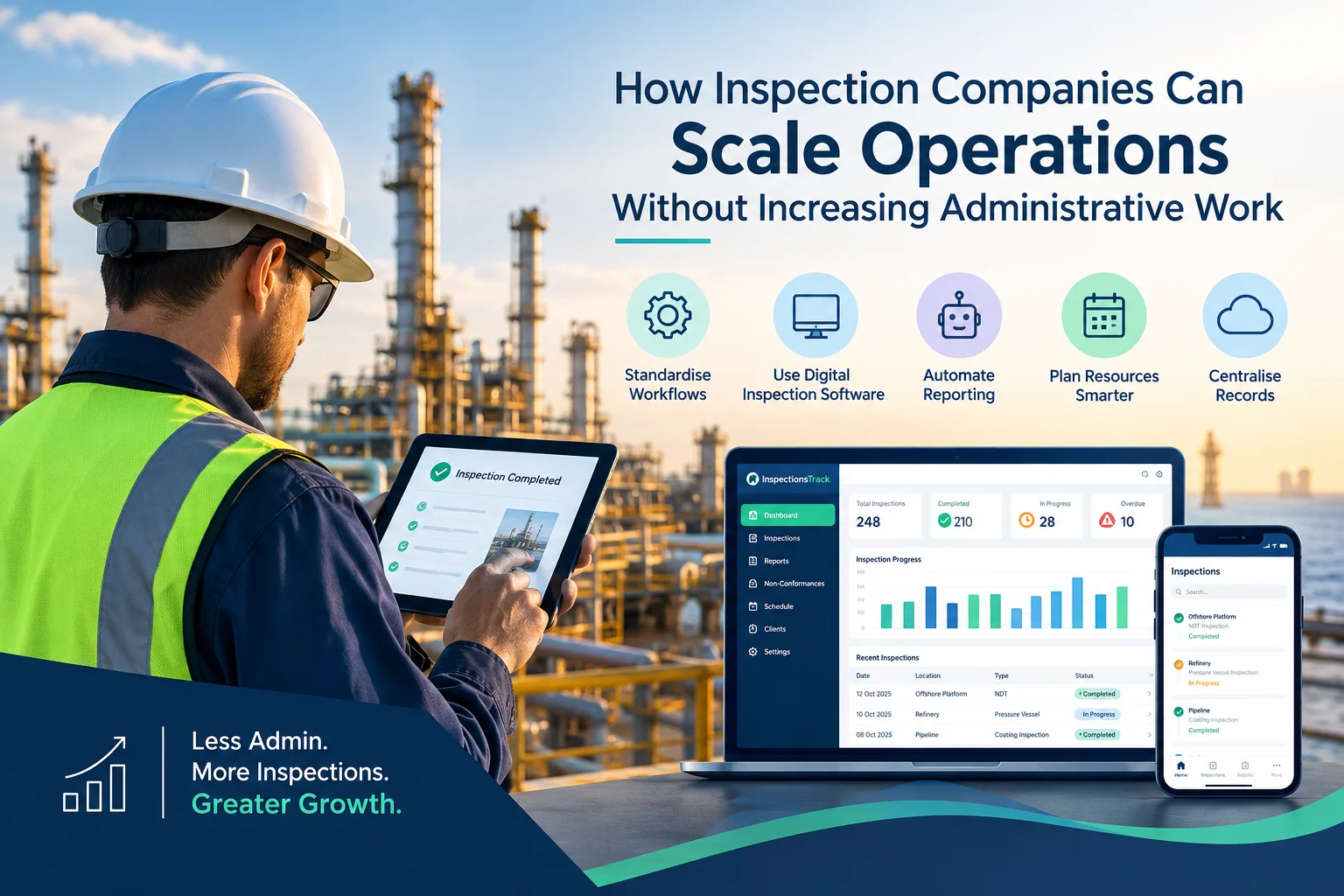
Inspection companies in the oil and gas industry face a common challenge: how to handle more inspections, manage larger projects, and meet client deadlines without increasing administrative workload. As businesses grow, inspection teams must manage…
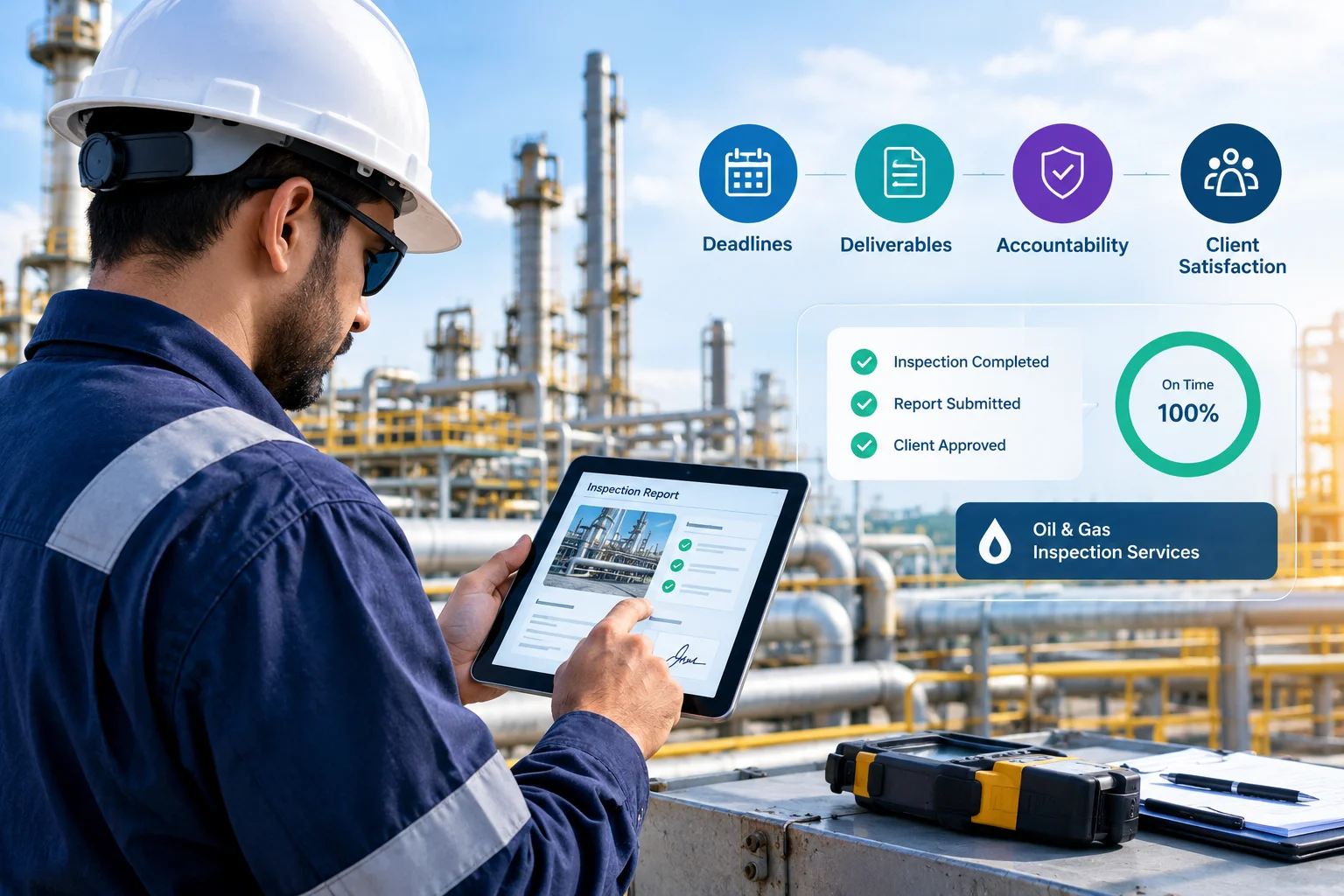
Meeting client Service Level Agreements (SLAs) is essential for inspection companies working in demanding industries such as oil and gas, energy, and industrial maintenance. Clients expect inspections to be completed on time, reports to be…


