
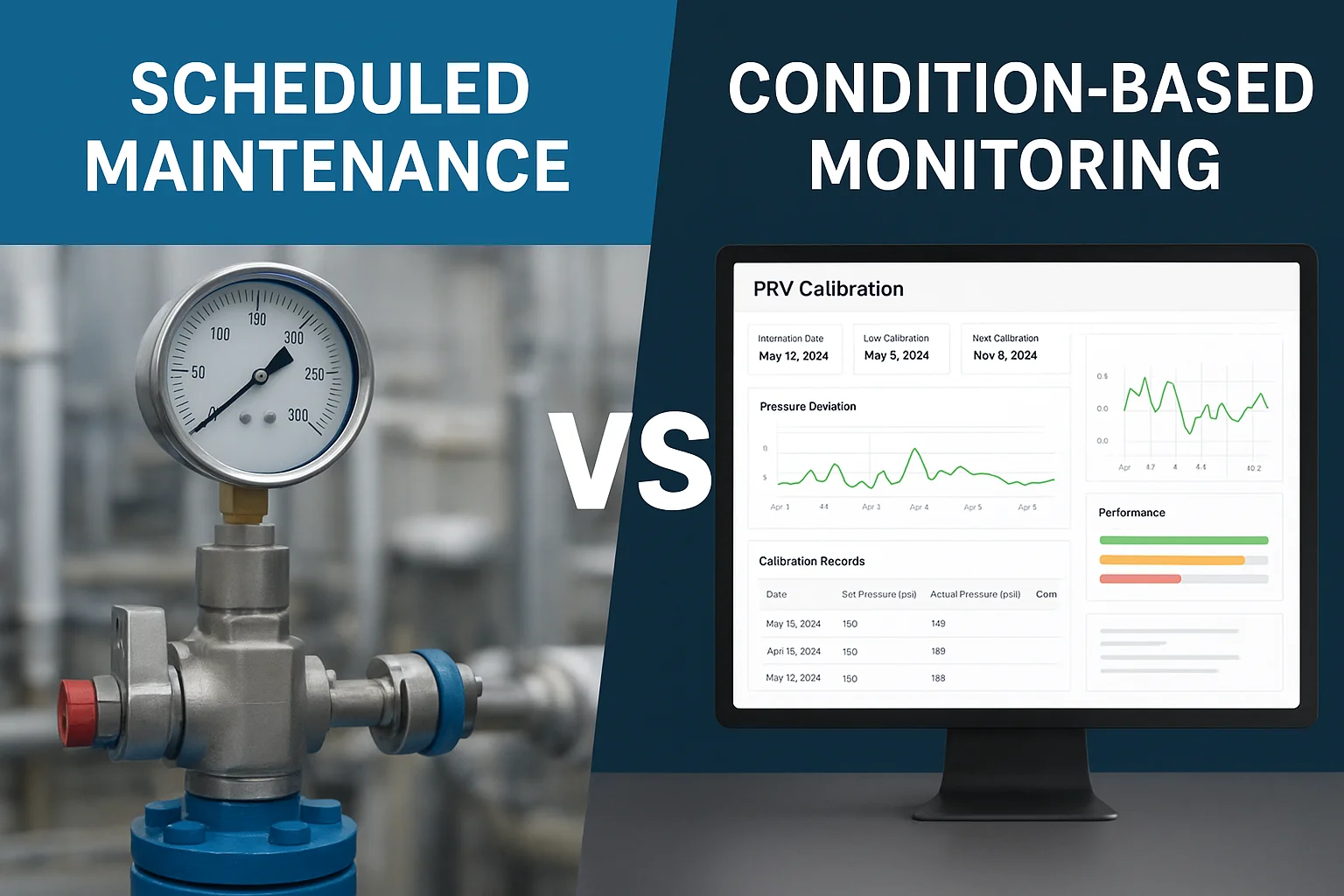
In the oil and gas industry, Pressure Relief Valves (PRVs) play a vital role in maintaining operational safety. These components act as the final line of defense against overpressure situations. However, ensuring their reliability depends heavily on one critical factor — calibration and maintenance.
Traditionally, companies relied on scheduled maintenance, a time-based approach. But with advancing technology and smarter systems, condition-based monitoring (CBM) has emerged as a more predictive and efficient method.
In this guide, we’ll compare Scheduled Maintenance vs. Condition-Based Monitoring and explore how modern digital tools like InspectionsTrack’s PRV Calibration Module are revolutionizing maintenance practices in the oil and gas sector.
Pressure Relief Valve (PRV) calibration ensures that valves open at the designated pressure levels to protect pipelines, vessels, and equipment from potential damage. Calibration involves:
Without accurate calibration, PRVs can either fail to open (risking explosions) or open too early (causing production loss).
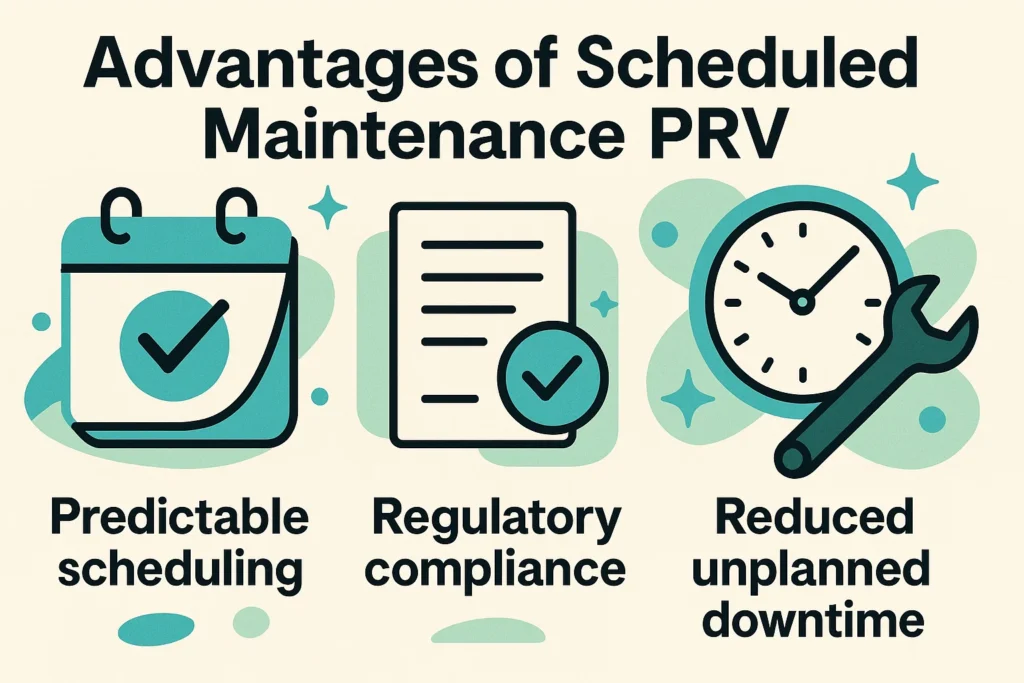
Scheduled maintenance is a time-based strategy where PRVs are serviced or calibrated at fixed intervals, regardless of their condition.
| Aspect | Description | Example |
|---|---|---|
| Frequency | Time-based (e.g., every 6 months) | Semi-annual PRV checks |
| Cost Impact | Higher due to unnecessary maintenance | Replacing working parts |
| Data Dependency | Minimal | Manual log sheets |
| Risk Level | Moderate | Hidden valve degradation possible |
Condition-Based Monitoring uses real-time data from sensors and digital systems to determine when a PRV actually needs maintenance or calibration.
| Aspect | Description | Example |
|---|---|---|
| Frequency | Based on valve condition | When pressure deviation exceeds threshold |
| Cost Impact | Lower in the long term | Preventive, not repetitive |
| Data Dependency | High (IoT, sensors, reports) | Real-time calibration data |
| Risk Level | Low | Issues identified early |
| Criteria | Scheduled Maintenance | Condition-Based Monitoring |
|---|---|---|
| Approach | Time-based | Data-driven |
| Efficiency | Moderate | High |
| Cost | Predictable but higher | Optimized over time |
| Failure Risk | Medium | Low |
| Technology Requirement | Basic | Advanced (IoT, analytics) |
| Best For | Smaller setups | Digitalized operations |
Regardless of the maintenance strategy, PRV calibration remains a non-negotiable safety measure. Accurate calibration ensures:
However, Condition-Based Monitoring offers a modern edge by enabling predictive calibration — anticipating issues before they occur.
InspectionsTrack provides a dedicated PRV Calibration and Pressure Gauge Module designed for the oil and gas inspection industry. This intelligent system simplifies maintenance management through:
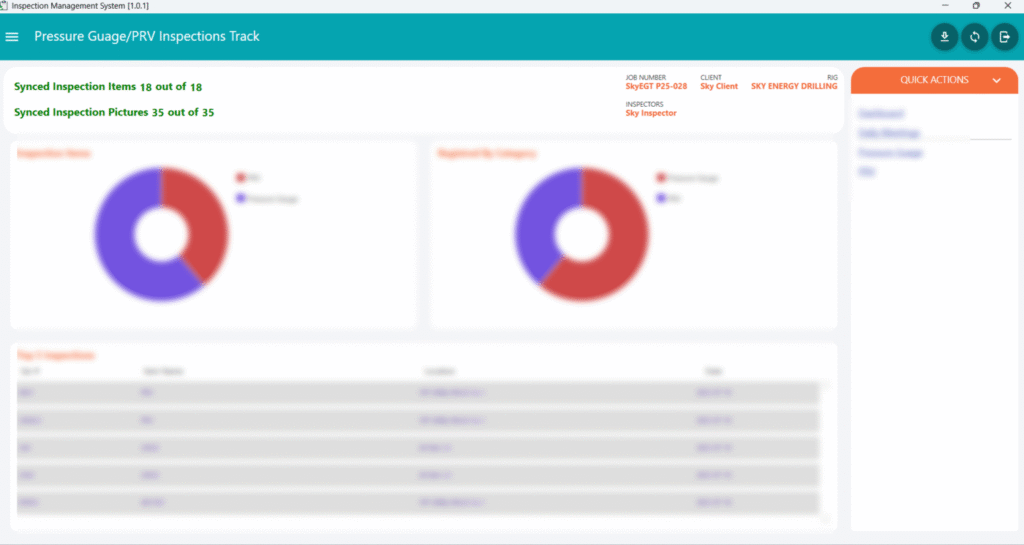
✅ Eliminate manual data entry and reduce human error.
✅ Improve safety compliance with real-time insights.
✅ Optimize maintenance resources and reduce costs.
✅ Enhance PRV reliability with data-driven calibration planning.
Your choice between Scheduled Maintenance and Condition-Based Monitoring depends on factors like asset criticality, budget, and digital readiness.
However, integrating both can offer the best of both worlds — a hybrid approach where regular checks complement data-based insights.
Start by digitizing your calibration processes with a reliable solution like InspectionsTrack. Over time, leverage data trends to transition toward predictive maintenance.
Empower your team with data-driven calibration management designed specifically for the oil and gas inspection industry.
➡️ Visit InspectionsTrack to learn how our PRV Calibration Module can streamline your maintenance workflows today.
In today’s competitive and safety-critical oil and gas environment, traditional maintenance methods are no longer enough. Condition-Based Monitoring, supported by digital tools like InspectionsTrack, helps organizations optimize performance, reduce downtime, and ensure PRV reliability with precision.
With the right strategy, you can move from reactive maintenance to predictive excellence, ensuring safety and operational success.
Readmore : pressure gauge calibration checklist
PRV calibration ensures safety by verifying that valves open at the correct set pressure, preventing equipment overpressure or premature releases.
Scheduled maintenance is time-based, while condition-based monitoring relies on real-time performance data to predict maintenance needs.
InspectionsTrack’s PRV Calibration Module automates scheduling, records digital test data, and provides real-time monitoring for compliance and accuracy.
Yes, a hybrid model combining scheduled maintenance and CBM provides the most reliable and cost-efficient approach for PRV calibration.

Inspection companies in the oil and gas industry face a common challenge: how to handle more inspections, manage larger projects, and meet client deadlines without increasing administrative workload. As businesses grow, inspection teams must manage…

Meeting client Service Level Agreements (SLAs) is essential for inspection companies working in demanding industries such as oil and gas, energy, and industrial maintenance. Clients expect inspections to be completed on time, reports to be…


