
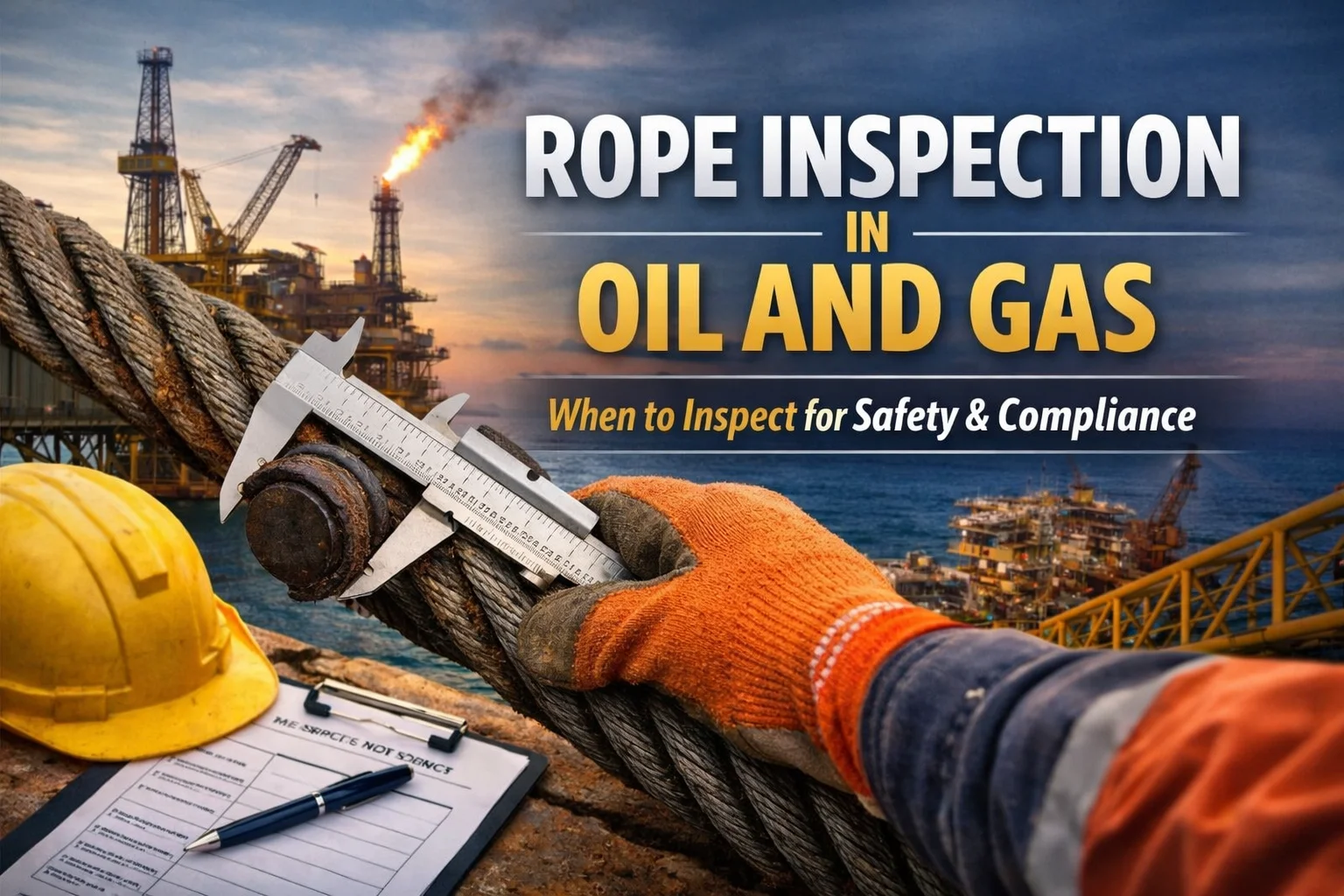
In the oil and gas industry, rope integrity is not just a maintenance concern—it is a critical safety requirement. Whether it is wire ropes on drilling rigs, hoisting systems, or lifting slings, timely inspection directly prevents equipment failure, downtime, and serious workplace accidents.
Therefore, understanding when rope should be inspected in oil and gas operations is essential for compliance, operational safety, and asset longevity.
To begin with, ropes in oil and gas environments are exposed to extreme stress. They operate under heavy loads, harsh weather, corrosion, and continuous mechanical friction. Consequently, they degrade faster than in most other industries.
Moreover, failure of a rope system can lead to:
In addition, regulatory bodies such as OSHA and API standards require strict inspection routines to ensure safe lifting and rigging operations.
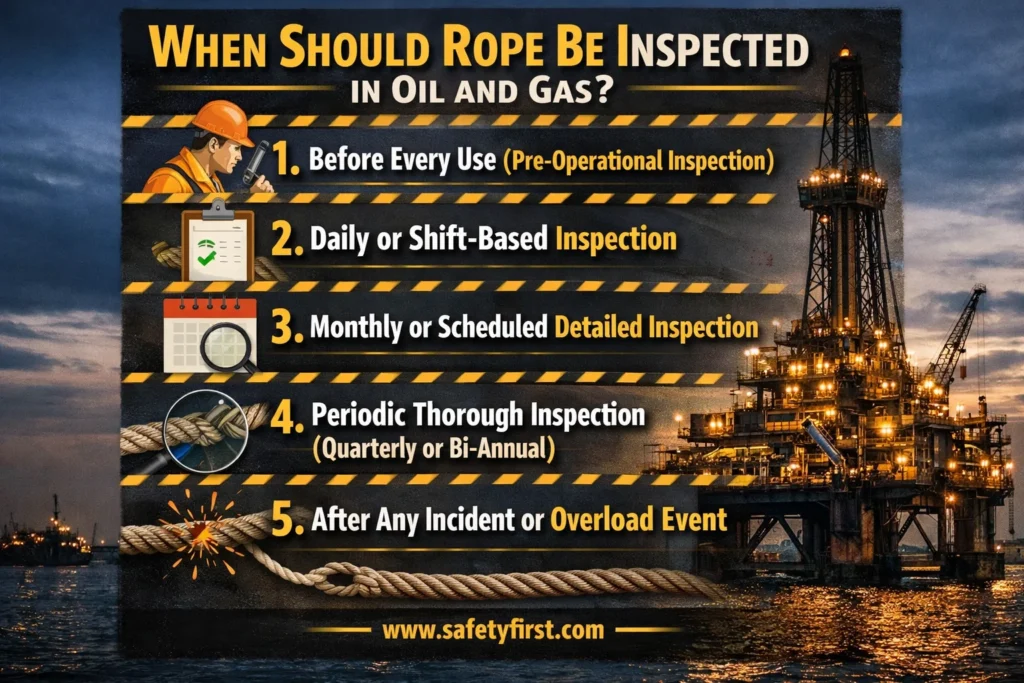
Rope inspection should not be treated as a one-time activity. Instead, it must follow a structured schedule based on usage, risk level, and regulatory requirements.
Firstly, ropes must be visually checked before each shift or use.
This includes:
Although this is a quick inspection, it is the first line of defense against failure.
In high-risk oil and gas environments, ropes used continuously should be inspected:
Furthermore, operators should ensure:
In addition, a more detailed inspection must be conducted monthly or as per site safety policy.
This inspection includes:
As a result, early-stage damage can be identified before escalation.
Most oil and gas safety standards require a competent person inspection at defined intervals.
Typically, this includes:
Furthermore, inspection records must be documented for compliance audits.
Equally important, ropes must be inspected immediately after:
In such cases, rope integrity may be compromised even if no visible damage exists.
To ensure consistency, inspectors follow defined criteria such as:
| Inspection Type | Frequency | Purpose |
|---|---|---|
| Pre-use inspection | Before every use | Detect immediate hazards |
| Shift inspection | Daily/Shift-based | Ensure operational safety |
| Detailed inspection | Monthly | Identify early wear |
| Thorough inspection | Quarterly/Bi-annual | Compliance & certification |
| Post-incident inspection | As needed | Damage assessment |
In oil and gas operations, rope inspection aligns with multiple safety frameworks such as:
Therefore, organizations must ensure inspections are not only performed but also properly recorded.
Despite strict regulations, many oil and gas companies face challenges such as:
As a result, operational risks significantly increase.
To overcome these challenges, digital solutions like Inspectionstrack Software for Oil and Gas Inspection Management provide a centralized and automated approach.
Moreover, inspection teams can access data from mobile devices, ensuring field-level accuracy and faster reporting.
In addition, digital systems significantly reduce human error and improve decision-making. Therefore, companies can:
Ultimately, Inspectionstrack helps transform rope inspection from a manual task into a proactive safety system.
To further improve safety and compliance, organizations should:
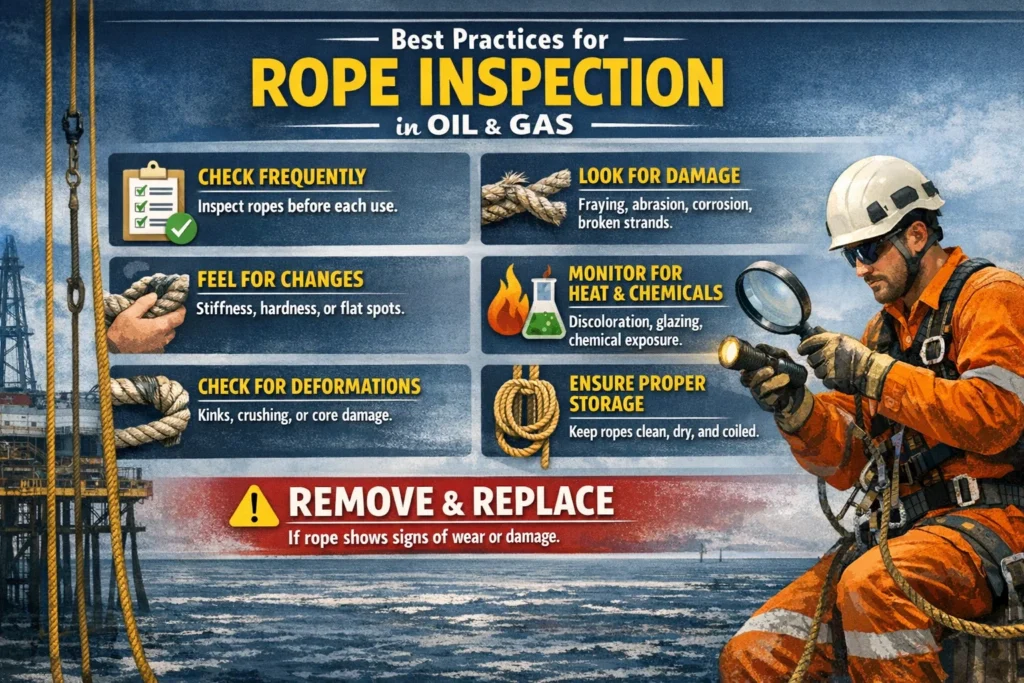
Additionally, inspections should always be documented digitally for traceability
In conclusion, rope inspection in oil and gas operations must be continuous, structured, and compliant with industry standards. From pre-use checks to periodic detailed inspections, every stage plays a crucial role in preventing failures.
However, relying on manual systems alone is no longer sufficient. Therefore, adopting solutions like Inspectionstrack Software ensures smarter inspections, better compliance, and improved operational safety.
Ultimately, when rope inspections are managed properly, companies not only meet regulations but also protect lives, assets, and productivity.
Read more : osha psm compliance audits for oil and gas facilities
Rope should be inspected at multiple stages to ensure safety and compliance. First, a visual check should be done before every use. In addition, daily or shift-based inspections are recommended for active equipment. Furthermore, detailed inspections are usually carried out monthly, while thorough inspections are scheduled quarterly or bi-annually depending on site regulations and usage intensity.
During inspection, several warning signs indicate rope deterioration. These include broken or frayed wires, corrosion or rust, diameter reduction, kinks, birdcaging, and core exposure. Moreover, heat damage, chemical exposure, or deformation after overload events are critical indicators that the rope may no longer be safe for use.
Digital rope inspection systems, such as Inspectionstrack Software, improve safety and compliance by eliminating manual errors and improving traceability. In addition, they automate inspection schedules, provide real-time reporting, and store complete inspection histories. As a result, companies can ensure better regulatory compliance, reduce downtime, and enhance overall operational safety.
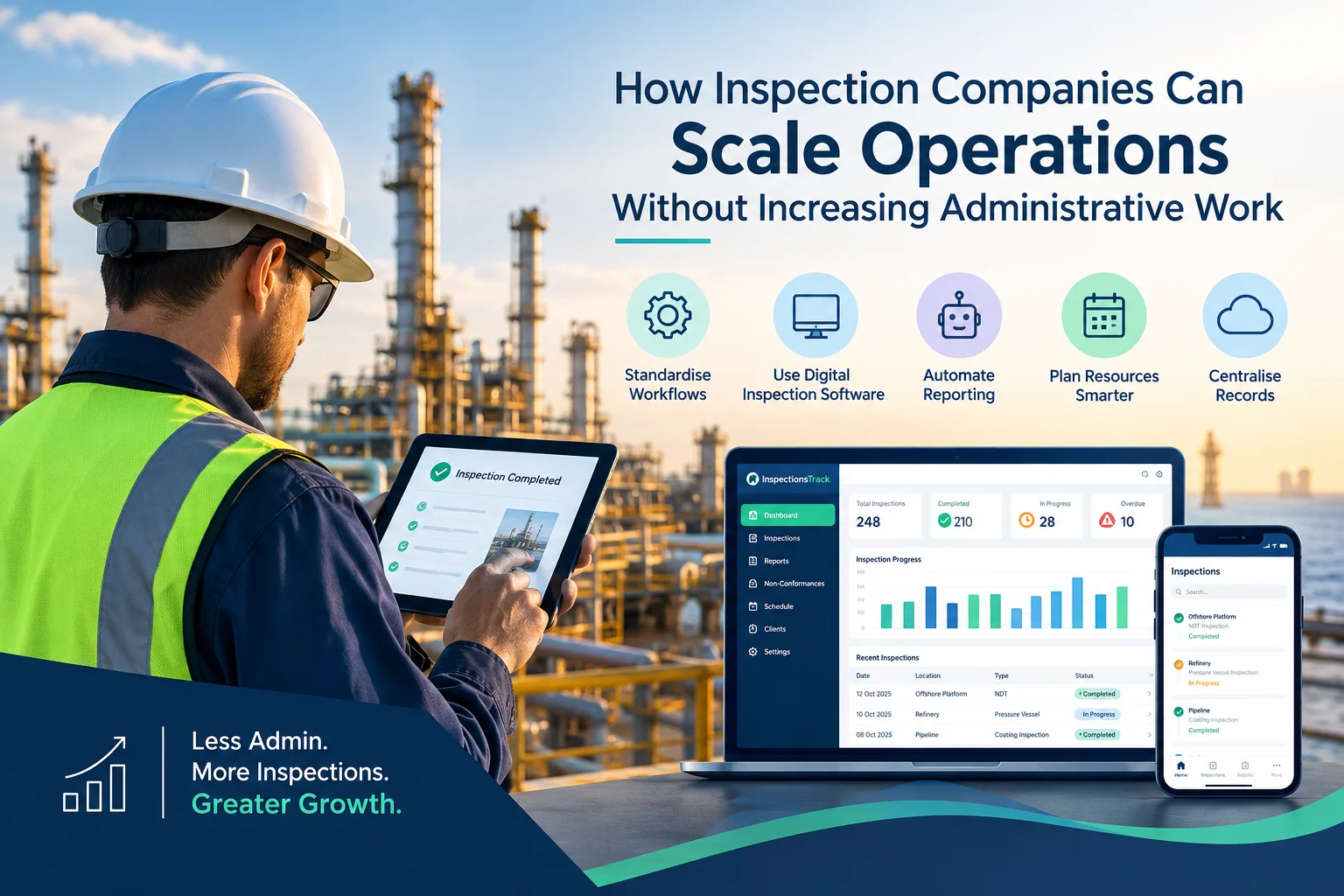
Inspection companies in the oil and gas industry face a common challenge: how to handle more inspections, manage larger projects, and meet client deadlines without increasing administrative workload. As businesses grow, inspection teams must manage…

Meeting client Service Level Agreements (SLAs) is essential for inspection companies working in demanding industries such as oil and gas, energy, and industrial maintenance. Clients expect inspections to be completed on time, reports to be…


