
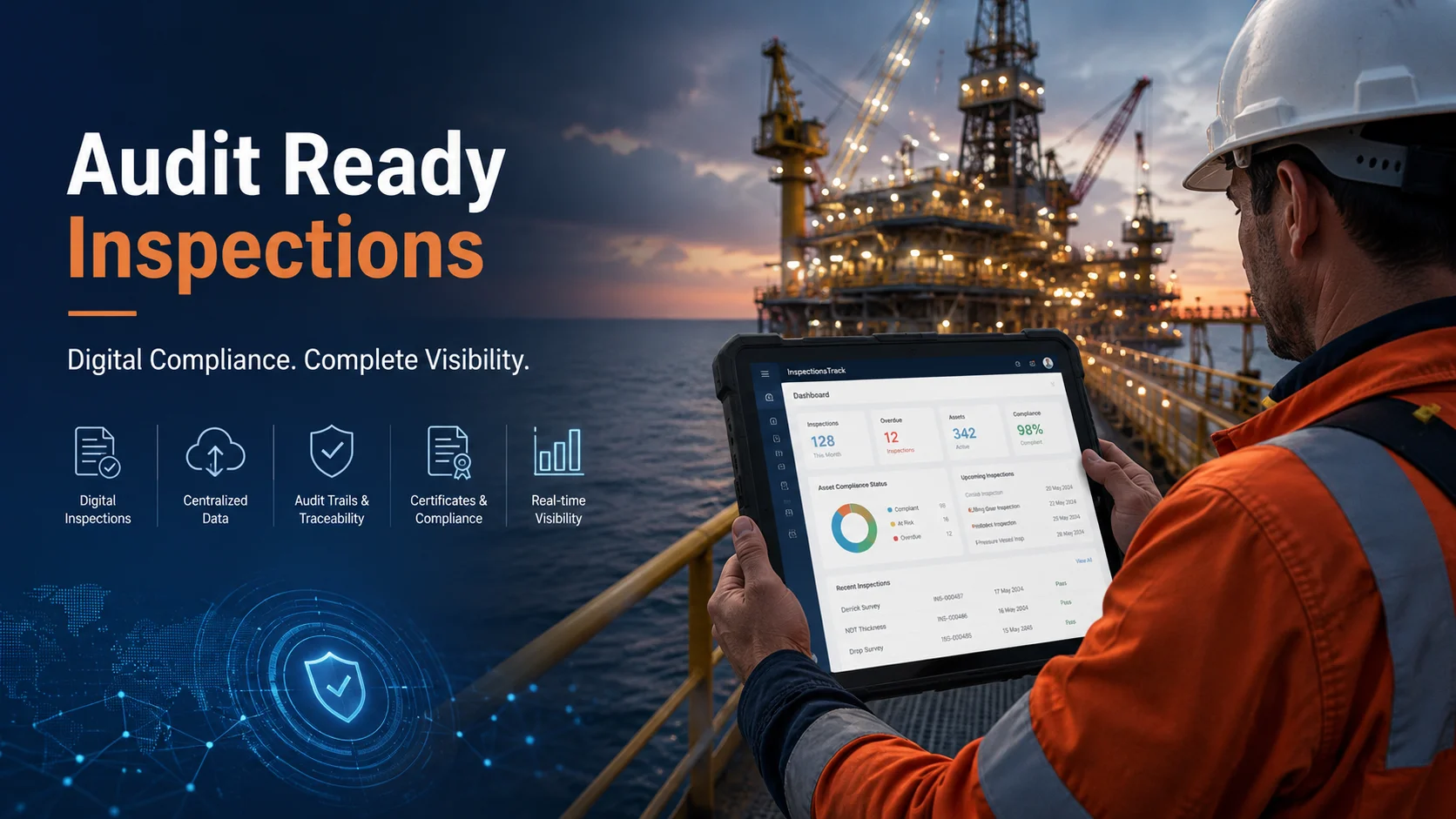
For many inspection companies, audit preparation begins only when a client, regulator, or certification body requests evidence.
Unfortunately, that approach often exposes serious operational weaknesses.
Missing inspection records, incomplete certificates, outdated asset histories, inconsistent reporting formats, and disconnected spreadsheets can quickly turn a routine audit into a costly exercise.
In the oil and gas industry, where inspection records support asset integrity, regulatory compliance, safety management systems, and client contracts, poor audit readiness creates significant business risk.
The most successful inspection companies do not prepare for audits.
Instead, they operate in a constant state of audit readiness.
This shift is one of the primary reasons inspection businesses are adopting digital inspection management platforms such as the InspectionsTrack Software Suite by Sky Soft Connections.
Inspection organizations manage large volumes of operational data across multiple assets, clients, locations, and inspection disciplines.
A typical inspection company may handle:
Each activity generates:
When these records exist across spreadsheets, emails, paper forms, and local storage systems, audit preparation becomes difficult and time-consuming.
Inspectors may store reports locally, making retrieval difficult months later.
Different inspectors often use different report templates.
Auditors frequently request evidence showing who performed inspections, when inspections occurred, and what findings were recorded.
Multiple report versions create uncertainty about which document is the official record.
Finding historical certificates can take hours or even days.
As operations grow, these challenges become increasingly difficult to manage.
Audit readiness means maintaining complete, accurate, accessible, and verifiable inspection records at all times.
An audit-ready inspection company can immediately provide:
Most importantly, every record must be traceable.
Auditors expect evidence, not assumptions.
Digital inspection software centralizes inspection operations into a controlled environment where records become searchable, standardized, and accessible.
Instead of chasing paperwork, organizations can retrieve information instantly.
The InspectionsTrack Software Suite was specifically designed to help oil and gas inspection companies maintain inspection integrity while improving compliance visibility.
One of the biggest audit challenges is locating information.
Digital inspection platforms store all records in a single system.
This includes:
As a result, auditors can receive requested documentation within minutes rather than days.
Inspection coordinators spend less time searching for records and more time managing operations.
Auditors look for consistency.
When every inspector uses a different reporting style, audit findings become more likely.
Digital inspection software standardizes:
Consequently, inspection outputs become uniform across projects and inspectors.
Traceability is a critical audit requirement.
Every inspection record should answer:
The InspectionsTrack Software Suite automatically maintains inspection histories and activity records.
This creates a transparent audit trail for every inspection event.
Document control remains one of the most frequent audit findings across industrial operations.
Digital systems eliminate common issues such as:
Version-controlled documents improve confidence in inspection records.
Many organizations discover compliance gaps only during audits.
Digital inspection platforms provide visibility before audits occur.
Managers can monitor:
Therefore, compliance issues can be addressed proactively.
| Area | Traditional Manual Process | Digital Inspection Software |
|---|---|---|
| Report Storage | Multiple locations | Centralized repository |
| Certificate Retrieval | Hours or days | Instant access |
| Audit Evidence Collection | Manual compilation | Automated retrieval |
| Inspection Traceability | Limited | Full audit trail |
| Compliance Visibility | Reactive | Real-time |
| Corrective Action Tracking | Spreadsheet-based | Automated |
| Document Version Control | Difficult | Built-in |
| Audit Preparation Time | High | Significantly reduced |
This comparison highlights why inspection companies increasingly move toward digital inspection management systems.
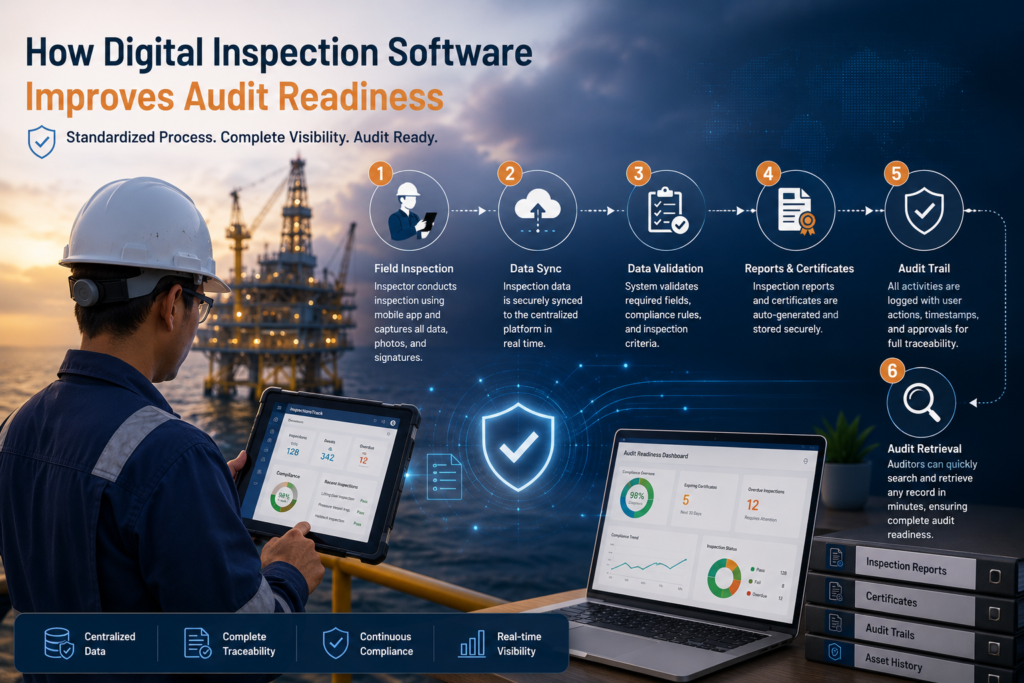
The inspector uses a mobile device to perform inspections onsite.
Data captured includes:
Inspection data automatically uploads to the inspection management system.
No manual re-entry is required.
The platform verifies:
This improves record accuracy.
The system generates:
Documents become immediately available.
Every action is logged.
The system records:
When auditors request evidence, users retrieve records through centralized search tools.
The process takes minutes instead of days.
When evaluating inspection software, companies should prioritize features that directly support compliance management.
Important capabilities include:
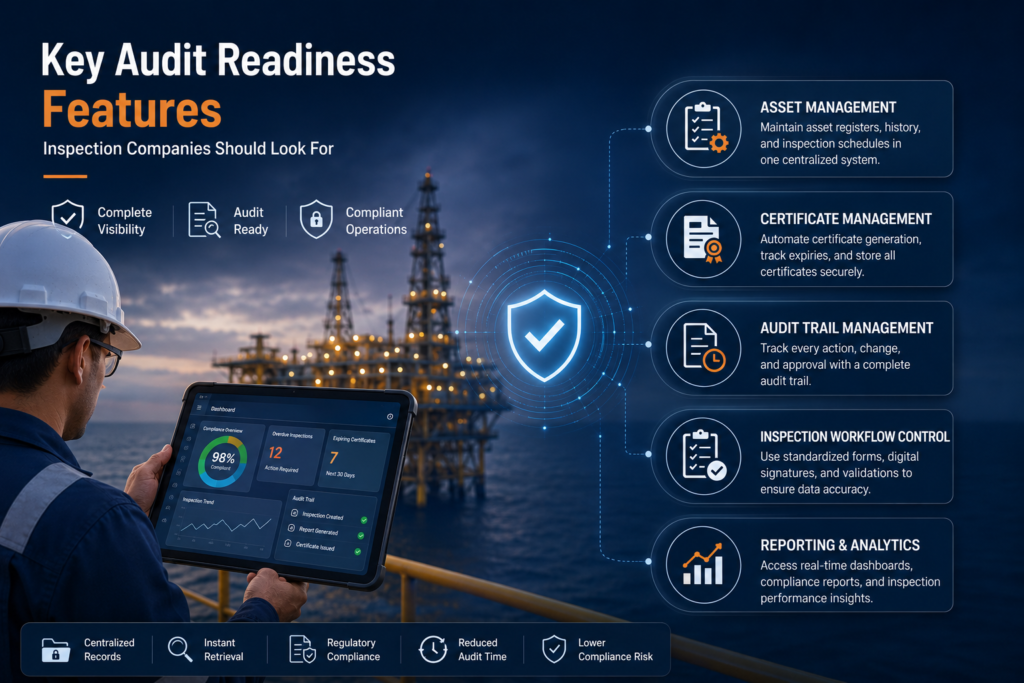
The InspectionsTrack Software Suite combines these capabilities into a single platform specifically designed for inspection operations within the oil and gas sector.
Many companies view audit readiness solely as a compliance objective.
However, operational benefits are often more significant.
Organizations that maintain digital inspection records typically experience:
As a result, audit readiness becomes a competitive advantage rather than a regulatory obligation.
The complexity of modern inspection operations continues to increase.
Clients expect:
Meanwhile, regulatory requirements continue to expand.
Manual systems struggle to meet these expectations efficiently.
Digital inspection software provides the structure, visibility, and traceability required to support both operational efficiency and audit compliance.
Solutions such as the InspectionsTrack Software Suite by Sky Soft Connections help inspection companies establish standardized processes while maintaining complete inspection visibility across assets, projects, and clients.
Audit readiness should not begin when an auditor arrives.
It should be built into daily inspection operations.
Inspection companies that rely on paper records, spreadsheets, and disconnected reporting processes often face unnecessary compliance risks and administrative burdens.
By implementing digital inspection software, organizations can centralize records, standardize workflows, improve traceability, and maintain continuous audit readiness.
For oil and gas inspection businesses managing complex inspection programs, platforms like the InspectionsTrack Software Suite provide the operational foundation needed to support compliance, efficiency, and long-term growth.
Read more : Inspection Failure Scenarios in Oil and Gas
Digital inspection software centralizes inspection records, creates audit trails, standardizes reporting, and enables instant retrieval of compliance documentation.
Auditors commonly request inspection reports, certificates, corrective action records, asset histories, inspector qualifications, and compliance evidence.
Traceability allows organizations to demonstrate who performed inspections, when inspections occurred, what findings were recorded, and how corrective actions were managed.
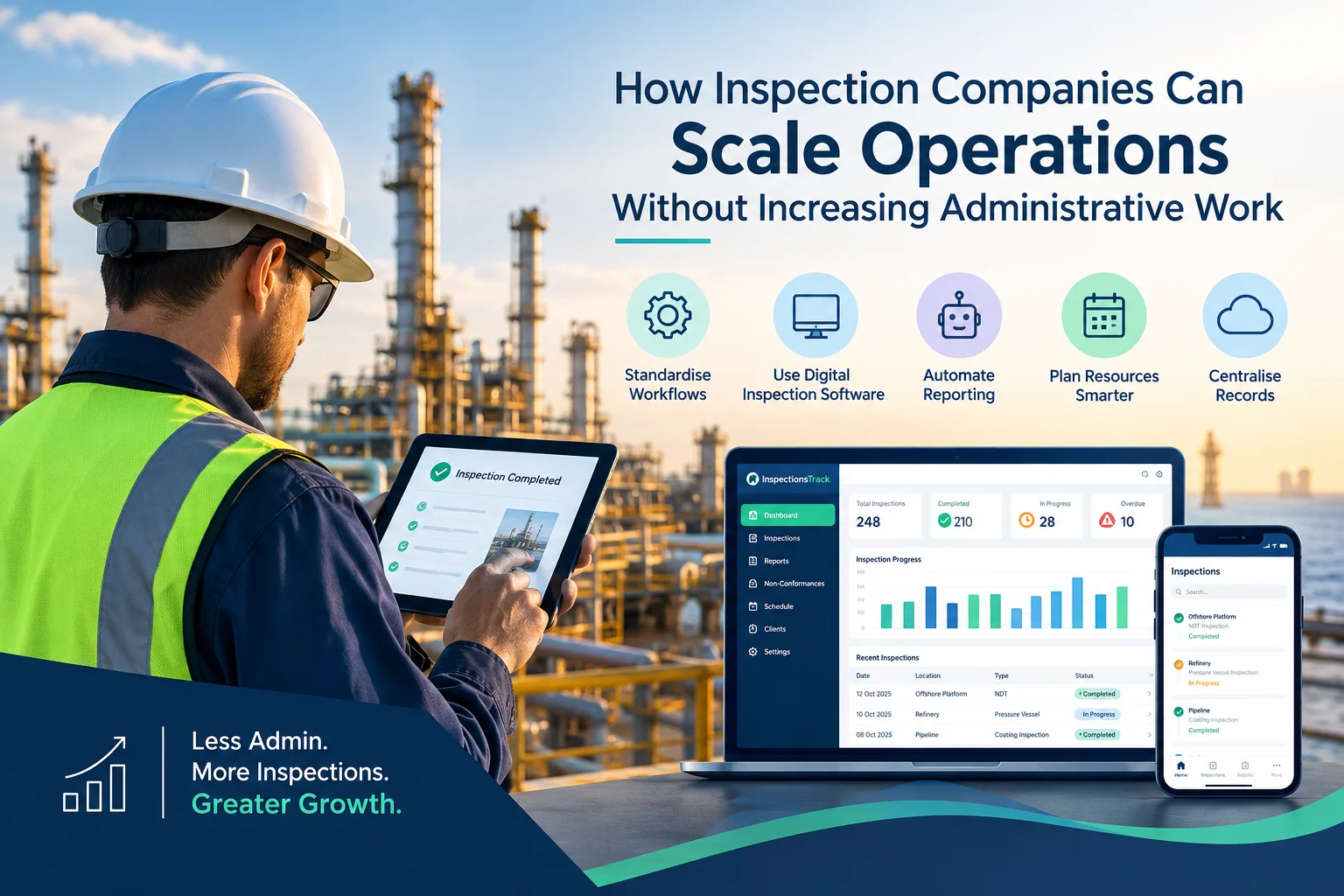
Inspection companies in the oil and gas industry face a common challenge: how to handle more inspections, manage larger projects, and meet client deadlines without increasing administrative workload. As businesses grow, inspection teams must manage…
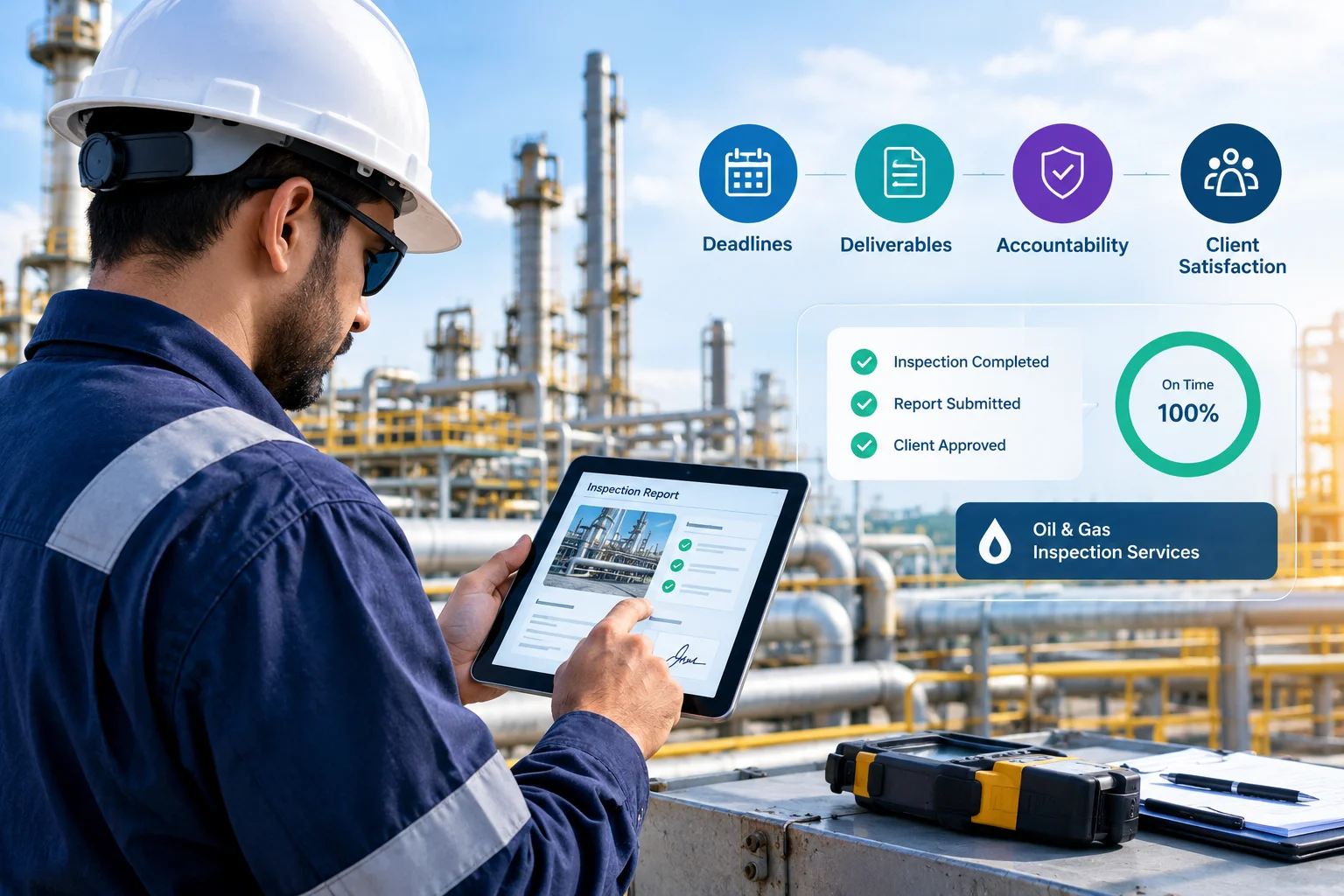
Meeting client Service Level Agreements (SLAs) is essential for inspection companies working in demanding industries such as oil and gas, energy, and industrial maintenance. Clients expect inspections to be completed on time, reports to be…


