
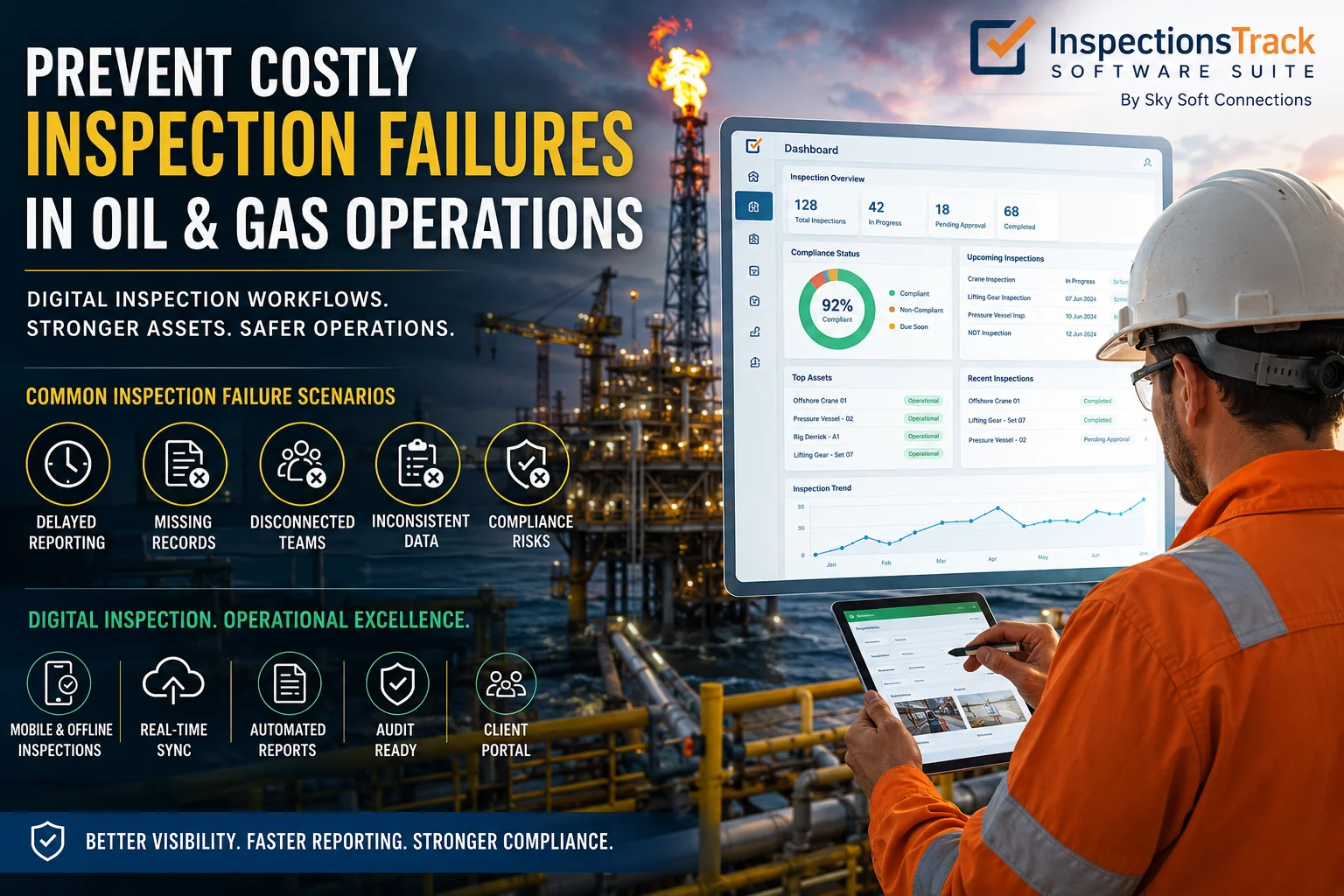
Inspection failures in oil and gas operations rarely happen because inspections are skipped entirely. Most failures occur because inspection workflows become fragmented, delayed, inconsistent, or disconnected from operational visibility.
In many offshore and industrial environments, inspection teams still manage critical inspection activities through spreadsheets, paper forms, disconnected systems, emails, and manually generated reports. As a result, companies struggle to maintain real-time visibility across assets, certifications, compliance records, and inspection status updates.
When inspection failures occur, the operational consequences can escalate quickly:
This is exactly why many oil and gas inspection companies are now shifting toward centralized digital inspection management platforms like the InspectionsTrack Software Suite by Sky Soft Connections.
Oil and gas inspections involve multiple operational layers. Inspection teams often manage lifting equipment, derricks, cranes, pressure systems, pipelines, tanks, drill pipes, and offshore assets simultaneously across different locations.
However, many organizations still rely on disconnected operational processes.
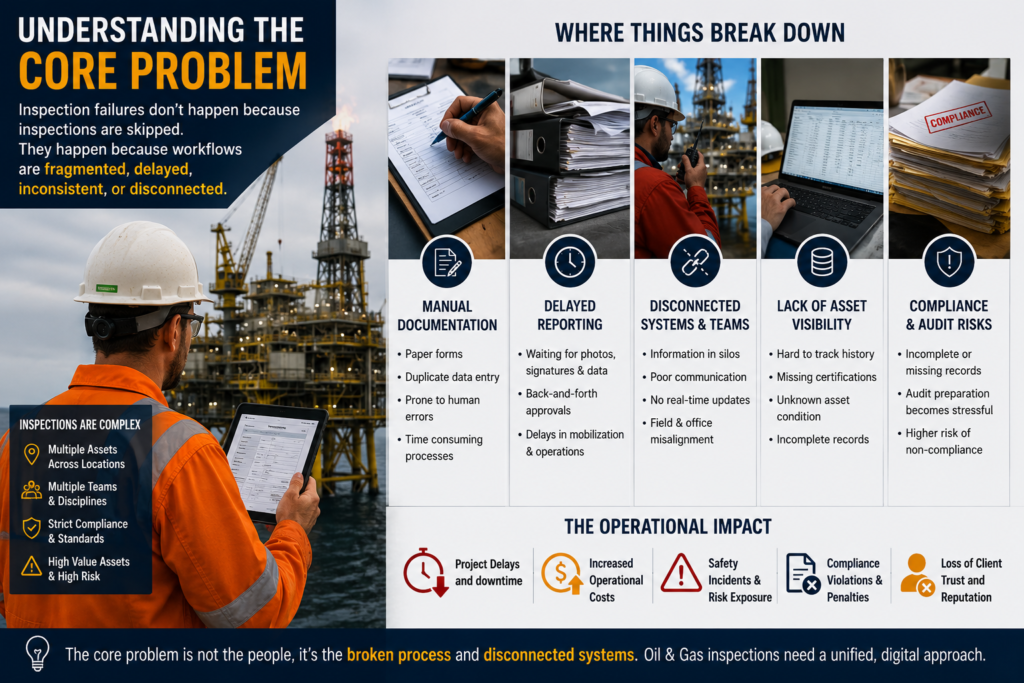
Field inspectors frequently complete inspection forms manually before office teams later re-enter the same information into reporting systems. Consequently, this creates delays and increases the risk of data entry errors.
Inspection reports often remain pending because engineers wait for photographs, signatures, approvals, or supporting documentation from multiple departments.
In offshore environments, even small reporting delays can affect vessel schedules, mobilization timelines, and client approvals.
Many companies cannot instantly verify:
As a result, inspection coordinators spend valuable time searching through spreadsheets and email threads.
Field inspectors may identify critical defects onsite. However, if reporting workflows remain manual, office teams may not receive that information quickly enough to respond operationally.
This delay can directly impact operational safety.
Oil and gas companies must maintain inspection traceability for regulatory audits, client reviews, and operational verification.
Unfortunately, paper-based systems often make audit preparation slow and stressful.
Consider an offshore lifting gear inspection project involving multiple cranes across several rigs.
If inspectors use paper forms:
Now imagine one failed lifting component remains undocumented because a paper form was misplaced. The operational and compliance consequences can become severe very quickly.
Oil and gas inspection companies frequently encounter the following operational problems:
These challenges become even more difficult during offshore operations where connectivity remains limited.
| Operational Issue | Business Impact |
|---|---|
| Delayed inspection reports | Project delays and slower approvals |
| Missing asset records | Compliance and audit risks |
| Manual reporting workflows | Increased operational costs |
| Disconnected inspection teams | Communication failures |
| Paper-based inspections | Data loss and reporting inconsistencies |
| Delayed approvals | Mobilization delays |
| Limited asset visibility | Reduced operational control |
| Inconsistent inspection formats | Client dissatisfaction |
| Slow certificate generation | Delayed operational clearance |
| Reactive maintenance decisions | Increased equipment failure risk |
Over time, these operational inefficiencies reduce productivity, increase operational exposure, and impact client confidence.
The InspectionsTrack Software Suite by Sky Soft Connections centralizes inspection operations into a single digital ecosystem designed specifically for oil and gas inspection workflows.
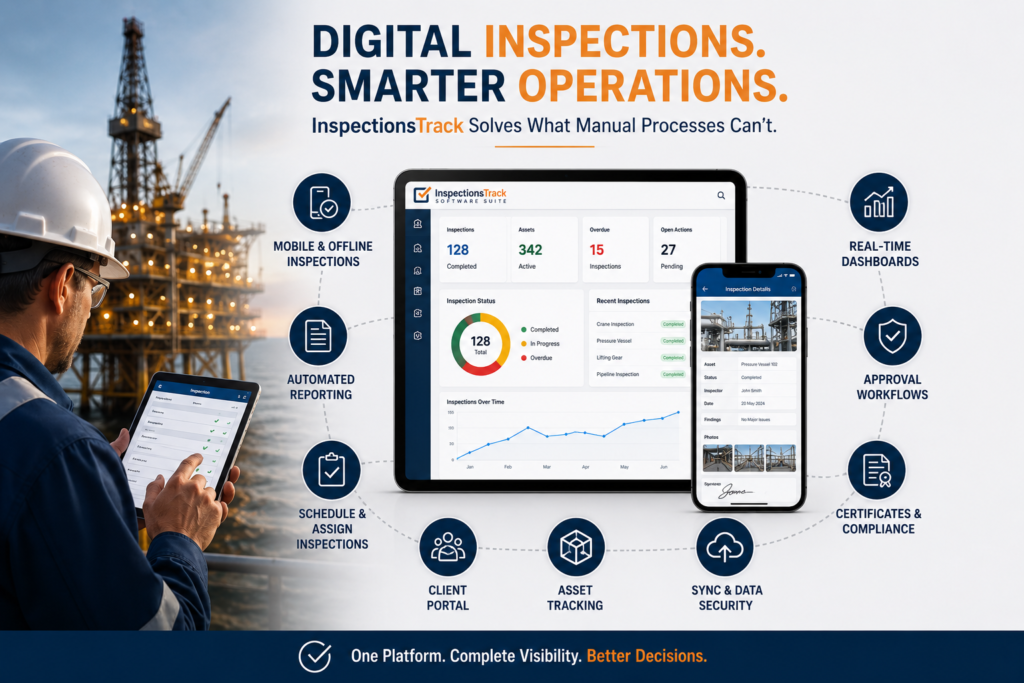
Instead of relying on disconnected spreadsheets and manual reporting, inspection teams can manage the complete inspection lifecycle digitally.
Inspectors can complete inspections directly from mobile devices onsite, even without internet connectivity.
Once connectivity becomes available, the system automatically synchronizes data to the centralized platform.
This capability is especially important for:
Inspection data flows directly into reporting templates automatically. Consequently, companies reduce manual reporting workloads significantly.
Operational teams can:
InspectionsTrack enables companies to maintain complete asset visibility from a centralized dashboard.
Teams can track:
Inspection managers can digitally review and approve reports before releasing them to clients.
This process improves:
Clients can securely access inspection reports, certificates, and operational records through centralized portals.
As a result, communication becomes faster and more transparent.
Digital inspection systems simplify audit preparation significantly because inspection records remain centralized, searchable, and traceable.
This reduces compliance stress during:
Inspection coordinators create mobilization plans, assign inspectors, allocate equipment, and schedule inspections digitally.
Inspectors complete inspections onsite using mobile devices while capturing:
Inspection data synchronizes automatically to the centralized platform whenever internet connectivity becomes available.
Supervisors review inspection findings, verify defects, and approve inspection results digitally.
The system generates certificates and inspection reports automatically using predefined templates.
Clients access reports and certificates through secure portals without waiting for manual email distribution.
All inspection history remains attached to the asset record for future reference and operational analysis.
Oil and gas companies can reduce inspection failures significantly by following these operational best practices:
Additionally, companies should regularly review operational workflows to identify reporting bottlenecks before they impact field operations.
The oil and gas industry is rapidly moving toward AI-assisted inspection operations because operational complexity continues increasing.
AI-powered inspection systems can help organizations:
Moreover, AI-assisted reporting enables faster analysis of large inspection datasets across multiple assets and locations.
As inspection volumes grow, manual operational oversight becomes increasingly difficult without intelligent automation.
Inspection companies no longer want isolated systems for reporting, scheduling, certification management, mobilization planning, and asset tracking.
Instead, organizations prefer centralized platforms that connect operational workflows into one environment.
Centralized inspection platforms provide:
Consequently, digital inspection transformation is becoming less of a competitive advantage and more of an operational requirement.
Inspection failure scenarios in oil and gas operations often begin with small workflow inefficiencies. However, over time, delayed reporting, disconnected systems, poor asset visibility, and manual processes can create major operational risks.
That is why many inspection companies are investing in digital inspection management platforms like the InspectionsTrack Software Suite by Sky Soft Connections.
By centralizing inspection workflows, improving operational visibility, automating reporting, and enabling real-time collaboration, companies can significantly reduce inspection failures while improving compliance, efficiency, and operational control.
Organizations looking to modernize inspection operations can start with a workflow assessment, operational consultation, or a live software demonstration to identify improvement opportunities across their inspection lifecycle.
Read more : How ADNOC Contractors Manage Derrick Inspection Reporting Delays
Inspection failures commonly result from delayed reporting, manual workflows, missing asset records, disconnected teams, and poor operational visibility.
Paper-based inspections increase the risk of lost records, delayed reporting, inconsistent documentation, and slower compliance verification.
Digital inspection software automates reporting, centralizes asset records, improves communication, and provides real-time operational visibility.
Centralized platforms improve audit readiness, reporting speed, asset tracking, compliance management, and operational transparency.
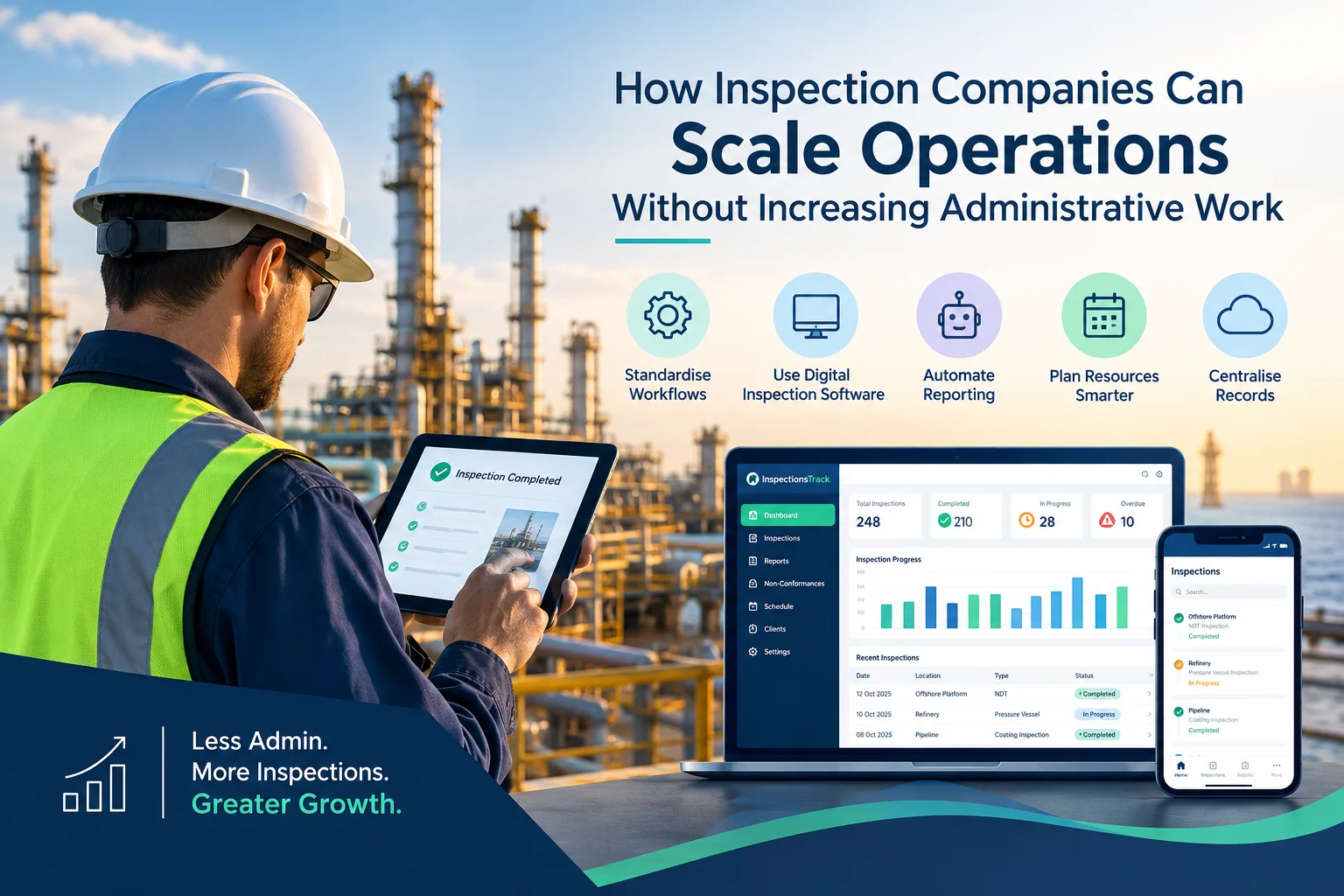
Inspection companies in the oil and gas industry face a common challenge: how to handle more inspections, manage larger projects, and meet client deadlines without increasing administrative workload. As businesses grow, inspection teams must manage…
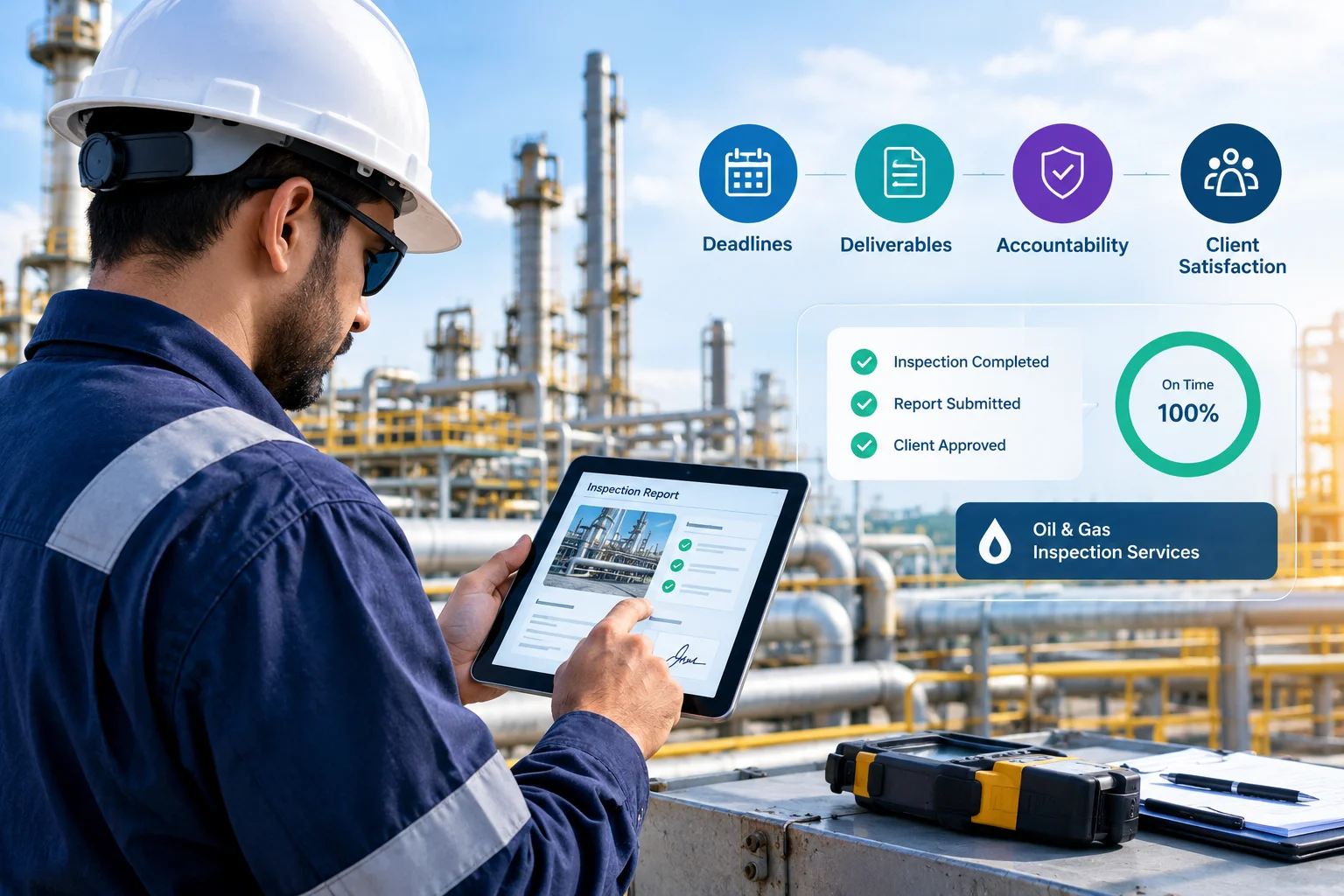
Meeting client Service Level Agreements (SLAs) is essential for inspection companies working in demanding industries such as oil and gas, energy, and industrial maintenance. Clients expect inspections to be completed on time, reports to be…


