
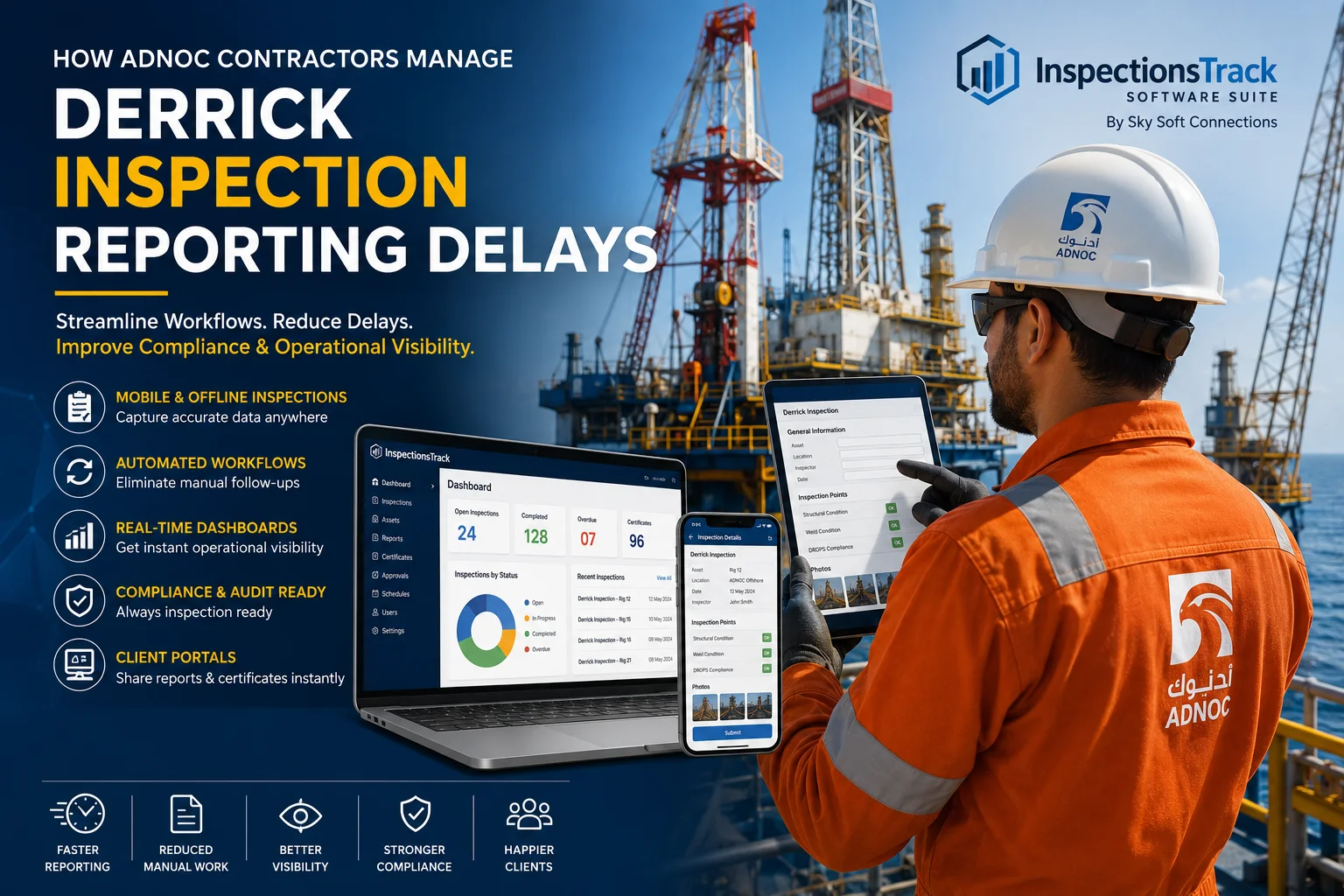
In offshore and onshore drilling operations, delayed derrick inspection reporting creates more than administrative inconvenience. It slows operational decisions, affects compliance readiness, increases audit pressure, and reduces asset visibility across critical equipment.
For ADNOC contractors operating in high pressure environments, inspection delays often happen because field inspections, reporting approvals, and client communication still depend on disconnected spreadsheets, paper forms, WhatsApp updates, and manually compiled reports.
As inspection workloads increase, many oil & gas inspection companies now move toward centralized digital inspection platforms like InspectionsTrack Software Suite by Sky Soft Connections to improve inspection visibility, accelerate reporting cycles, and maintain operational compliance across multiple assets and sites.
Derrick inspections involve complex operational workflows. Inspectors must capture structural observations, dropped object risks, equipment conditions, photographs, certificates, and compliance findings while working in demanding offshore or drilling environments.
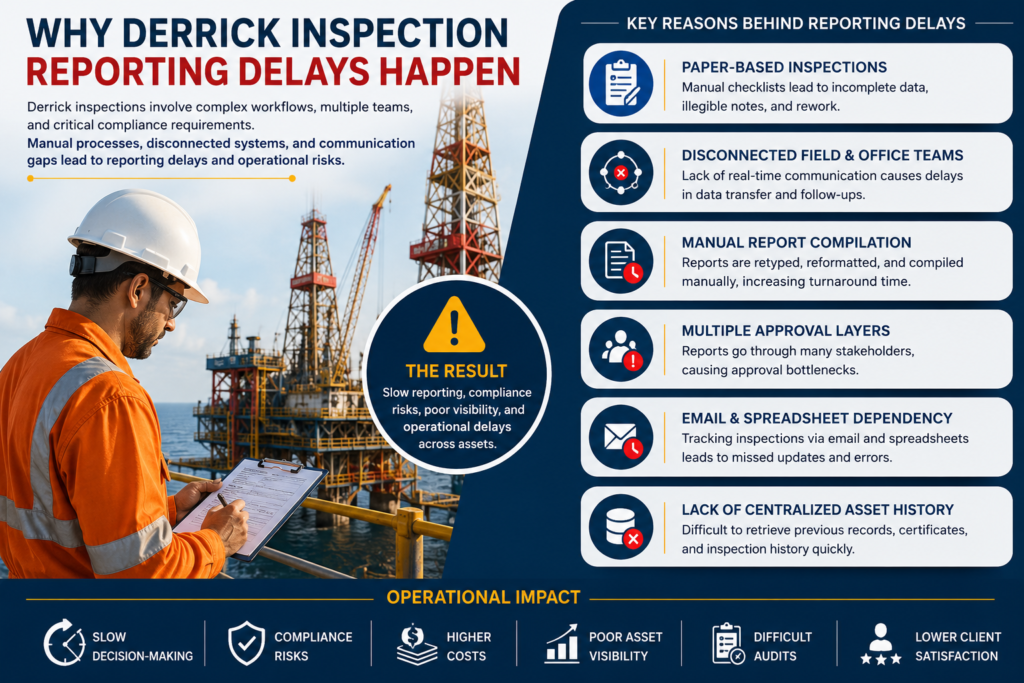
However, many contractors still rely on fragmented reporting methods.
Common operational bottlenecks include:
As a result, inspection coordinators often spend more time managing documentation than managing actual operations.
In many operations, field inspectors complete inspections onsite while office teams manually recreate reports later. Consequently, this creates:
Furthermore, when inspection data stays isolated in spreadsheets or local devices, operational teams struggle to track inspection status across multiple rigs or projects.
Delayed derrick inspection reporting can directly affect:
For ADNOC contractors, maintaining structured inspection records is critical because operators require accurate and traceable inspection histories.
Without centralized inspection management, companies risk losing operational visibility across assets and inspection cycles.
Oil & gas inspection companies commonly experience:
When contractors manage inspections across multiple rigs or offshore locations, the reporting process becomes even more difficult.
Common multi site issues include:
Therefore, many inspection managers now prioritize digital inspection transformation initiatives.
| Operational Issue | Business Impact |
|---|---|
| Delayed inspection reports | Project and operational delays |
| Missing inspection records | Compliance and audit risks |
| Paper based inspections | Slow reporting turnaround |
| Disconnected field teams | Communication gaps |
| Manual approvals | Reporting bottlenecks |
| No centralized asset history | Reduced asset visibility |
| Spreadsheet based tracking | Increased administrative workload |
| Delayed certificates | Client dissatisfaction |
| Inconsistent inspection formats | Reporting inaccuracies |
| Limited dashboards | Poor operational visibility |
Even small delays in inspection reporting can create larger operational disruptions.
For example:
As operations scale, these inefficiencies become increasingly expensive.
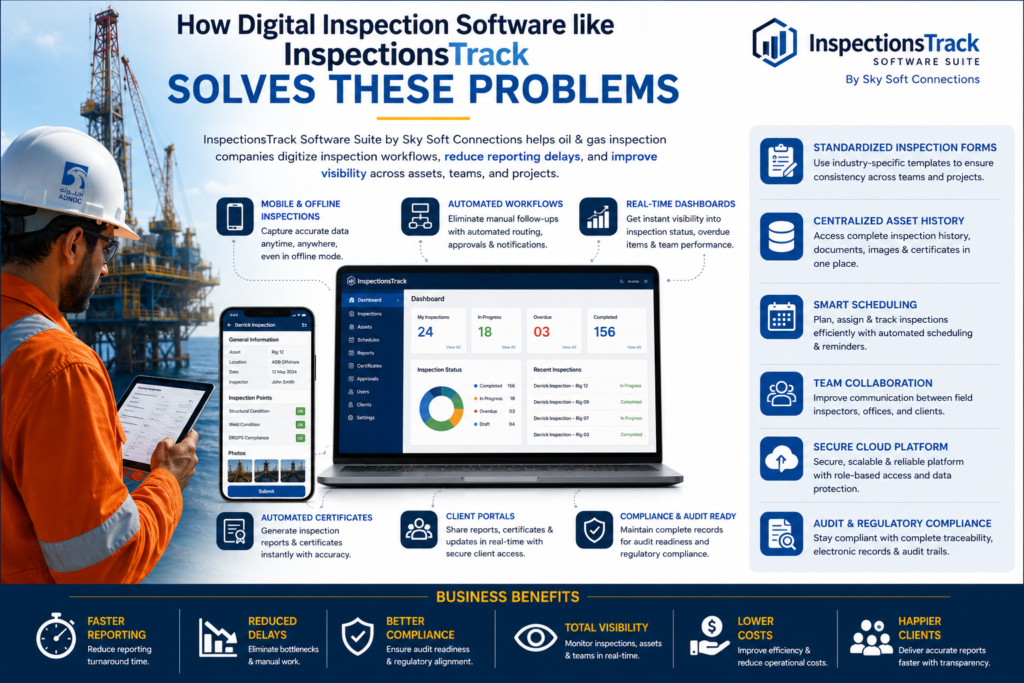
InspectionsTrack Software Suite by Sky Soft Connections helps oil & gas inspection companies centralize inspection workflows, reporting, approvals, and asset tracking within one connected platform.
Instead of managing disconnected spreadsheets and paper forms, companies can standardize inspection operations across all sites and teams.
Field inspectors can perform derrick inspections directly through mobile devices or tablets.
Key capabilities include:
This significantly reduces reporting delays from offshore locations.
InspectionsTrack helps automate reporting processes through:
Consequently, inspection teams reduce manual administrative work while improving reporting consistency.
Inspection managers can access:
This improves decision making across inspection operations.
Many ADNOC contractors require faster reporting access and better operational visibility.
With centralized client portals, companies can provide:
As a result, client communication becomes faster and more transparent.
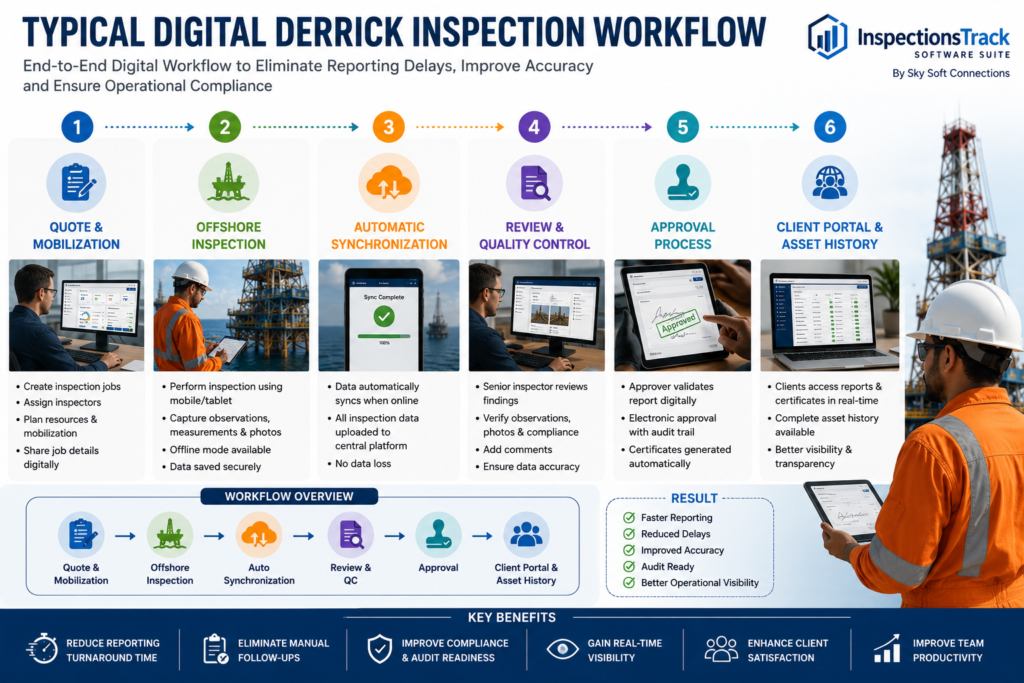
Inspection coordinators create inspection jobs, assign inspectors, and prepare mobilization plans digitally.
Inspectors perform derrick inspections onsite using mobile devices with offline functionality.
Inspection data includes:
Once internet connectivity becomes available, the system automatically synchronizes inspection data to the central platform.
Senior inspectors or managers review inspection findings digitally instead of through manual email chains.
Approvers validate reports and certificates within the system.
Clients access finalized reports and certificates through secure portals without waiting for manual email distribution.
Quote → Mobilization → Inspection → Review → Approval → Client Portal → Asset History
This workflow significantly improves reporting turnaround times while reducing operational bottlenecks.
Use structured digital forms to ensure consistency across all inspection teams.
Digital inspections reduce duplicate data entry and improve reporting accuracy.
Offshore operations often face connectivity challenges. Therefore, offline functionality is essential.
Maintain complete inspection histories within one platform for faster audits and operational visibility.
Reduce manual approval delays through digital workflows and notifications.
Operational dashboards help managers identify reporting bottlenecks quickly.
Provide clients with centralized report access through secure portals.
Oil & gas inspection operations are rapidly evolving toward AI assisted workflows.
Modern inspection platforms increasingly support:
As inspection workloads grow, companies require smarter operational systems to manage increasing data volumes.
AI driven inspection operations help companies identify patterns across:
Consequently, operational teams can make faster and more informed decisions.
Centralized digital inspection systems improve:
This becomes increasingly important for large scale ADNOC contractor operations.
Oil & gas operators increasingly expect:
As a result, inspection companies are investing in centralized inspection management software platforms.
Centralized systems help companies scale inspection operations across:
This improves operational consistency and reduces administrative overhead.
Audit preparation becomes significantly easier when companies maintain centralized digital inspection records.
Inspection managers can quickly retrieve:
Therefore, compliance processes become more manageable and less time consuming.
Derrick inspection reporting delays often originate from disconnected operational workflows, manual reporting processes, and limited visibility between field and office teams.
However, as operational complexity increases, contractors can no longer rely on spreadsheets, paper forms, and fragmented communication systems.
Digital inspection platforms like InspectionsTrack Software Suite by Sky Soft Connections help oil & gas inspection companies streamline inspection workflows, improve reporting speed, centralize asset visibility, and maintain audit readiness across operations.
For companies managing high volume inspection operations, improving reporting efficiency is no longer just a technology upgrade. It has become an operational requirement.
Organizations looking to modernize inspection workflows can explore a free demo or consultation to identify practical opportunities for workflow improvement, reporting automation, and digital inspection transformation.
Read more : How Mobile Inspection Apps Improve Dropped Object Survey Accuracy
Companies can reduce delays by using centralized digital inspection software with mobile inspections, automated approvals, offline functionality, and real time dashboards.
Paper based inspections slow reporting, create duplicate data entry, increase approval delays, and reduce operational visibility across inspection teams.
Digital inspection software improves reporting speed, asset visibility, audit readiness, communication, certificate management, and operational efficiency.
Centralized asset history helps companies track inspection records, monitor equipment conditions, improve compliance readiness, and support audit processes.
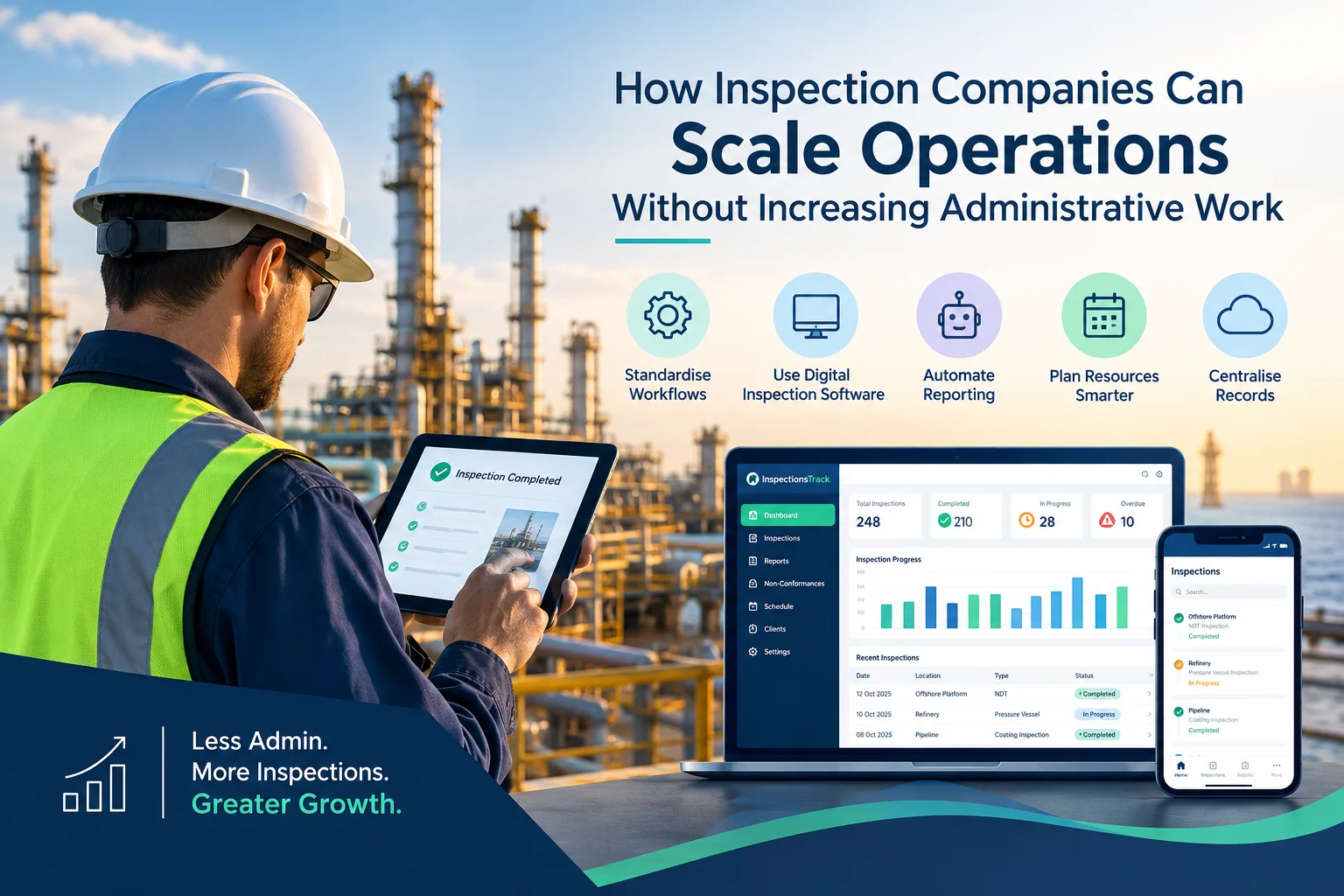
Inspection companies in the oil and gas industry face a common challenge: how to handle more inspections, manage larger projects, and meet client deadlines without increasing administrative workload. As businesses grow, inspection teams must manage…
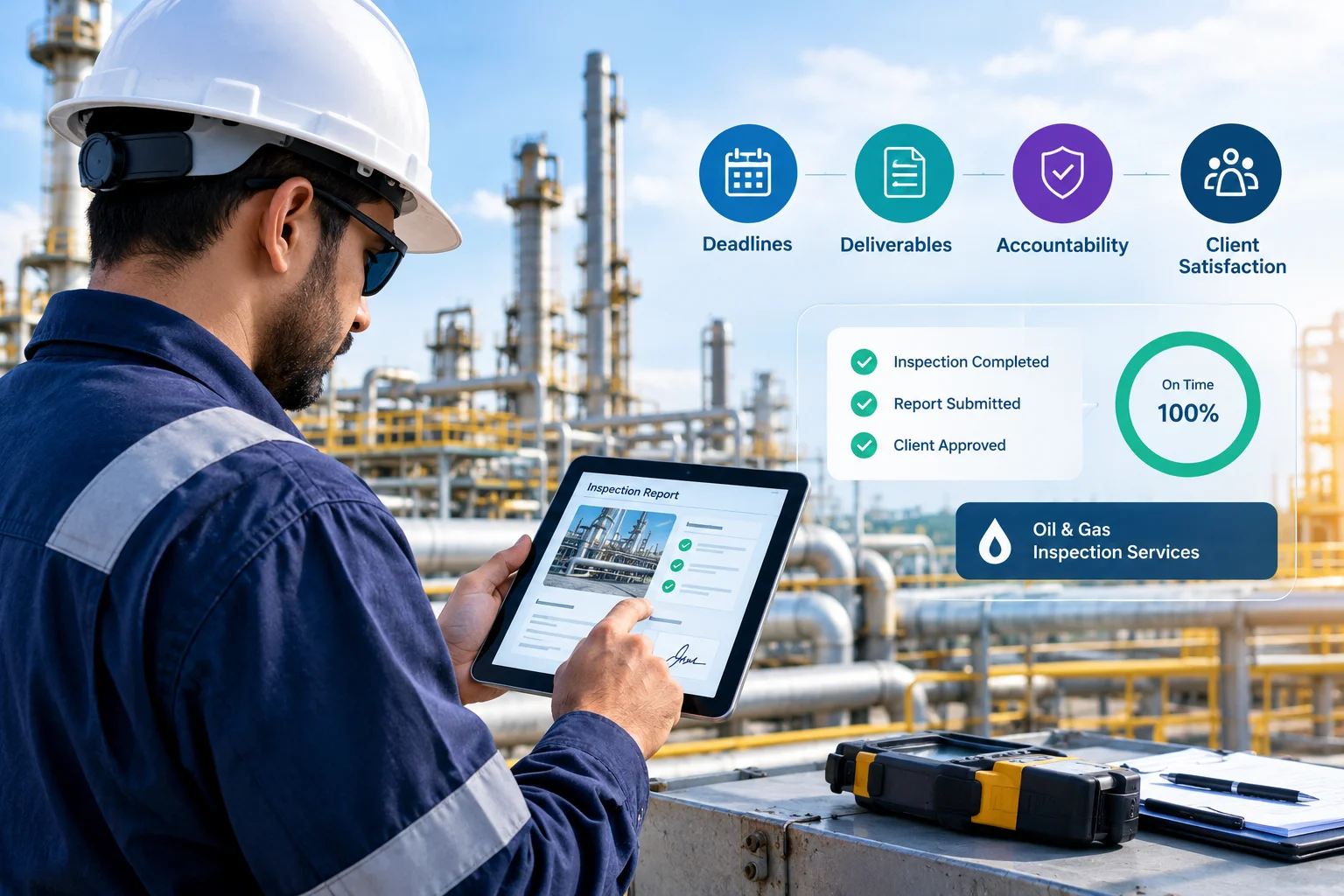
Meeting client Service Level Agreements (SLAs) is essential for inspection companies working in demanding industries such as oil and gas, energy, and industrial maintenance. Clients expect inspections to be completed on time, reports to be…


