
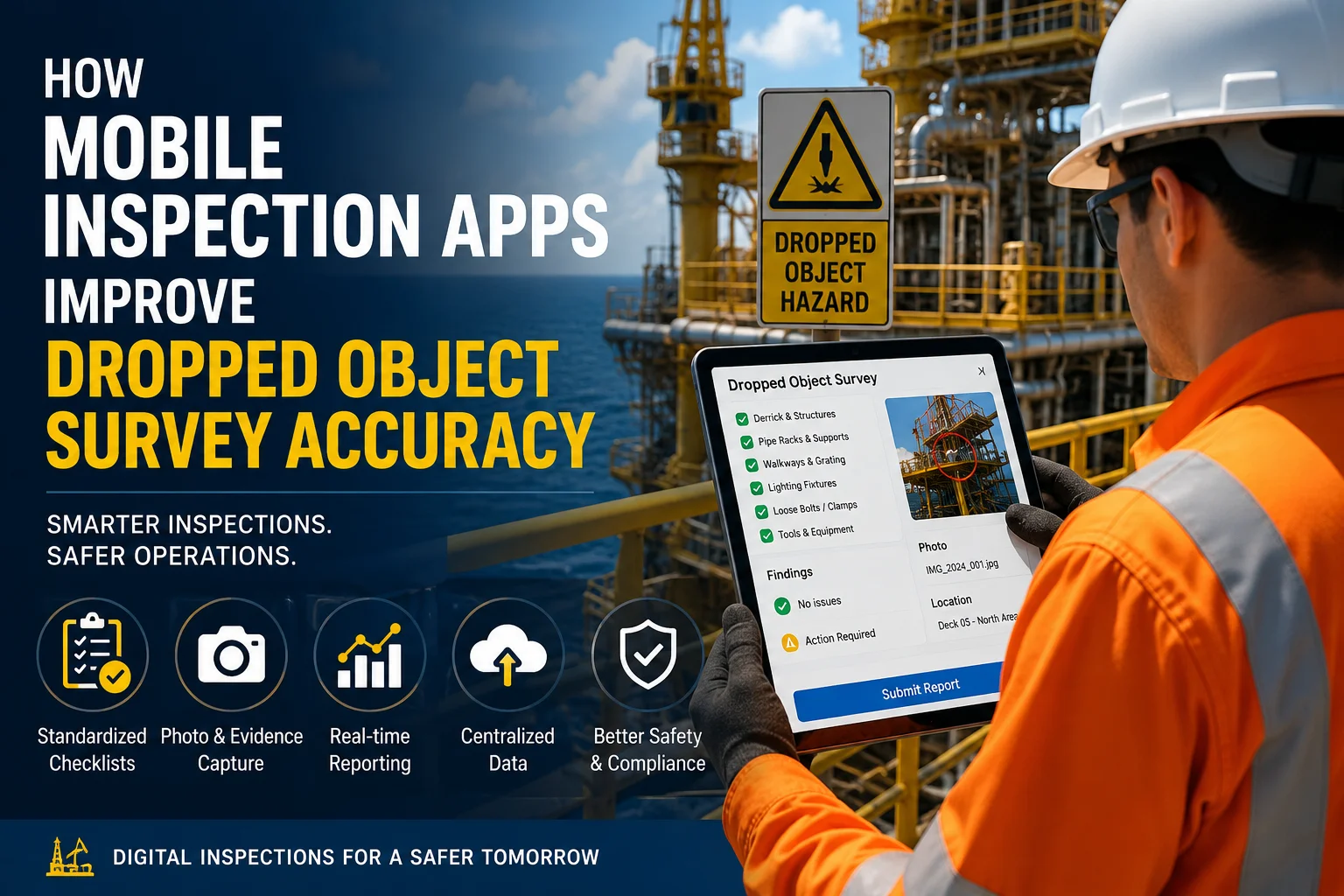
Dropped objects remain one of the biggest safety risks in offshore and onshore oil and gas operations. Even a small unsecured item can cause serious injuries, equipment damage, or costly operational downtime. Therefore, companies must ensure every dropped object survey is accurate, traceable, and completed on time.
However, many inspection teams still rely on paper forms, spreadsheets, and manual reporting processes. As a result, inspection errors, missing data, delayed reporting, and poor visibility continue to impact operational safety.
This is where mobile inspection apps are transforming the industry.
Modern solutions like Inspections Track help oil and gas companies digitize dropped object surveys, improve inspection accuracy, and streamline compliance management across multiple assets and locations.
A dropped object survey is a structured inspection process used to identify items that could potentially fall from elevated areas during drilling, lifting, maintenance, or offshore operations.
These surveys typically include inspections of:
The goal is simple: identify hazards before incidents occur.
Although traditional inspection methods are still widely used, they often create operational inefficiencies.
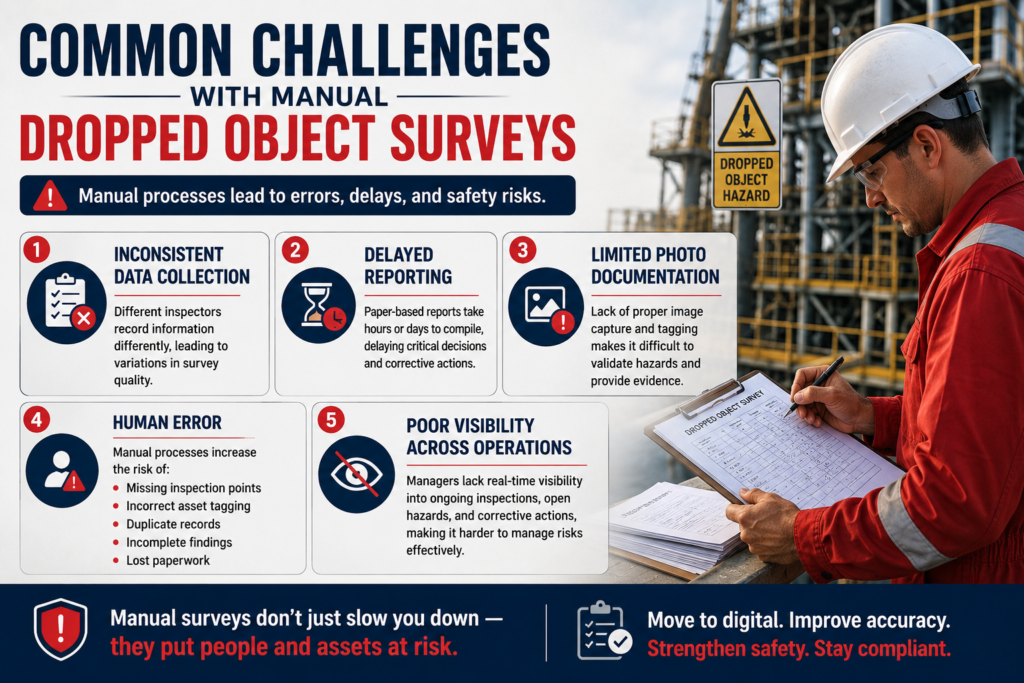
Different inspectors may record information differently. Consequently, survey quality can vary from one inspection to another.
Paper-based reports often take hours or days to compile. Meanwhile, operational risks may remain unresolved.
Without proper image capture and tagging, inspectors may struggle to provide evidence for identified hazards.
Manual processes increase the risk of:
Managers often lack real-time visibility into ongoing inspections, open hazards, or corrective actions.
Mobile inspection software helps inspection teams collect accurate, standardized, and real-time field data directly from mobile devices.
As a result, inspection quality improves significantly.
Mobile inspection apps provide predefined digital forms and inspection templates. Therefore, every inspector follows the same process.
This standardization helps reduce:
Additionally, inspection managers can update templates instantly across all inspection teams.
Inspectors can complete surveys directly on tablets or mobile devices while working onsite.
This allows teams to:
Consequently, inspection records become more accurate and easier to track.
Visual documentation is critical during dropped object inspections.
Mobile inspection apps allow inspectors to:
As a result, teams can verify hazards faster and improve audit readiness.
Manual reporting often slows down corrective actions. However, mobile inspection software automatically generates reports once inspections are completed.
This improves:
| Traditional Process | Mobile Inspection App |
|---|---|
| Manual paperwork | Digital forms |
| Delayed reports | Instant reporting |
| Limited visibility | Real-time dashboards |
| High error rates | Standardized workflows |
| Scattered inspection records | Centralized inspection data |
Therefore, operations teams can respond to risks much faster.
Oil and gas inspections must meet strict safety and compliance requirements. Mobile inspection apps help organizations maintain complete inspection histories and digital audit trails.
This includes:
Consequently, compliance reporting becomes much easier during audits.
Inspection findings often involve multiple departments, including:
Mobile inspection apps improve communication by allowing teams to share inspection data instantly.
As a result:
Inspections Track provides advanced digital inspection software designed specifically for the oil and gas inspection industry.
The platform helps organizations improve dropped object survey accuracy through:
Additionally, the software helps inspection companies standardize workflows across rigs, offshore platforms, and field operations.
Companies using digital inspection solutions often achieve:
Therefore, mobile inspection apps are becoming essential for modern oil and gas inspection operations.
To maximize inspection quality, organizations should follow these best practices:
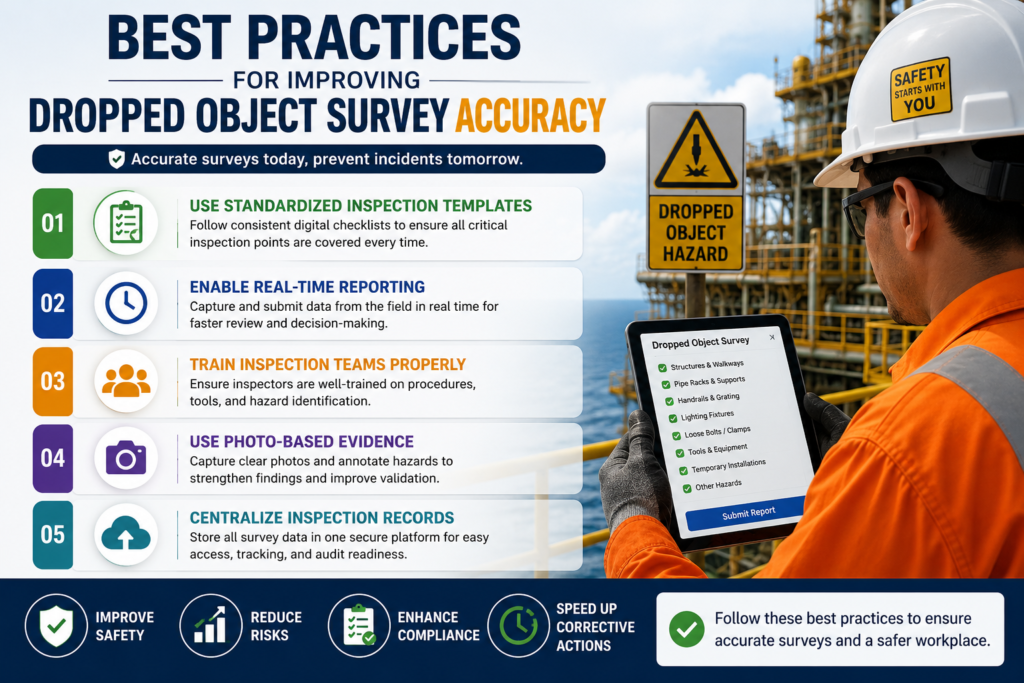
Ensure all inspection teams follow the same digital workflows.
Allow supervisors to review findings immediately after inspections.
Even the best software requires trained users for accurate inspections.
Visual documentation improves hazard validation and reporting accuracy.
Store all inspection data in one secure platform for easier access and compliance management.
Dropped object incidents can lead to serious operational and safety consequences in the oil and gas industry. Therefore, improving inspection accuracy should remain a top priority.
Mobile inspection apps help organizations eliminate manual inefficiencies, improve data quality, and accelerate corrective actions. Moreover, they provide better visibility across inspection operations while supporting compliance requirements.
With solutions like Inspections Track, oil and gas companies can digitize dropped object surveys, improve operational safety, and build more efficient inspection workflows across all assets and locations.
Read more : The Impact of Poor Derrick Inspection Visibility on Rig Operations
A dropped object survey is an inspection process used to identify unsecured items or equipment that could fall and create safety hazards during oil and gas operations.
Mobile inspection apps standardize inspection checklists, enable real-time data capture, reduce manual errors, and improve photo documentation during surveys.
Digital inspection software helps companies improve compliance, speed up reporting, track corrective actions, and maintain accurate inspection records across multiple sites.
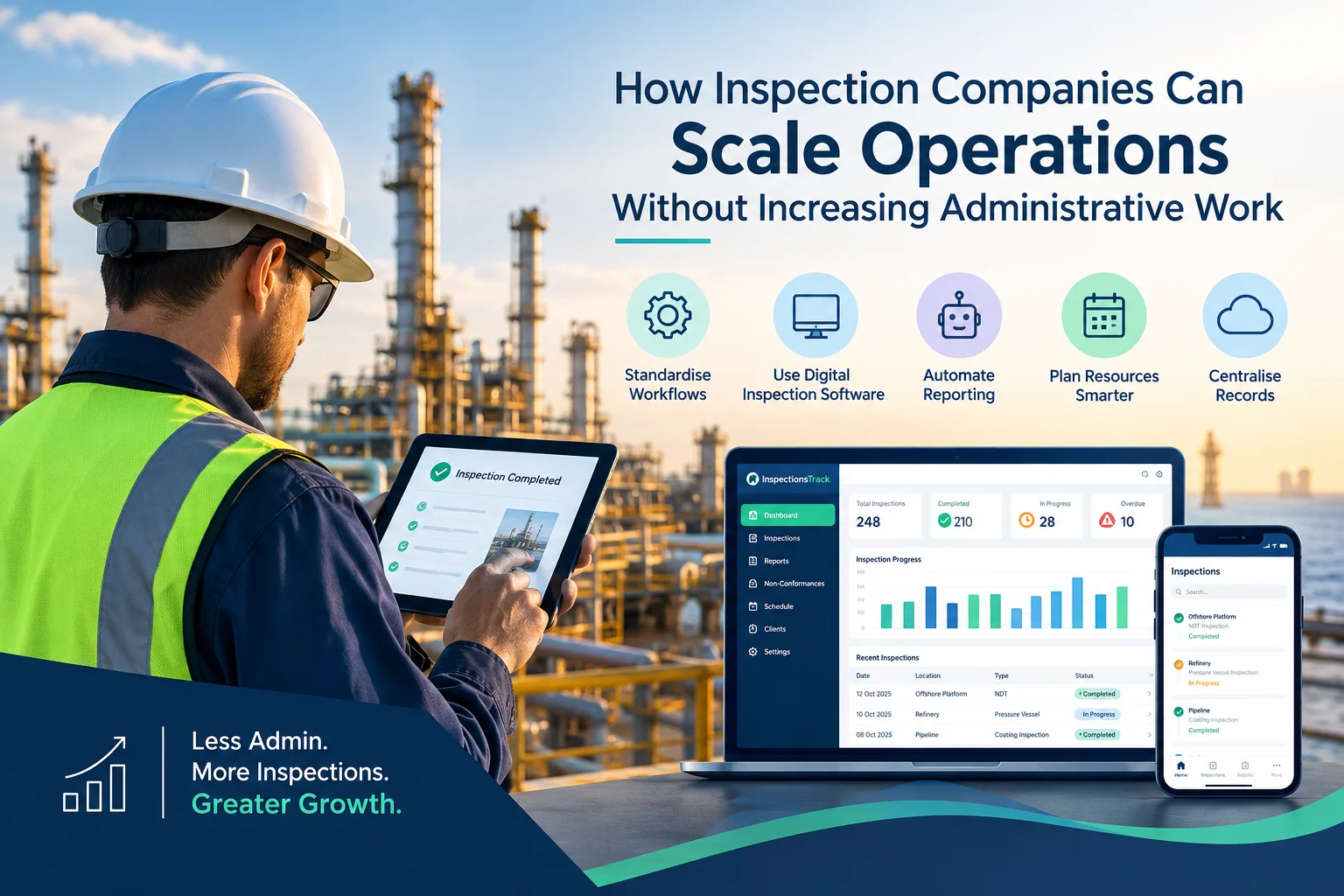
Inspection companies in the oil and gas industry face a common challenge: how to handle more inspections, manage larger projects, and meet client deadlines without increasing administrative workload. As businesses grow, inspection teams must manage…
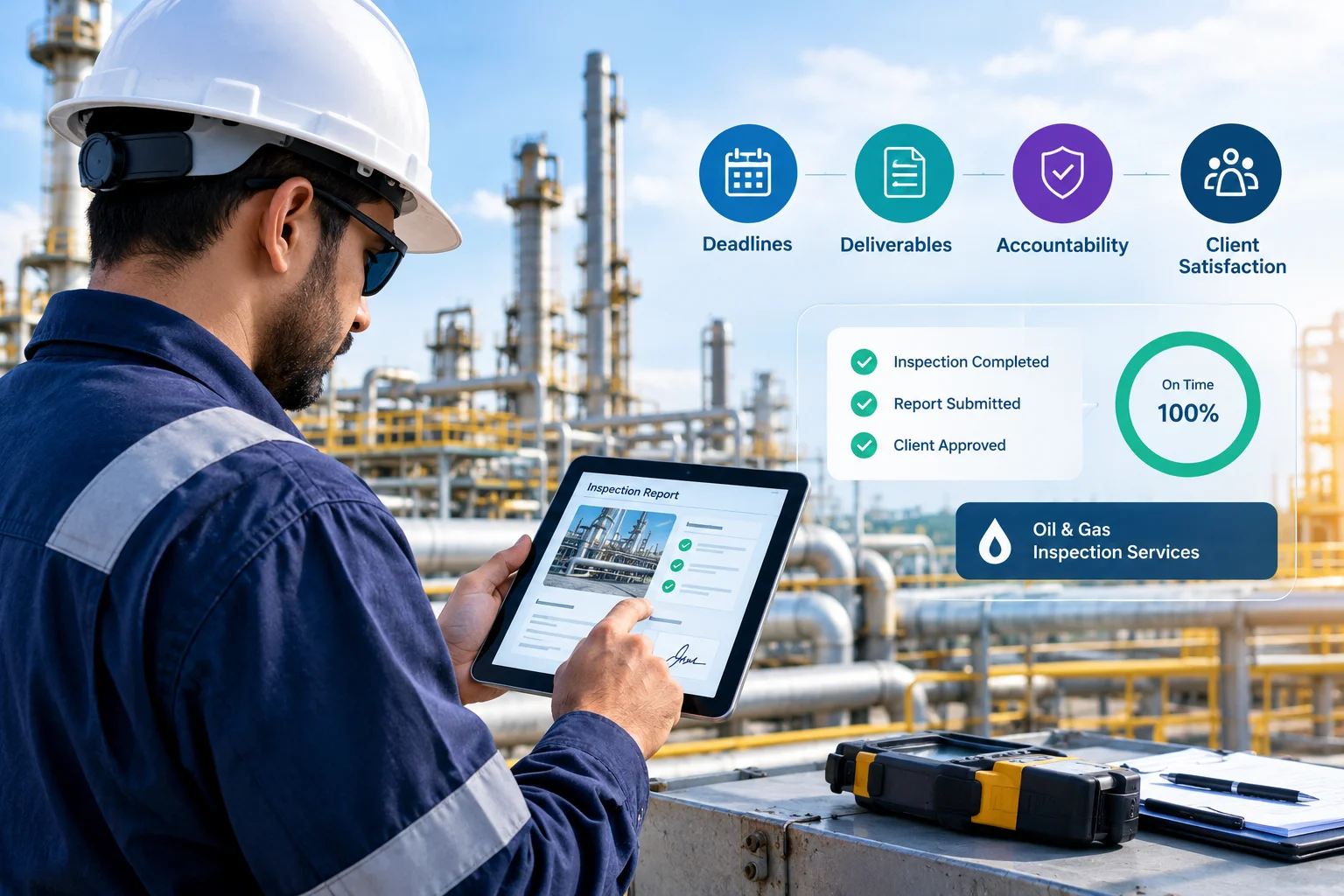
Meeting client Service Level Agreements (SLAs) is essential for inspection companies working in demanding industries such as oil and gas, energy, and industrial maintenance. Clients expect inspections to be completed on time, reports to be…


