
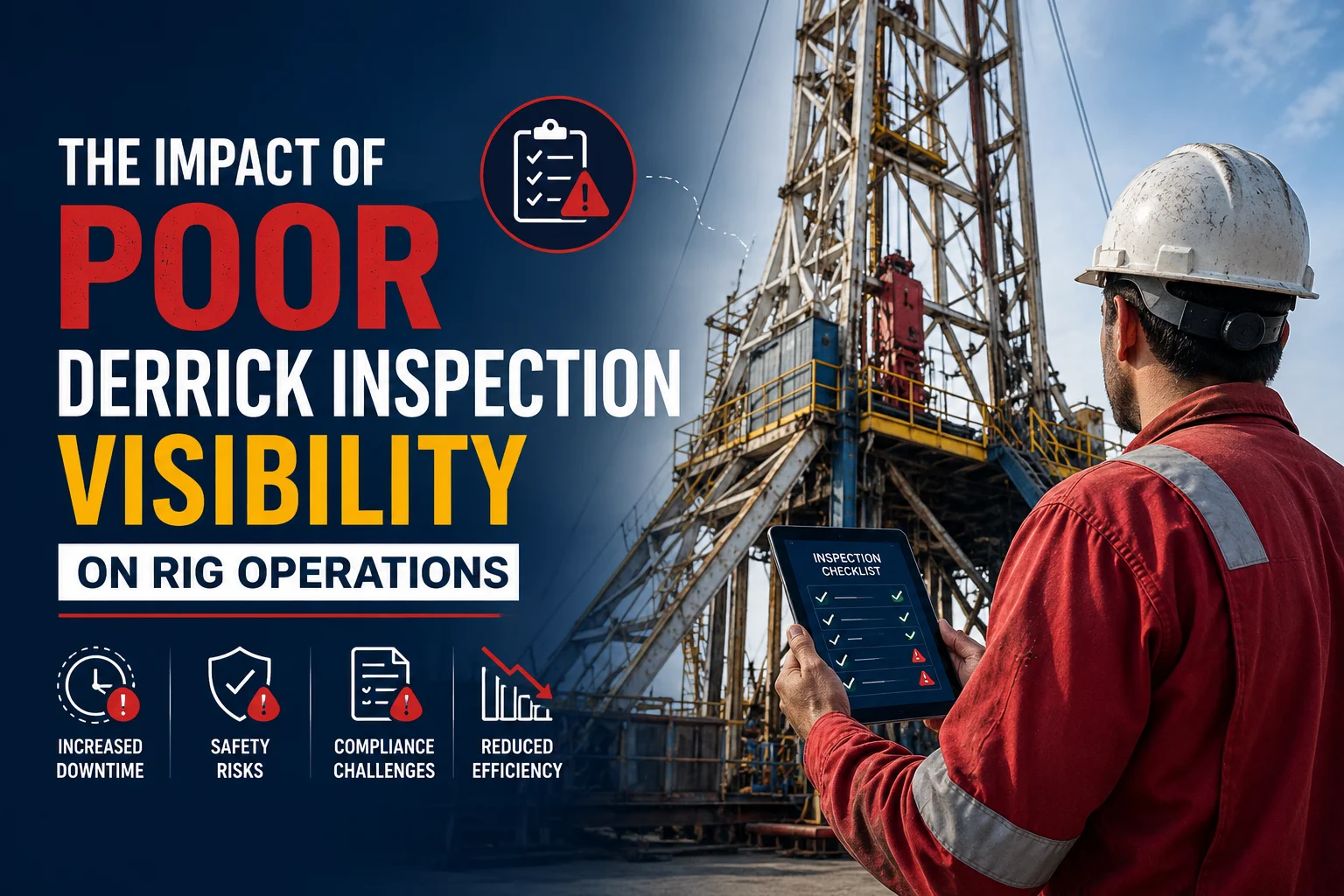
The oil and gas industry depends heavily on derrick integrity for safe and efficient drilling operations. However, many companies still struggle with poor derrick inspection visibility caused by disconnected systems, paper based reporting, delayed inspection updates, and limited operational transparency.
As a result, rig managers, inspection teams, and operations leaders often face delays, compliance risks, and unplanned downtime without having real time insight into equipment condition and inspection status.
This is where digital inspection management platforms like Inspections Track help oil and gas companies improve derrick inspection visibility, streamline reporting, and support safer rig operations.
Derrick inspections play a critical role in maintaining structural integrity and operational safety across drilling rigs. Since derricks are exposed to continuous stress, vibration, weather conditions, and heavy lifting operations, regular inspections are essential.
However, when inspection visibility is poor, companies struggle to:
Consequently, operational risks increase significantly.
Several operational and technological gaps contribute to limited inspection visibility in rig operations.
Many oil and gas companies still rely on spreadsheets, handwritten forms, and email based reporting systems. Although these methods may work temporarily, they often create delays and data inconsistencies.
Common problems include:
In many organizations, inspection data is stored across multiple systems. Therefore, managers cannot easily access a complete overview of derrick conditions.
For example:
| Inspection Challenge | Operational Impact |
|---|---|
| Multiple data sources | Reduced visibility |
| No centralized dashboard | Slow decision making |
| Delayed inspection updates | Increased operational risk |
| Manual reporting workflows | Lower productivity |
| Poor document management | Compliance difficulties |
Without real time visibility, inspection teams cannot quickly identify high priority issues. As a result, minor structural concerns may become major operational failures.
Poor visibility does not only affect inspection teams. In reality, it impacts the entire drilling operation.
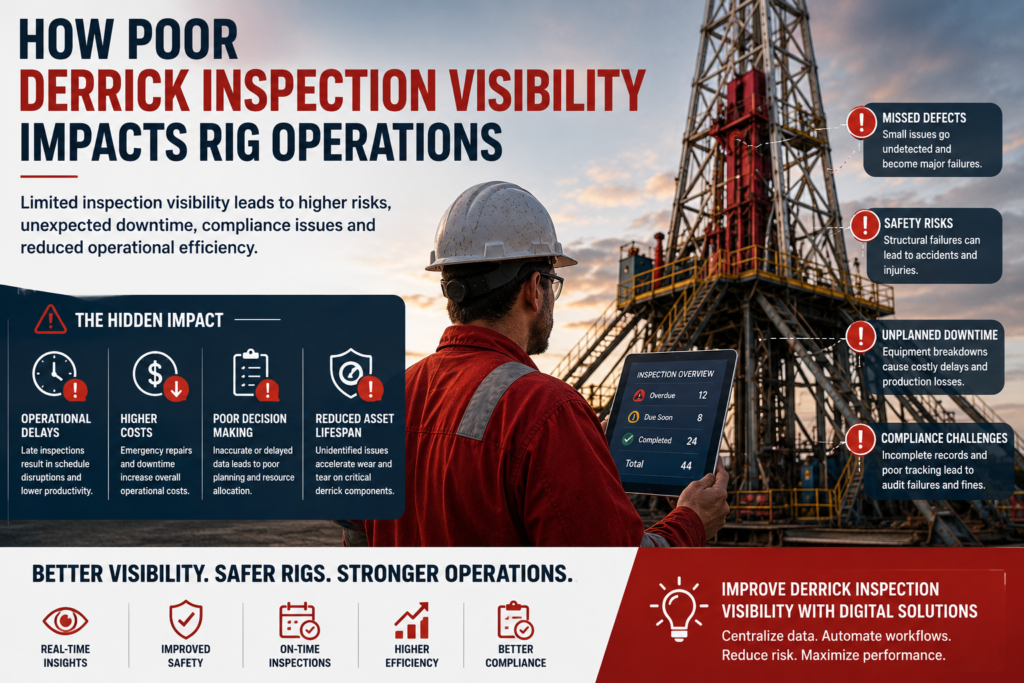
When inspection records are incomplete or delayed, maintenance teams may miss critical warning signs. Consequently, unexpected derrick failures can occur during operations.
Unplanned downtime often leads to:
Even small inspection delays can create major disruptions across drilling projects.
Safety remains one of the biggest concerns in oil and gas rig operations. Since derricks support critical lifting and structural functions, poor inspection visibility creates serious workplace hazards.
Potential risks include:
Therefore, inspection visibility directly affects workforce safety.
Oil and gas companies must comply with strict industry regulations and inspection standards. However, poor visibility makes compliance management far more difficult.
Inspection teams often face challenges such as:
When records are stored manually, retrieving historical reports becomes time consuming.
Without digital tracking, organizations cannot easily verify inspection activities.
Manual reporting workflows slow down audit preparation significantly.
As a result, companies may face regulatory penalties or failed compliance audits.
Operational leaders require accurate inspection data to make informed decisions. However, poor visibility limits access to real time operational insights.
This affects:
Consequently, decision making becomes reactive rather than proactive.
Many organizations experience visibility problems without realizing the long term operational impact.
Here are some common warning signs:
Inspection reports consistently arrive late or remain incomplete.
Teams spend excessive time searching for previous inspection records.
Managers cannot quickly identify which inspections are completed, pending, or overdue.
Recurring issues continue because previous findings are not properly tracked.
Inspection data is not easily shared between field personnel, supervisors, and management.
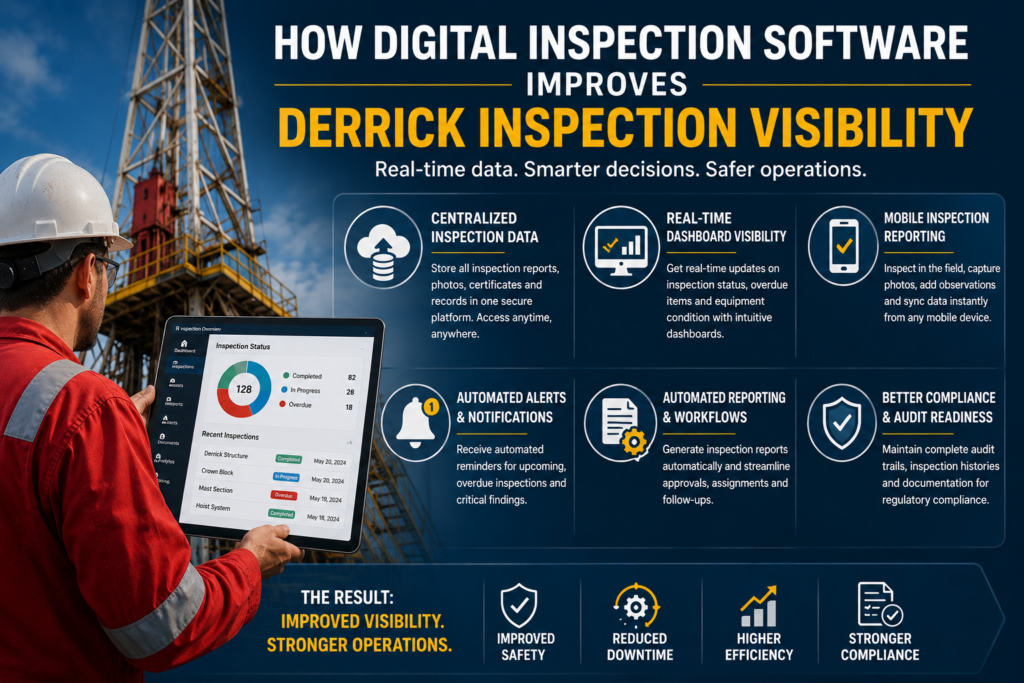
Modern inspection management platforms significantly improve operational visibility and efficiency.
This is where Inspections Track provides value for oil and gas inspection companies.
The software centralizes inspection workflows and gives operational teams real time access to critical inspection data.
All derrick inspection reports, certificates, and historical records are stored in one platform.
This improves:
Managers can monitor inspection activities through centralized dashboards.
Key benefits include:
Field inspectors can complete inspections directly from mobile devices.
As a result:
Automation helps eliminate delays caused by manual workflows.
The system can automatically:
Digital inspection software simplifies audit preparation by maintaining complete inspection histories and activity logs.
This helps organizations:
Organizations that improve inspection visibility often experience measurable operational improvements.
| Operational Area | Improvement |
|---|---|
| Safety Management | Reduced workplace risks |
| Compliance Tracking | Faster audit preparation |
| Equipment Reliability | Fewer unexpected failures |
| Operational Efficiency | Faster reporting workflows |
| Decision Making | Better real time insights |
| Downtime Reduction | Improved rig productivity |
Oil and gas companies can improve visibility by implementing several operational strategies.
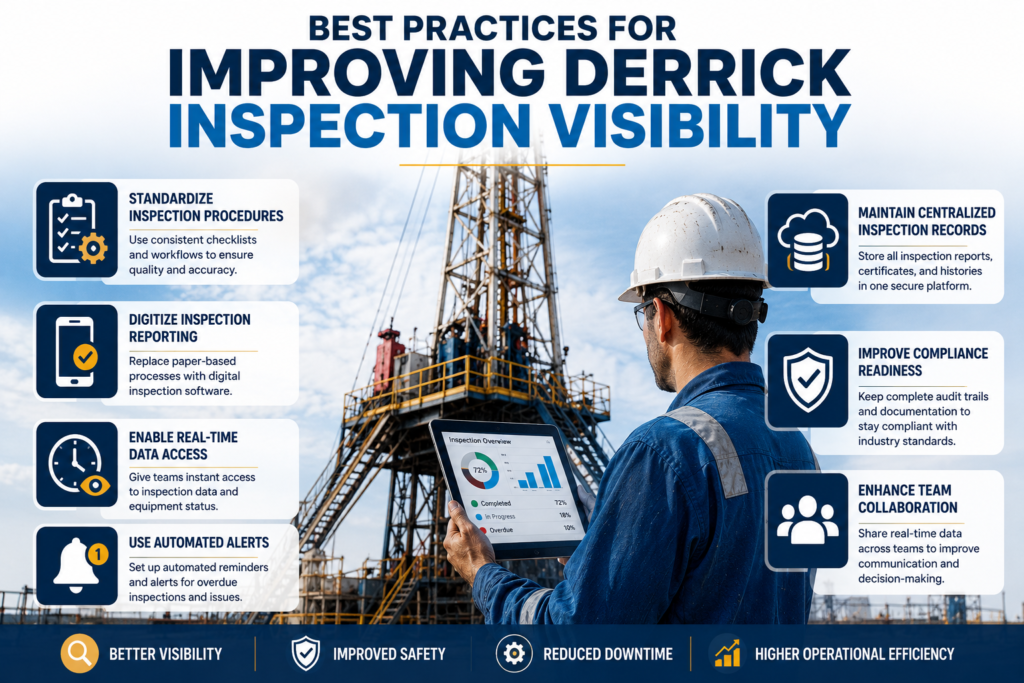
Consistent inspection workflows improve reporting quality and reduce confusion.
Replacing paper based systems with digital inspection software increases efficiency and transparency.
Operational leaders should have instant access to inspection data and equipment status.
Automated notifications help teams respond quickly to overdue inspections and critical findings.
Centralized data storage simplifies reporting, audits, and historical tracking.
The oil and gas industry continues shifting toward digital transformation because operational visibility has become essential for safety, efficiency, and compliance.
Traditional inspection methods can no longer support the growing complexity of modern rig operations.
Therefore, companies increasingly adopt platforms like Inspections Track to:
Poor derrick inspection visibility can create serious operational, safety, and compliance challenges across rig operations. Delayed reporting, disconnected systems, and limited access to inspection data increase operational risks and reduce efficiency.
However, digital inspection management solutions help organizations gain real time visibility, streamline inspection workflows, and improve operational control.
With platforms like Inspections Track, oil and gas companies can modernize derrick inspection management, reduce downtime, improve compliance readiness, and support safer rig operations through centralized digital inspection workflows.
Read more : Common NDT Data Management Problems That Impact Operational Safety
Derrick inspection visibility refers to the ability to track, monitor, and access real time inspection data, reports, and equipment status across drilling operations.
Poor visibility can lead to delayed maintenance, increased downtime, safety risks, compliance issues, and slower operational decision making.
Digital inspection software like Inspections Track helps centralize inspection data, automate reporting, provide real time visibility, and improve compliance management for oil and gas companies.
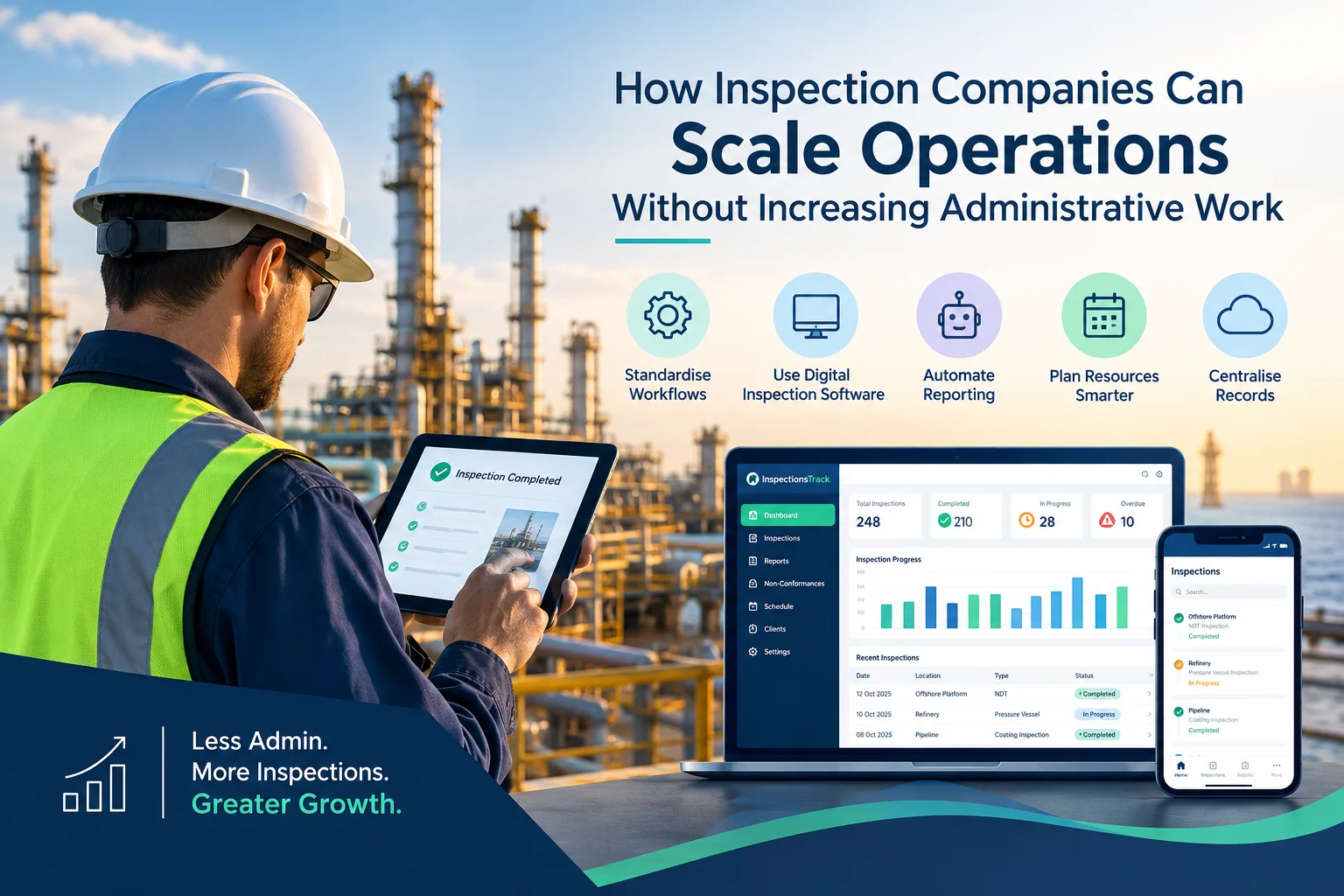
Inspection companies in the oil and gas industry face a common challenge: how to handle more inspections, manage larger projects, and meet client deadlines without increasing administrative workload. As businesses grow, inspection teams must manage…
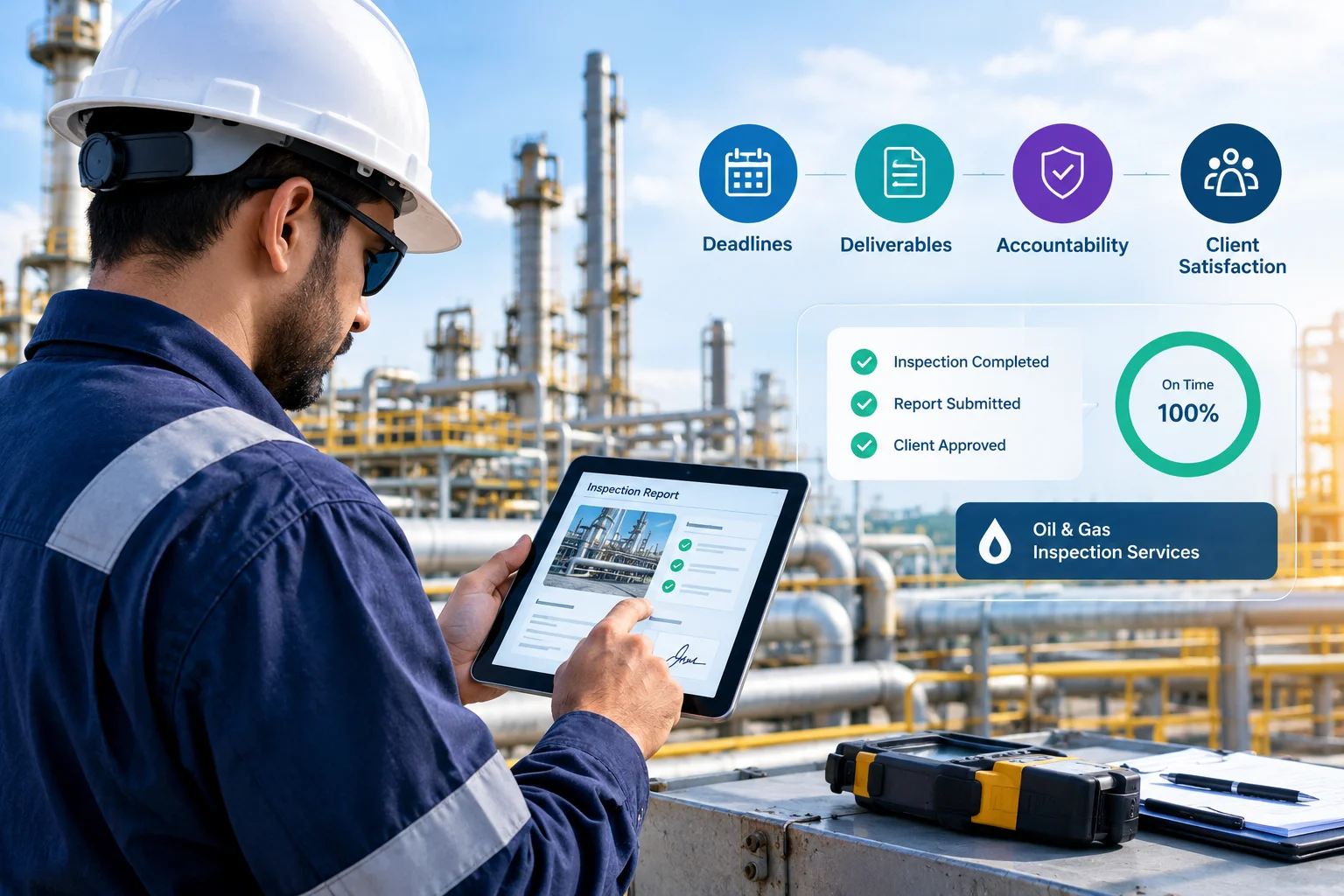
Meeting client Service Level Agreements (SLAs) is essential for inspection companies working in demanding industries such as oil and gas, energy, and industrial maintenance. Clients expect inspections to be completed on time, reports to be…


