
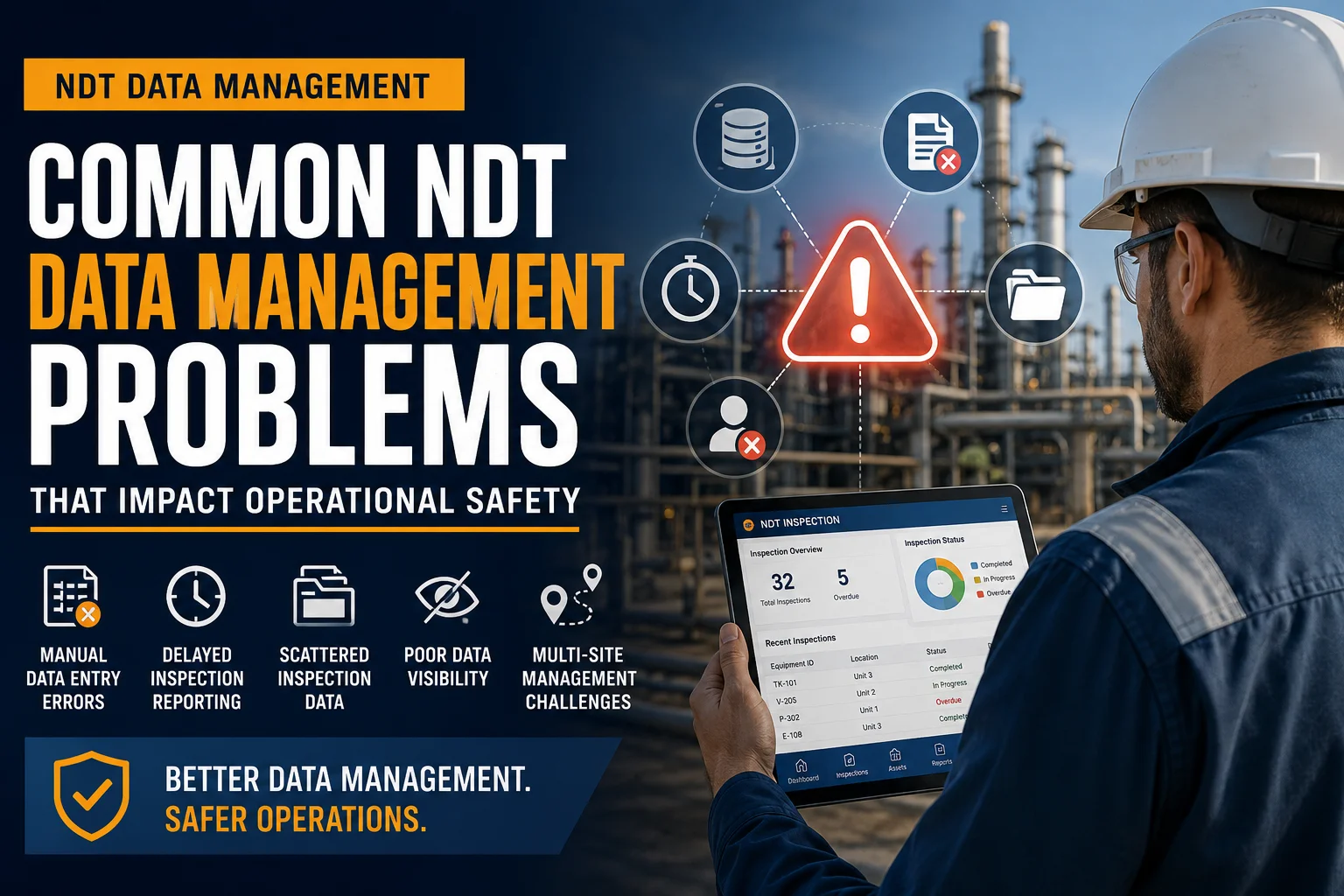
Non-Destructive Testing (NDT) plays a critical role in maintaining safety, compliance, and operational reliability across the oil and gas industry. However, many inspection companies still struggle with outdated data management processes that create reporting delays, increase human error, and reduce visibility into asset integrity.
As inspection operations grow, managing NDT records manually becomes more difficult. Consequently, operational safety risks increase when inspection data is incomplete, delayed, or inaccessible. Therefore, businesses are now shifting toward digital inspection management systems like InspectionsTrack to improve data accuracy, streamline reporting, and strengthen compliance management.
NDT inspections generate large volumes of critical operational data every day. This includes:
When this information is not managed properly, safety issues can go unnoticed. In addition, poor data visibility makes decision-making slower and less reliable.
As a result, companies face:
Therefore, proper NDT data management is no longer optional for modern inspection companies.
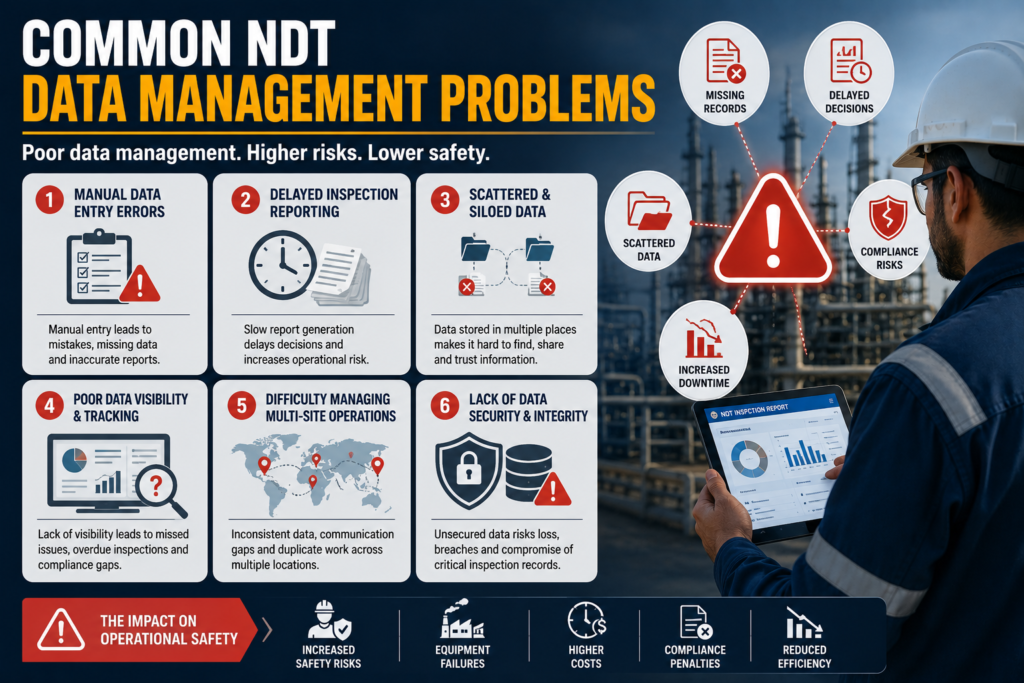
One of the biggest problems in NDT operations is manual data entry. Many companies still rely on spreadsheets, handwritten notes, and paper-based reporting systems.
Although manual processes may seem manageable initially, they often create serious issues over time.
Moreover, even a small mistake in inspection data can impact operational safety significantly.
Digital inspection software automatically captures inspection data directly from mobile devices. Therefore, technicians can reduce human error while improving reporting accuracy.
With InspectionsTrack, inspection teams can:
As a result, companies improve both operational efficiency and safety compliance.
In many oil and gas companies, inspection reports take days or even weeks to finalize. This delay creates serious operational challenges.
Meanwhile, maintenance teams may continue operating equipment without updated inspection information.
| Problem | Operational Impact |
|---|---|
| Delayed maintenance decisions | Increased equipment failure risk |
| Slow client reporting | Reduced customer trust |
| Missing compliance deadlines | Regulatory penalties |
| Poor operational visibility | Slower decision-making |
Therefore, faster reporting processes are essential for maintaining safe operations.
Modern NDT software automates report generation immediately after inspections are completed. Consequently, supervisors and clients gain faster access to critical safety information.
Key advantages include:
Another major issue is scattered inspection data. Often, records are stored across:
Because of this, retrieving inspection history becomes difficult and time-consuming.
Centralized inspection management improves:
Furthermore, centralized systems reduce the chances of losing critical operational data.
InspectionsTrack provides a centralized inspection management platform specifically designed for oil and gas inspection operations.
The software helps companies:
Consequently, operations become more organized, transparent, and efficient.
Operational safety depends heavily on real-time visibility. However, many companies still struggle to track ongoing inspections effectively.
Without proper dashboards or monitoring systems, managers cannot quickly identify:
Therefore, decision-making becomes reactive instead of proactive.
Modern inspection dashboards provide instant access to operational data. As a result, managers can respond quickly before small issues become serious failures.
Additionally, real-time analytics help businesses improve long-term operational performance.
Oil and gas companies often operate across multiple locations. Managing NDT operations manually across different sites creates major coordination challenges.
Moreover, managing inspections across remote locations becomes even more difficult without cloud-based systems.
Cloud inspection software allows teams to access inspection records from any location. Therefore, field inspectors, supervisors, and clients stay connected in real time.
This improves:
The consequences of poor inspection data management can be severe.
Additionally, inaccurate inspection records make audits more difficult and increase legal risks.
Therefore, companies must invest in reliable inspection management systems that improve data accuracy and operational transparency.
Companies can improve operational safety by following these best practices:
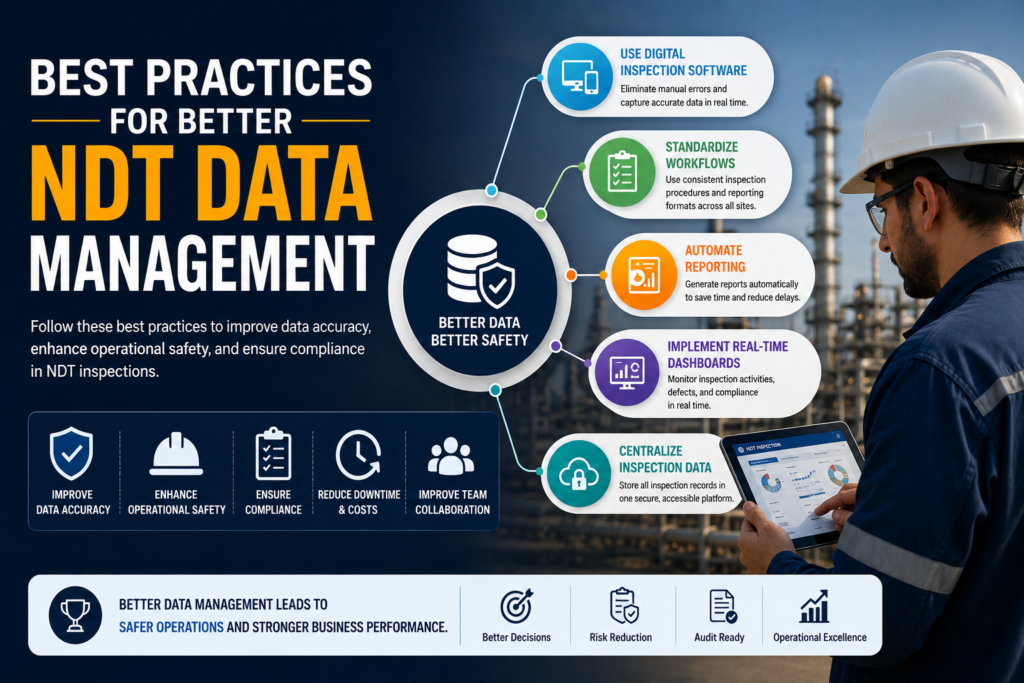
Digital platforms reduce manual errors while improving inspection efficiency.
Consistent reporting procedures improve operational accuracy and compliance.
Automated reports reduce delays and improve data accessibility.
Real-time visibility helps managers make faster operational decisions.
A single platform improves traceability and operational control.
InspectionsTrack is designed specifically for inspection companies operating in the oil and gas sector.
The platform supports:
As a result, inspection companies can improve operational safety, reduce reporting delays, and strengthen compliance management.
Poor NDT data management creates significant operational safety risks for oil and gas companies. Manual processes, delayed reporting, scattered records, and poor visibility can all lead to costly operational failures.
However, digital inspection management platforms help businesses solve these problems effectively. By automating reporting, centralizing inspection data, and improving real-time visibility, companies can strengthen operational safety while improving efficiency.
Therefore, businesses looking to modernize their inspection operations should consider implementing advanced solutions like InspectionsTrack to improve safety, compliance, and operational performance.
Read more : How Inspection Automation Improves Drill Pipe Lifecycle Management
The most common NDT data management problems include manual data entry errors, delayed reporting, scattered inspection records, poor operational visibility, and difficulty managing multi-site inspections.
Digital inspection software improves operational safety by reducing human error, automating reports, centralizing inspection data, and providing real-time visibility into inspection activities and asset conditions.
Centralized inspection data helps companies improve compliance management, track asset history, access reports quickly, and maintain better operational control across multiple inspection sites.
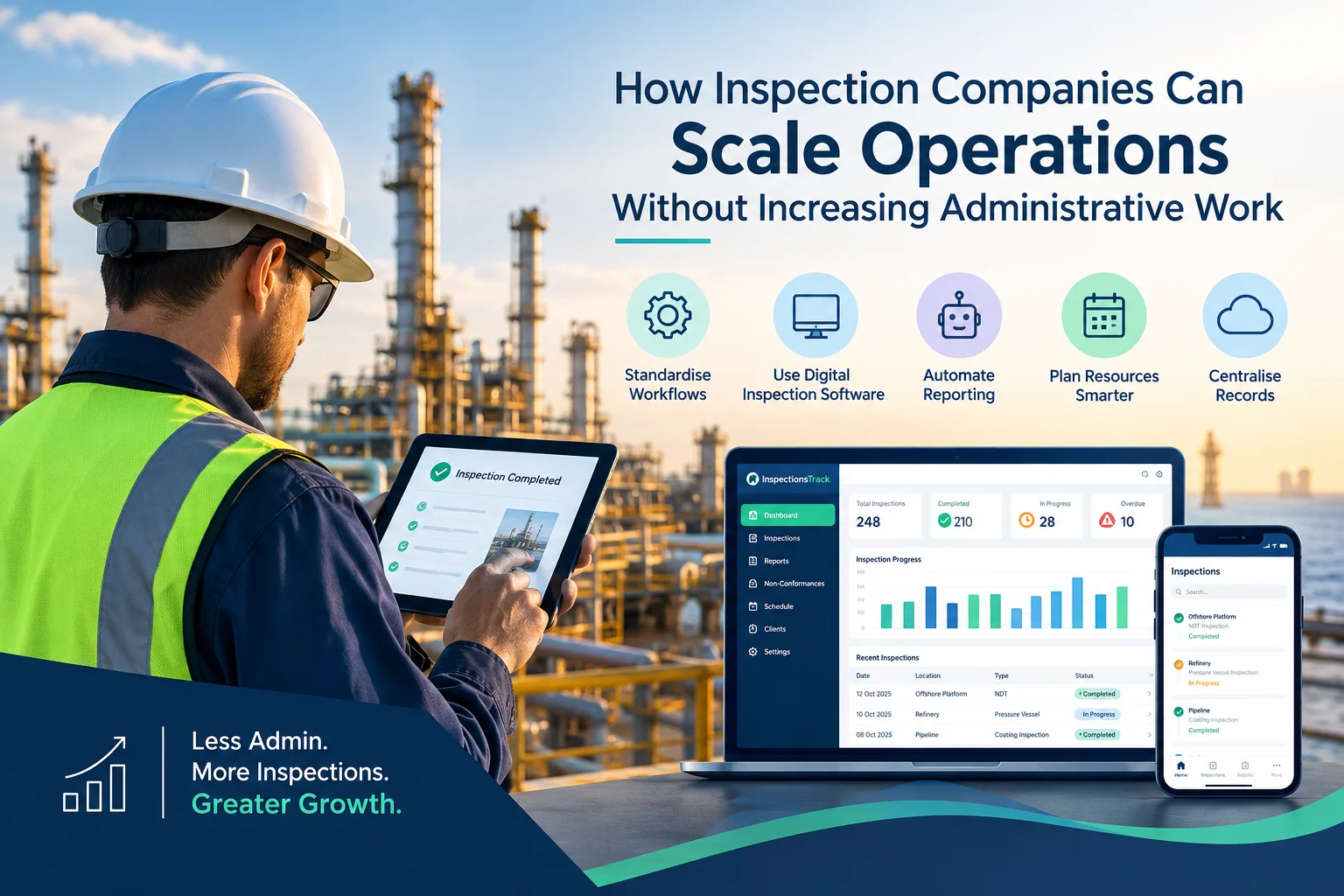
Inspection companies in the oil and gas industry face a common challenge: how to handle more inspections, manage larger projects, and meet client deadlines without increasing administrative workload. As businesses grow, inspection teams must manage…
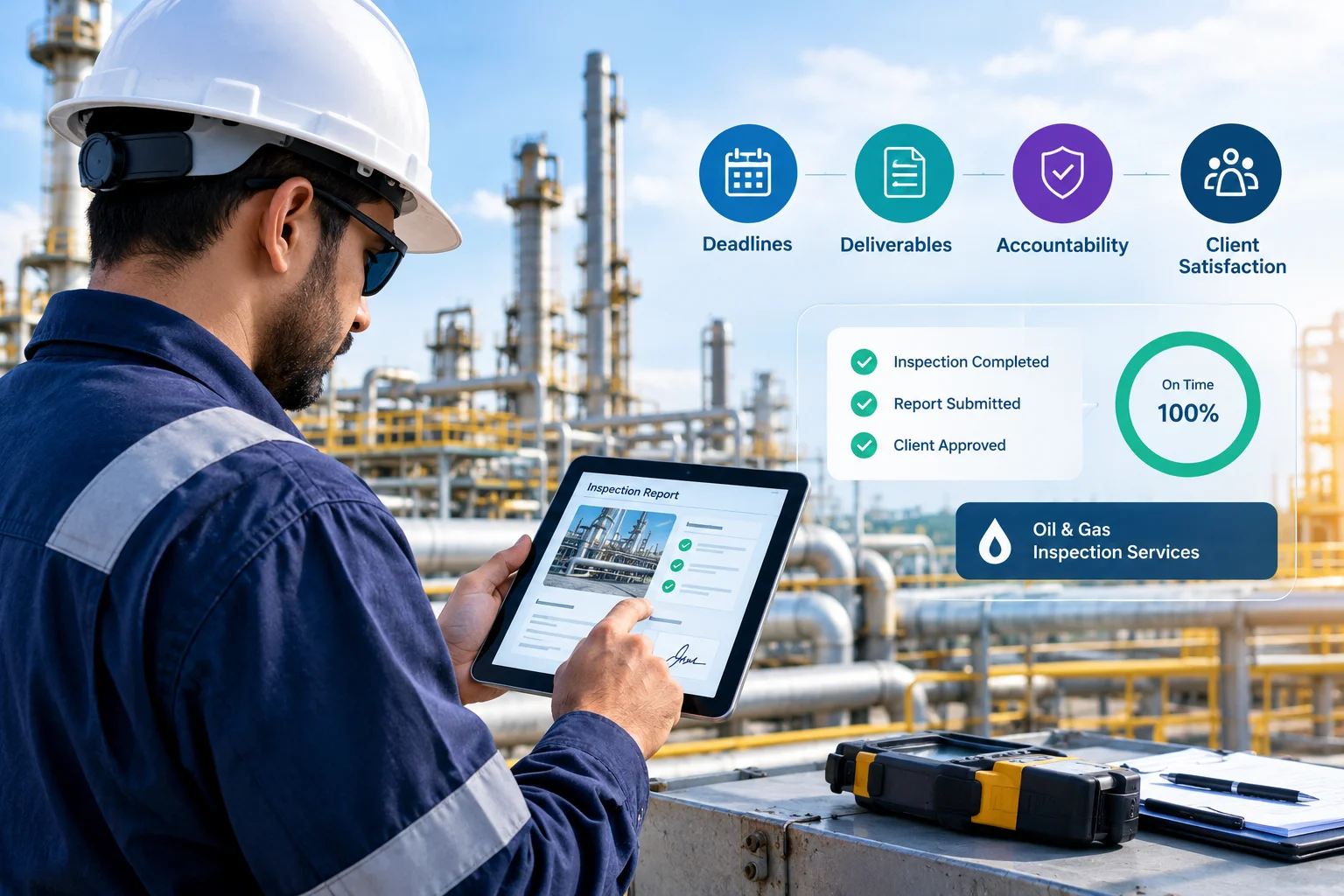
Meeting client Service Level Agreements (SLAs) is essential for inspection companies working in demanding industries such as oil and gas, energy, and industrial maintenance. Clients expect inspections to be completed on time, reports to be…


