
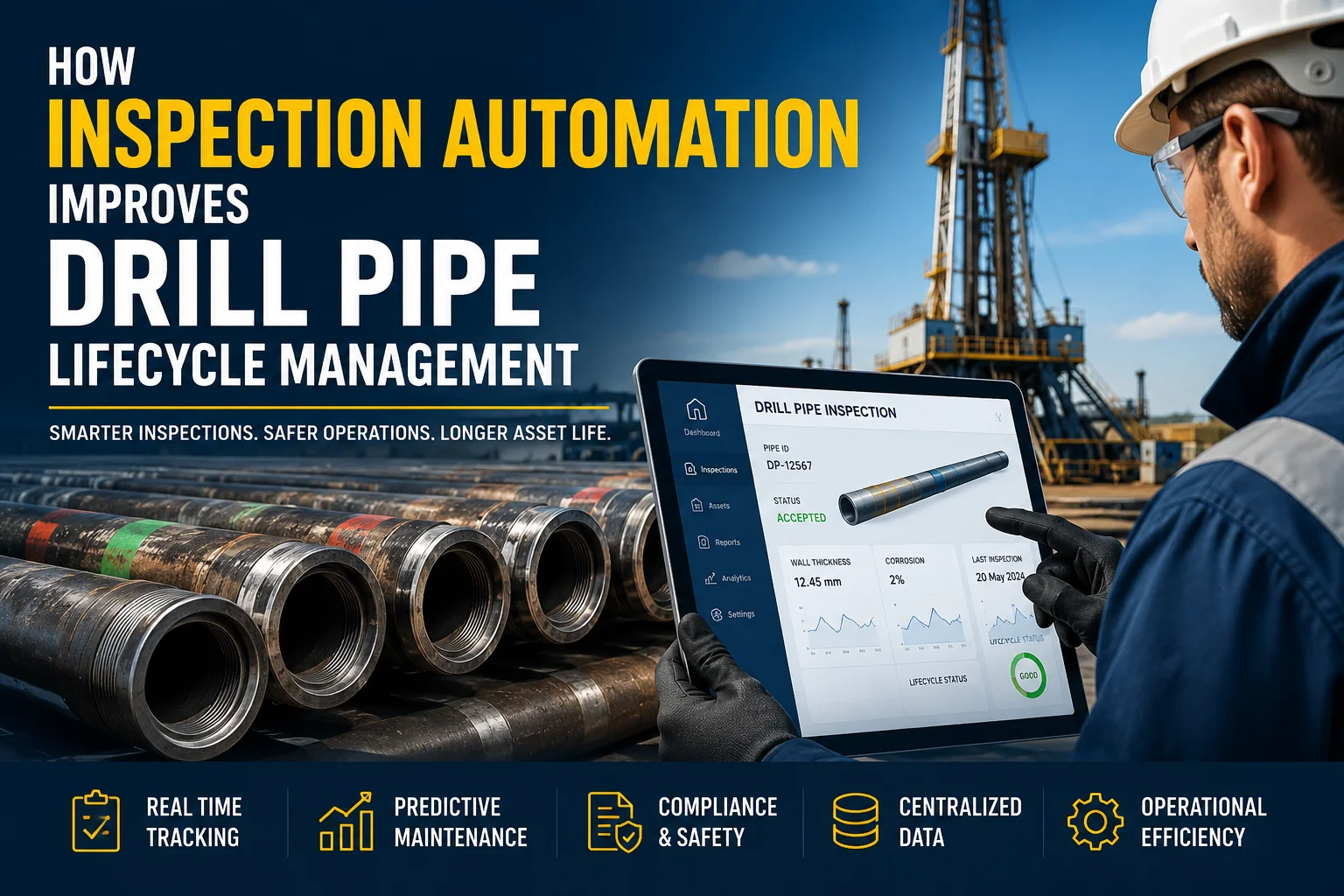
Drill pipe failures can create serious operational risks in the oil and gas industry. Unplanned downtime, safety incidents, inspection delays, and high replacement costs often result from poor lifecycle management. Therefore, companies are now moving away from manual inspection tracking and adopting automated inspection systems to improve visibility, compliance, and operational efficiency.
Inspection automation helps companies monitor drill pipe conditions more accurately while reducing paperwork and human error. In addition, it provides real time access to inspection records, maintenance history, rejection criteria, and asset performance data. As a result, inspection teams can make faster and smarter decisions throughout the drill pipe lifecycle.
Drill pipe lifecycle management refers to the process of tracking, inspecting, maintaining, repairing, and retiring drill pipes throughout their operational life. Since drill pipes operate under extreme pressure and harsh drilling conditions, regular inspections are essential for maintaining safety and reliability.
A proper lifecycle management strategy typically includes:
However, manual systems often make these processes difficult to manage effectively. Consequently, many oil and gas inspection companies are investing in inspection automation software.
Many organizations still rely on spreadsheets, paper reports, and disconnected systems. Although these methods may appear manageable initially, they often create major operational challenges over time.
| Challenge | Impact on Operations |
|---|---|
| Delayed inspection reporting | Slower operational decisions |
| Human data entry errors | Incorrect asset records |
| Lost inspection documents | Compliance risks |
| Limited visibility | Difficulty tracking pipe conditions |
| No centralized database | Poor collaboration between teams |
| Difficult audit preparation | Increased administrative workload |
Furthermore, manual processes make it harder to identify recurring issues or monitor asset performance trends. This lack of visibility can reduce the usable life of drill pipes and increase replacement costs.
Inspection automation transforms the way companies manage drill pipe inspections and maintenance activities. Instead of relying on paperwork and manual reporting, teams can use digital workflows and centralized platforms.
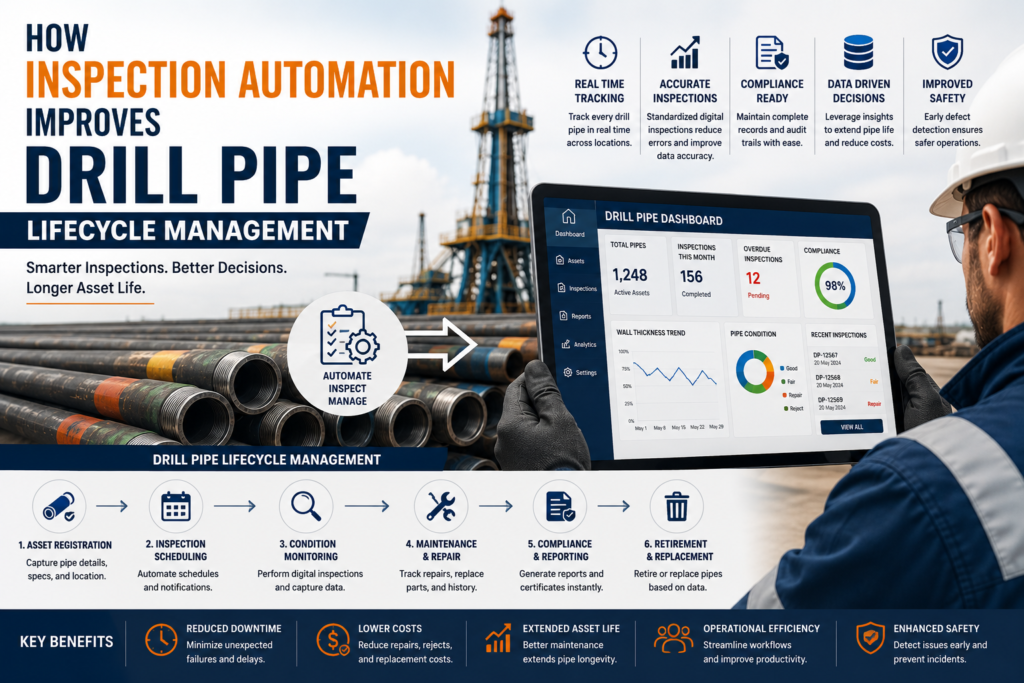
Automated inspection systems allow companies to track each drill pipe throughout its lifecycle. Every inspection, repair, and operational update is recorded in a centralized database.
As a result, inspectors and managers can instantly access:
This level of visibility helps organizations make proactive maintenance decisions instead of reactive ones.
Traditional reporting processes often delay operational decisions. Inspectors may spend hours preparing reports manually after field inspections.
However, inspection automation significantly reduces reporting time. Inspection teams can complete inspections using mobile devices, while reports are automatically generated in real time.
This process improves:
Consequently, drilling operations experience fewer delays.
The oil and gas industry operates under strict regulatory and safety standards. Therefore, maintaining accurate inspection documentation is critical.
Inspection automation helps companies maintain compliance by:
In addition, automated systems improve consistency across inspection teams and operational locations.
One of the biggest advantages of inspection automation is predictive maintenance. Instead of waiting for equipment failures, companies can identify early warning signs using inspection data and asset trends.
For example, recurring wall thickness reductions or repeated repair patterns can trigger maintenance alerts automatically. Therefore, companies can address issues before they become critical failures.
Data fragmentation is a major challenge in manual inspection management. Inspection reports, spreadsheets, and repair records are often stored in different systems.
Inspection automation centralizes all drill pipe information into one platform. Because of this, managers can access real time dashboards and performance analytics.
| Operational Insight | Business Benefit |
|---|---|
| Pipe rejection trends | Improved replacement planning |
| Inspection frequency analysis | Better scheduling efficiency |
| Repair history tracking | Reduced recurring failures |
| Utilization monitoring | Improved asset allocation |
| Performance analytics | Data driven decision making |
As a result, organizations gain stronger operational control and better long term planning capabilities.
Manual inspections and handwritten reports increase the chances of human error. Even small mistakes can create safety risks or inaccurate asset records.
Automated inspection software reduces these risks by:
Consequently, inspection accuracy improves significantly across the entire operation.
Drill pipe lifecycle management often involves multiple departments, including inspection teams, operations managers, maintenance personnel, and compliance officers.
Without centralized systems, communication gaps can slow down decision making. However, inspection automation enables real time collaboration through shared dashboards and cloud based access.
This improves:
Therefore, teams can respond faster to operational requirements.
InspectionsTrack helps oil and gas inspection companies digitize and automate inspection workflows for drill pipes and other critical assets.
The platform is designed to improve operational efficiency, reporting accuracy, and compliance management across industrial inspections.
In addition, the software helps organizations improve asset visibility while reducing administrative workload.
Implementing inspection automation successfully requires proper planning and operational alignment.
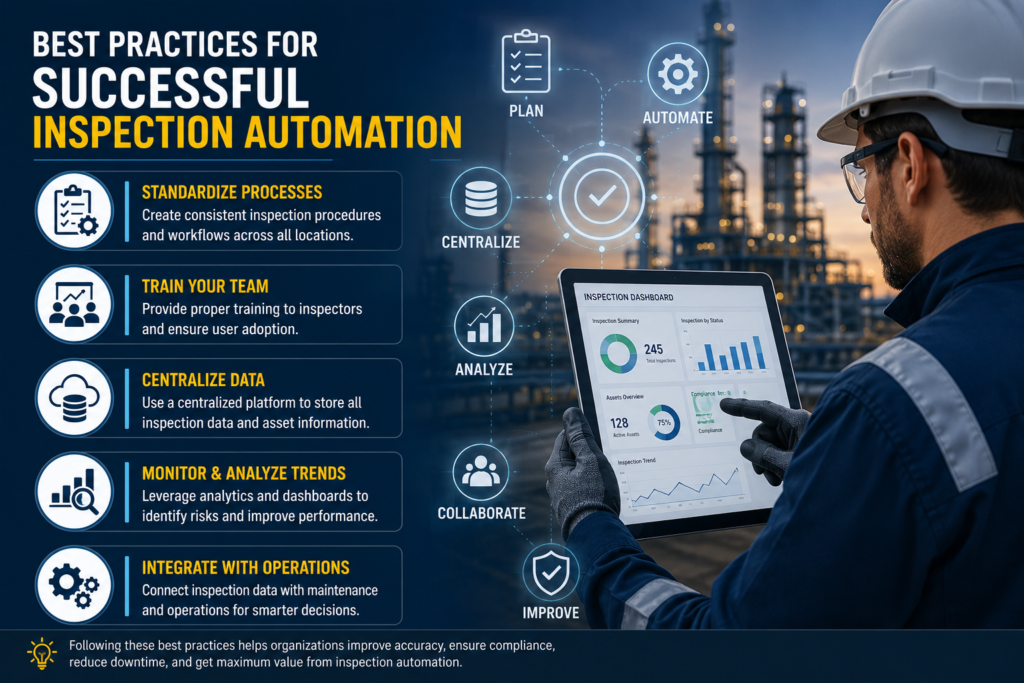
Create consistent inspection workflows across all operational locations. This improves reporting quality and inspection accuracy.
Ensure inspectors understand how to use digital inspection tools and mobile applications effectively.
Store all inspection and maintenance records within a single platform to improve visibility and reporting.
Review inspection analytics and performance trends frequently to identify operational risks early.
Connect inspection data with operational planning to improve scheduling and maintenance coordination.
The oil and gas industry is rapidly moving toward digital transformation. As operations become more data driven, inspection automation will continue playing a critical role in asset management and operational efficiency.
Companies that adopt automated inspection systems can improve compliance, reduce downtime, enhance safety, and extend drill pipe lifespan. Furthermore, they gain the operational visibility needed to make faster and smarter business decisions.
Inspection automation is changing how oil and gas companies manage drill pipe lifecycle operations. Traditional manual systems often create delays, errors, and compliance challenges. However, automated inspection platforms provide real time visibility, predictive maintenance capabilities, and centralized reporting.
As a result, organizations can improve safety, operational efficiency, and asset reliability while reducing long term costs.
Solutions like InspectionsTrack help inspection companies modernize their workflows and manage drill pipe inspections more effectively in today’s demanding oil and gas environment.
Read more : How to Manage Multi Site NDT Operations More Efficiently
Inspection automation improves drill pipe management by providing real time tracking, faster reporting, centralized inspection records, and predictive maintenance insights. This helps reduce downtime and improve operational efficiency.
Manual tracking often leads to delayed reports, data entry errors, lost documents, and poor visibility into asset conditions. As a result, companies may face compliance risks and higher maintenance costs.
InspectionsTrack helps companies automate inspections, generate digital reports, track asset history, improve compliance management, and enhance operational visibility across oil and gas inspection workflows.
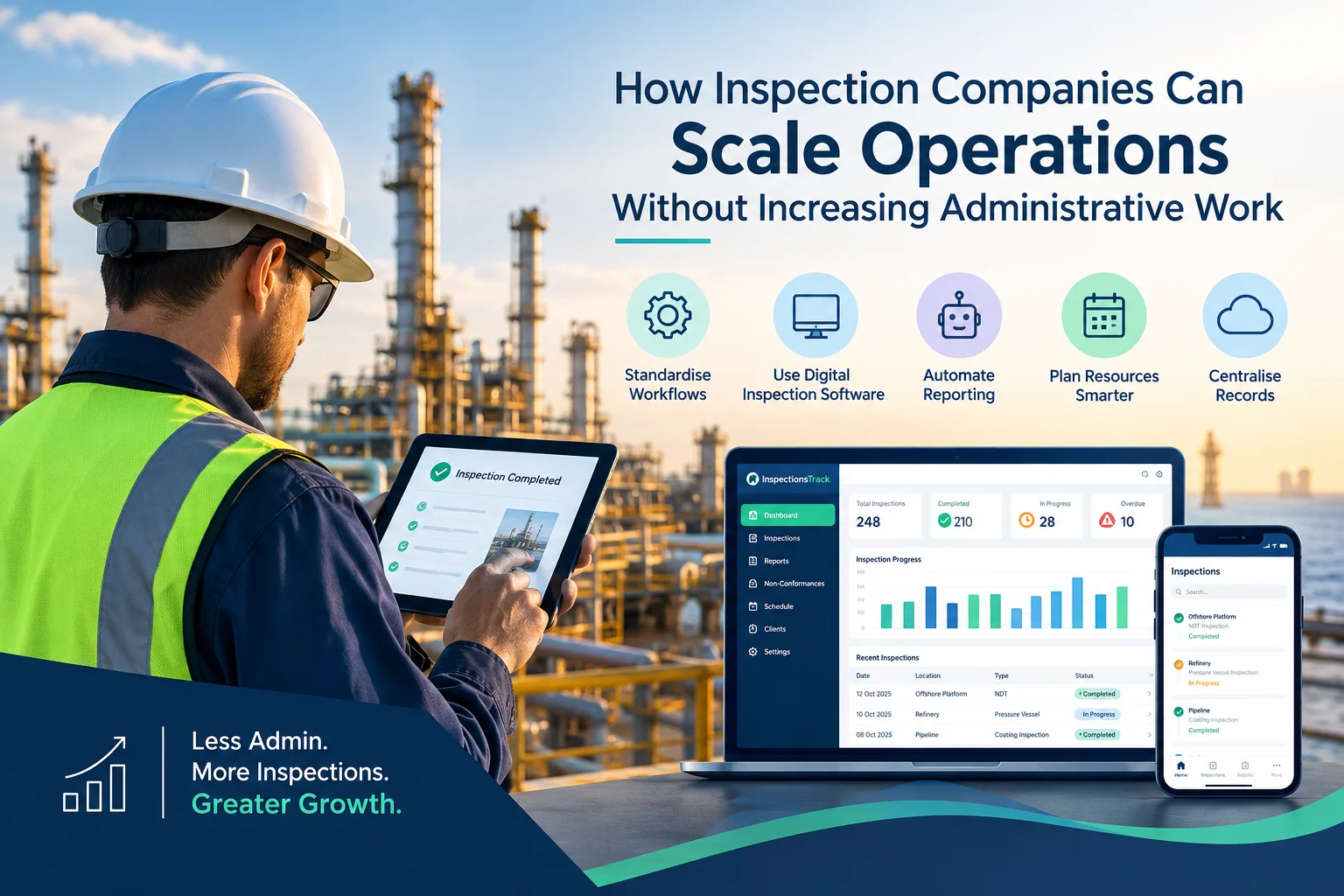
Inspection companies in the oil and gas industry face a common challenge: how to handle more inspections, manage larger projects, and meet client deadlines without increasing administrative workload. As businesses grow, inspection teams must manage…
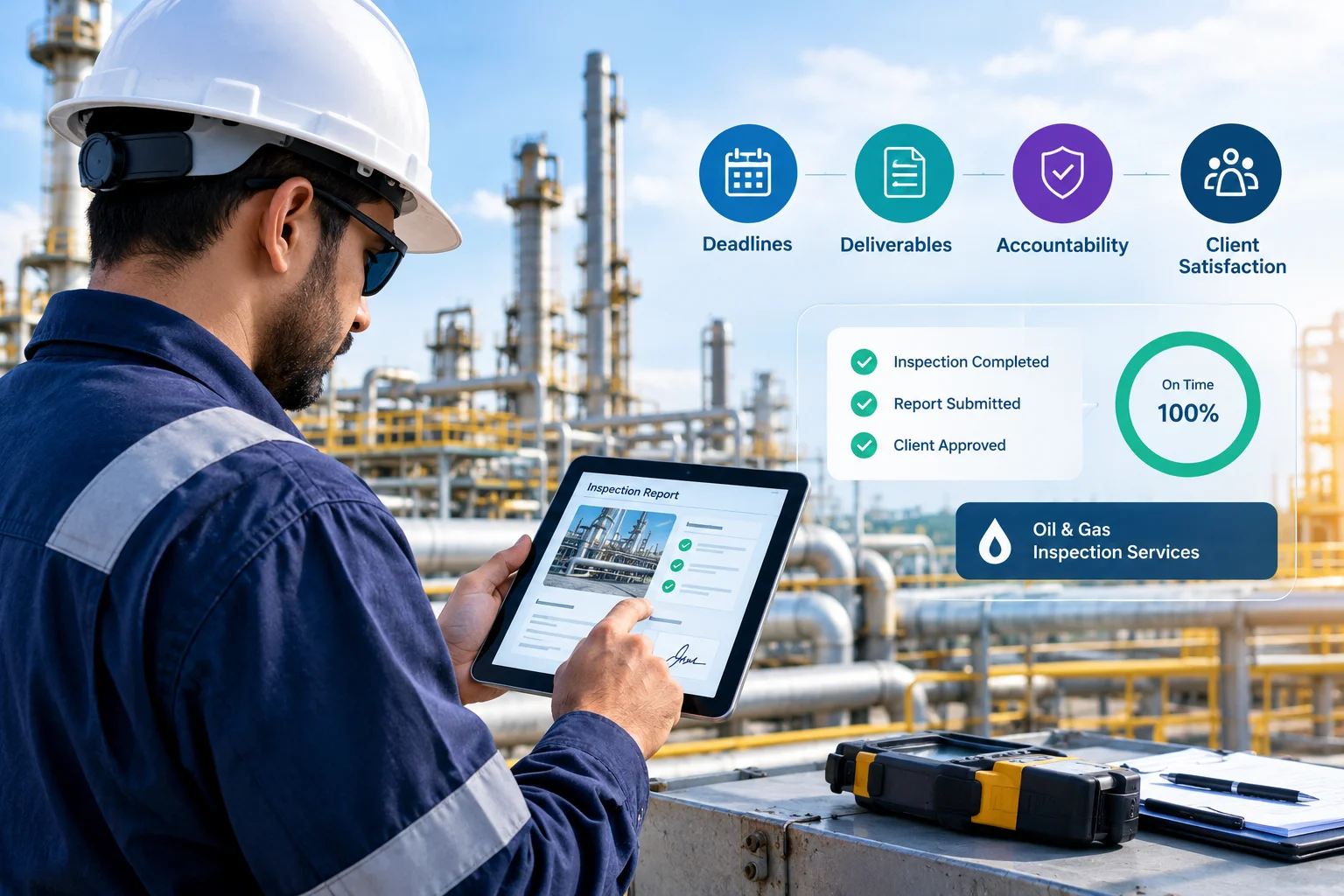
Meeting client Service Level Agreements (SLAs) is essential for inspection companies working in demanding industries such as oil and gas, energy, and industrial maintenance. Clients expect inspections to be completed on time, reports to be…


