
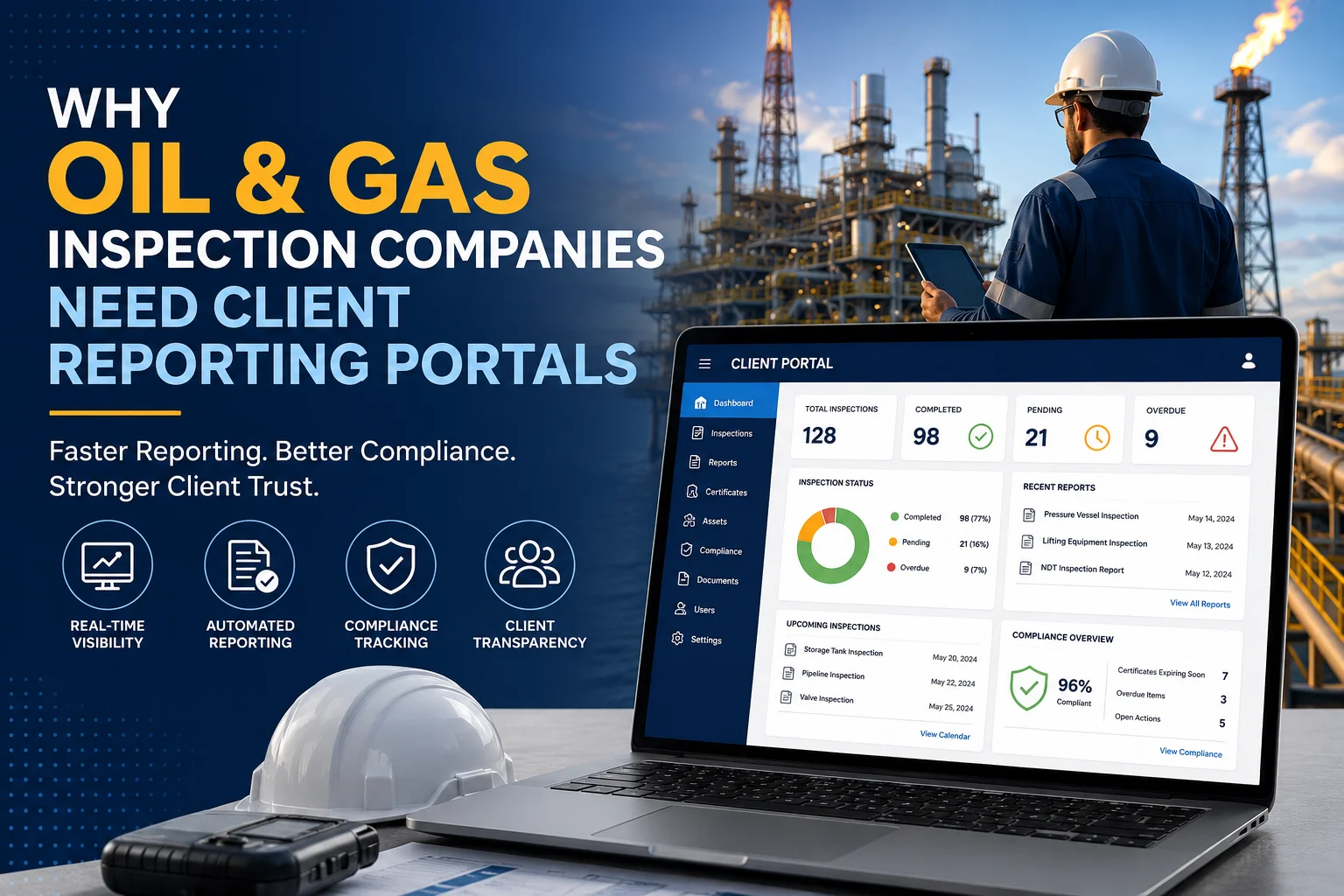
The oil and gas industry depends heavily on accurate inspections, fast reporting, and strict compliance management. However, many inspection companies still rely on spreadsheets, emails, paper reports, and disconnected systems to manage client communication and inspection reporting.
As a result, reporting delays, missing documents, poor visibility, and communication gaps become common operational problems. Moreover, clients now expect faster access to inspection reports, certificates, compliance records, and real time project updates.
This is exactly why client reporting portals are becoming essential for modern oil and gas inspection companies.
A client reporting portal gives inspection companies a centralized digital platform where clients can securely access inspection reports, certificates, compliance documents, asset history, and live inspection status updates anytime.
More importantly, it improves operational efficiency, strengthens client trust, and helps inspection companies deliver a more professional service experience.
A client reporting portal is a secure online platform connected to inspection management software. It allows clients to view and manage inspection related information from one centralized location.
Instead of requesting reports through emails or waiting for manual updates, clients can directly log into the portal and access important information instantly.
In the oil and gas industry, where inspections are critical for safety and compliance, these capabilities significantly improve operational workflows.
Oil and gas inspection projects generate large amounts of data every day. Managing this manually creates serious operational challenges.
Inspection teams often spend hours compiling reports manually. Consequently, clients experience delays in receiving important inspection results.
When reports are stored across emails, local systems, and spreadsheets, document tracking becomes difficult. Eventually, this increases the risk of missing records during audits.
Clients frequently need project updates, inspection status reports, and compliance documentation. Without a portal, communication becomes slow and inefficient.
Administrative staff spend valuable time responding to repetitive client requests for reports and inspection updates.
The oil and gas sector follows strict regulatory standards. Missing or outdated records can create serious compliance problems.
Speed matters in industrial inspections. Delays can impact operations, project timelines, and compliance deadlines.
With a client reporting portal, inspection data becomes instantly available after approval. Therefore, clients no longer need to wait for manual email communication.
Inspection companies can also automate report generation, which saves significant time for inspection teams.
Transparency is critical in oil and gas operations. Clients want visibility into inspection progress, compliance status, and asset conditions.
A reporting portal provides clients with 24/7 access to their inspection records. As a result, communication becomes clearer and more professional.
This level of transparency strengthens long term business relationships.
Oil and gas inspections involve strict compliance requirements. Inspection companies must maintain accurate documentation for audits, certifications, and regulatory reviews.
A client reporting portal centralizes all compliance related records in one system.
Consequently, inspection companies reduce the risk of compliance failures.
Manual reporting consumes a large amount of operational time. Teams often spend hours preparing PDFs, responding to emails, and organizing records.
Client reporting portals automate many of these repetitive tasks.
As a result, inspection companies can focus more on inspections and less on paperwork.
Modern inspection projects require fast decision making. However, disconnected reporting systems create visibility gaps.
Client portals provide real time dashboards and inspection tracking tools that improve operational awareness.
This improves both operational control and client satisfaction.
| Feature | Manual Reporting | Client Reporting Portal |
|---|---|---|
| Report Delivery Speed | Slow | Instant |
| Client Access | Email Based | 24/7 Secure Access |
| Compliance Tracking | Difficult | Automated |
| Document Management | Scattered | Centralized |
| Inspection Visibility | Limited | Real Time |
| Administrative Work | High | Reduced |
| Audit Readiness | Time Consuming | Simplified |
| Client Experience | Inconsistent | Professional |
Lifting gear inspection companies often manage thousands of certificates and inspection reports.
With a reporting portal:
Non destructive testing companies generate large volumes of technical reports.
A reporting portal helps clients:
Offshore projects involve multiple stakeholders across different locations.
Client reporting portals improve collaboration by providing centralized access to inspection data from anywhere.
Many inspection companies initially view reporting portals as an operational upgrade. However, the long term financial benefits are significant.
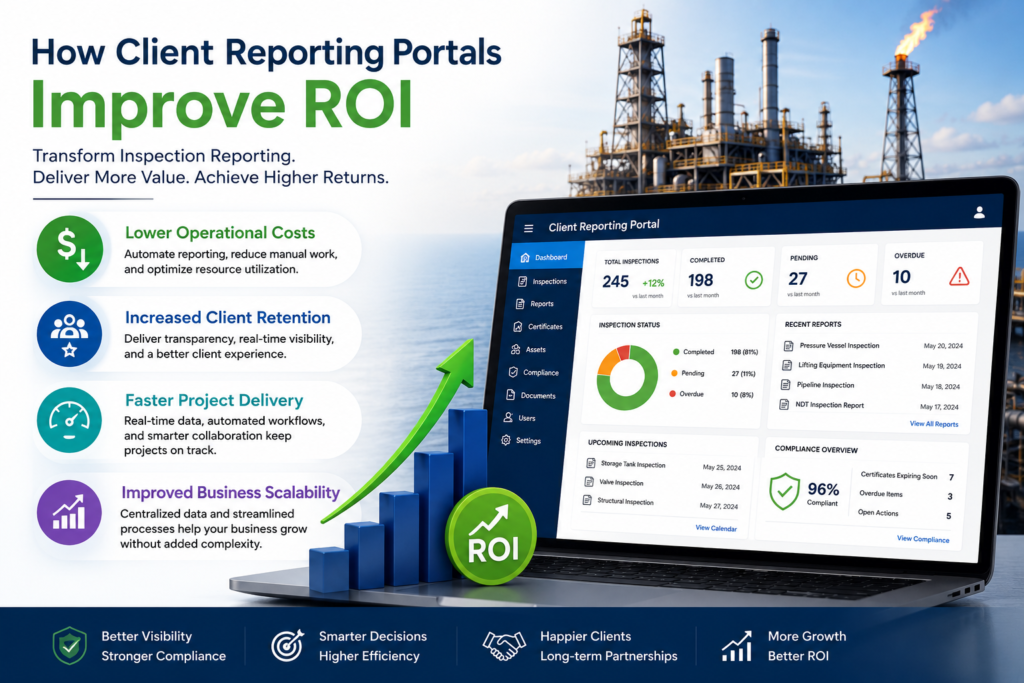
Automation reduces manual administrative work. Therefore, companies require fewer resources for reporting and document management.
Clients prefer inspection companies that offer transparency, faster communication, and digital access.
A professional reporting experience increases customer satisfaction and retention rates.
Real time reporting reduces bottlenecks and improves workflow efficiency. Consequently, projects move faster.
Manual reporting systems become difficult to manage as operations grow.
A digital reporting portal supports scalable growth without increasing administrative complexity.
Choosing the right inspection reporting software is important.
All reports, certificates, and compliance records should remain in one system.
Inspection reports should generate automatically to reduce manual work.
Clients should only access authorized information.
Inspectors should upload inspection data directly from the field.
The system should support audit readiness and regulatory compliance management.
Real time dashboards improve operational visibility.
Inspections Track provides a complete inspection software solution designed specifically for the oil and gas inspection industry.
The platform helps inspection companies modernize reporting workflows, improve compliance management, and deliver a better client experience.
By using Inspections Track, inspection companies can reduce reporting delays, improve transparency, and streamline operations across multiple inspection disciplines.
The oil and gas industry is rapidly moving toward digital inspection workflows. Clients now expect faster communication, real time visibility, and instant access to inspection records.
Companies that continue relying on manual reporting systems may struggle to meet these expectations.
On the other hand, inspection companies that invest in client reporting portals position themselves for stronger growth, better client retention, and improved operational efficiency.
Digital reporting is no longer just a competitive advantage. It is becoming an industry requirement.
A client reporting portal is a secure online platform where clients can access inspection reports, certificates, compliance documents, and project updates in real time.
They improve transparency, speed up reporting, reduce manual work, and help inspection companies maintain better compliance management.
Yes. Client portals centralize inspection records, making audits and compliance reviews much easier and faster.
They automate manual reporting tasks, reduce administrative workload, and improve workflow efficiency.
Oil and gas inspection companies operate in a highly demanding environment where accuracy, speed, compliance, and client trust are essential.
Manual reporting systems create unnecessary delays, communication problems, and operational inefficiencies. However, client reporting portals solve these challenges by centralizing inspection data, automating workflows, and improving transparency.
More importantly, they help inspection companies deliver a modern, professional client experience while improving operational performance.
If your inspection company still relies on spreadsheets, emails, and disconnected reporting systems, now is the right time to modernize your inspection workflows.
Explore how Inspections Track can help your business streamline inspections, improve compliance, and provide clients with real time reporting visibility.
Read more: How Inspection Delays Affect Safety, Compliance, and Project Timelines
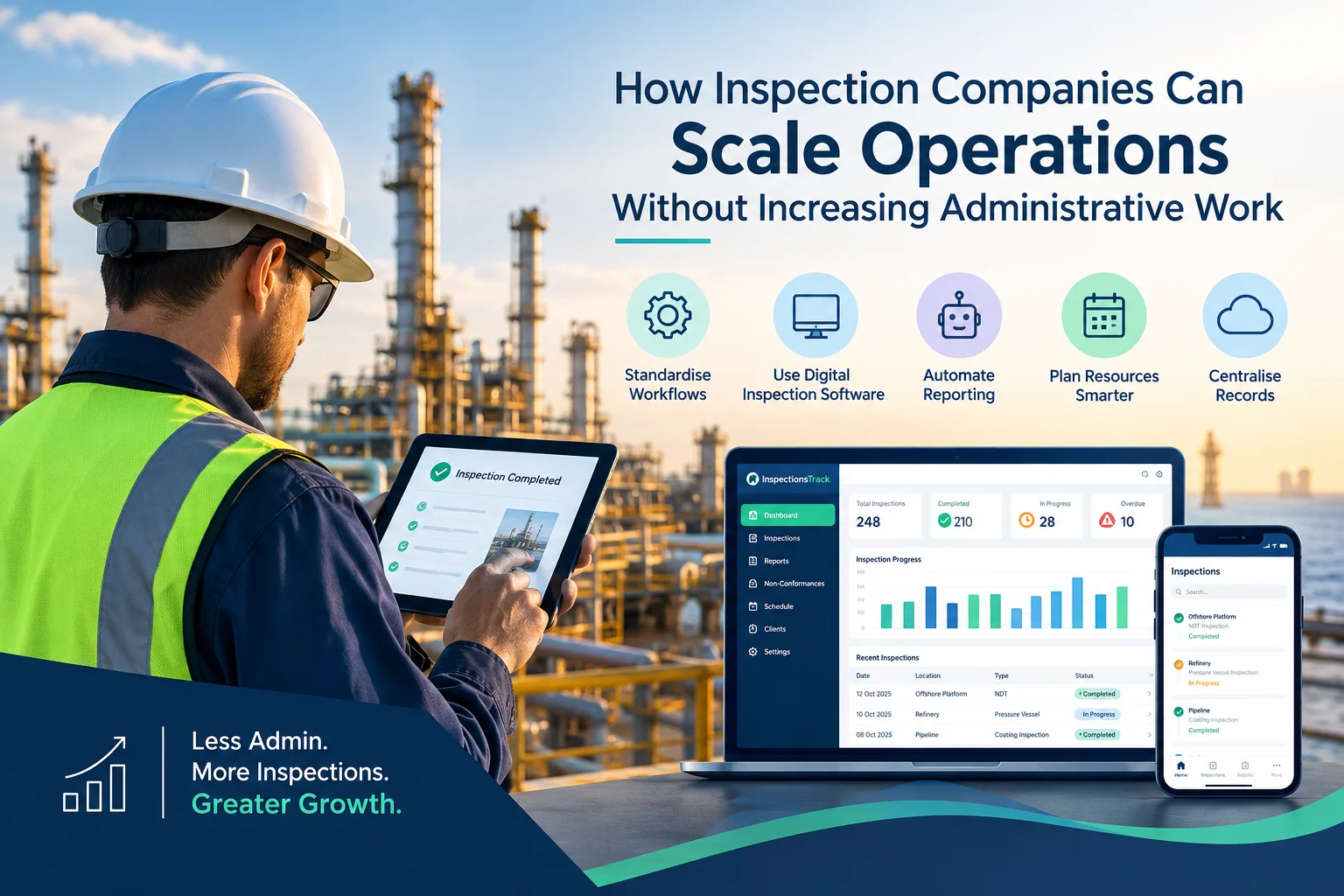
Inspection companies in the oil and gas industry face a common challenge: how to handle more inspections, manage larger projects, and meet client deadlines without increasing administrative workload. As businesses grow, inspection teams must manage…
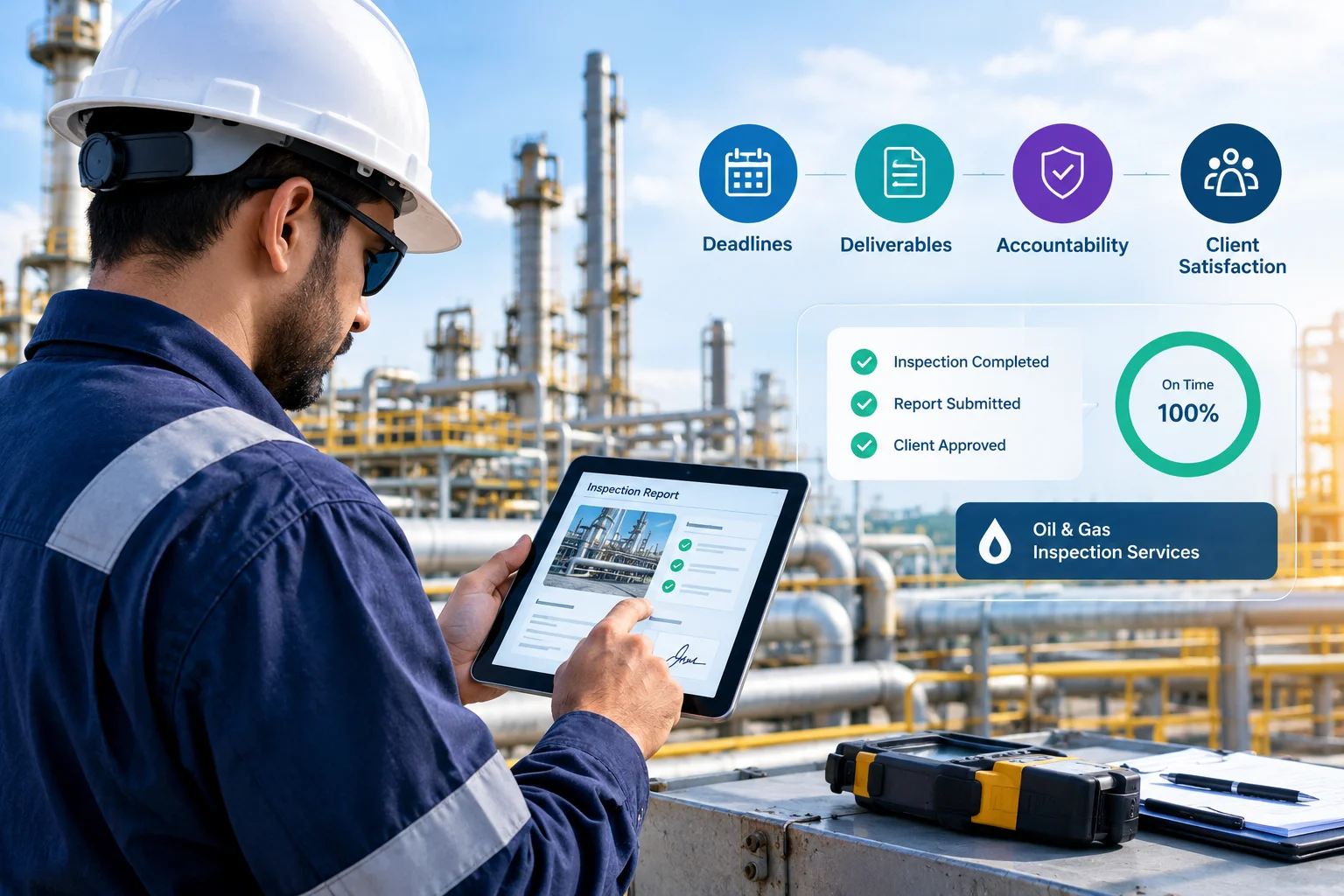
Meeting client Service Level Agreements (SLAs) is essential for inspection companies working in demanding industries such as oil and gas, energy, and industrial maintenance. Clients expect inspections to be completed on time, reports to be…


