
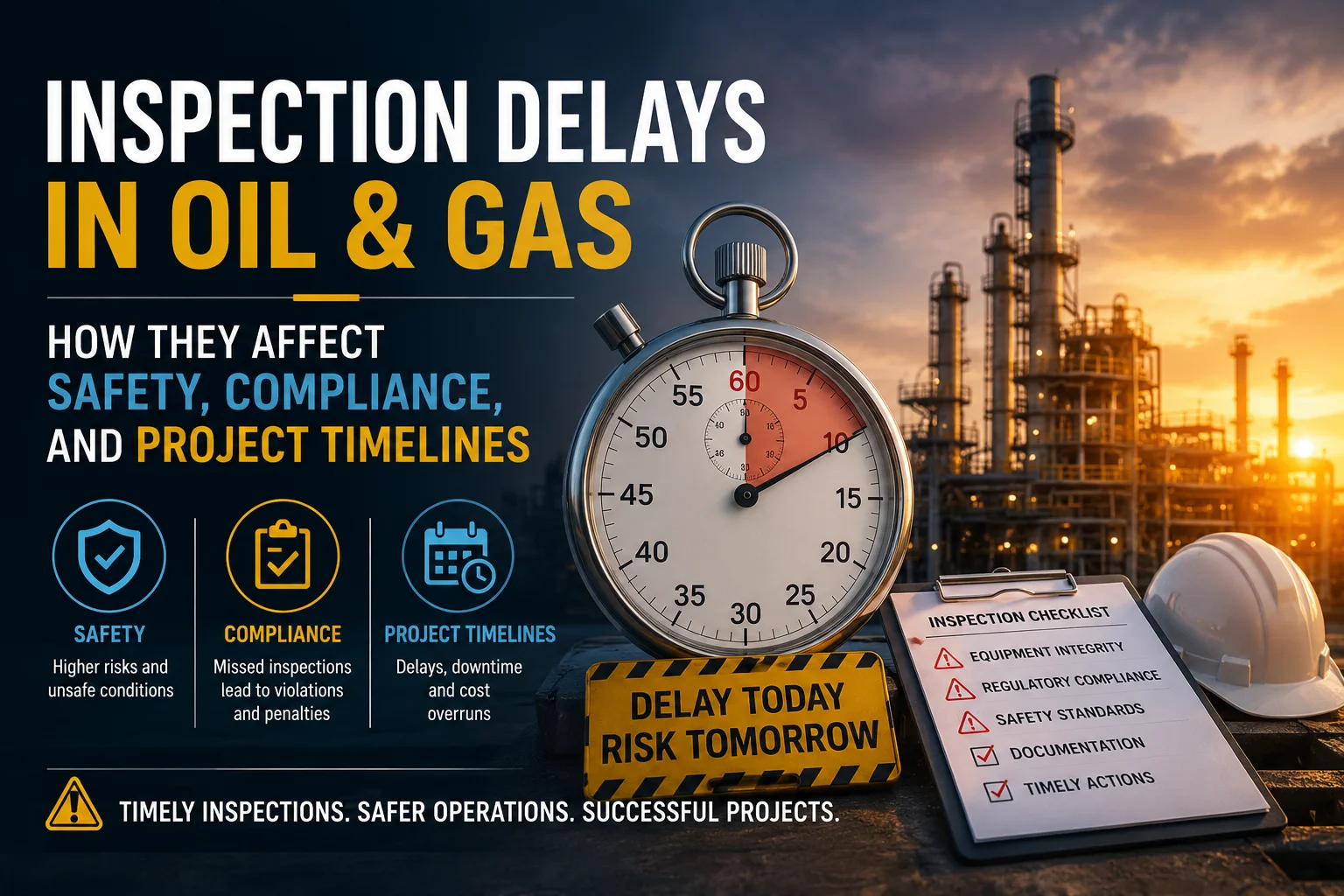
Inspection delays are one of the most overlooked operational risks in the oil and gas industry. While many companies focus on production targets and project delivery, delayed inspections often create hidden problems that affect safety, compliance, operational efficiency, and profitability.
In high risk industries, inspections are not just a routine process. They are directly connected to equipment reliability, workforce safety, regulatory compliance, and project continuity. Therefore, when inspections are delayed, the consequences can spread across the entire operation.
Today, many oil and gas companies are moving toward digital inspection systems like Inspectionstrack to reduce reporting delays, improve visibility, and maintain audit readiness in real time.
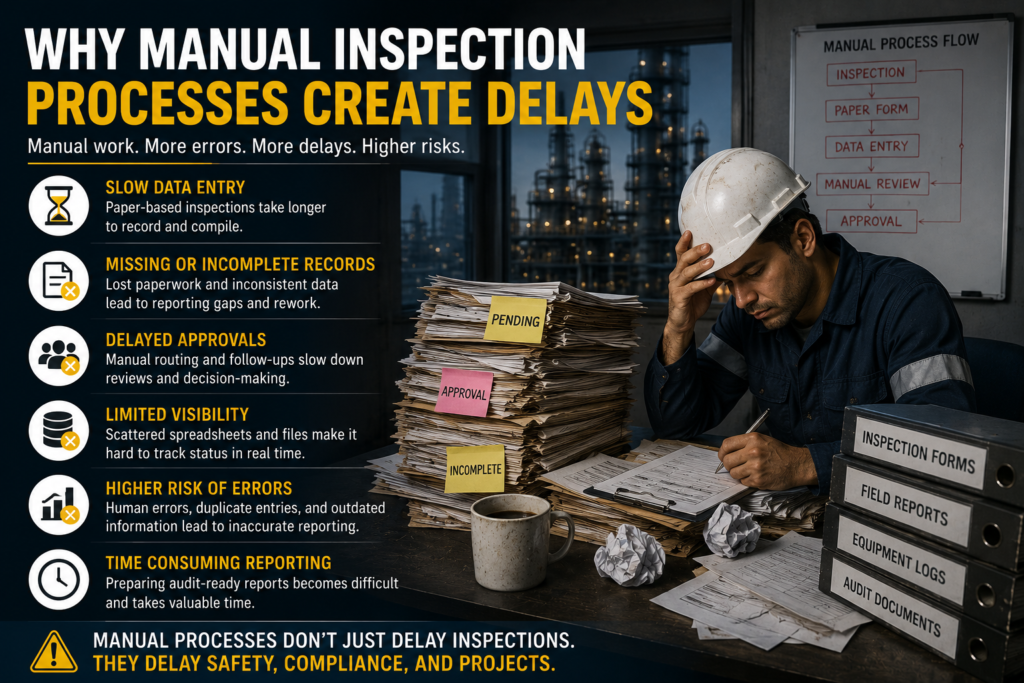
Inspection delays happen for many reasons. In some cases, field teams rely on manual paperwork. In other situations, inspection data is stored in spreadsheets or disconnected systems. As a result, reports take longer to process, approvals become slow, and critical findings may not reach decision makers on time.
Consequently, businesses face operational gaps that can impact both safety and project execution.
| Cause | Operational Impact |
|---|---|
| Manual reporting processes | Slow report generation |
| Paper based inspections | Lost or incomplete records |
| Spreadsheet tracking | Poor visibility and version control |
| Delayed approvals | Equipment downtime |
| Limited field connectivity | Reporting backlogs |
| Disconnected systems | Compliance gaps |
Moreover, when inspections are delayed repeatedly, small operational issues can quickly turn into major risks.
Safety is the biggest concern in oil and gas operations. Equipment inspections help identify wear, corrosion, structural damage, and operational failures before they become dangerous incidents.
However, delayed inspections reduce the ability to detect these issues early.
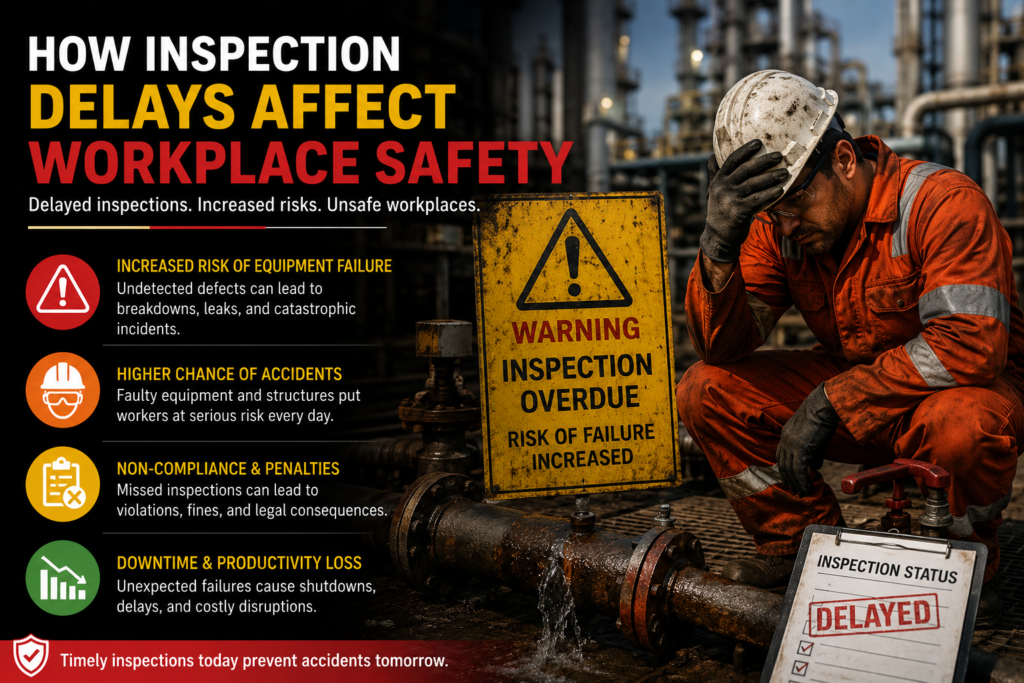
When inspection schedules are missed, critical assets may continue operating despite hidden defects. Consequently, organizations increase the risk of:
Furthermore, delayed reporting means corrective actions are also delayed. As a result, hazards remain active for longer periods.
Without real time inspection data, managers often lack a clear understanding of asset conditions. Therefore, decision making becomes reactive instead of proactive.
For example, if inspection reports are submitted days later, maintenance teams cannot prioritize repairs immediately. In turn, unsafe equipment may remain operational longer than expected.
Inspection delays can also affect field workers directly. Unsafe environments increase the likelihood of:
Because of this, inspection efficiency should be treated as a core safety strategy rather than an administrative task.
Oil and gas companies operate under strict regulatory and client compliance requirements. Inspection records must be accurate, traceable, and available during audits.
However, delayed inspections often create documentation gaps.
Many assets require inspections within specific intervals. If inspections are delayed, companies may fail to meet:
As a result, businesses may face penalties, failed audits, or operational restrictions.
Audit preparation becomes difficult when inspection records are stored across spreadsheets, emails, and paper files.
Consequently, companies often struggle with:
| Compliance Challenge | Business Impact |
|---|---|
| Missing inspection records | Failed audits |
| Incomplete documentation | Compliance penalties |
| Delayed certifications | Project delays |
| Poor traceability | Reduced client trust |
| Version control issues | Reporting inaccuracies |
Therefore, centralized inspection management has become essential for modern industrial operations.
Inspection delays do not only affect safety and compliance. They also create major disruptions in project schedules.
In oil and gas projects, inspections are connected to approvals, mobilization, certifications, maintenance activities, and operational readiness. Consequently, one delayed inspection can affect multiple departments.
Equipment often requires inspection clearance before use. If reports are delayed, operational teams may be unable to proceed with planned activities.
For example:
As a result, project timelines become harder to manage.
When inspections are not completed efficiently, equipment downtime increases significantly.
Moreover, delayed reporting slows maintenance coordination. Therefore, operational interruptions become longer and more expensive.
Inspection delays also create financial losses through:
Consequently, inefficient inspection management directly affects profitability.
Many companies still depend on spreadsheets, paperwork, and disconnected reporting systems. Although these methods may appear manageable initially, they become inefficient as operations grow.
Furthermore, manual systems make it difficult to monitor inspection progress across multiple sites and assets.
Modern inspection software helps companies streamline inspections, reporting, compliance tracking, and operational visibility.
Platforms like Inspectionstrack are specifically designed for oil and gas inspection operations. As a result, inspection teams can reduce delays while improving accuracy and compliance management.
Digital forms and automated workflows help inspectors submit reports directly from the field. Consequently, reporting time is reduced significantly.
Managers can monitor inspection status, pending actions, and compliance records in real time. Therefore, decision making becomes faster and more accurate.
Inspectionstrack helps businesses maintain audit ready records with centralized documentation and traceability features.
Because all inspection data is stored in one system, field teams, managers, and clients can access updated information quickly.
Automation reduces manual data entry and reporting inconsistencies. As a result, inspection accuracy improves.
| Feature | Manual Process | Digital Inspection Software |
|---|---|---|
| Reporting Speed | Slow | Fast |
| Data Accuracy | Error prone | Improved accuracy |
| Compliance Tracking | Difficult | Automated |
| Real Time Visibility | Limited | Full visibility |
| Audit Readiness | Time consuming | Simplified |
| Document Management | Disconnected | Centralized |
| Field Accessibility | Restricted | Mobile enabled |
Companies that want to improve operational performance should focus on proactive inspection management strategies.
Mobile inspection apps allow inspectors to complete reports directly on site. Consequently, delays caused by manual paperwork are eliminated.
Automation helps reduce approval bottlenecks and manual coordination.
A centralized system improves document management, compliance tracking, and audit preparation.
Businesses should track metrics such as:
Therefore, management teams can identify inefficiencies earlier.
The oil and gas industry is moving toward digital transformation rapidly. Companies now require faster reporting, better compliance management, and improved operational visibility.
As a result, digital inspection platforms are becoming a critical part of modern operations.
Organizations that continue using manual systems may struggle with increasing compliance demands, operational complexity, and project pressure.
Meanwhile, businesses using intelligent inspection software gain:
Inspection delays can create serious operational challenges across safety, compliance, and project execution. Although many companies underestimate these risks, delayed inspections often lead to downtime, compliance issues, financial losses, and safety incidents.
Therefore, businesses should focus on improving inspection efficiency through digital transformation.
Solutions like Inspectionstrack help oil and gas companies streamline inspections, automate reporting, improve audit readiness, and maintain real time operational visibility.
In today’s competitive industrial environment, faster and smarter inspection management is no longer optional. It has become essential for safe, compliant, and efficient operations.
Read more : lifting gear inspection software vs spreadsheets
Inspection delays can increase the risk of equipment failures, safety incidents, compliance violations, and operational downtime.
Inspection software centralizes records, automates tracking, and improves audit readiness through real time visibility and digital documentation.
Industries such as oil and gas, lifting equipment, NDT, rope access, marine, and industrial inspection services benefit significantly from digital inspection solutions.
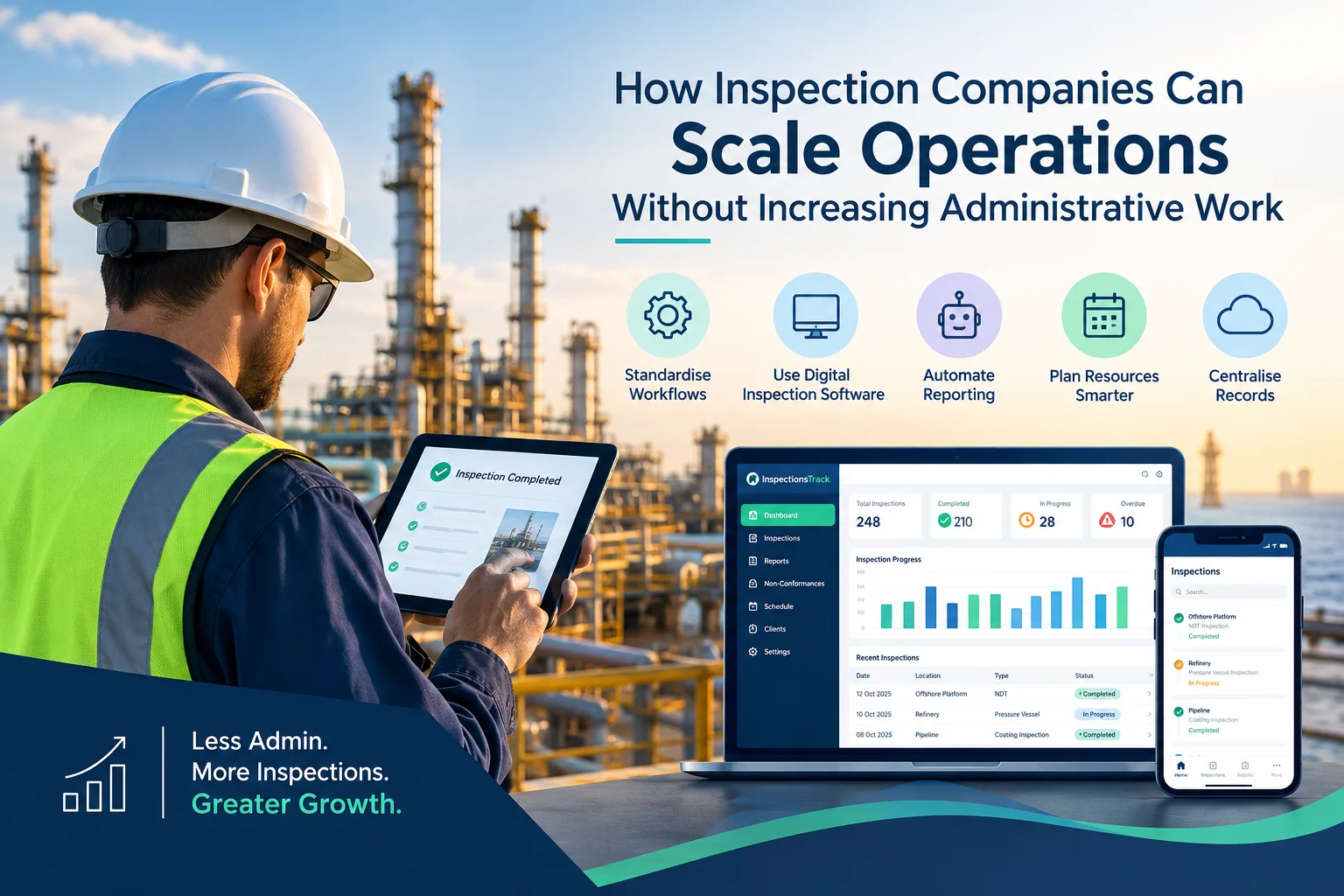
Inspection companies in the oil and gas industry face a common challenge: how to handle more inspections, manage larger projects, and meet client deadlines without increasing administrative workload. As businesses grow, inspection teams must manage…
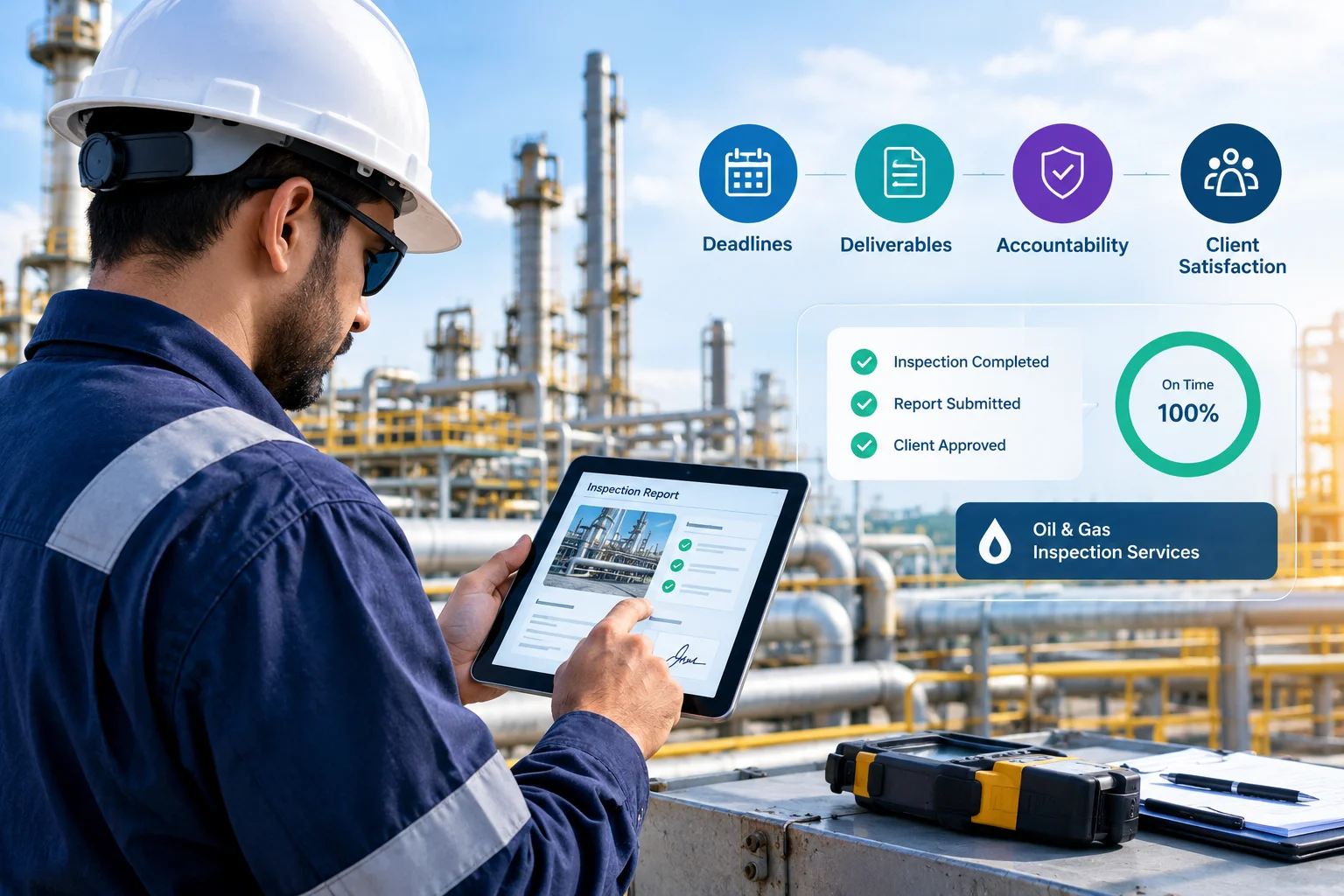
Meeting client Service Level Agreements (SLAs) is essential for inspection companies working in demanding industries such as oil and gas, energy, and industrial maintenance. Clients expect inspections to be completed on time, reports to be…


