
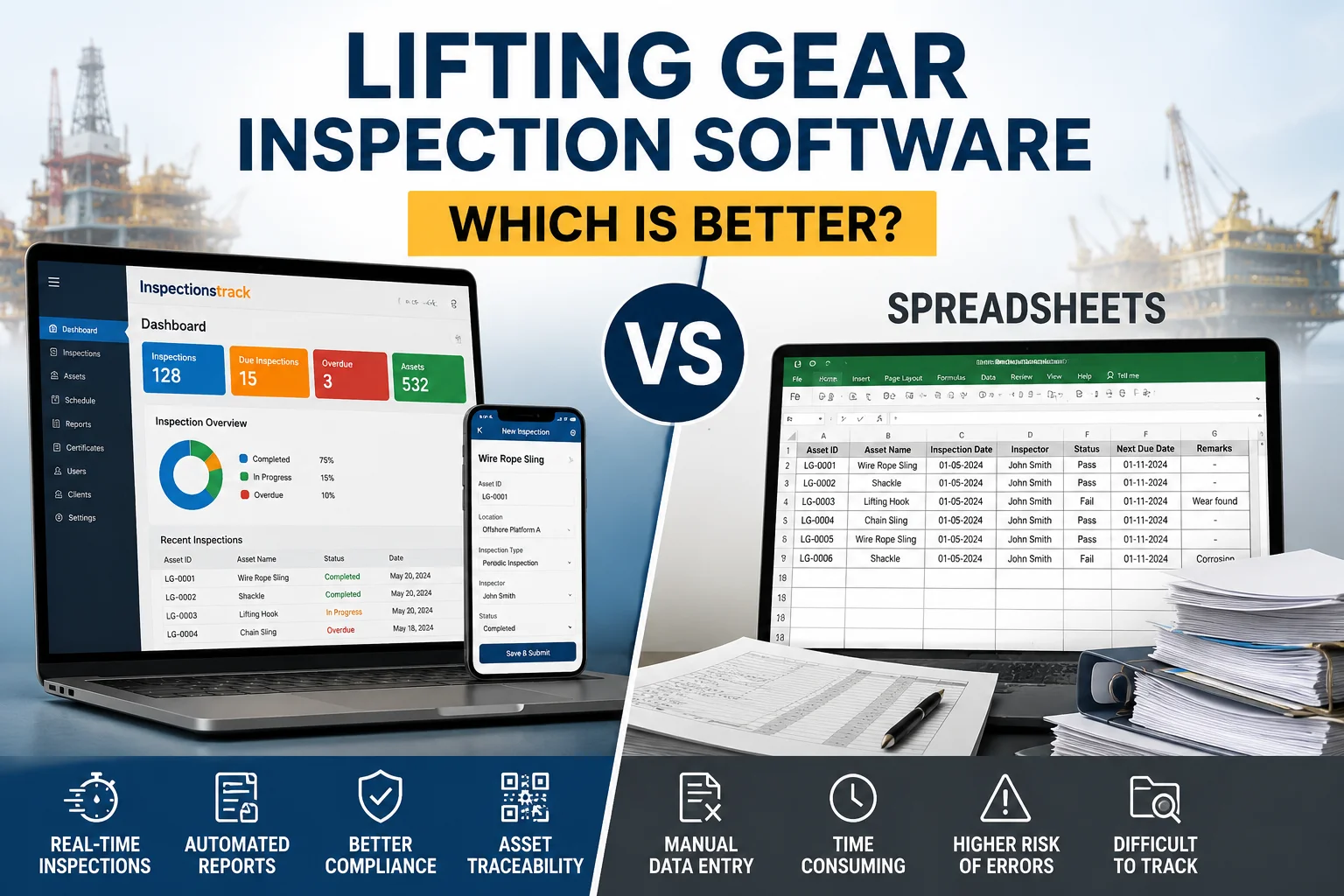
Lifting gear inspections play a critical role in maintaining safety, compliance, and operational efficiency in the oil and gas industry. However, many companies still rely on spreadsheets to manage inspection records, certifications, and reporting. While spreadsheets may appear simple and cost effective in the beginning, they often create delays, data errors, and compliance risks as operations grow.
On the other hand, modern lifting gear inspection software provides a centralized and automated way to manage inspections, equipment records, certifications, and reporting in real time.
So, which option is actually better for inspection companies, oil and gas contractors, and industrial operations?
This guide compares lifting gear inspection software and spreadsheets in detail so decision makers can understand which solution delivers better efficiency, compliance, and long term value.
Lifting equipment failures can lead to operational downtime, safety incidents, failed audits, and financial losses. Therefore, inspection data must remain accurate, accessible, and up to date at all times.
Companies managing cranes, slings, shackles, hooks, lifting beams, wire ropes, and offshore lifting equipment need systems that support:
Although spreadsheets can store information, they often struggle to support these operational demands effectively.
Many inspection companies begin with spreadsheets because they are familiar and easy to access. However, problems usually appear as inspection volumes increase.
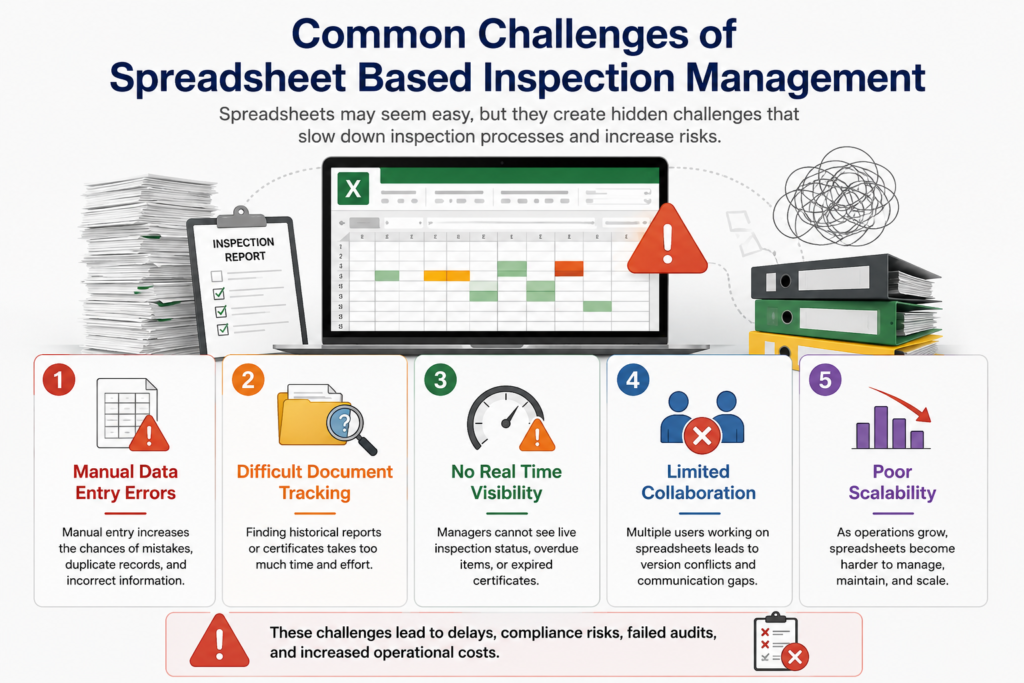
Inspection teams often enter data manually across multiple sheets. As a result, duplicate records, incorrect dates, and missing certifications become common.
Finding historical reports or equipment certificates can take significant time. Consequently, audits become stressful and inefficient.
Managers cannot easily monitor inspection progress, expired certificates, or overdue inspections in real time.
When multiple inspectors update spreadsheets simultaneously, version conflicts frequently occur.
As operations grow across sites or regions, spreadsheets become harder to manage and maintain.
Lifting gear inspection software is a digital platform designed specifically to manage inspection operations, compliance records, certifications, and reporting workflows.
Instead of relying on disconnected files, the software centralizes everything into one system.
Modern solutions such as Inspectionstrack Software Suite help oil and gas inspection companies streamline operations through automation, mobile inspections, QR code traceability, and real time dashboards.
| Feature | Spreadsheets | Lifting Gear Inspection Software |
|---|---|---|
| Inspection Data Management | Manual | Automated |
| Report Generation | Time Consuming | Instant |
| Compliance Tracking | Difficult | Real Time |
| Certificate Management | Scattered Files | Centralized |
| Audit Preparation | Manual Effort | Audit Ready |
| Equipment Traceability | Limited | QR Code Enabled |
| Mobile Inspection Capability | No | Yes |
| Team Collaboration | Limited | Multi User Access |
| Data Accuracy | Higher Risk of Errors | Improved Accuracy |
| Operational Visibility | Limited | Real Time Dashboards |
| Scalability | Difficult | Highly Scalable |
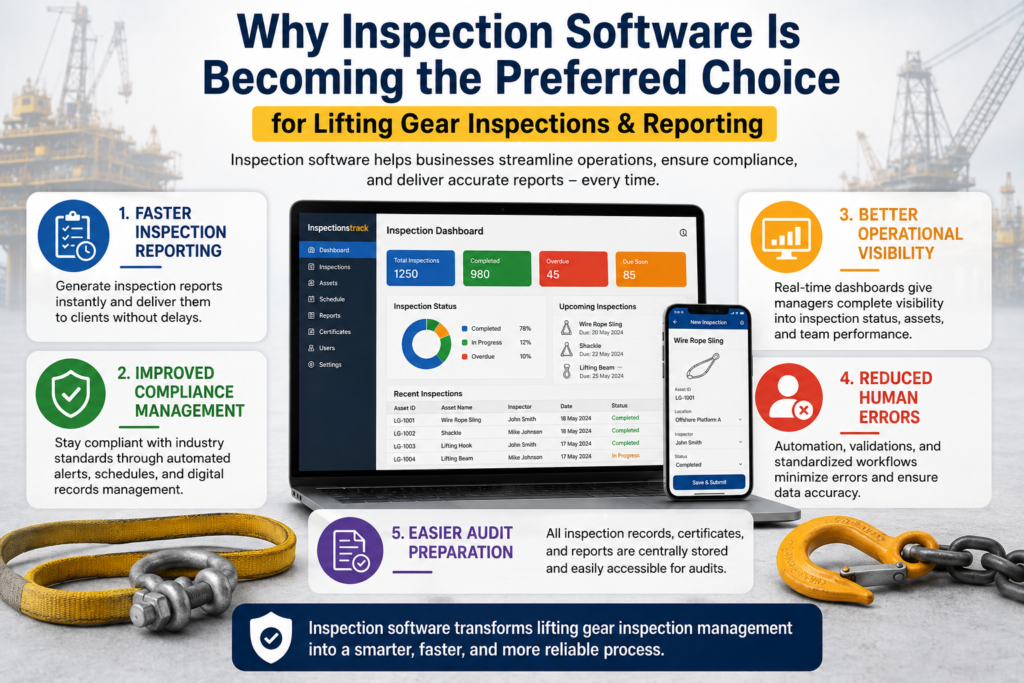
Inspection software significantly reduces reporting time. Inspectors can complete inspections directly from mobile devices, while reports generate automatically.
As a result, companies can deliver certificates and inspection reports much faster to clients.
Compliance requirements in the oil and gas industry continue to increase. Therefore, companies need systems that help track:
Inspection software simplifies all these processes through automated alerts and centralized record management.
Managers can monitor inspection activity, equipment status, and technician performance through live dashboards.
Consequently, decision makers gain better operational control and faster visibility into ongoing projects.
Automation minimizes manual data entry. Therefore, companies experience fewer reporting mistakes and improved data consistency.
Audit preparation becomes much simpler because all inspection records remain digitally organized and accessible in one platform.
Oil and gas environments require strict safety standards and detailed inspection tracking. Because of this, digital inspection systems provide major operational advantages.
All lifting assets remain organized in one secure system.
Inspectors can instantly access equipment history by scanning QR codes.
Managers receive live inspection status updates from field teams.
Inspectors can work both online and offline from remote sites.
Certificates and reports generate automatically after inspections.
At first glance, spreadsheets may appear inexpensive. However, they often create hidden operational costs over time.
Therefore, companies frequently spend more time and resources managing spreadsheet related issues than expected.
Not all inspection systems are designed specifically for industrial inspections. Therefore, companies should evaluate software carefully.
Allows inspectors to perform inspections directly from tablets or smartphones.
Reduces manual paperwork and accelerates certificate delivery.
Tracks lifting equipment history, inspection status, and certification records.
Provides management with operational insights and reporting visibility.
Supports inspections in remote oil and gas locations without internet access.
Enables collaboration between inspectors, managers, and clients.
Inspectionstrack is designed specifically for oil and gas inspections, lifting gear inspections, NDT inspections, DROPS inspections, and industrial compliance management.
The platform helps companies replace spreadsheets with a centralized digital inspection system that improves operational efficiency and compliance visibility.
Because of these features, inspection companies can reduce reporting delays, improve operational control, and deliver a more professional experience to clients.
If your company still relies on spreadsheets for lifting gear inspections, it may already be experiencing operational inefficiencies without realizing the full impact.
The larger the inspection workload becomes, the harder spreadsheets are to manage effectively.
Therefore, companies looking to improve compliance, reporting speed, operational visibility, and scalability are increasingly shifting toward digital inspection platforms.
Spreadsheets may work for very small inspection operations. However, they struggle to support the speed, compliance, and visibility required in modern oil and gas environments.
In contrast, lifting gear inspection software provides automation, centralized records, real time visibility, and faster reporting that help companies operate more efficiently and remain audit ready.
For oil and gas inspection companies aiming to improve safety, compliance, and operational performance, investing in specialized inspection software is no longer just an upgrade. It is becoming an operational necessity.
Read more : The Real Cost of Inefficient Inspections in Oil and Gas and How to Fix It
Yes. Inspection software offers automation, centralized records, faster reporting, and better compliance management compared to spreadsheets.
Yes. Many modern inspection platforms, including Inspectionstrack, support offline inspections for remote oil and gas sites.
Oil and gas companies use digital inspection software to improve compliance, reduce reporting delays, enhance traceability, and streamline inspection operations.
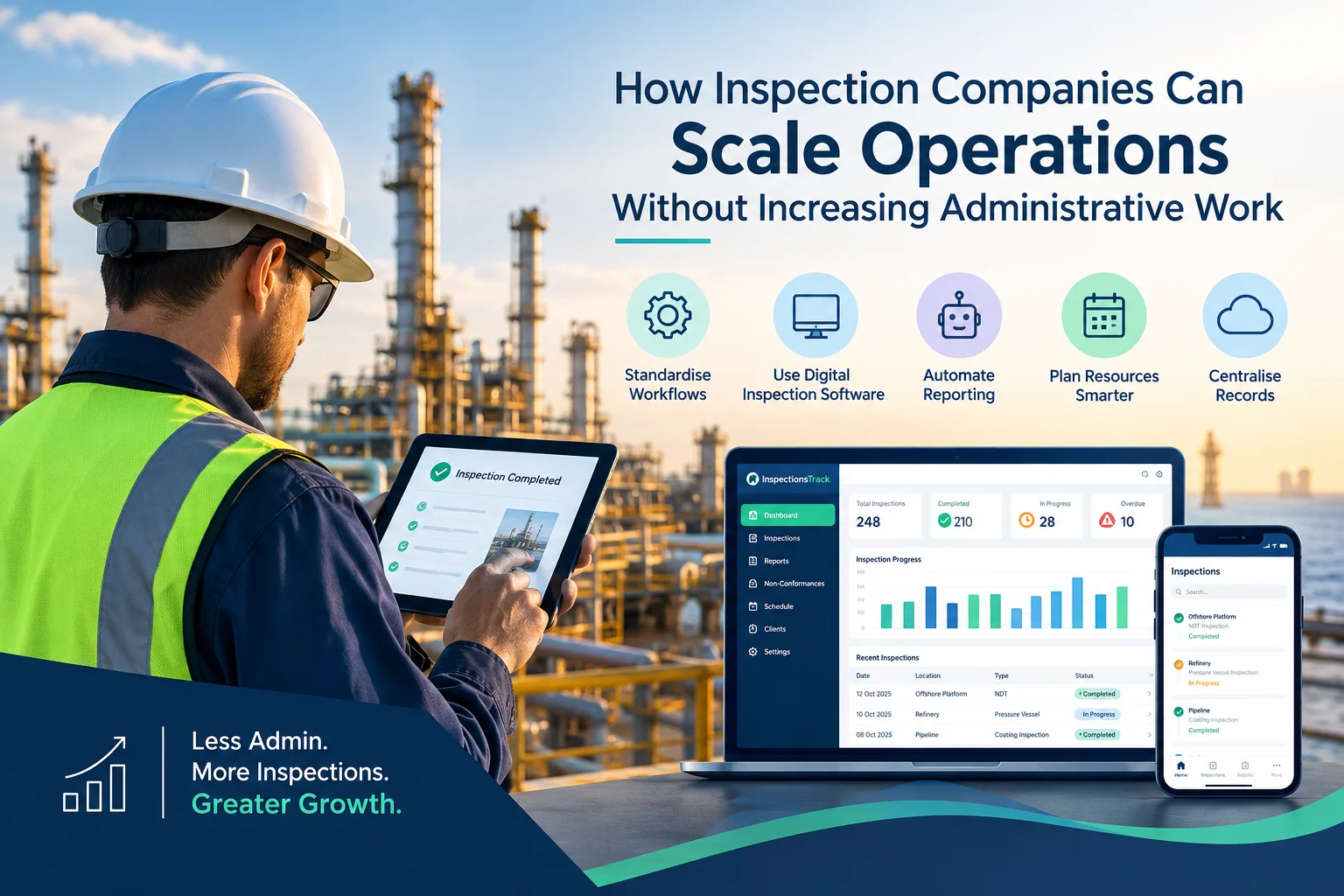
Inspection companies in the oil and gas industry face a common challenge: how to handle more inspections, manage larger projects, and meet client deadlines without increasing administrative workload. As businesses grow, inspection teams must manage…
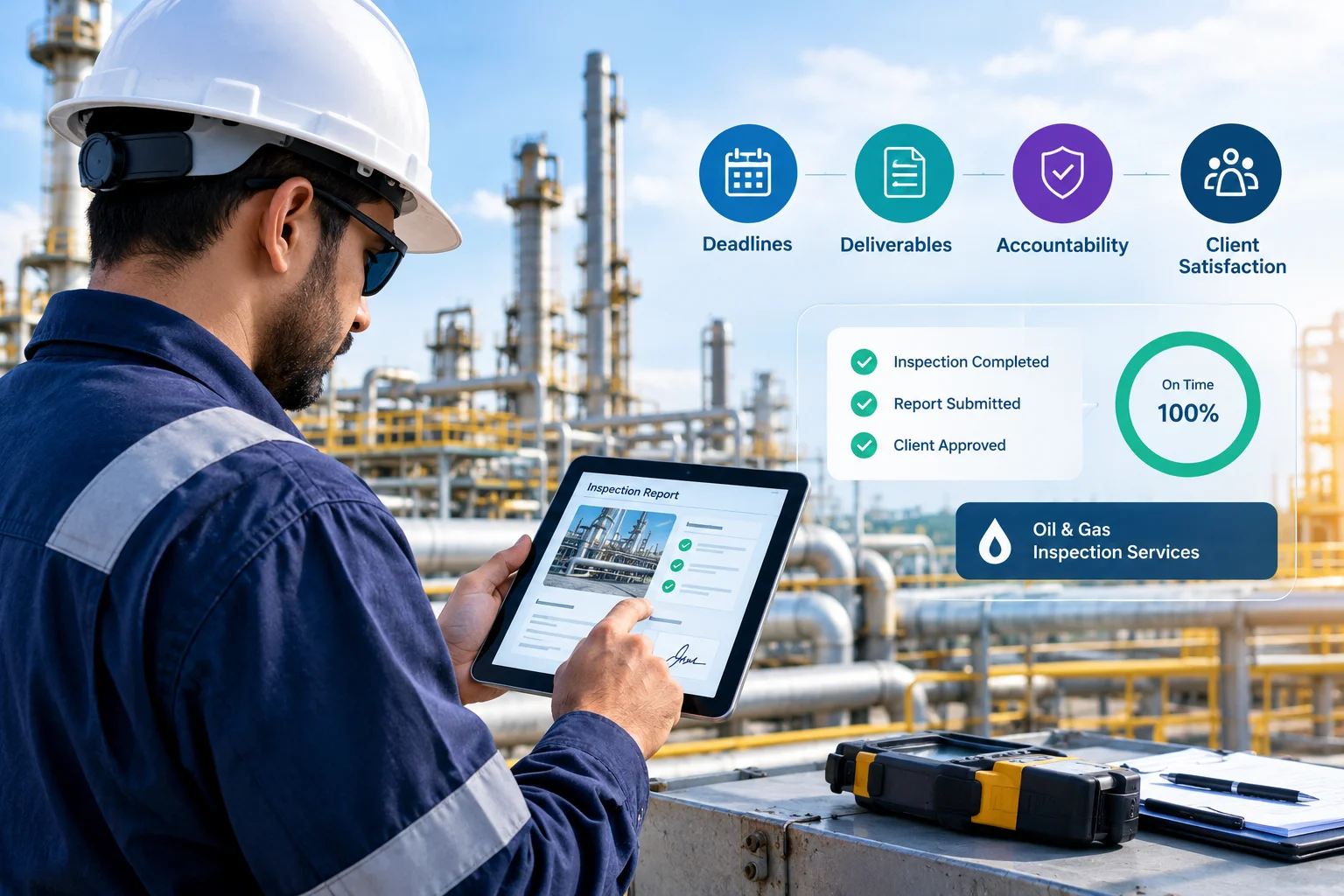
Meeting client Service Level Agreements (SLAs) is essential for inspection companies working in demanding industries such as oil and gas, energy, and industrial maintenance. Clients expect inspections to be completed on time, reports to be…


