
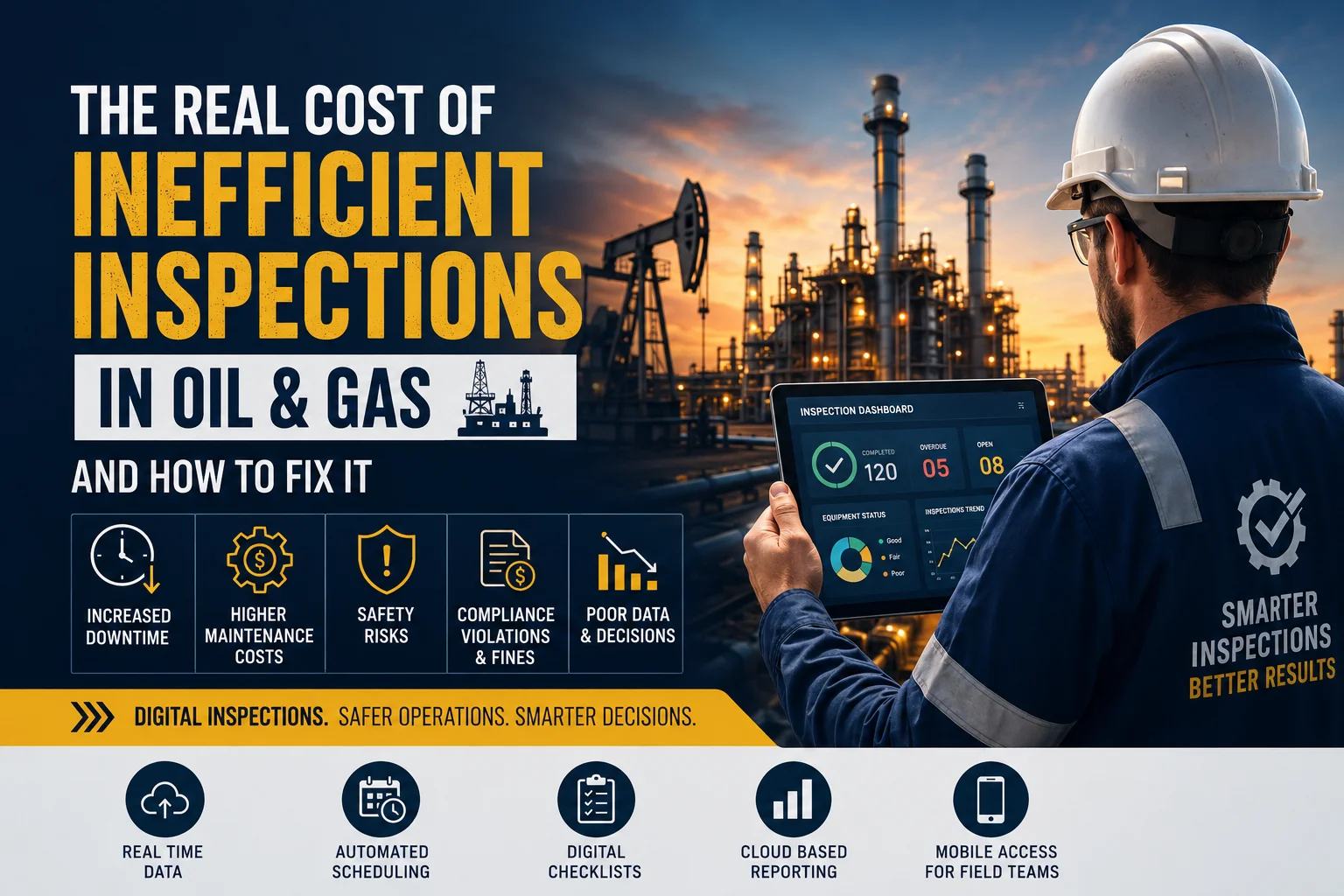
The oil and gas industry operates in a high risk environment where safety, compliance, and efficiency are critical. However, many companies still rely on outdated inspection processes. As a result, inefficiencies increase costs, create delays, and expose operations to serious risks.
In this blog, you will learn the real cost of inefficient inspections in oil and gas. More importantly, you will discover how modern inspection tracking software can solve these challenges.
Inspections are not just routine tasks. Instead, they play a key role in ensuring:
Therefore, when inspections are inefficient, the impact spreads across the entire operation.
Many companies underestimate the financial and operational impact of poor inspection processes. However, the costs are often significant.
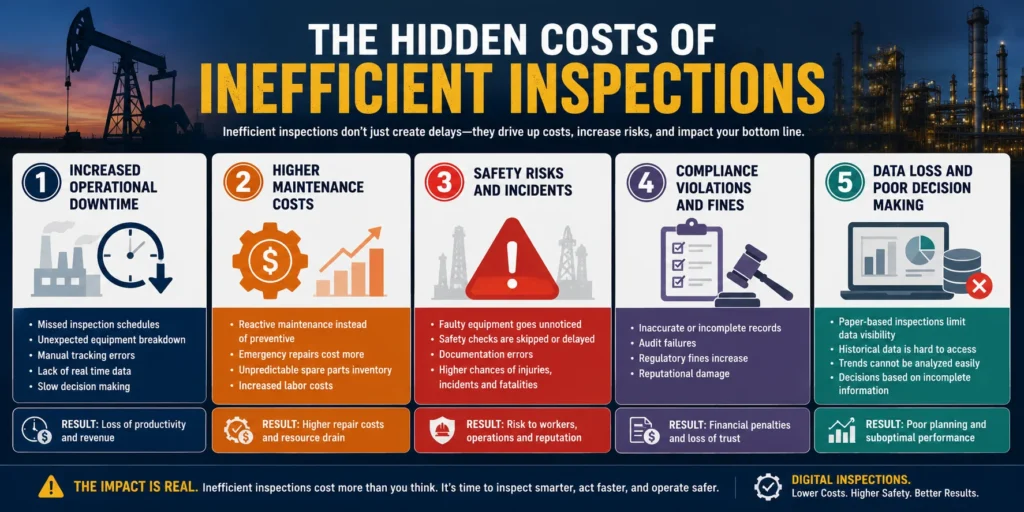
When inspections are delayed or poorly managed, equipment failures become more likely. As a result, unplanned downtime increases.
For example:
| Issue | Impact |
|---|---|
| Missed inspection schedules | Unexpected equipment breakdown |
| Manual tracking errors | Delayed maintenance |
| Lack of real time data | Slow decision making |
Consequently, companies lose productivity and revenue.
Inefficient inspections often lead to reactive maintenance instead of preventive maintenance. Therefore, small issues turn into major failures.
In addition:
As a result, overall maintenance expenses rise significantly.
Safety is a top priority in oil and gas. However, poor inspection processes increase the risk of accidents.
For instance:
Therefore, companies face higher chances of injuries, incidents, and even fatalities.
Regulatory compliance is strict in this industry. However, manual inspections make it difficult to maintain accurate records.
As a result:
Moreover, reputational damage can be even more costly than fines.
Many companies still rely on paper based inspections. However, this approach limits data visibility.
Because of this:
Therefore, strategic planning suffers.
Before fixing the problem, it is important to understand the root causes.
Paper based inspections are slow and error prone. In addition, data entry takes time and increases the risk of mistakes.
Different teams often follow different inspection methods. As a result, consistency is lost.
Inspection data is not shared in real time. Therefore, teams cannot act quickly.
Managers do not have a clear view of inspection status. Consequently, tracking progress becomes difficult.
Now that you understand the problem, let us focus on the solution. The good news is that modern technology can transform inspection processes.
Inspection tracking software is a powerful solution designed to streamline inspections. It helps companies move from manual processes to digital workflows.
Therefore, inspections become faster, more accurate, and easier to manage.
First, digital inspections eliminate paperwork. As a result, teams complete inspections faster.
In addition:
Inspection software ensures that all inspections are properly documented. Therefore, audits become easier.
Moreover:
When inspections are consistent and accurate, safety improves.
For example:
With digital tools, companies gain access to valuable insights.
As a result:
Although software requires investment, it reduces long term costs.
Because of this:
| Factor | Manual Inspections | Digital Inspections |
|---|---|---|
| Speed | Slow | Fast |
| Accuracy | Error prone | Highly accurate |
| Data access | Limited | Real time |
| Compliance | Difficult | Easy to use |
| Cost | High long term | Lower long term |
To get the most value, companies should follow these best practices.
Select a solution that fits your operational needs. For example, it should support oil and gas specific workflows.
Employees should understand how to use the software effectively. Therefore, training is essential.
Create uniform checklists and procedures. As a result, consistency improves.
Continuously track performance and improve processes. Therefore, efficiency increases over time.
The future of inspections is digital and data driven. Technologies such as automation, AI, and IoT are transforming the industry.
As a result:
Therefore, companies that adopt digital solutions will gain a competitive advantage.
Inefficient inspections in oil and gas come with hidden costs that affect safety, compliance, and profitability. However, these challenges can be solved with the right approach.
By adopting inspection track software, companies can improve efficiency, reduce risks, and lower costs. Moreover, they can make better decisions using real time data.
In conclusion, modernizing inspection processes is not just an option. It is a necessity for success in today’s oil and gas industry.
Read more : Inspection Errors in Oil and Gas: Hidden Risks Every Inspector Should Know
Inefficient inspections are slow manual or unorganized processes that lead to errors delays and higher risks
They ensure equipment safety regulatory compliance and prevent costly failures and downtime
It is a digital tool that helps manage schedule and track inspections in real time with accurate reporting
It reduces downtime improves maintenance planning and minimizes errors which lowers overall operational costs
Yes digital inspections are faster more accurate and provide real time data for better decision making
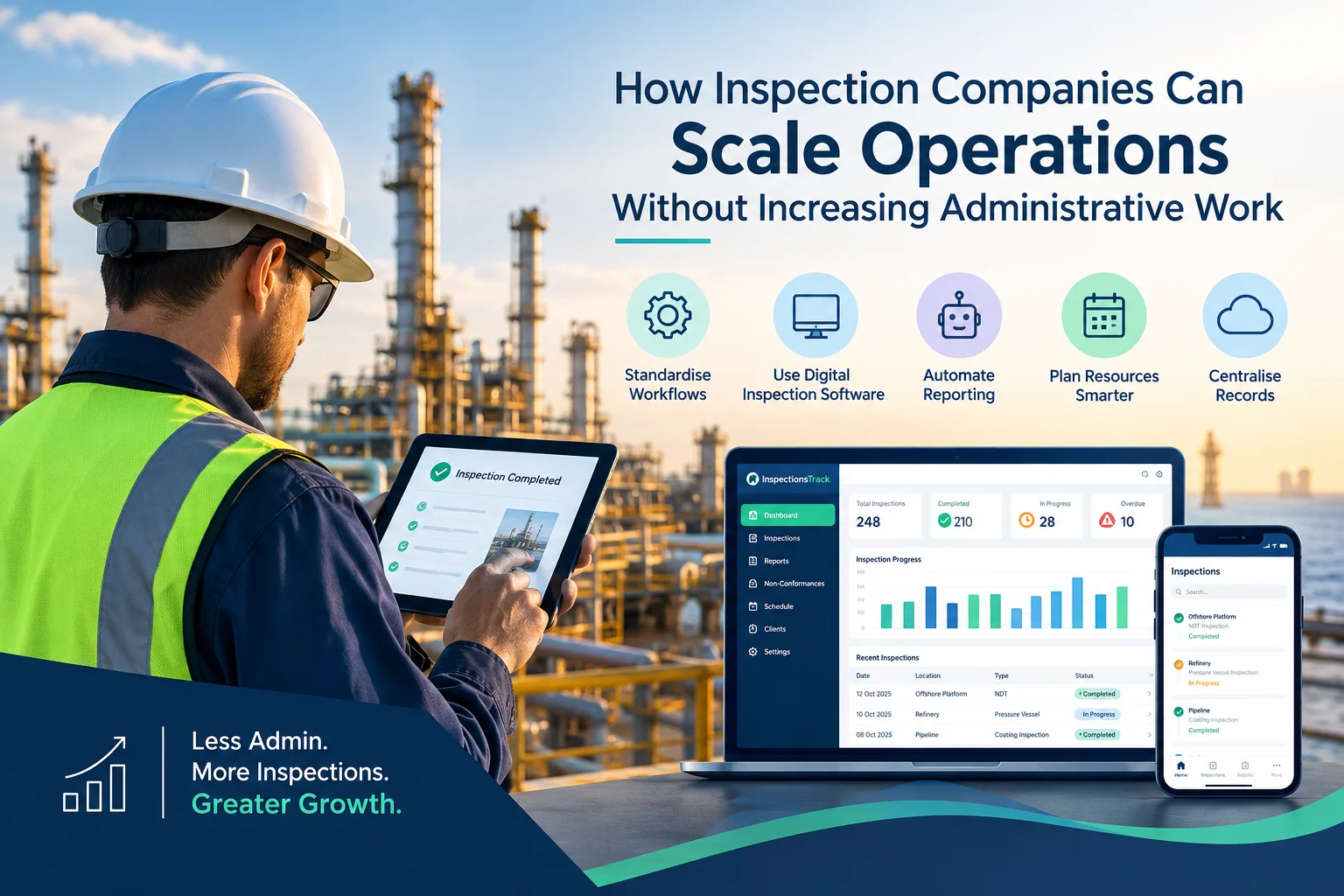
Inspection companies in the oil and gas industry face a common challenge: how to handle more inspections, manage larger projects, and meet client deadlines without increasing administrative workload. As businesses grow, inspection teams must manage…
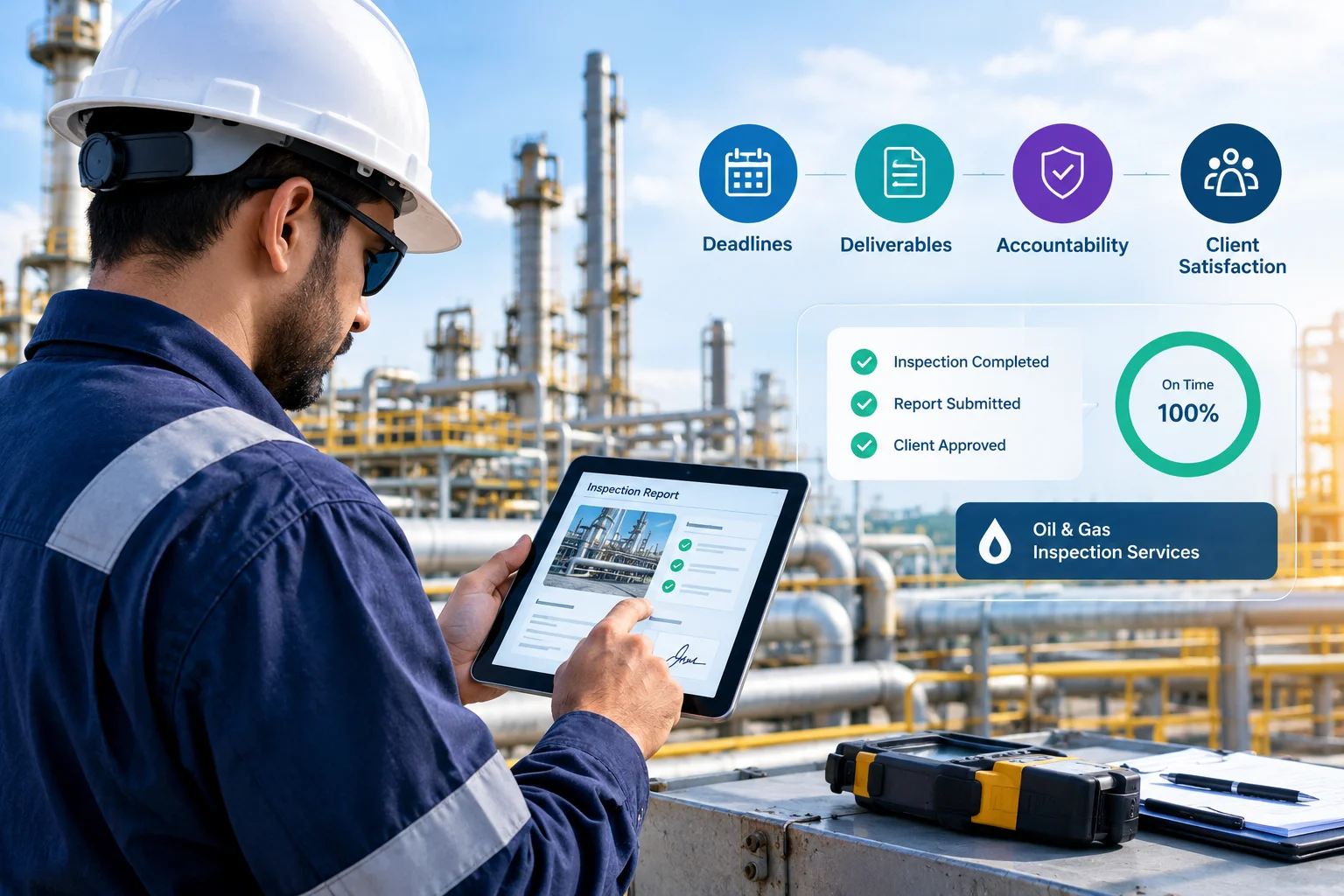
Meeting client Service Level Agreements (SLAs) is essential for inspection companies working in demanding industries such as oil and gas, energy, and industrial maintenance. Clients expect inspections to be completed on time, reports to be…


