
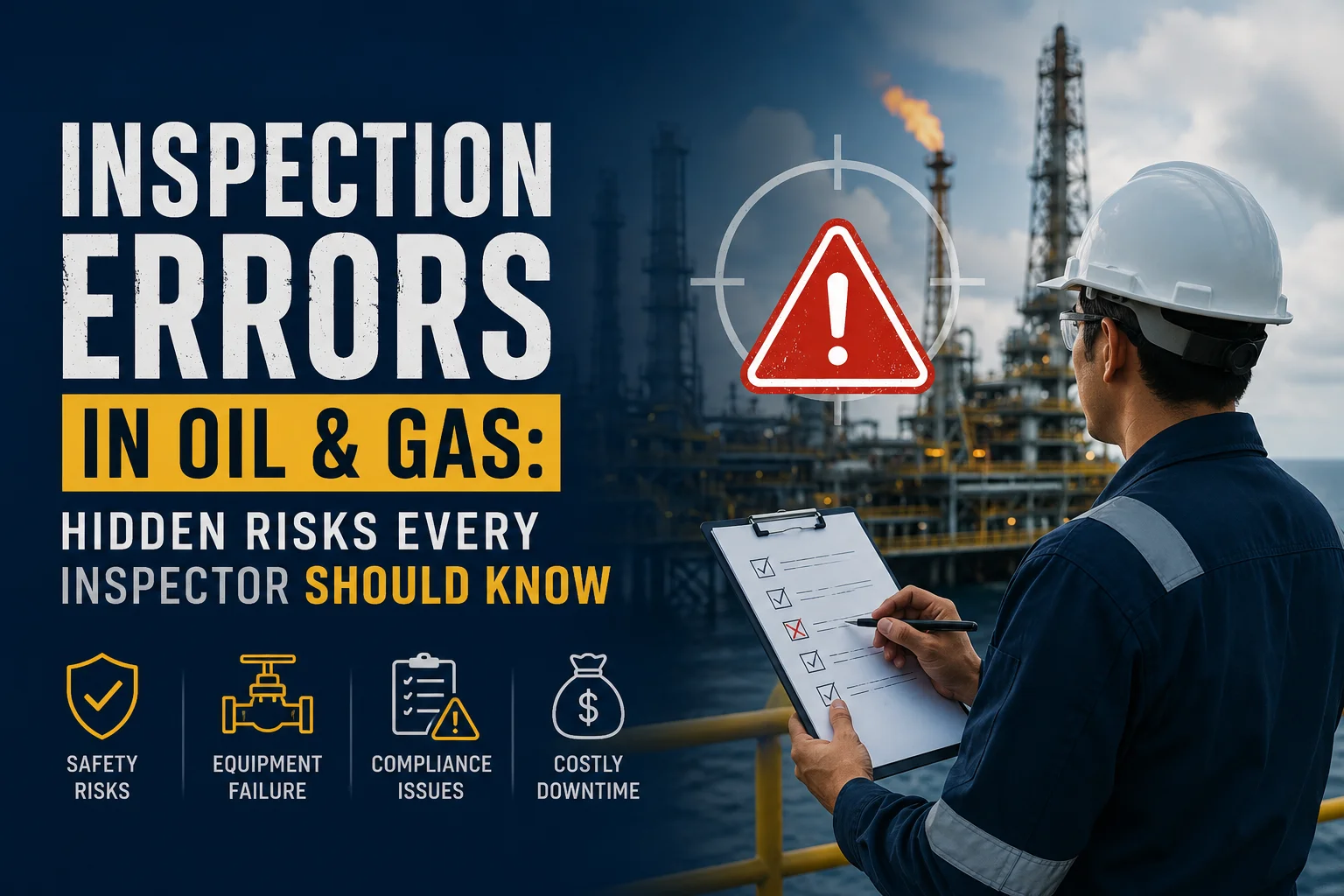
Oil and gas inspections play a critical role in maintaining safety, compliance, and operational efficiency. However, even experienced inspectors can make mistakes. As a result, these inspection errors can lead to costly downtime, environmental damage, and serious safety hazards. Therefore, understanding these hidden risks is essential for every professional in the industry.
In this guide, you will learn about common inspection errors, why they happen, and how modern inspection tracking software can help reduce them.
First of all, oil and gas facilities operate under extreme conditions. Consequently, even a small oversight can escalate into a major incident. Moreover, regulatory bodies require strict compliance, so errors can also result in penalties.
Because of these risks, inspectors must adopt a systematic and error free approach.
Although inspection procedures are well defined, errors still occur. In many cases, they are caused by human factors, outdated processes, or lack of proper tools.
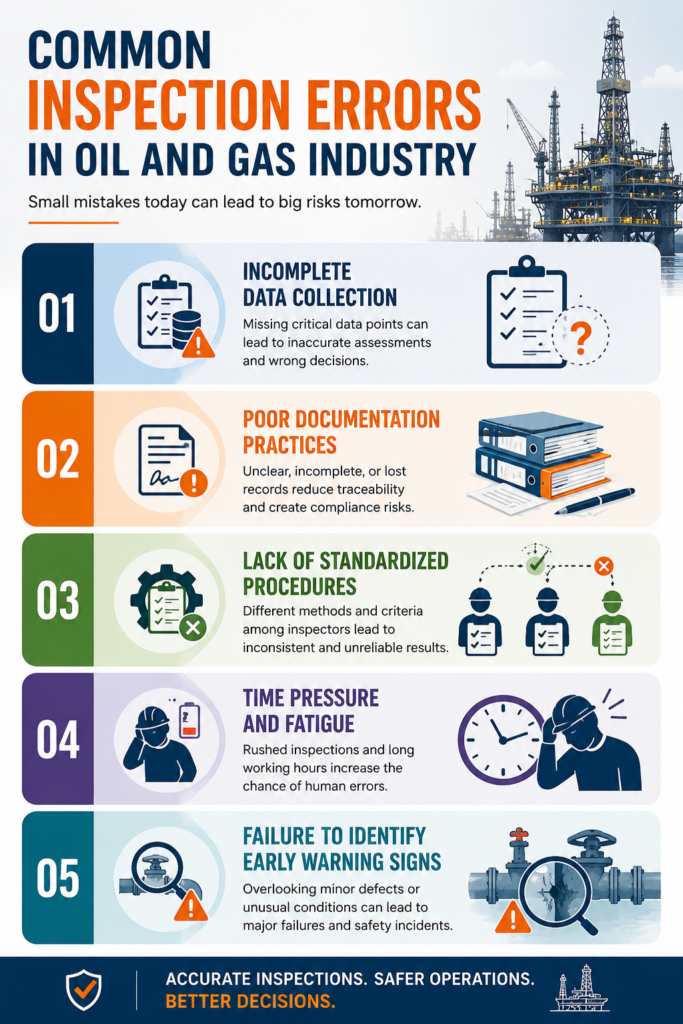
Often, inspectors miss critical data points during field inspections. For instance, they may skip minor corrosion spots or fail to record pressure readings accurately.
As a result, incomplete data leads to poor decision making.
In some cases, inspectors rely on manual paperwork. However, handwritten notes can be unclear or lost.
Therefore, poor documentation reduces traceability and accountability.
Different inspectors may follow different methods. Consequently, inconsistency in inspections creates gaps in data quality.
Inspectors often work long hours in harsh environments. As a result, fatigue increases the likelihood of mistakes.
Sometimes, small defects are ignored. However, these minor issues can grow into major failures over time.
While common errors are easy to identify, hidden risks are more dangerous because they remain unnoticed.
Even small human errors can multiply across systems. For example, incorrect data entry may affect maintenance schedules.
When inspection data is stored in separate systems, teams cannot access complete information. Therefore, decision making becomes inefficient.
If inspection reports are delayed, corrective actions are also delayed. Consequently, risks continue to grow.
Without proper tracking, companies may fail to meet regulatory requirements. As a result, audits become challenging.
To overcome these challenges, many companies are adopting inspection tracking software for oil and gas inspections. This technology improves accuracy, efficiency, and compliance.
| Feature | Benefit |
|---|---|
| Digital data entry | Reduces manual errors |
| Automated workflows | Ensures consistency |
| Real time updates | Improves decision making |
| Centralized database | Eliminates data silos |
| Compliance tracking | Simplifies audits |
Because of these advantages, organizations can significantly reduce inspection errors.
Although technology helps, inspectors must also follow best practices.
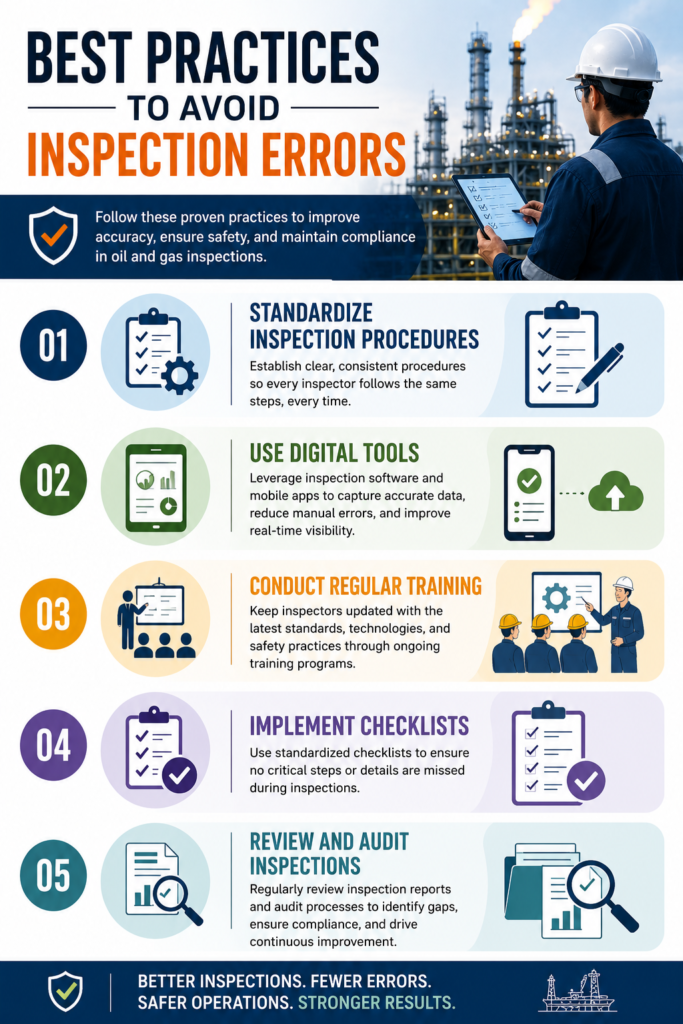
First, ensure all inspectors follow the same guidelines. This improves consistency.
Instead of relying on paper, use inspection tracking software. As a result, data becomes more reliable.
Training helps inspectors stay updated with industry standards. Therefore, they can identify risks more effectively.
Checklists ensure that no step is missed. In addition, they improve efficiency.
Regular audits help identify gaps. Consequently, continuous improvement becomes possible.
As the industry evolves, inspection processes are becoming more digital. For example, technologies like AI, IoT, and predictive analytics are transforming inspections.
Moreover, inspection tracking software is becoming a standard tool. Therefore, companies that adopt these solutions early will gain a competitive advantage.
Inspection errors in oil and gas are not just minor issues. Instead, they are hidden risks that can lead to serious consequences. However, by understanding these risks and implementing the right tools, companies can improve safety and efficiency.
In conclusion, combining skilled inspectors with advanced inspection tracking software ensures accurate, consistent, and compliant inspections. As a result, organizations can protect their assets, workforce, and reputation.
Read more : How to Stay Audit Ready in Oil and Gas Without Extra Work
The most common errors include incomplete data collection, poor documentation, lack of standardized procedures, and missed early warning signs. In many cases, these issues occur due to manual processes and time pressure.
Inspection tracking software helps by digitizing data entry, standardizing checklists, and enabling real time reporting. As a result, inspectors can reduce human errors, improve consistency, and ensure better compliance.
It is important because inspection errors can lead to equipment failure, safety incidents, and regulatory penalties. Therefore, minimizing errors helps protect workers, assets, and the environment while ensuring smooth operations.
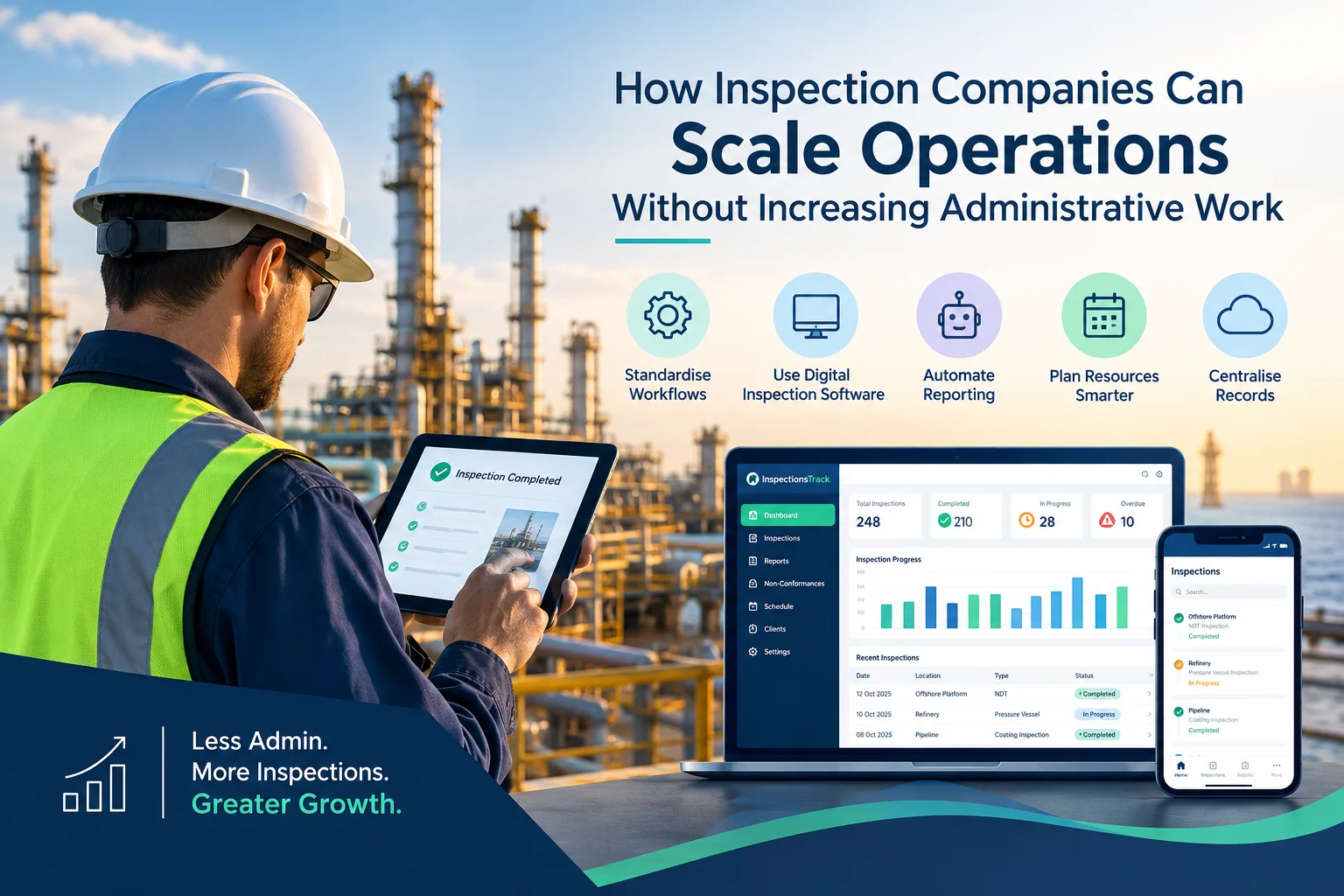
Inspection companies in the oil and gas industry face a common challenge: how to handle more inspections, manage larger projects, and meet client deadlines without increasing administrative workload. As businesses grow, inspection teams must manage…
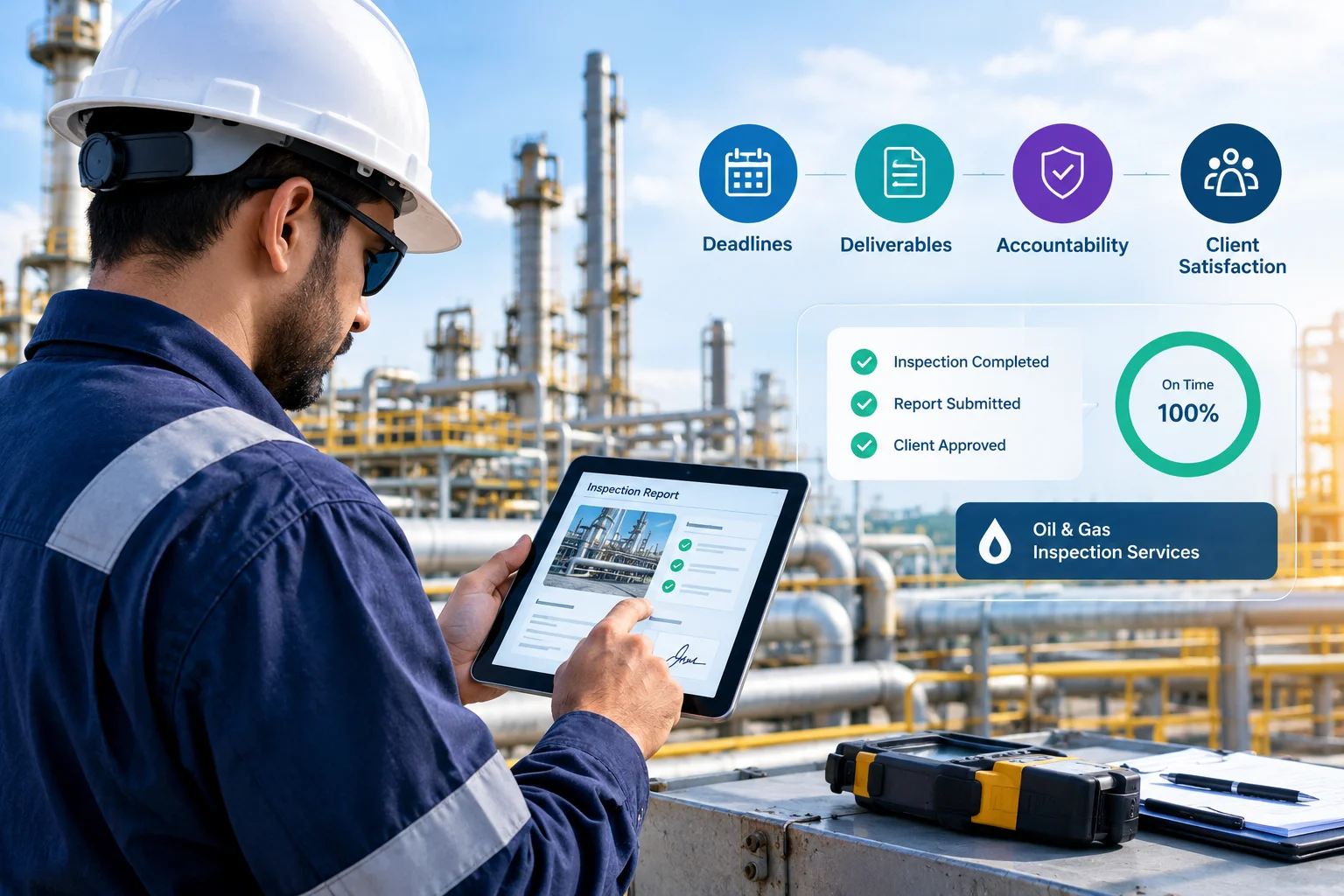
Meeting client Service Level Agreements (SLAs) is essential for inspection companies working in demanding industries such as oil and gas, energy, and industrial maintenance. Clients expect inspections to be completed on time, reports to be…


