
OSHA Process Safety Management (PSM) compliance audits are a critical safety and regulatory requirement for oil and gas facilities. Moreover, they ensure that hazardous processes are controlled, risks are minimized, and operational safety is consistently maintained.
In addition, these audits are not just about regulatory compliance; they also protect lives, assets, and the environment. Therefore, understanding how PSM audits work is essential for every facility manager, HSE officer, and compliance team.
The OSHA Process Safety Management (PSM) standard is designed to prevent the release of highly hazardous chemicals. Specifically, it applies to industries like:
Furthermore, OSHA PSM ensures that facilities implement structured safety programs to reduce catastrophic incidents.
As a result, organizations can significantly reduce both financial and human risk.
OSHA PSM compliance audits are systematic evaluations of how well a facility follows PSM regulations.
In simple terms, these audits check whether your safety systems actually work in real-world operations.
Moreover, audits ensure continuous improvement in safety performance.
To fully understand compliance requirements, let’s break down the core audit elements:
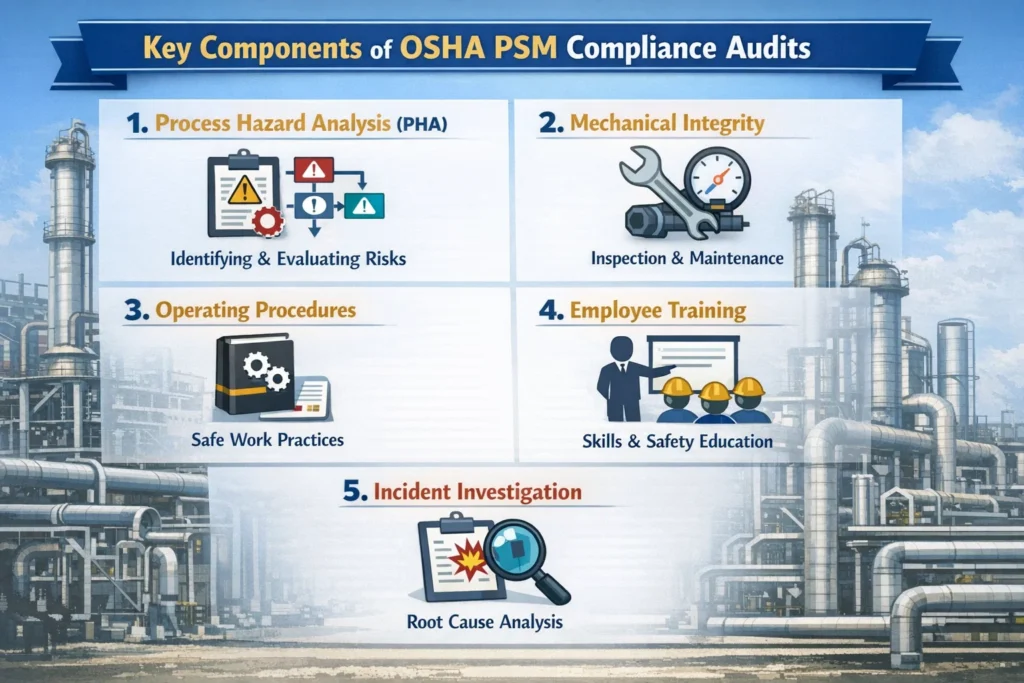
This identifies potential hazards in chemical processes. Additionally, it ensures risks are evaluated before incidents occur.
Equipment must be regularly inspected and maintained. Otherwise, system failures can lead to serious accidents.
Clear documentation is required for safe operation. Furthermore, employees must follow standardized procedures.
Workers must be trained on hazards, emergency procedures, and safety protocols.
Every incident must be investigated to prevent recurrence.
Below is a practical checklist used in most oil and gas facilities:
| Audit Area | Requirement | Status (Yes/No) |
|---|---|---|
| Process Safety Review | Updated PHA completed | |
| Equipment Maintenance | Inspection logs available | |
| Training Records | Employee certifications up to date | |
| Emergency Response Plan | Tested and documented | |
| Documentation Control | SOPs updated and accessible |
This checklist helps ensure no critical compliance gap is missed.
However, despite strict regulations, many oil and gas facilities face challenges such as:
Consequently, these issues can lead to audit failures or penalties.
Today, many organizations are shifting from manual audits to digital inspection solutions.
For instance, modern platforms like Inspectionstrack Software help oil and gas facilities streamline compliance processes.
Moreover, these systems improve transparency and accountability across all operational levels.
Inspectionstrack Software plays a crucial role in simplifying OSHA PSM compliance audits for oil and gas facilities.
As a result, companies can move from reactive compliance to proactive safety management.
To make it clearer, here is the standard audit workflow:
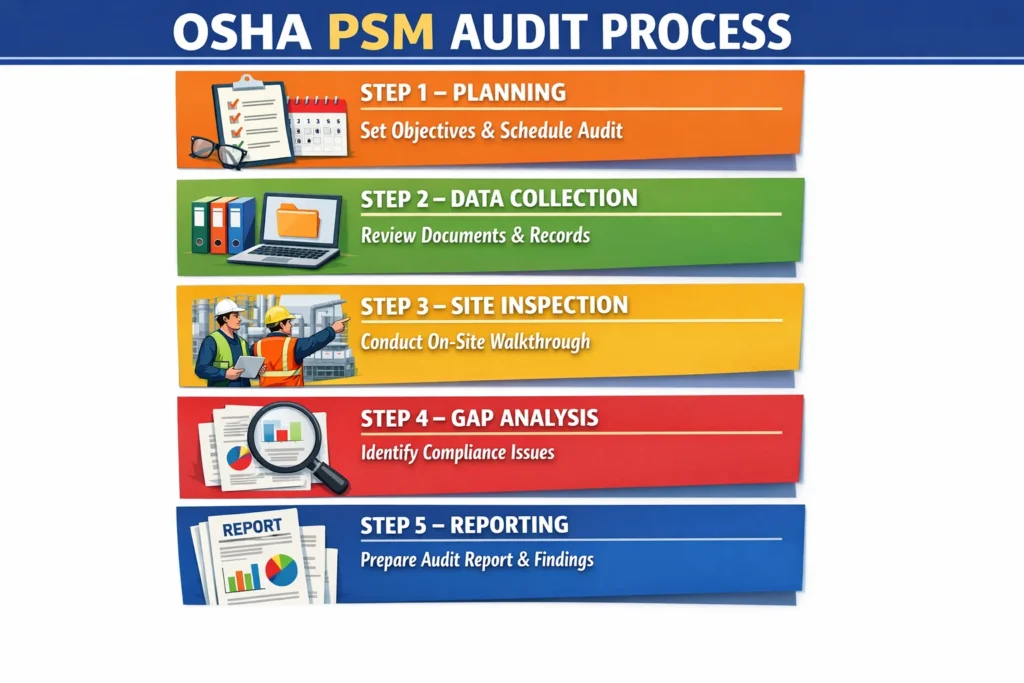
Auditors define scope, objectives, and compliance criteria.
Auditors review records, logs, and safety documents.
Auditors conduct physical verification of equipment and processes.
Non-compliance issues are identified and documented.
A final audit report is generated with recommendations.
To ensure successful audits, organizations should:
Additionally, companies should adopt a continuous improvement mindset rather than a one-time compliance approach.
In conclusion, OSHA PSM compliance audits for oil and gas facilities are essential for ensuring operational safety, regulatory compliance, and risk reduction.
Moreover, with increasing regulatory pressure, relying on manual systems is no longer efficient. Therefore, adopting intelligent solutions like Inspectionstrack Software can significantly improve compliance accuracy and audit readiness.
Ultimately, organizations that prioritize structured audits and digital transformation will achieve safer operations and stronger regulatory standing.
Read more : mobile inspection apps vs paper for compliance
OSHA PSM compliance audits are conducted to ensure that oil and gas facilities follow safety regulations designed to prevent hazardous chemical releases. They help identify gaps, improve safety systems, and maintain regulatory compliance.
OSHA requires companies to conduct PSM compliance audits at least once every three years.
However, many companies perform internal audits more frequently to stay audit-ready and reduce risks.
A PSM audit typically reviews process hazard analysis (PHA), mechanical integrity, operating procedures, employee training, and emergency response plans to ensure all safety systems are functioning effectively.
Digital inspection tools like Inspectionstrack Software streamline audits by automating checklists, centralizing data, reducing errors, and providing real-time reporting for better compliance management.
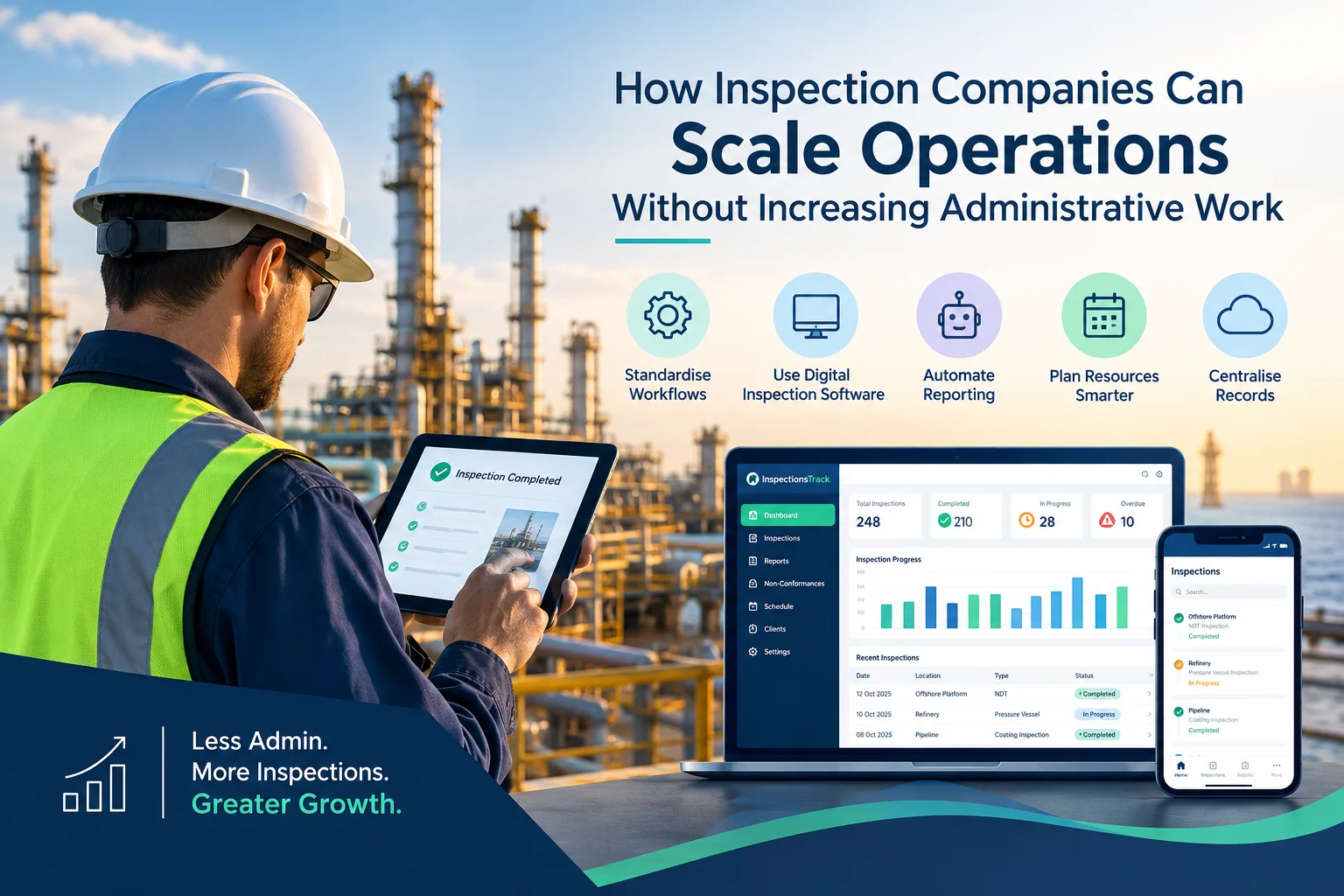
Inspection companies in the oil and gas industry face a common challenge: how to handle more inspections, manage larger projects, and meet client deadlines without increasing administrative workload. As businesses grow, inspection teams must manage…

Meeting client Service Level Agreements (SLAs) is essential for inspection companies working in demanding industries such as oil and gas, energy, and industrial maintenance. Clients expect inspections to be completed on time, reports to be…


