
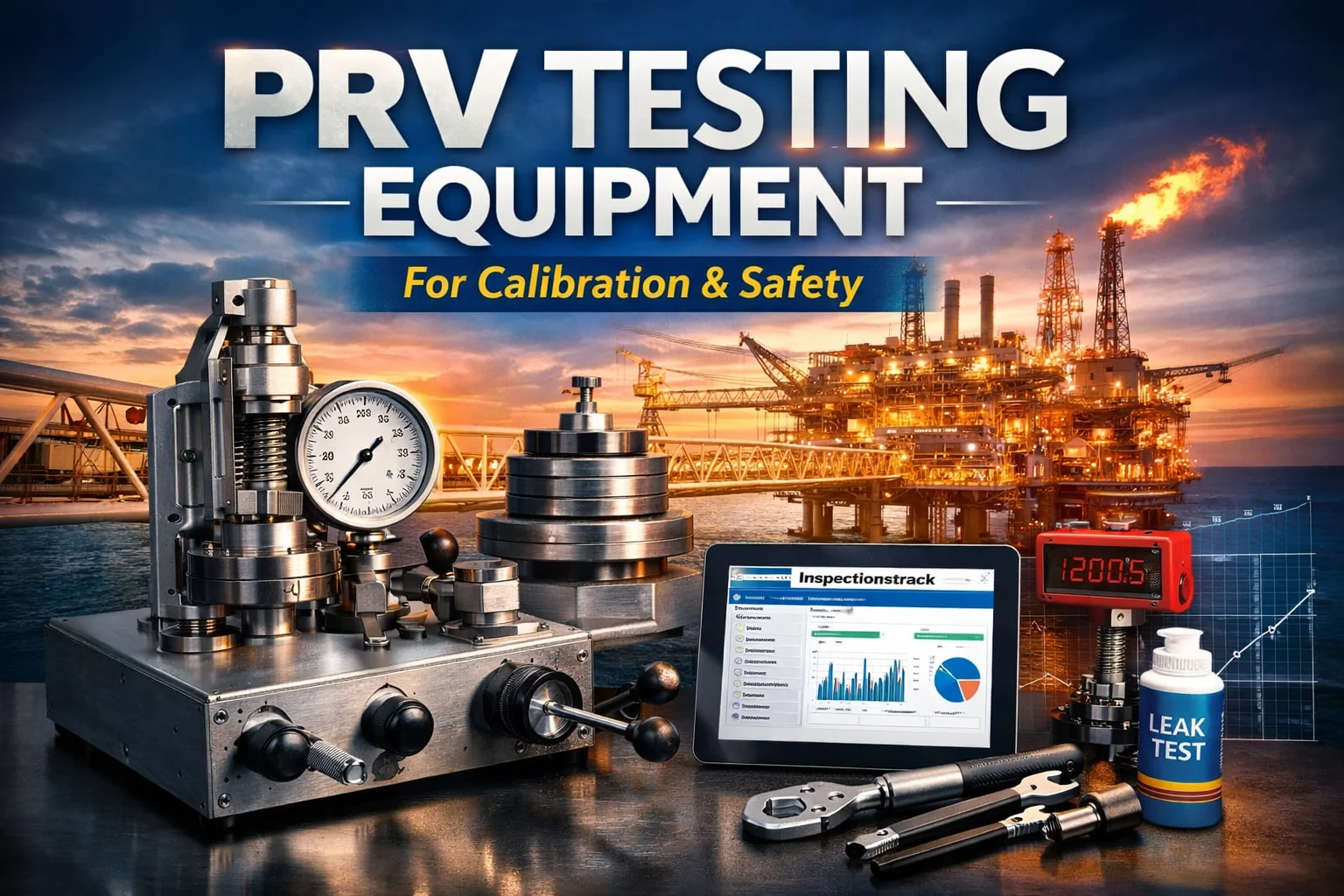
Pressure Relief Valves play a critical role in protecting equipment, pipelines, and personnel in the oil and gas industry. Therefore, proper PRV testing and calibration is essential to ensure safety, compliance, and operational efficiency. In this guide, you will discover the complete list of equipment required for PRV testing, along with best practices and how digital tools like Inspections track can streamline the process.
PRV testing involves verifying that a pressure relief valve opens at the correct set pressure and reseats properly. Calibration, on the other hand, ensures that the valve is adjusted accurately according to operational requirements.
As a result, both processes help prevent overpressure incidents, reduce downtime, and maintain regulatory compliance.
Using the right equipment ensures accurate results and safe testing conditions. Moreover, it minimizes human error and improves efficiency. Without proper tools, testing can lead to incorrect readings, safety risks, and compliance issues.
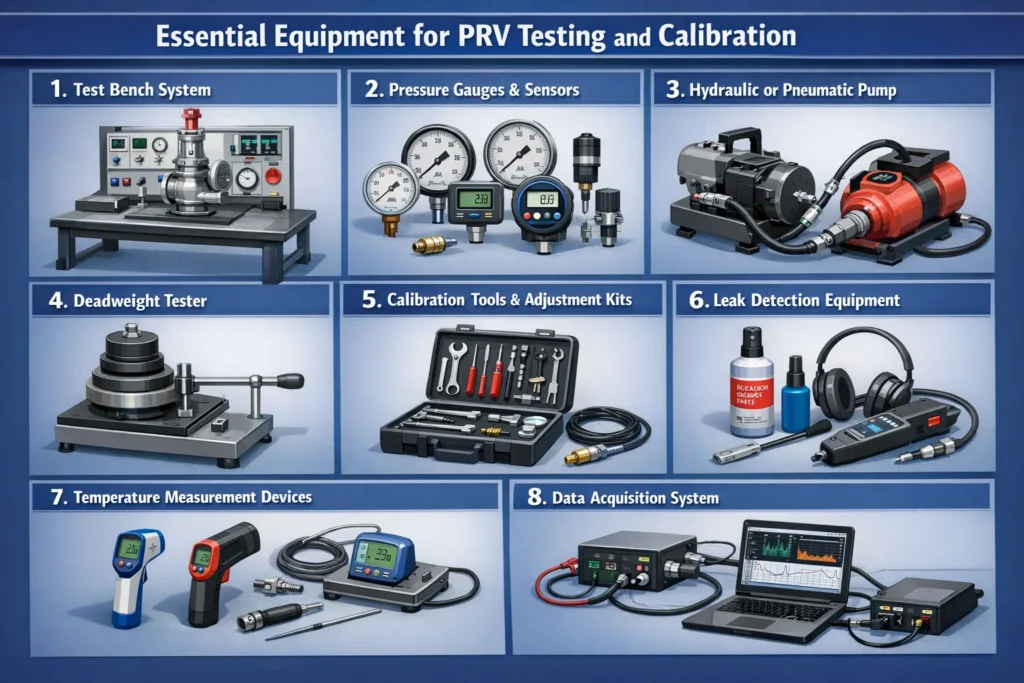
A PRV test bench is the primary setup used for testing valves under controlled conditions.
Key features include:
In addition, advanced test benches allow automated testing, which improves accuracy and repeatability.
Accurate pressure measurement is crucial during testing.
Types commonly used:
Furthermore, digital gauges provide real time data, which enhances calibration accuracy.
These pumps generate the required pressure to test the valve.
Options include:
Consequently, selecting the correct pump depends on the type of PRV being tested.
A deadweight tester is used as a calibration standard.
Benefits:
Therefore, it is essential for ensuring measurement precision.
These tools help adjust the valve to the desired set pressure.
Typical tools include:
In addition, proper calibration tools ensure consistent valve performance.
Leak testing ensures that the valve reseats properly after activation.
Common methods:
As a result, this step verifies the integrity of the valve.
Temperature can affect pressure readings.
Devices include:
Therefore, monitoring temperature ensures more accurate testing results.
Modern PRV testing requires digital data recording.
Capabilities:
Moreover, integrating this with inspection software improves efficiency.
| Equipment | Purpose | Importance Level |
|---|---|---|
| Test Bench | Controlled testing environment | High |
| Pressure Gauges | Measure pressure accurately | High |
| Pump System | Generate required pressure | High |
| Deadweight Tester | Calibration standard | Very High |
| Calibration Tools | Adjust valve settings | Medium |
| Leak Detection Tools | Check valve sealing | High |
| Temperature Devices | Monitor environmental conditions | Medium |
| Data Acquisition System | Record and analyze data | High |
To achieve accurate and reliable results, follow these best practices:
Additionally, regular training of technicians enhances testing quality and safety.
Manual processes often lead to inefficiencies and data loss. However, Inspectionstrack software transforms PRV testing and calibration workflows.
As a result, companies can reduce errors, improve compliance, and increase operational efficiency.
Despite having the right equipment, challenges still exist.
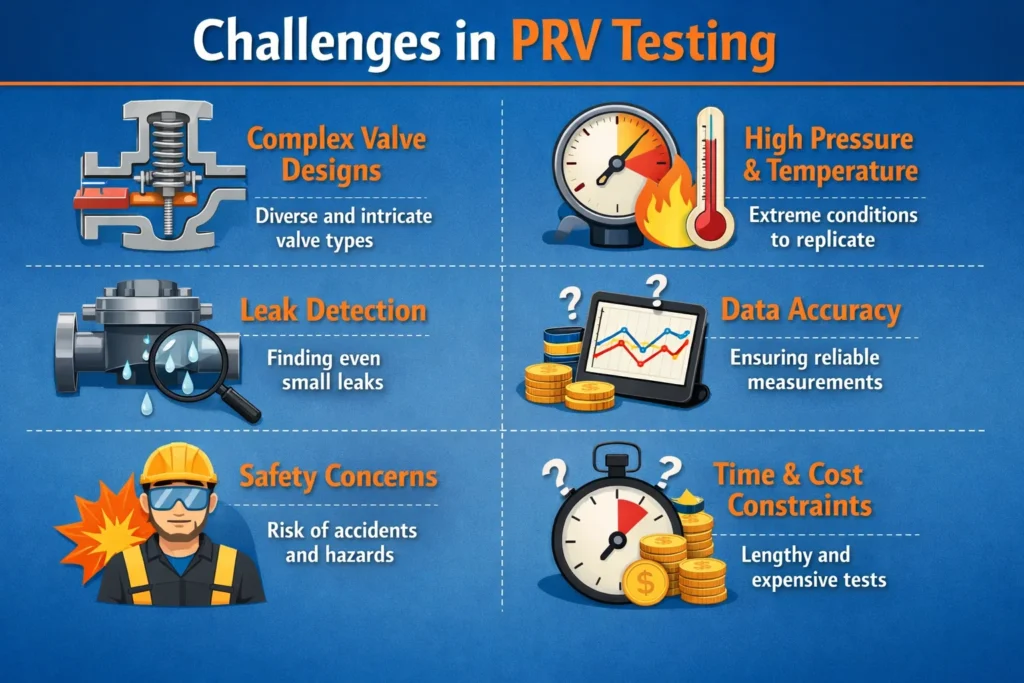
However, using advanced tools and software significantly reduces these challenges.
PRV testing and calibration require a combination of specialized equipment and precise procedures. From test benches to digital data systems, each tool plays a vital role in ensuring safety and compliance.
Moreover, adopting digital solutions like Inspections track enhances accuracy, efficiency, and reporting capabilities. Therefore, investing in the right equipment and technology is essential for any oil and gas operation.
Read more : zero drift fixes prv testing calibration workflow
The test bench and pressure measurement instruments are the most critical because they directly impact testing accuracy.
PRVs should be tested periodically based on industry standards, operating conditions, and regulatory requirements.
Yes, modern systems combined with software like Inspections track allow automated testing, data collection, and reporting.
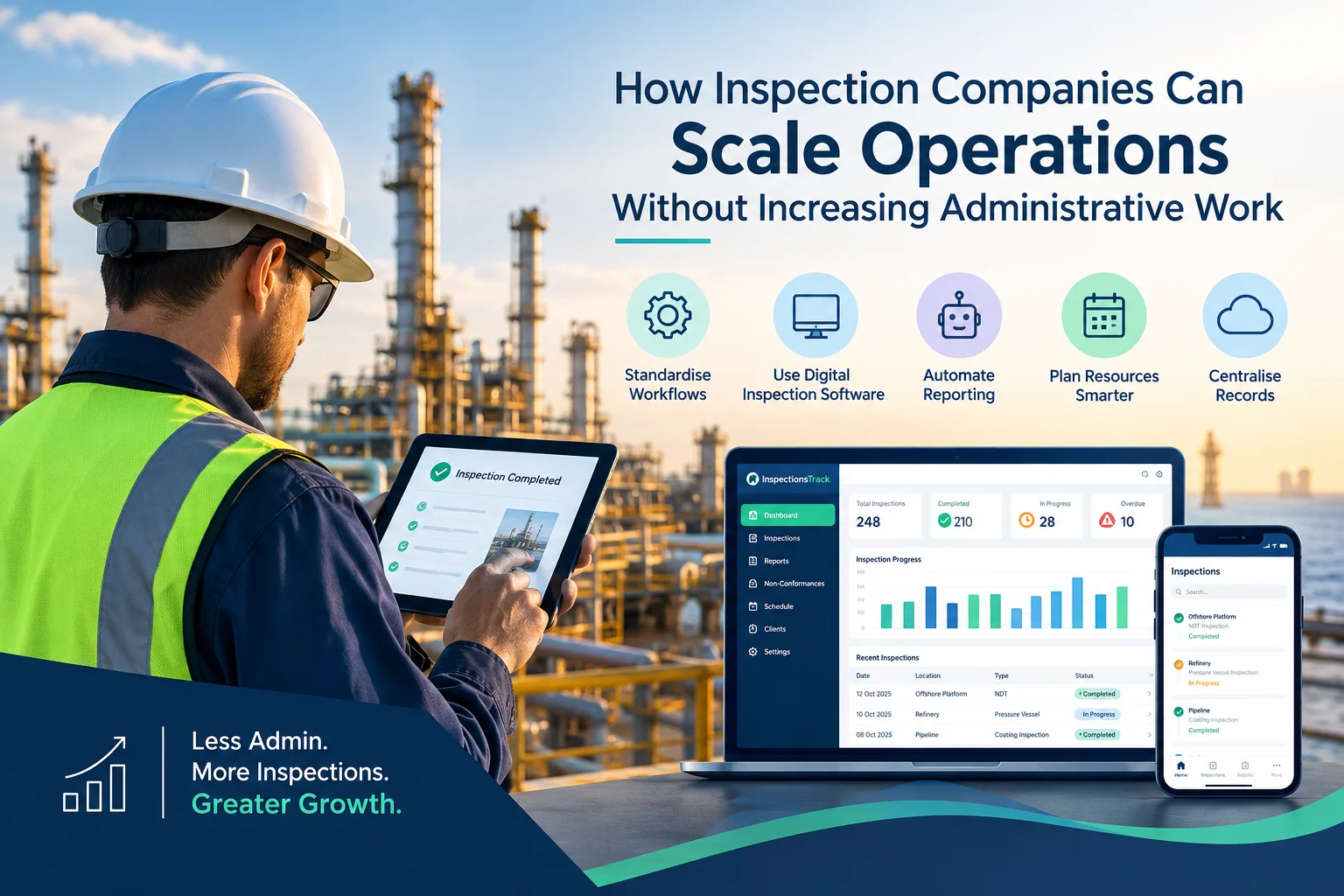
Inspection companies in the oil and gas industry face a common challenge: how to handle more inspections, manage larger projects, and meet client deadlines without increasing administrative workload. As businesses grow, inspection teams must manage…
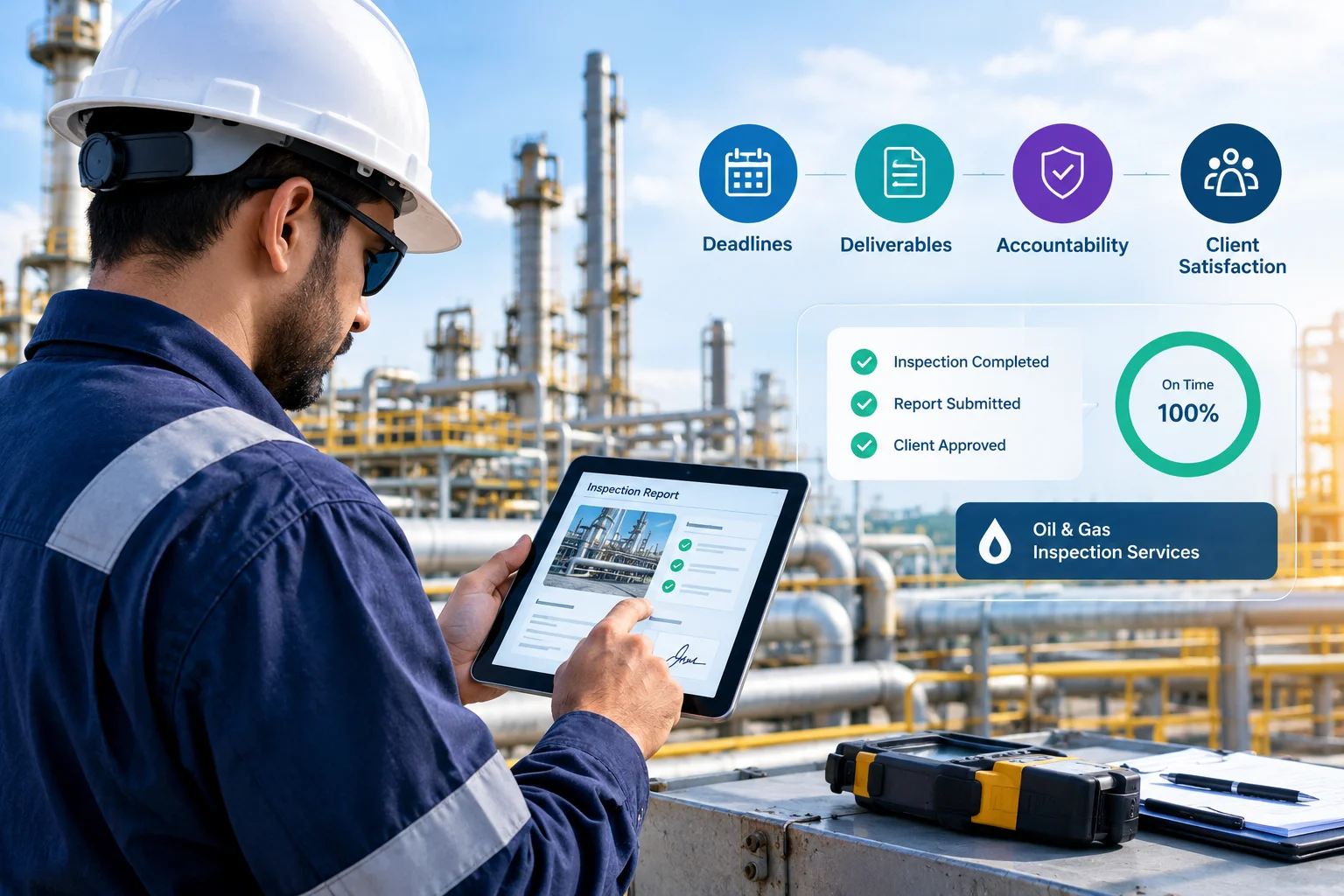
Meeting client Service Level Agreements (SLAs) is essential for inspection companies working in demanding industries such as oil and gas, energy, and industrial maintenance. Clients expect inspections to be completed on time, reports to be…


