
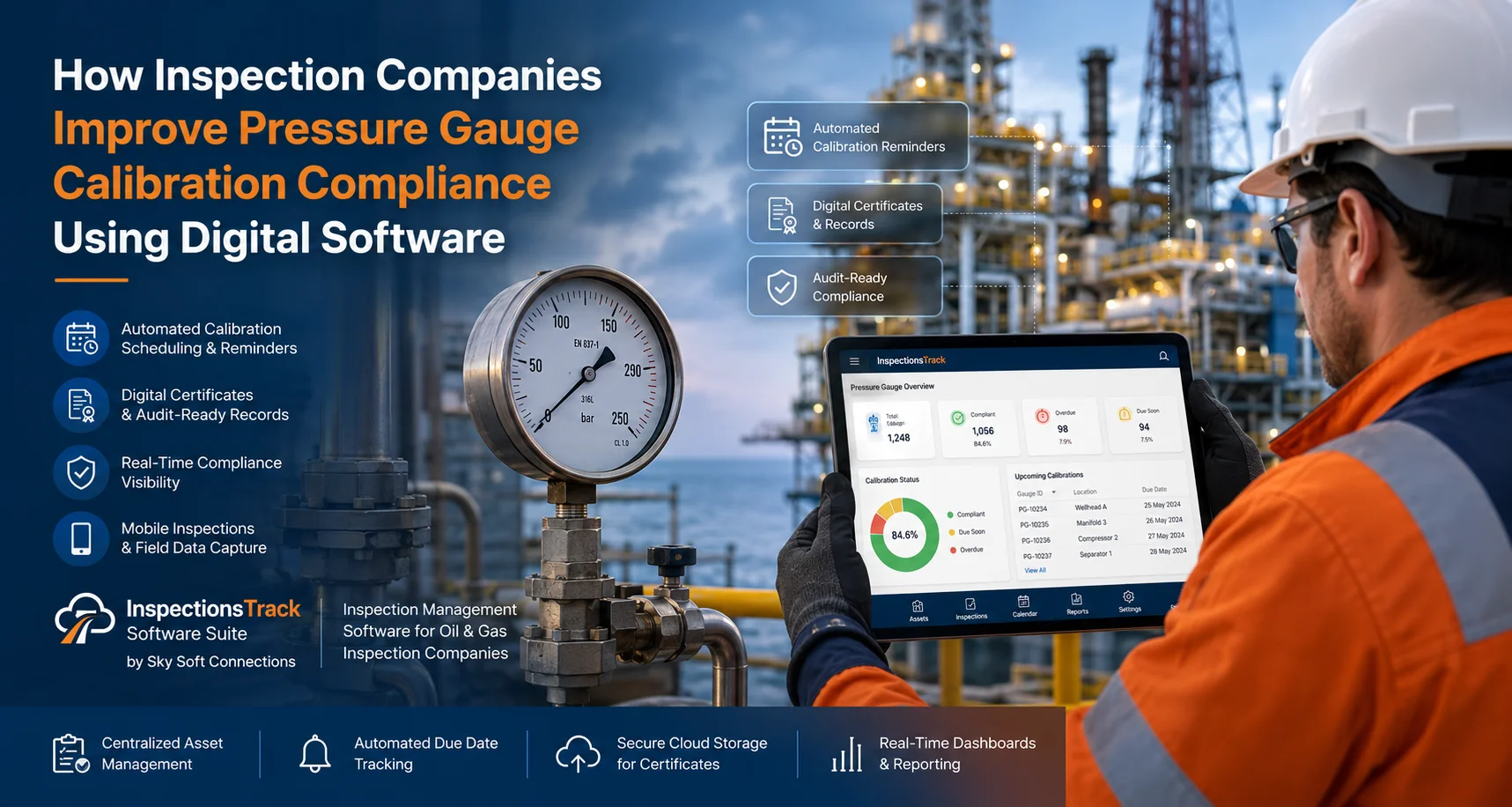
Pressure gauges are among the most frequently inspected instruments in oil and gas operations.
They are installed across drilling rigs, pressure vessels, pipelines, wellhead equipment, hydraulic systems, compressors, pumps, and process facilities. Because these instruments directly influence operational safety and regulatory compliance, inspection companies must ensure every gauge remains calibrated within its approved interval.
The challenge is that calibration compliance becomes increasingly difficult as asset volumes grow.
Many inspection companies still rely on spreadsheets, manual certificates, paper calibration records, and disconnected reporting processes. As a result, calibration schedules are often missed, records become difficult to trace, and audit preparation turns into a time-consuming exercise.
For inspection companies supporting multiple clients and assets, even a small calibration oversight can create compliance risks, operational delays, and client dissatisfaction.
This is why leading inspection businesses are adopting digital inspection management platforms such as InspectionsTrack Software Suite by Sky Soft Connections to automate pressure gauge calibration management and maintain continuous compliance visibility.
Pressure gauges are considered safety-critical instruments in many oil and gas operations.
An inaccurate gauge can lead to:
Inspection companies are expected to provide accurate calibration records and demonstrate that every inspected gauge meets required standards.
Compliance managers often need immediate access to:
Without a centralized system, retrieving this information becomes difficult and error-prone.
Inspection companies frequently encounter the following operational problems:
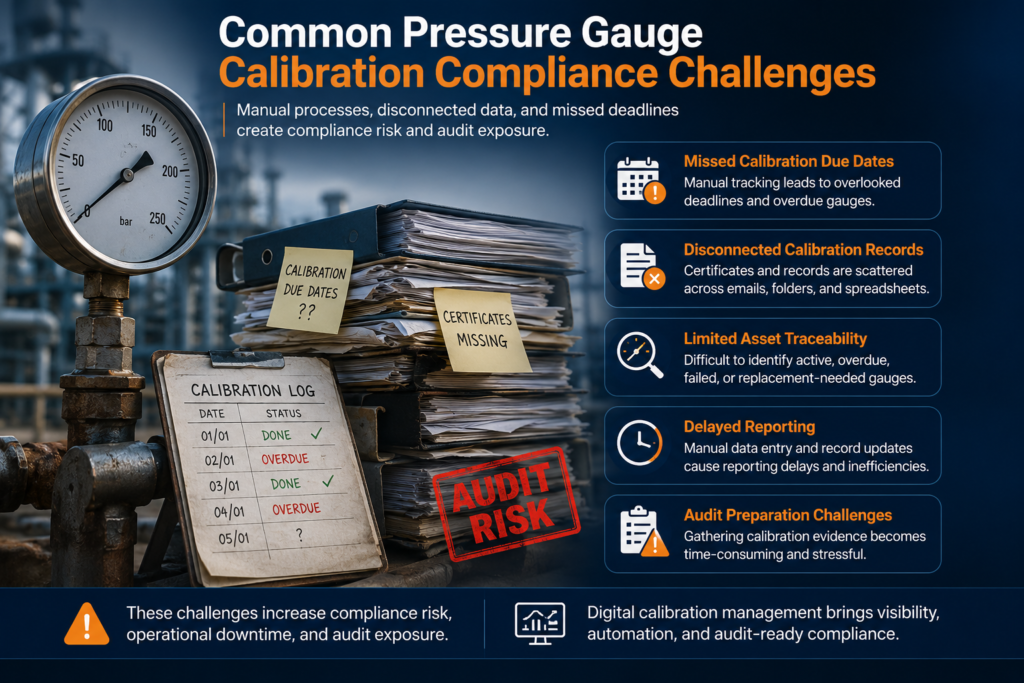
Manual tracking methods often rely on spreadsheets or calendar reminders.
When hundreds or thousands of gauges are involved, due dates can easily be overlooked.
Certificates may exist in:
Consequently, finding historical calibration evidence becomes difficult during audits.
Many organizations struggle to quickly determine:
Technicians may perform calibrations in the field, yet administrative teams often spend days compiling reports and updating records manually.
Before audits, teams frequently spend significant time gathering:
This reactive approach increases workload and introduces unnecessary risk.
Digital inspection software transforms calibration management from a reactive process into a proactive compliance workflow.
Instead of manually tracking due dates and records, inspection companies gain real-time visibility across their entire calibration program.
InspectionsTrack Software Suite provides a centralized platform where calibration activities, certificates, asset registers, inspection records, and compliance status remain connected within a single system.
This significantly reduces administrative effort while improving compliance accuracy.
Every pressure gauge can be registered within the system, including:
As a result, inspection teams always know the current status of each gauge.
The system automatically monitors calibration intervals.
Instead of relying on spreadsheets, users receive visibility into:
This helps inspection companies prevent missed deadlines before they become compliance issues.
Calibration certificates are stored directly against each asset record.
Users can instantly access:
This creates a complete digital audit trail.
Field technicians can perform inspections using mobile devices.
They can:
Consequently, reporting delays are dramatically reduced.
Compliance managers gain immediate visibility into calibration performance.
Dashboards can display:
This enables faster operational decisions.
The following workflow illustrates how modern inspection companies manage calibration compliance using InspectionsTrack.
| Step | Activity |
|---|---|
| 1 | Register pressure gauge asset |
| 2 | Define calibration frequency |
| 3 | Assign technician or inspection team |
| 4 | Receive automated calibration reminders |
| 5 | Perform calibration onsite |
| 6 | Record results through mobile application |
| 7 | Upload calibration certificate |
| 8 | Update asset compliance status |
| 9 | Generate client reports |
| 10 | Monitor next calibration cycle automatically |
This structured workflow creates consistency across all calibration activities.
| Compliance Area | Manual Process | Digital Process |
|---|---|---|
| Asset Tracking | Spreadsheet dependent | Centralized database |
| Due Date Monitoring | Manual reminders | Automated scheduling |
| Certificate Storage | Multiple locations | Single repository |
| Audit Preparation | Time-consuming | Instant retrieval |
| Reporting | Manual compilation | Automated reporting |
| Compliance Visibility | Limited | Real-time dashboards |
| Historical Records | Difficult to access | Instantly searchable |
| Field Data Capture | Paper forms | Mobile application |
Inspection companies managing large asset volumes typically see significant improvements in operational efficiency after digitizing calibration workflows.

Consider an offshore inspection contractor responsible for maintaining calibration records for hundreds of pressure gauges across multiple rigs.
Using spreadsheets, the contractor faces challenges such as:
After implementing InspectionsTrack Software Suite, the organization gains:
As a result, compliance teams spend less time managing paperwork and more time focusing on operational quality.
Inspection companies that digitize pressure gauge calibration management typically achieve:
Teams gain continuous visibility into calibration status across all assets.
Supporting records are available immediately when auditors request evidence.
Automation eliminates repetitive manual tracking tasks.
Clients receive timely reports and transparent compliance records.
Every calibration activity is linked to the relevant asset and technician.
Inspection teams spend less time updating spreadsheets and more time performing value-added inspection work.
Regulatory expectations continue to increase.
At the same time, asset volumes, inspection frequency requirements, and client reporting demands continue growing.
Manual compliance management simply does not scale effectively.
Modern inspection businesses require:
This is precisely why more oil and gas inspection companies are adopting platforms such as InspectionsTrack Software Suite by Sky Soft Connections.
The platform helps organizations manage pressure gauge calibration compliance alongside other critical inspection processes including:
Pressure gauge calibration compliance is no longer just about maintaining certificates.
Inspection companies must demonstrate complete asset traceability, accurate calibration histories, audit readiness, and real-time compliance visibility.
Organizations that continue relying on spreadsheets and paper-based processes often struggle with missed calibration dates, fragmented records, and inefficient reporting workflows.
By implementing a digital inspection management platform such as InspectionsTrack Software Suite by Sky Soft Connections, inspection companies can automate calibration scheduling, centralize records, improve audit readiness, and strengthen overall compliance performance.
For inspection businesses operating in demanding oil and gas environments, digital calibration management is rapidly becoming a competitive necessity rather than an optional improvement.
Read more : How Inspection Companies Improve Audit Readiness Using Digital Inspection Software
Calibration frequency depends on regulatory requirements, manufacturer recommendations, operating conditions, and client specifications. Many organizations use 6-month or 12-month intervals.
Most challenges arise from manual tracking methods, disconnected records, spreadsheet errors, and limited visibility into upcoming calibration due dates.
A calibration record should include asset ID, serial number, calibration date, technician details, test results, certificate reference, and next due date.
Digital software centralizes calibration records, certificates, inspection history, and compliance data, making audit evidence instantly accessible.
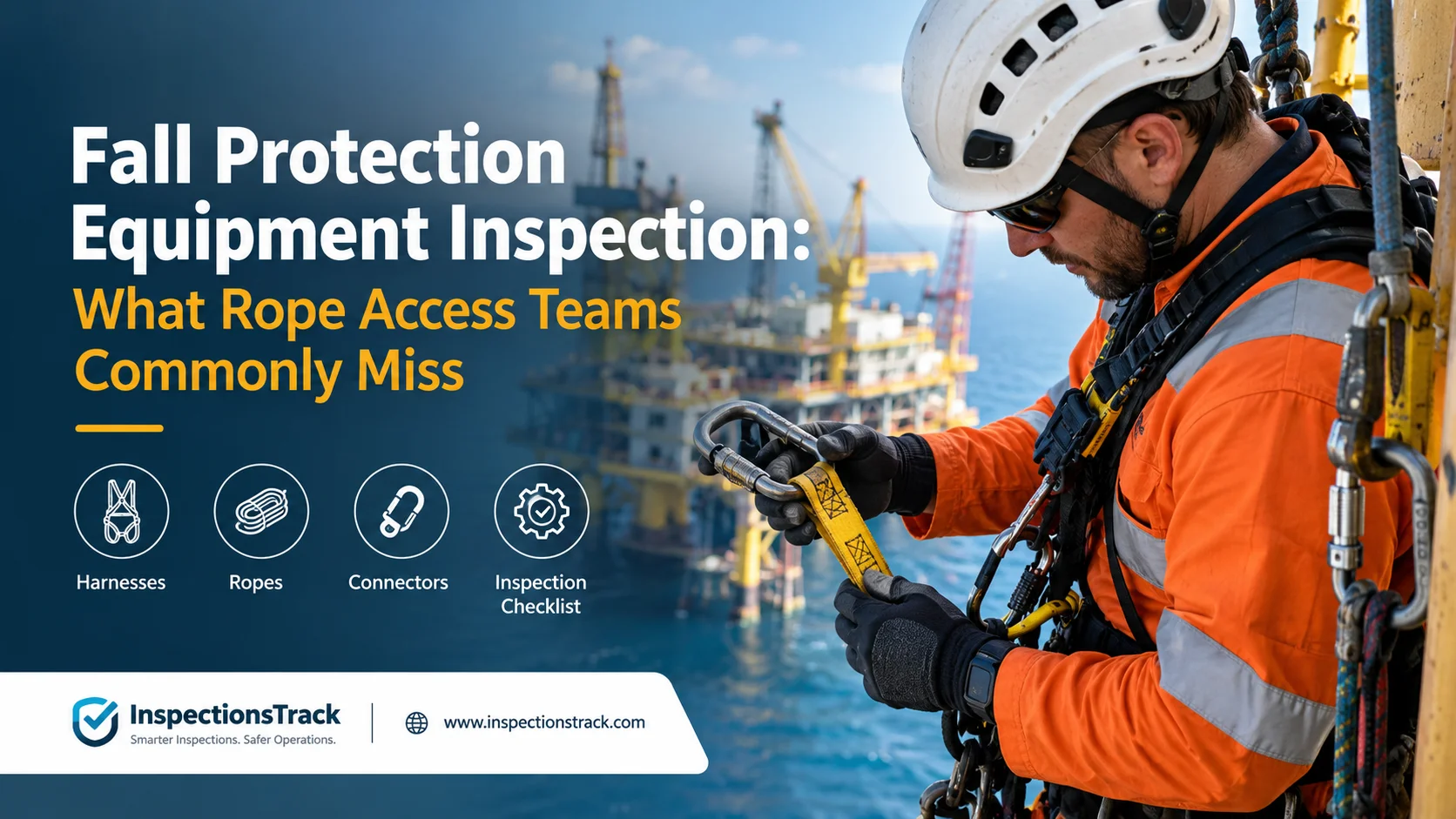
Working at height is one of the most demanding activities in industrial environments. For rope access teams, however, safety depends on more than having the right equipment. Fall protection equipment must also be inspected correctly,…
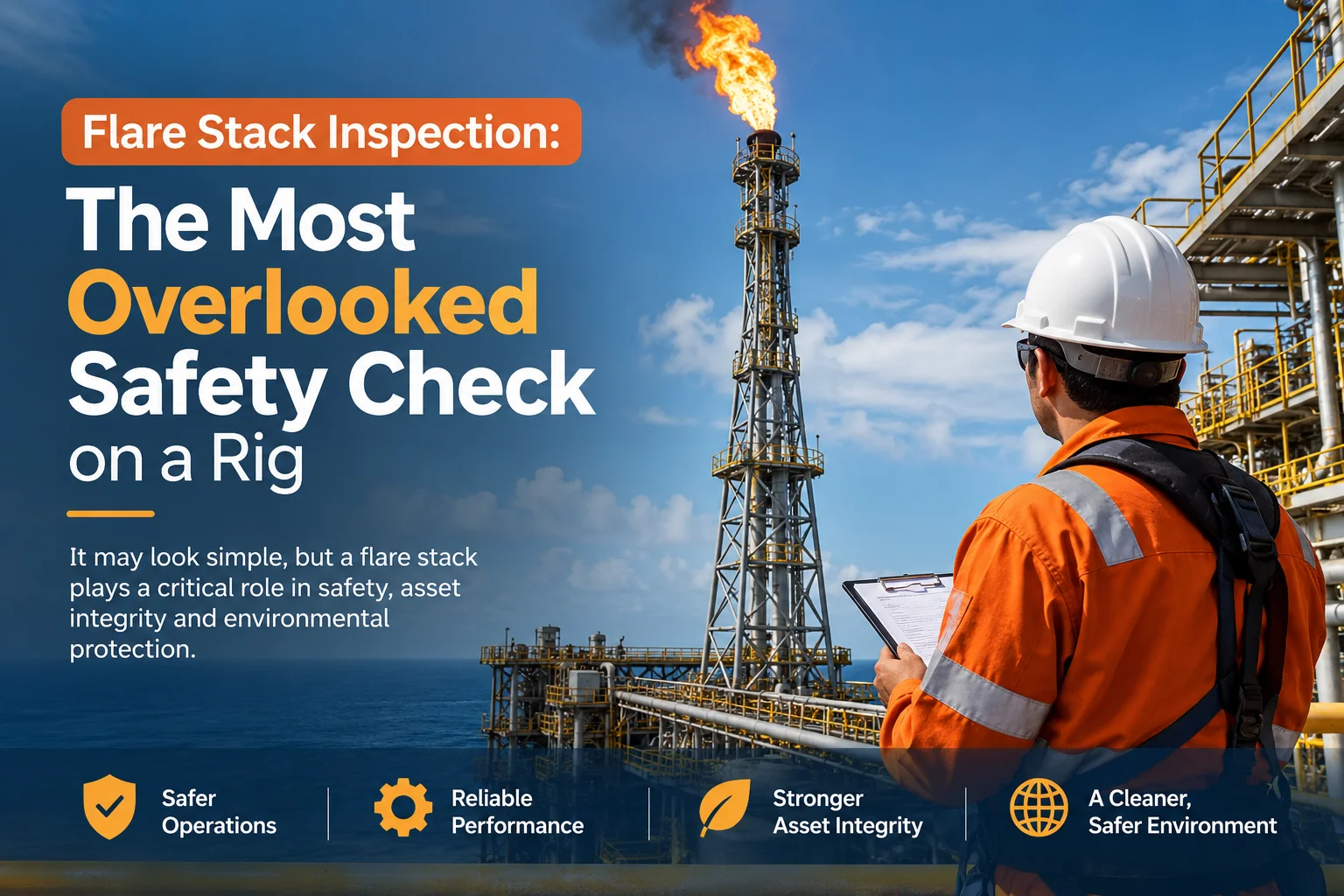
A flare stack may look like a simple vertical structure standing above a rig or production facility. In reality, it is one of the most important safety systems for handling flammable gases and relieving potentially…


