
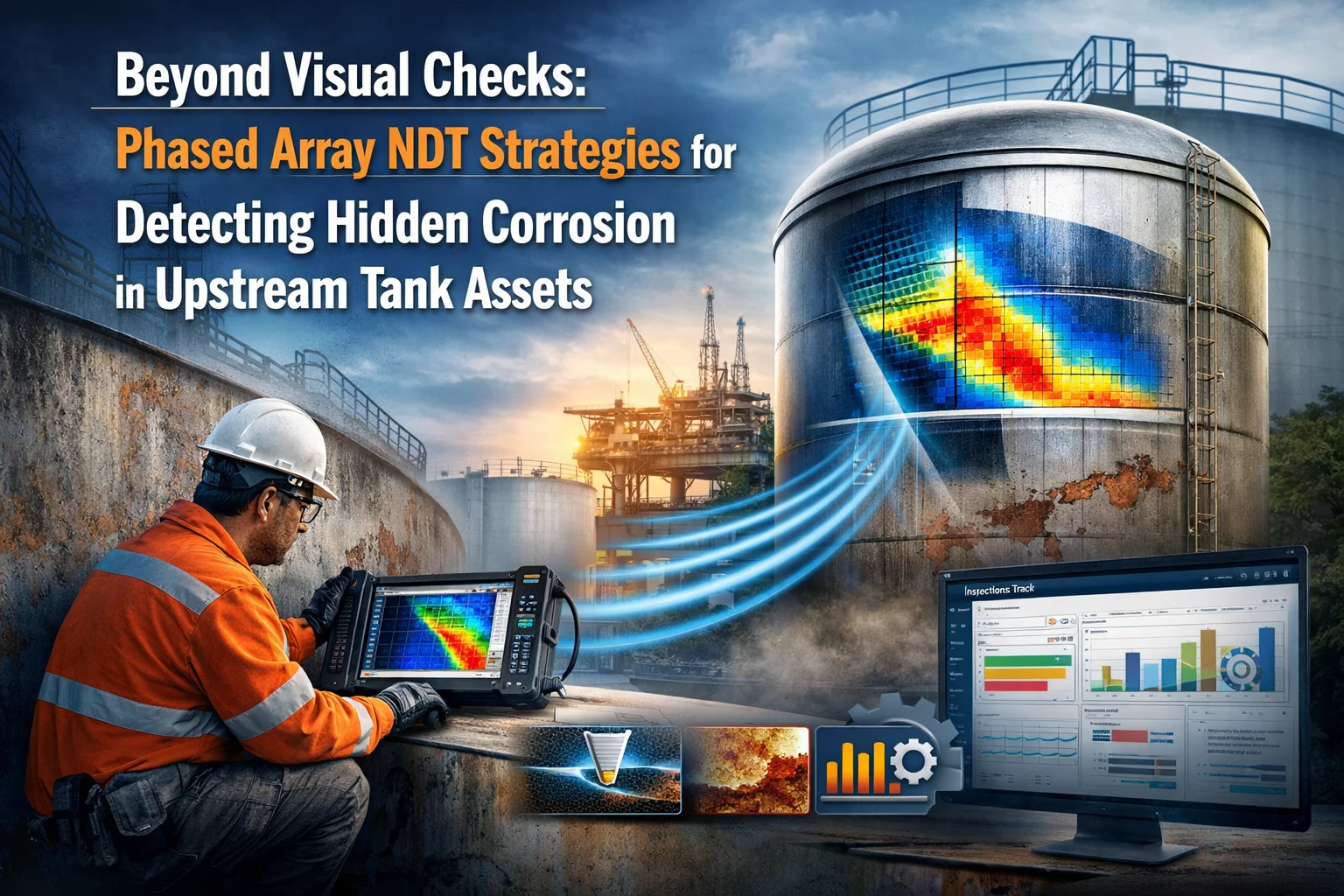
Hidden corrosion is one of the biggest threats to upstream oil and gas tank assets. While visual inspections are useful, they often fail to detect subsurface flaws. Therefore, companies are increasingly adopting advanced Phased Array Ultrasonic Testing (PAUT) to uncover what lies beneath the surface.
In this guide, we will explore how phased array NDT works, why it matters, and how you can optimize your inspection strategy using modern tools like Inspections Track software.
Traditionally, inspectors relied heavily on visual checks. However, this approach has limitations.
As a result, companies face increased risks, including leaks, environmental hazards, and costly downtime.
Phased Array Ultrasonic Testing is an advanced non-destructive testing method that uses multiple ultrasonic elements to scan materials from different angles.
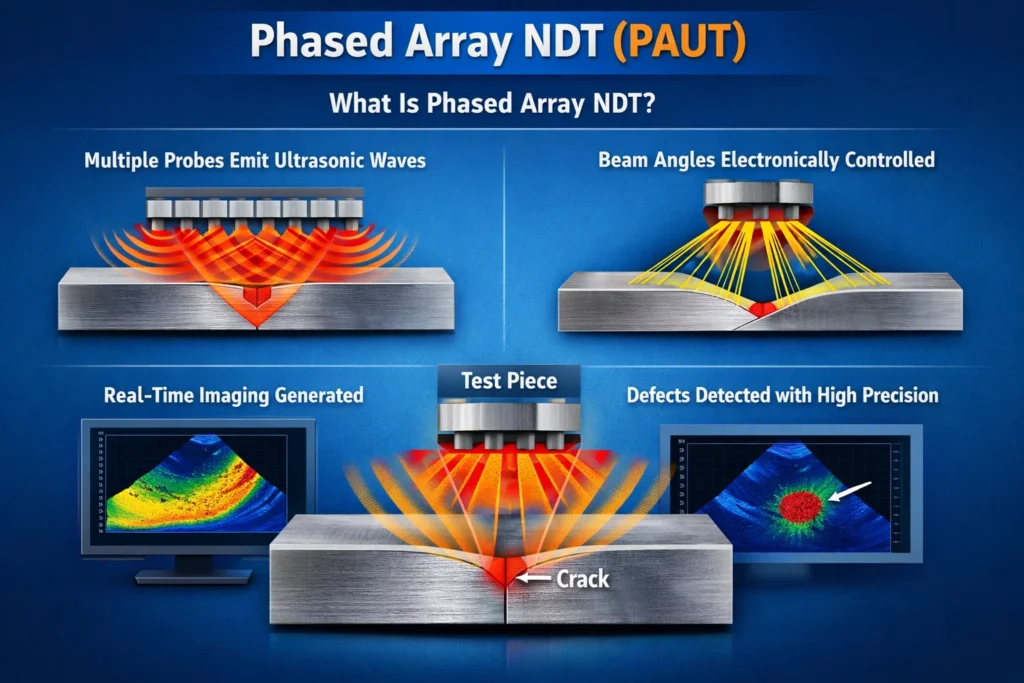
Consequently, inspectors can identify corrosion, cracks, and weld defects without dismantling equipment.
Compared to conventional methods, PAUT offers significant advantages.
Moreover, it enhances safety by reducing the need for intrusive inspections.
Understanding corrosion types is essential before applying PAUT strategies.
Therefore, phased array becomes a critical tool for proactive maintenance.
To get the best results, companies must implement structured strategies.
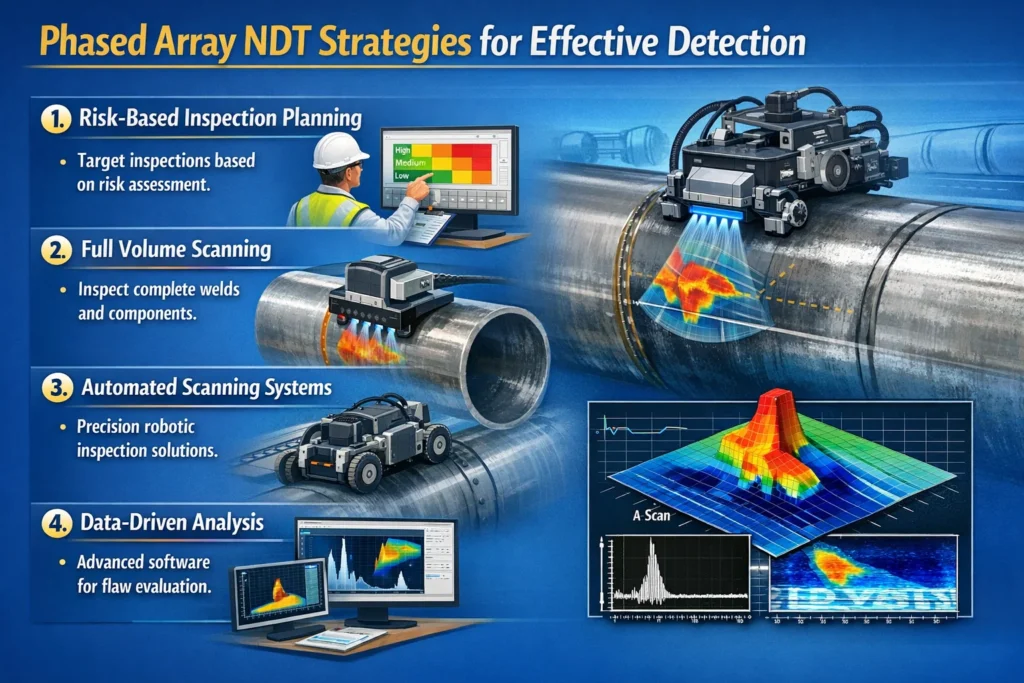
First, prioritize tanks based on:
This approach ensures efficient resource allocation.
Instead of spot checks, use phased array for:
As a result, no hidden defect goes unnoticed.
Using automated scanners:
Additionally, it allows inspections in hazardous areas.
Modern PAUT generates large volumes of data. Therefore:
Read more : types of tanks in oil and gas industry
| Inspection Method | Accuracy | Detection Depth | Speed | Data Recording |
|---|---|---|---|---|
| Visual Inspection | Low | Surface Only | Fast | No |
| Conventional UT | Medium | Moderate | Medium | Limited |
| Phased Array (PAUT) | High | Deep/Internal | Fast | Yes |
Clearly, phased array stands out as the most reliable solution.
While PAUT provides accurate data, managing that data is equally important. This is where Inspections Track software becomes essential.
As a result, inspection teams can make faster and smarter decisions.
To maximize effectiveness, follow these best practices:
Furthermore, continuous improvement ensures long-term asset integrity.
The industry is evolving rapidly. Therefore, companies must stay ahead.
These innovations, combined with phased array technology, are transforming inspection strategies.
Visual inspections alone are no longer sufficient for detecting hidden corrosion in upstream tank assets. Instead, Phased Array NDT provides a powerful, accurate, and efficient solution.
However, technology alone is not enough. By integrating Inspections Track software, companies can streamline workflows, improve data management, and ensure compliance.
Ultimately, adopting advanced NDT strategies not only enhances safety but also reduces operational costs and extends asset life.
Read more : atex zone ex inspections for oil gas safety
Phased Array NDT is an advanced ultrasonic testing method that detects hidden corrosion and weld defects in tank assets without dismantling equipment.
Visual inspections only reveal surface flaws. Subsurface corrosion, wall thinning, and weld cracks often go undetected without advanced NDT methods like PAUT.
Inspections Track software centralizes inspection data, provides real-time analysis, tracks corrosion trends, and ensures compliance for safer, efficient tank maintenance.
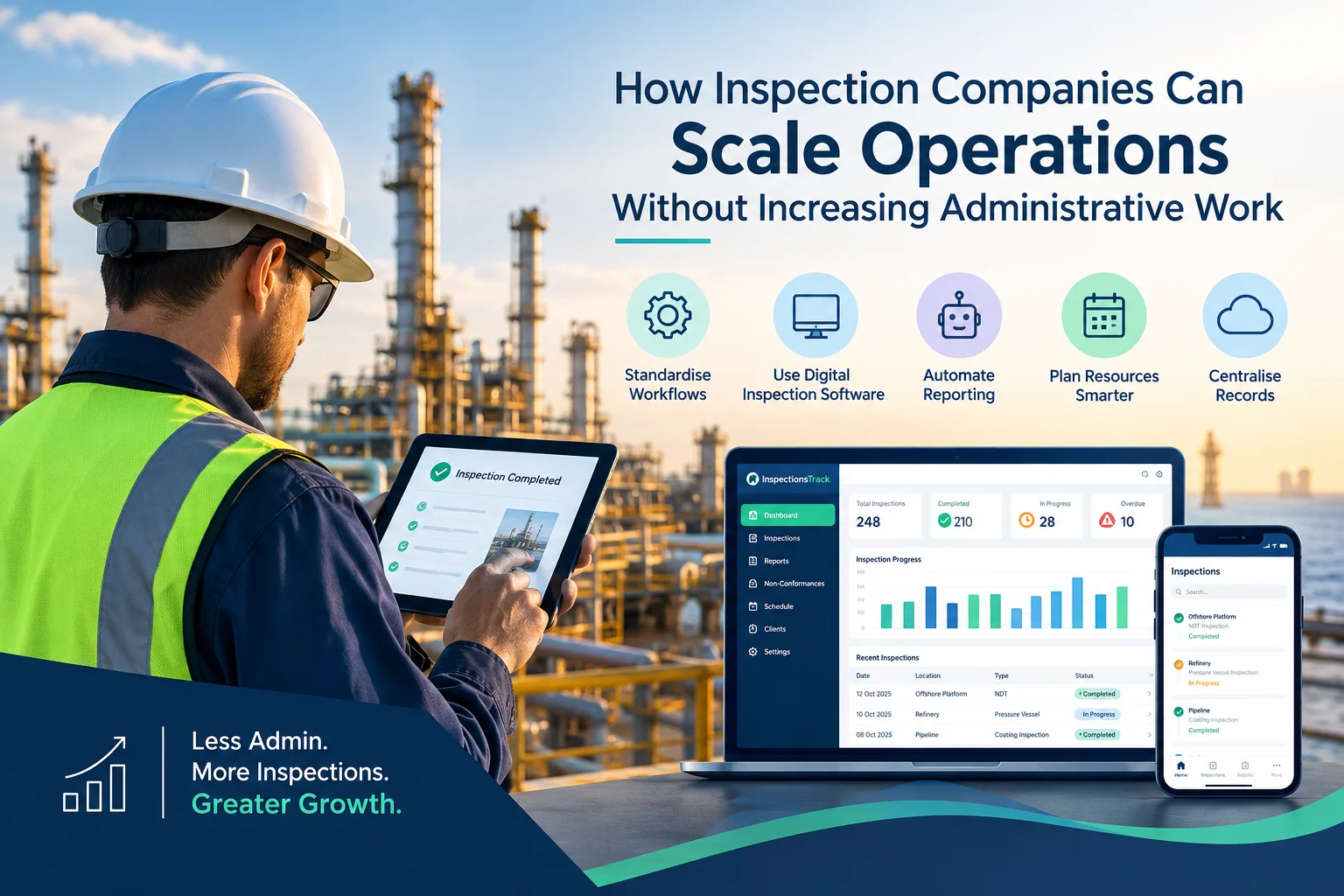
Inspection companies in the oil and gas industry face a common challenge: how to handle more inspections, manage larger projects, and meet client deadlines without increasing administrative workload. As businesses grow, inspection teams must manage…

Meeting client Service Level Agreements (SLAs) is essential for inspection companies working in demanding industries such as oil and gas, energy, and industrial maintenance. Clients expect inspections to be completed on time, reports to be…


