
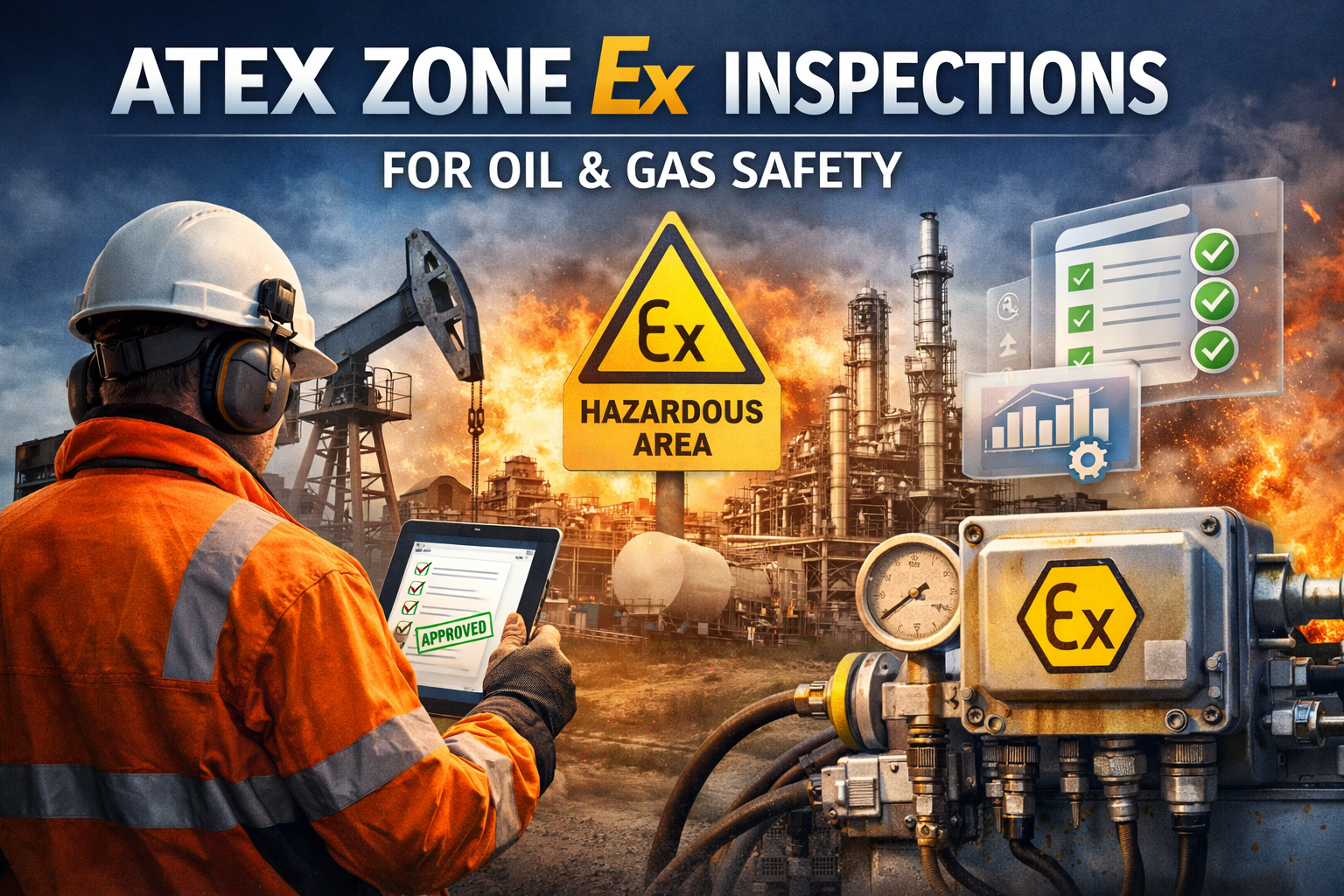
ATEX (Atmosphères Explosibles) refers to European directives that regulate equipment and working conditions in explosive atmospheres.
Ex inspections involve checking electrical and mechanical equipment installed in hazardous zones to ensure they meet safety standards and function properly.
Hazardous areas are classified into zones based on the likelihood of explosive atmospheres.
| Zone | Description | Risk Level |
|---|---|---|
| Zone 0 | Explosive atmosphere present continuously | Very High |
| Zone 1 | Likely during normal operations | High |
| Zone 2 | Occurs rarely and for short periods | Moderate |
| Zone | Description | Risk Level |
|---|---|---|
| Zone 20 | Continuous dust presence | Very High |
| Zone 21 | Likely during operations | High |
| Zone 22 | Occasional presence | Moderate |
Therefore, understanding zone classification is essential before conducting inspections.
ATEX inspections are not one-size-fits-all. Instead, they are categorized based on depth and frequency.
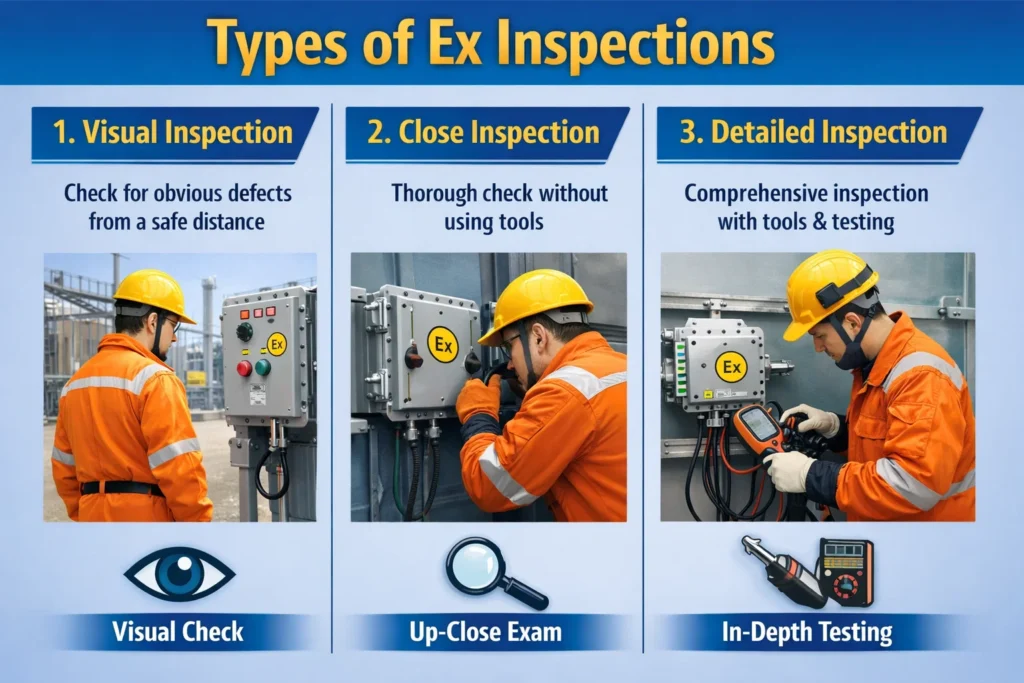
In practice, combining all three ensures complete safety coverage.
During ATEX inspections, multiple components must be evaluated.
Additionally, inspectors must verify that all equipment matches the correct zone classification.
To maintain consistency and compliance, inspections follow a structured approach.
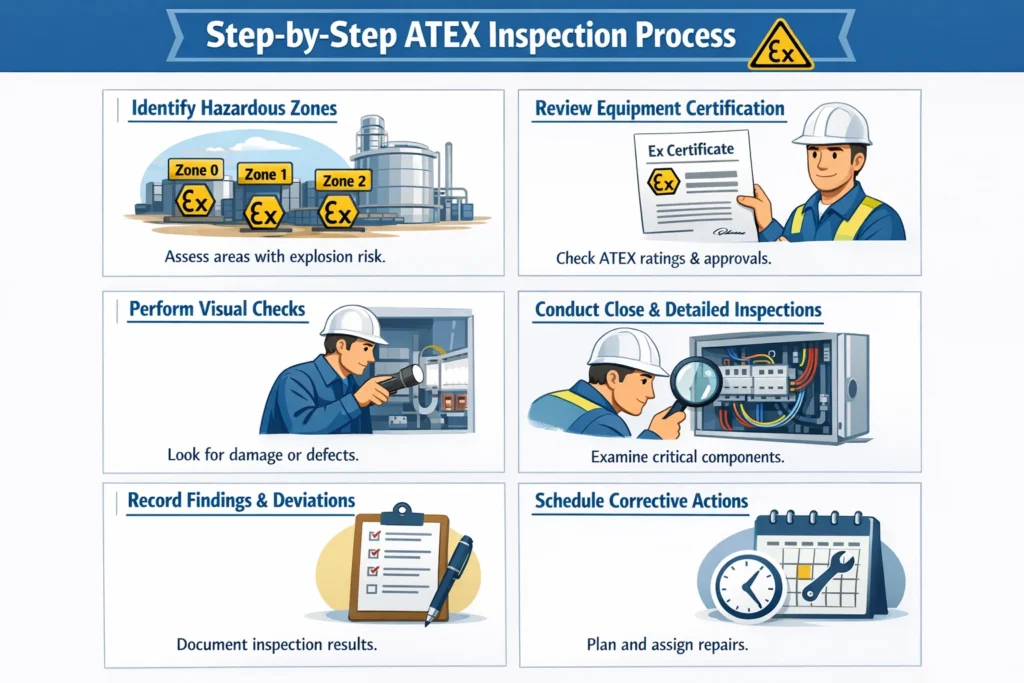
As a result, this systematic process minimizes risks and ensures traceability.
Despite their importance, many organizations face challenges.
Consequently, these challenges can lead to safety incidents and regulatory penalties.
Modern oil and gas companies are shifting to digital solutions like Inspections Track Software to overcome these limitations.

Therefore, adopting Inspections Track significantly enhances efficiency, safety, and compliance.
To ensure optimal results, follow these proven practices:
Additionally, integrating software solutions helps maintain consistency across all operations.
Organizations must adhere to international standards, including:
Following these standards ensures global compliance and operational safety.
ATEX Zone Ex inspections are essential for maintaining safety in hazardous oil and gas environments. While traditional methods may still be in use, they often lead to inefficiencies and risks.
However, by adopting structured inspection processes and leveraging Inspections Track Software, companies can significantly improve safety, ensure compliance, and streamline operations.
In today’s high-risk environments, proactive inspection management is not just beneficial it’s essential.
Read more : lifting appliances inspection oil and gas
ATEX inspections ensure equipment in hazardous areas is safe and compliant, preventing explosions.
Frequency depends on zone classification and risk level, but regular inspections are mandatory.
Digital tools improve accuracy, automate scheduling, and ensure compliance with safety standards.
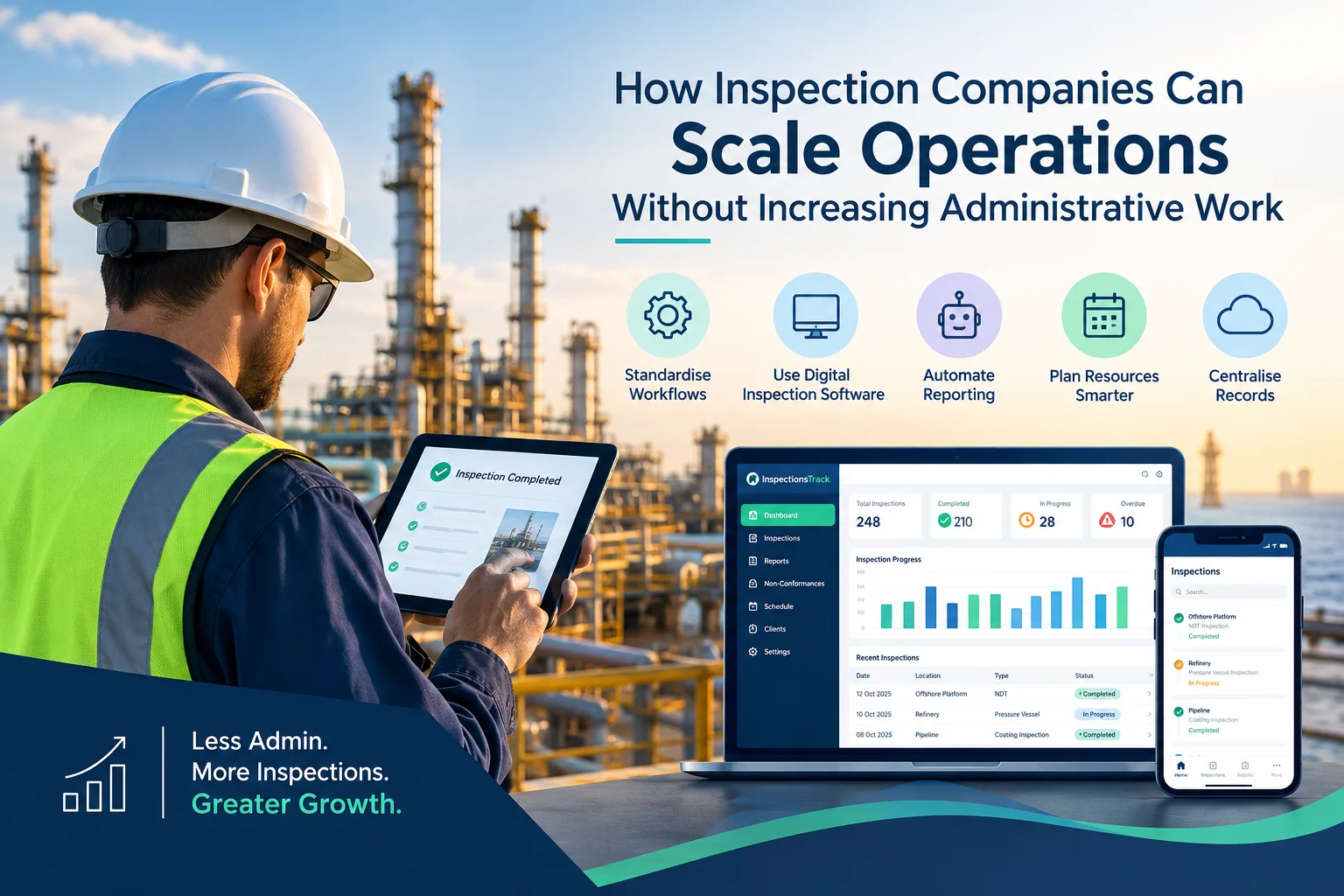
Inspection companies in the oil and gas industry face a common challenge: how to handle more inspections, manage larger projects, and meet client deadlines without increasing administrative workload. As businesses grow, inspection teams must manage…
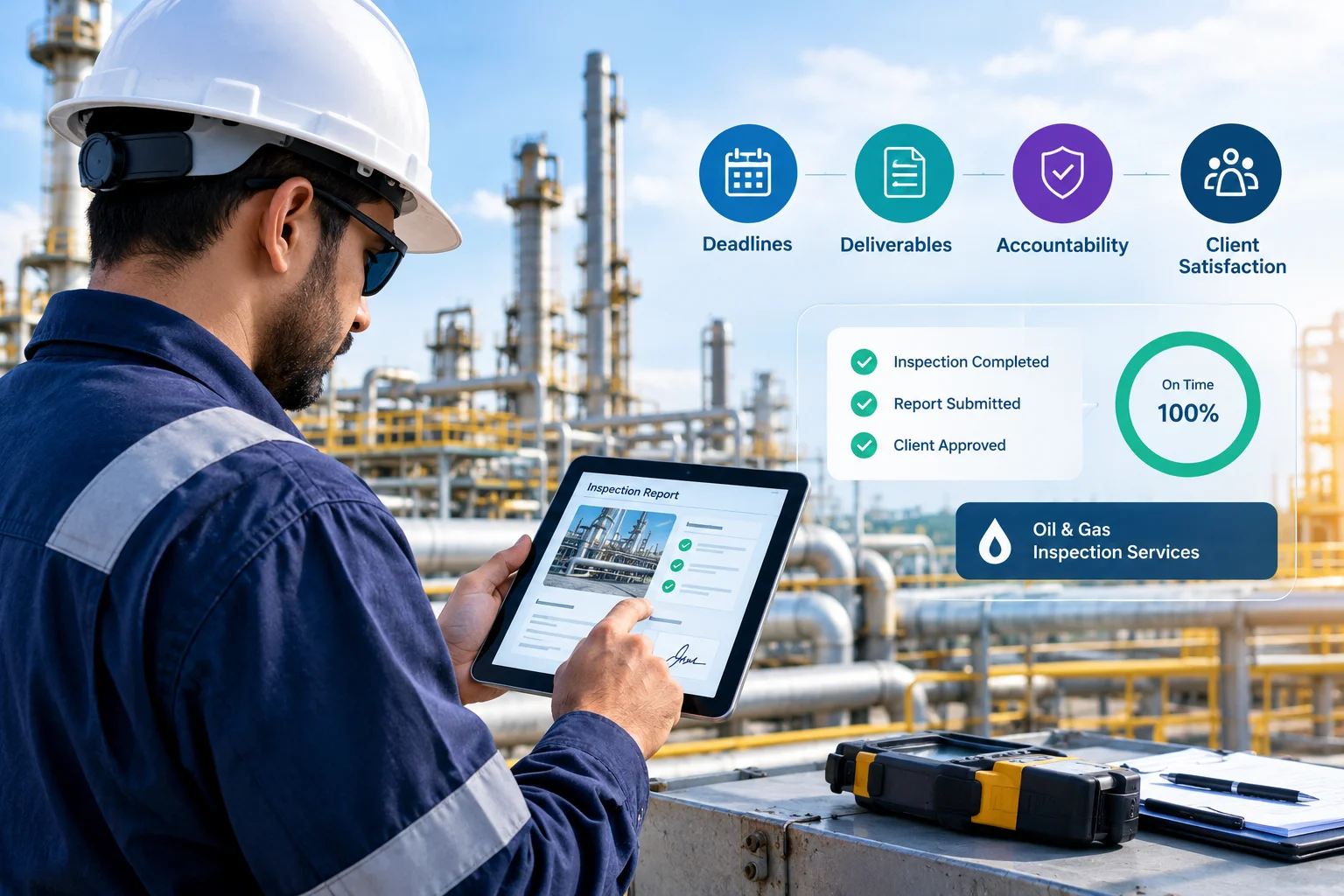
Meeting client Service Level Agreements (SLAs) is essential for inspection companies working in demanding industries such as oil and gas, energy, and industrial maintenance. Clients expect inspections to be completed on time, reports to be…


