
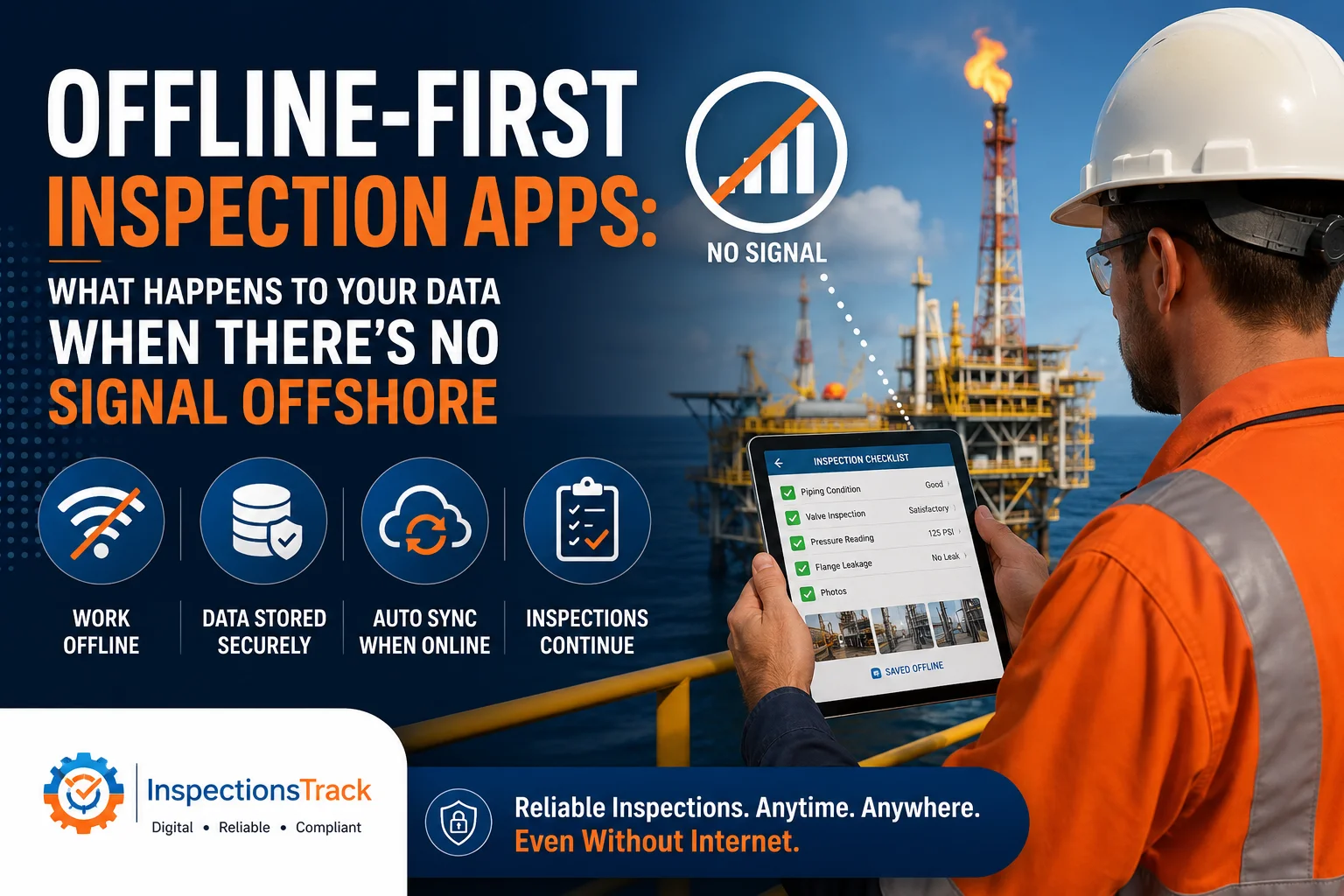
Imagine standing on an offshore oil platform hundreds of miles from the coast. Your inspection team is completing critical safety checks, yet there is no internet connection. Does your inspection stop? More importantly, what happens to the inspection data you have already collected?
For many inspection companies, unreliable connectivity remains one of the biggest operational challenges. While cloud-based inspection software offers convenience, it often fails when inspectors work in remote offshore environments.
This is exactly why offline-first inspection apps have become essential for modern oil and gas operations.
In this guide, you’ll learn how offline inspection software works, how your data remains secure without internet access, and why Inspections Track helps inspection companies continue working efficiently—even in the most remote offshore locations.
Offshore facilities rarely enjoy uninterrupted internet access. Instead, inspectors frequently experience:
Consequently, inspection teams cannot rely on real-time cloud access throughout the inspection process.
If your inspection software requires continuous internet connectivity, productivity quickly declines.
Many inspection platforms were designed for office environments rather than offshore operations.
When connectivity disappears, inspectors often experience:
| Challenge | Operational Impact |
|---|---|
| Unable to open inspection forms | Inspection delays |
| Lost inspection progress | Duplicate work |
| Missing photos | Incomplete reports |
| Manual paper notes | Higher error rates |
| Delayed reporting | Slower compliance approvals |
| Data inconsistencies | Poor asset history |
As a result, companies lose valuable time while increasing operational risk.
An offline-first inspection app stores inspection data directly on the inspection device instead of relying on continuous cloud communication.
Therefore, inspectors can:
Later, once connectivity returns, the application securely synchronizes all collected data with the central database.
This approach ensures uninterrupted inspections regardless of network availability.
Instead of sending every action immediately to the cloud, an offline-first application follows a smarter workflow.
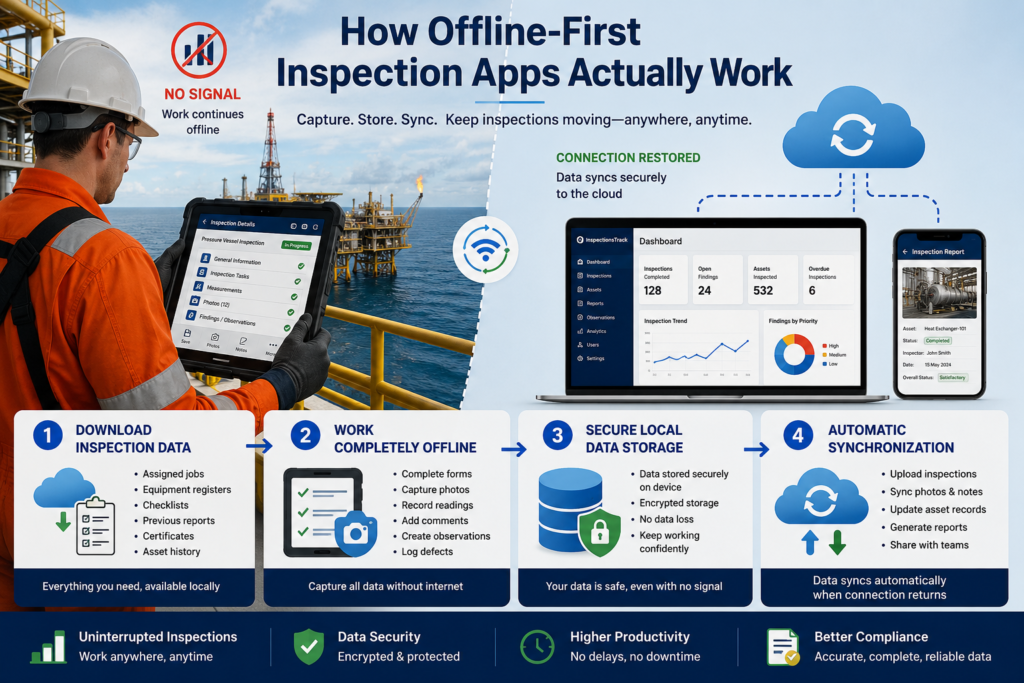
Before mobilization, inspectors synchronize:
Everything required for the inspection becomes available locally.
During offshore inspections, inspectors continue working normally.
They can:
Importantly, every action is saved instantly on the device.
Rather than waiting for internet connectivity, inspection data remains safely stored inside the application.
This prevents:
Even if connectivity disappears for several days, inspectors can continue working confidently.
Once internet access becomes available, the application automatically:
The synchronization happens in the background, minimizing manual effort.
This is one of the most common questions from inspection managers.
The answer depends entirely on your inspection software.
With a properly designed offline-first inspection application, your data remains:
Inspection records stay safely encrypted on the device until synchronization.
Inspectors can review previous inspections, certificates, and equipment history at any time.
Unexpected signal loss does not interrupt inspection activities.
Once connectivity returns, updates are transmitted without requiring inspectors to recreate their work.
Oil and gas inspections frequently occur in locations such as:
In these environments, uninterrupted internet access cannot be guaranteed.
Consequently, offline capability becomes a business-critical requirement rather than a convenience.
Before selecting inspection software, verify that it provides these capabilities.
| Feature | Why It Matters |
|---|---|
| Offline inspection forms | Continue inspections anywhere |
| Local encrypted storage | Protect sensitive inspection data |
| Automatic synchronization | Reduce manual uploads |
| Offline photo capture | Document findings immediately |
| Asset history access | Improve inspection accuracy |
| Digital signatures | Complete reports in the field |
| Certificate generation | Faster compliance documentation |
| Conflict resolution | Prevent duplicate records |
| Mobile compatibility | Work on phones and tablets |
| Audit trail | Maintain regulatory compliance |
Inspections Track was designed specifically for the demanding requirements of the oil and gas inspection industry.
Unlike generic inspection platforms, it enables inspectors to work confidently in remote offshore environments where internet connectivity is unreliable.
With Inspections Track, inspection teams can:
Inspectors can continue inspections even without internet access.
High-quality images remain attached to inspection records until synchronization.
Historical inspection data stays available throughout the inspection process.
Standardized inspection templates improve consistency across teams.
Inspection reports are prepared using collected data, reducing administrative effort.
Once a network becomes available, inspection records sync securely with the central system.
Inspections Track supports numerous oil and gas inspection workflows, including:
Organizations adopting offline-first inspection solutions often experience:
As a result, inspection teams spend less time managing connectivity issues and more time focusing on safety and compliance.
| Feature | Offline-First Apps | Online-Only Apps |
|---|---|---|
| Works without internet | ✅ Yes | ❌ No |
| Stores data locally | ✅ Yes | ❌ Limited |
| Automatic synchronization | ✅ Yes | Limited |
| Remote offshore support | ✅ Excellent | ❌ Poor |
| Inspection continuity | ✅ High | Low |
| Risk of lost work | Very Low | High |
| Productivity | High | Inconsistent |
Yes. Offline-first inspection apps allow inspectors to complete inspections, capture photos, and record findings without any active internet connection.
Yes. Modern offline inspection software stores data securely on the device using encrypted local storage until synchronization occurs.
The application automatically uploads completed inspections, images, notes, and reports to the central database, ensuring all records remain up to date.
Absolutely. Inspectors can capture photos, attach supporting documents, and store all evidence locally until connectivity is restored.
Yes. Offshore environments often experience unstable or unavailable internet. Offline functionality ensures inspections continue without interruption, improving productivity and compliance.
Reliable inspection software should never depend on a constant internet connection—especially in offshore oil and gas operations where connectivity is unpredictable.
An offline-first inspection app ensures inspectors can continue collecting accurate, compliant, and secure inspection data regardless of network availability. Furthermore, automatic synchronization eliminates the need for duplicate work while preserving a complete asset history.
For organizations seeking to improve field productivity, reduce reporting delays, and strengthen operational resilience, Inspections Track delivers a purpose-built solution. Its offline capabilities, secure data handling, automated synchronization, and industry-specific inspection workflows help inspection teams stay productive wherever their work takes them.
Whether your teams inspect lifting equipment, perform NDT, conduct DROPS surveys, or manage asset integrity across offshore facilities, Inspections Track keeps your inspection data safe even when there’s no signal.
Read more : NDT Data Silos: The Silent Barrier Preventing Smarter Asset Management
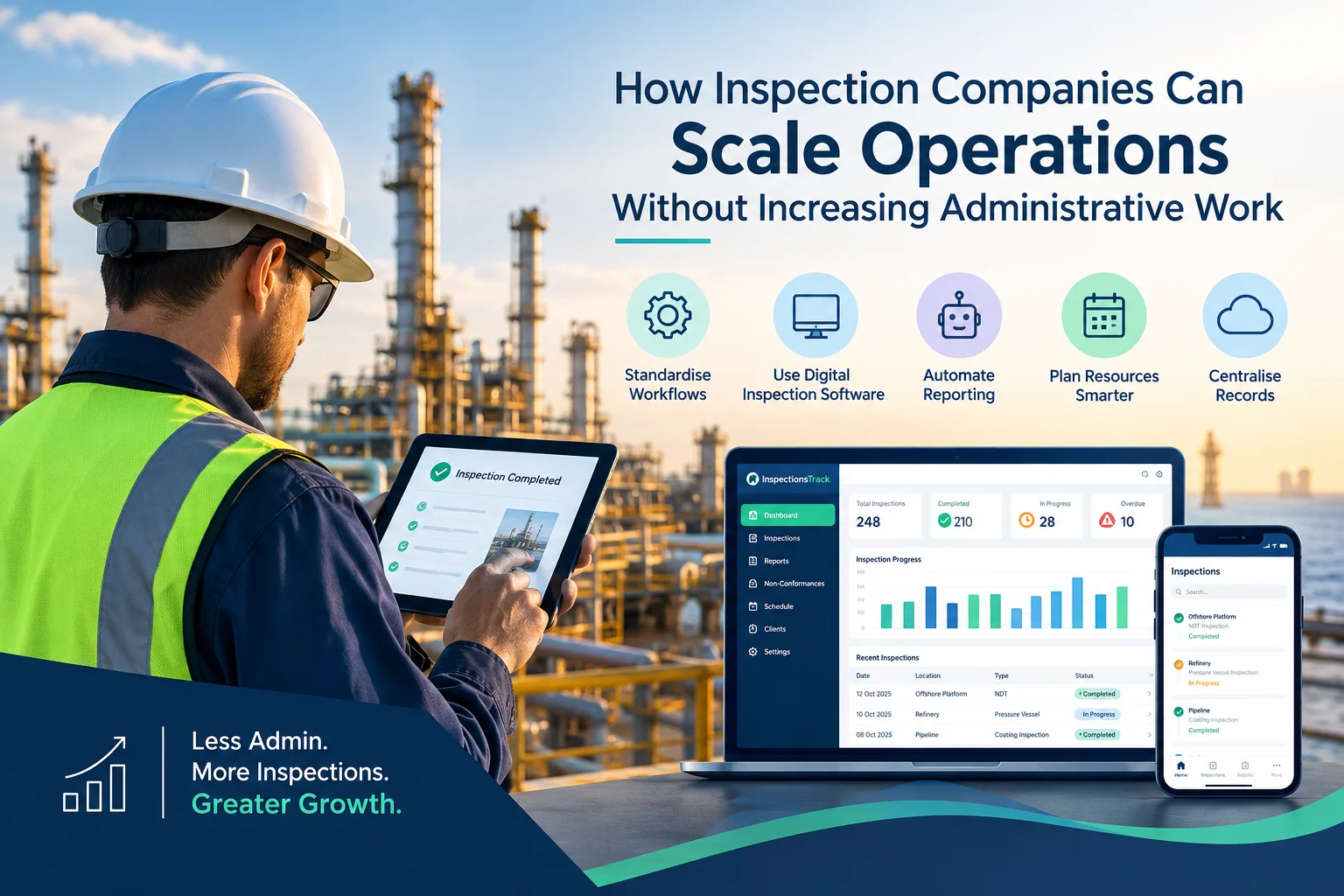
Inspection companies in the oil and gas industry face a common challenge: how to handle more inspections, manage larger projects, and meet client deadlines without increasing administrative workload. As businesses grow, inspection teams must manage…
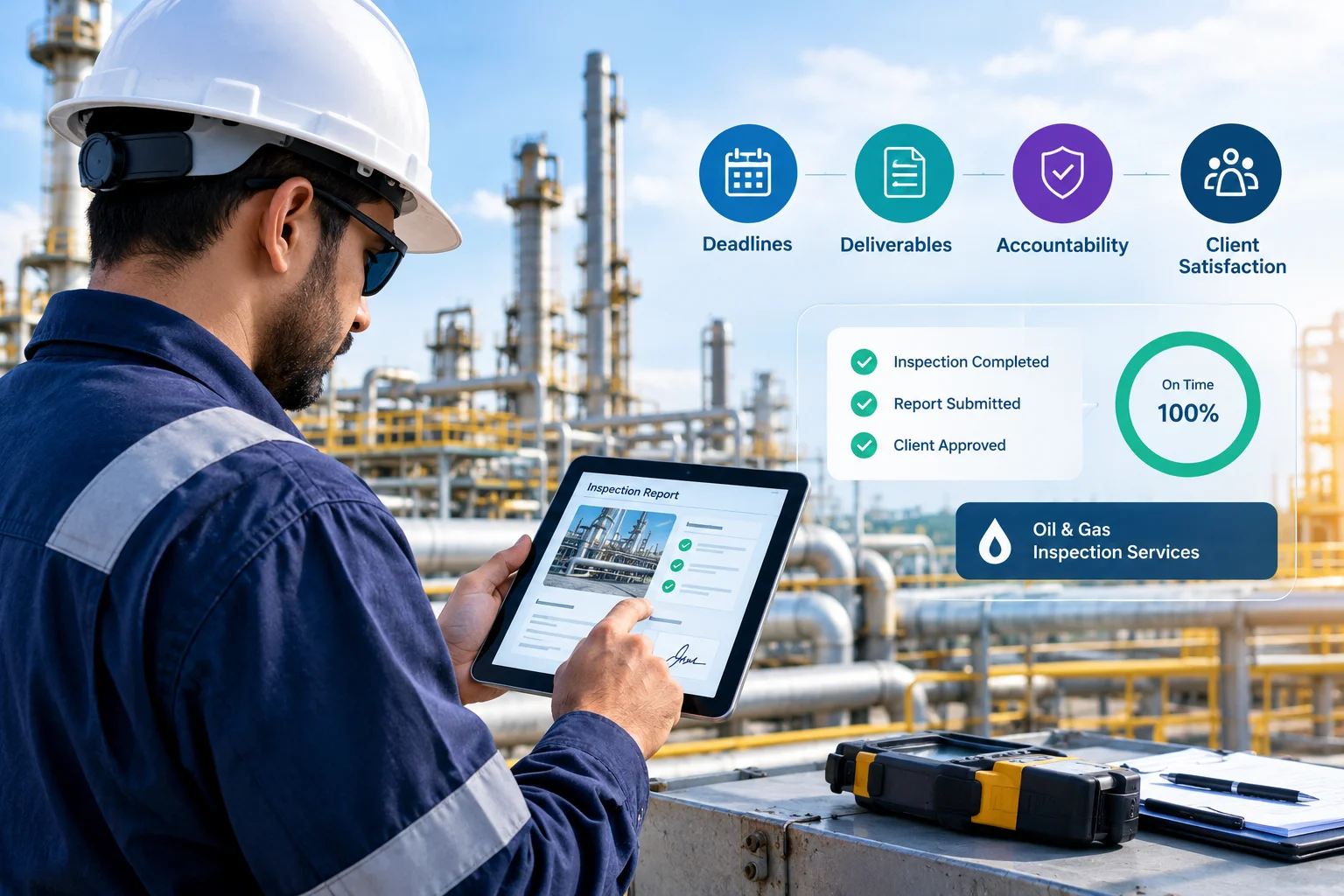
Meeting client Service Level Agreements (SLAs) is essential for inspection companies working in demanding industries such as oil and gas, energy, and industrial maintenance. Clients expect inspections to be completed on time, reports to be…


