
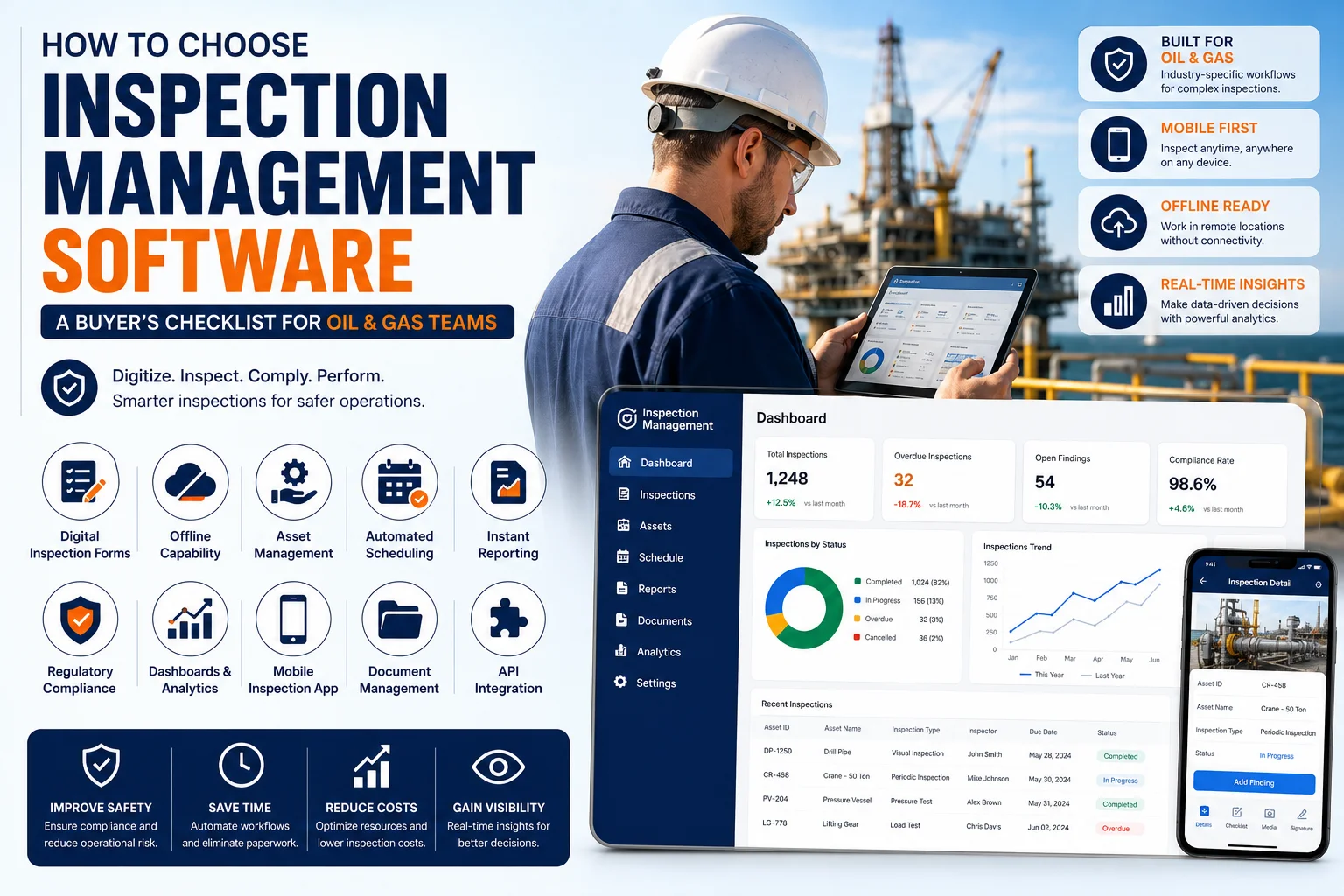
The oil and gas industry operates in one of the most regulated and asset-intensive environments in the world. Every inspection affects operational safety, equipment reliability, regulatory compliance, and project timelines. Therefore, choosing the right Inspection Management Software is no longer just an IT decision—it is a strategic business investment.
Unfortunately, many organizations still rely on spreadsheets, disconnected applications, or paper-based inspections. As operations expand across multiple sites, these manual methods become increasingly difficult to manage. Consequently, companies experience reporting delays, compliance risks, duplicate work, and poor visibility into asset conditions.
This buyer’s guide explains exactly what oil and gas companies should evaluate before purchasing inspection software. Whether you inspect drilling equipment, offshore assets, cranes, pipelines, lifting gear, or pressure vessels, this checklist will help you make a confident decision.
Oil and gas inspections involve thousands of assets, multiple inspection standards, and strict compliance requirements.
Without centralized software, companies often struggle with:
However, modern inspection software solves these challenges by digitizing the entire inspection lifecycle.
As a result, inspection teams work faster, managers gain real-time visibility, and organizations improve compliance while reducing operational costs.
Many companies purchase generic inspection software because it appears affordable initially.
Unfortunately, these systems often fail to support industry-specific workflows.
Common problems include:
Eventually, organizations spend significantly more on workarounds than they would have invested in the right platform from the beginning.
Use this checklist before selecting any inspection management solution.
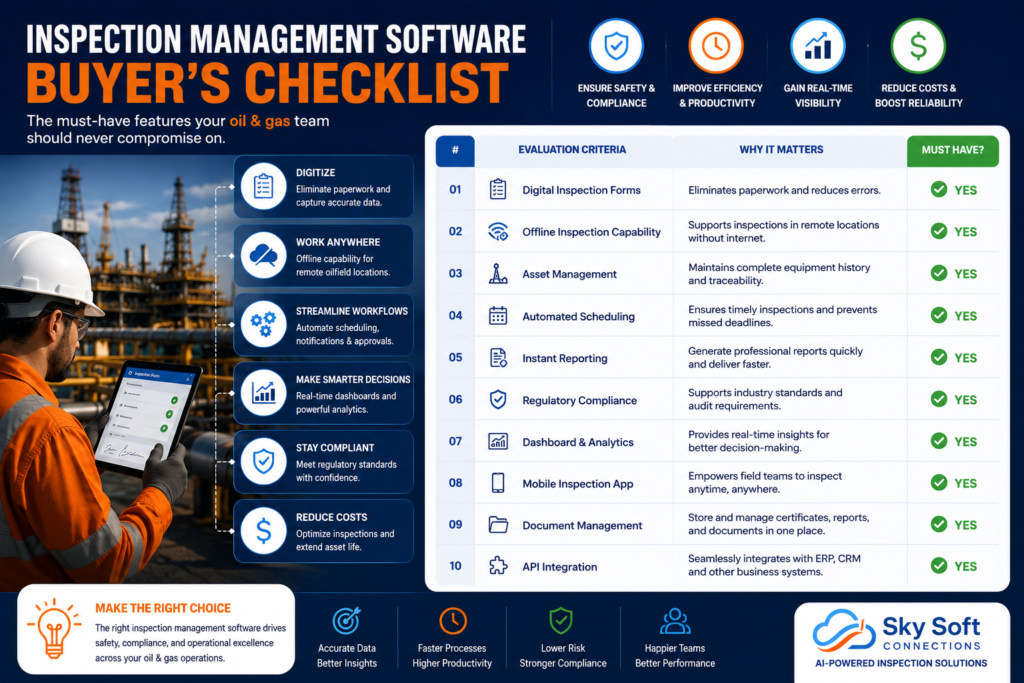
| Evaluation Criteria | Why It Matters | Must Have? |
|---|---|---|
| Digital Inspection Forms | Eliminates paperwork | ✅ Yes |
| Offline Inspection Capability | Supports remote locations | ✅ Yes |
| Asset Management | Complete equipment history | ✅ Yes |
| Automated Scheduling | Never miss inspections | ✅ Yes |
| Instant Reporting | Faster client delivery | ✅ Yes |
| Regulatory Compliance | Supports industry standards | ✅ Yes |
| Dashboard & Analytics | Better decision making | ✅ Yes |
| Mobile Inspection App | Field productivity | ✅ Yes |
| Document Management | Centralized certificates | ✅ Yes |
| API Integration | Connects ERP & CRM | ✅ Yes |
Not every inspection platform understands the complexity of oilfield inspections.
Your software should support inspections for:
Industry-specific workflows dramatically reduce manual configuration.
Paper forms slow inspections and increase the risk of human error.
Instead, your inspectors should complete inspections directly on tablets or mobile devices.
A quality platform allows users to:
Consequently, inspection reports become more accurate and consistent.
Oilfield inspections often occur in remote locations with unreliable internet connectivity.
Therefore, offline functionality should be one of your highest priorities.
The software should allow inspectors to:
Without offline support, productivity drops significantly.
Every inspection revolves around equipment.
Therefore, your software should maintain a complete inspection history for every asset.
Look for features including:
This centralized approach improves decision-making across the organization.
Manual scheduling creates unnecessary administrative work.
Instead, inspection software should automatically schedule recurring inspections based on:
Automation ensures inspections never fall behind schedule.
Clients expect reports immediately after inspections.
Therefore, your software should generate professional reports automatically.
Look for:
Instant reporting reduces administrative workload considerably.
Compliance is one of the biggest reasons companies invest in inspection software.
Your solution should support documentation required for:
Additionally, the system should maintain a complete audit trail for every inspection.
Inspectors spend most of their time in the field—not at a desk.
Therefore, the software should provide an intuitive mobile experience.
Essential mobile capabilities include:
A user-friendly interface also increases adoption across inspection teams.
Data should help managers make better operational decisions.
Modern inspection management software should provide dashboards that display:
| Dashboard Metric | Business Value |
|---|---|
| Completed Inspections | Track productivity |
| Overdue Inspections | Reduce compliance risk |
| Equipment Status | Improve asset reliability |
| Failed Inspections | Prioritize maintenance |
| Inspector Performance | Optimize workforce |
| Upcoming Inspections | Better planning |
These insights help organizations identify trends before they become costly issues.
Inspection software should never operate in isolation.
Instead, it should integrate with systems such as:
Integration reduces duplicate work and improves data accuracy.
Many companies purchase software that works today but cannot support tomorrow’s growth.
Choose software that can scale across:
Scalability protects your long-term investment.
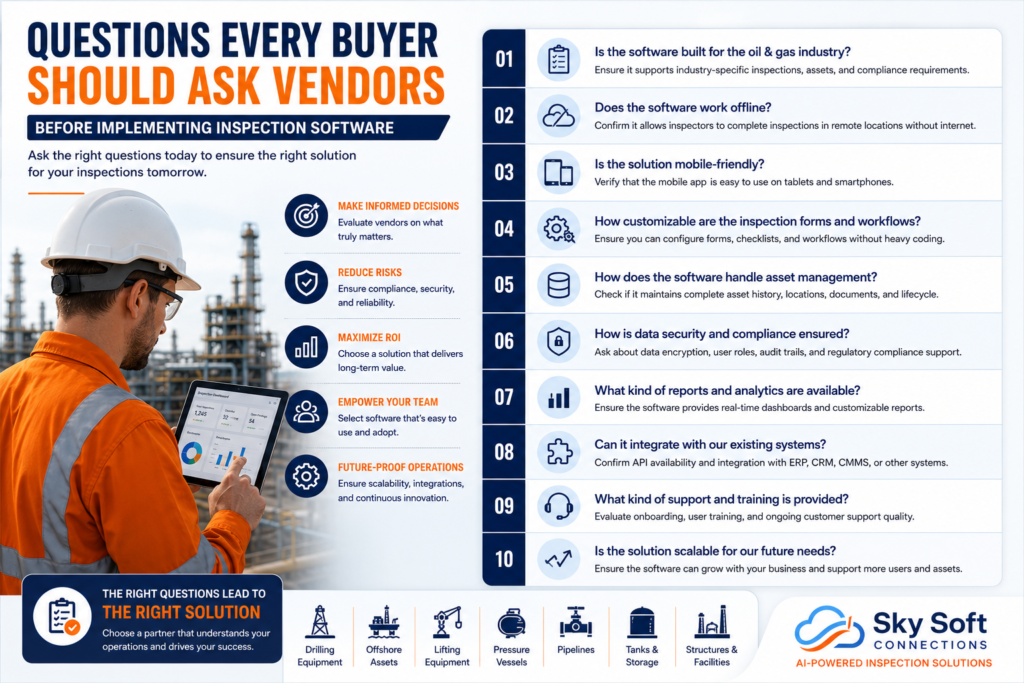
Before making a purchase, ask every software provider the following questions:
These questions will help you compare vendors objectively.
Many organizations rush into software purchases without fully evaluating their operational needs.
Avoid these common mistakes:
By avoiding these pitfalls, your organization is far more likely to achieve a successful implementation.
Inspections Track Software is purpose-built for inspection companies operating in the oil and gas industry.
Rather than offering generic inspection functionality, it supports real-world inspection workflows used across drilling, offshore, marine, and industrial operations.
Key capabilities include:
As a result, inspection teams can reduce paperwork, improve compliance, accelerate reporting, and gain complete visibility into inspection operations from a single platform.
Before signing any contract, confirm that your chosen software provides:
| Requirement | Status |
|---|---|
| Oil & Gas Specific | ✅ |
| Offline Mobile App | ✅ |
| Digital Forms | ✅ |
| Asset Management | ✅ |
| Automated Scheduling | ✅ |
| Instant Reports | ✅ |
| Dashboard Analytics | ✅ |
| Compliance Tracking | ✅ |
| API Integration | ✅ |
| Custom Workflows | ✅ |
| Document Management | ✅ |
| Scalable Architecture | ✅ |
If any of these capabilities are missing, consider evaluating additional vendors before making a final decision.
Choosing the right Inspection Management Software can significantly improve operational efficiency, inspection accuracy, and regulatory compliance across oil and gas operations. While many solutions offer basic inspection features, only industry-focused platforms can effectively manage the complexity of asset-intensive environments.
By following this buyer’s checklist, your team can confidently evaluate vendors, avoid costly implementation mistakes, and invest in software that supports long-term business growth. From digital inspections and automated scheduling to real-time reporting and asset lifecycle management, the right platform becomes a foundation for safer, smarter, and more efficient operations.
If your organization is looking for a solution built specifically for the oil and gas sector, Inspections Track Software delivers the specialized tools needed to streamline inspections, improve compliance, and give your teams complete visibility over every asset and inspection workflow.
Read more : Drill Pipe Inspection Categories Explained: DS-1 Grades and What They Mean for Your Rig
Inspection management software is a digital platform that helps organizations plan, perform, track, and report inspections while managing assets, compliance records, schedules, and documentation from a centralized system.
Oil and gas operations involve complex assets, strict regulations, and remote inspection sites. Inspection management software improves accuracy, reduces paperwork, ensures compliance, enables offline inspections, and provides real-time visibility into inspection activities.
Look for digital inspection forms, offline mobile access, asset management, automated scheduling, instant report generation, compliance tracking, customizable workflows, dashboards, document management, and integration with ERP or CRM systems.
Yes. Modern solutions designed for field operations allow inspectors to complete inspections offline and automatically synchronize data once an internet connection becomes available.
Inspections Track Software is purpose-built for the oil and gas industry. It supports digital inspections, preventive maintenance, asset tracking, equipment certification, automated reporting, offline inspections, NDT workflows, crane and derrick inspections, and real-time dashboards to improve operational efficiency and compliance.
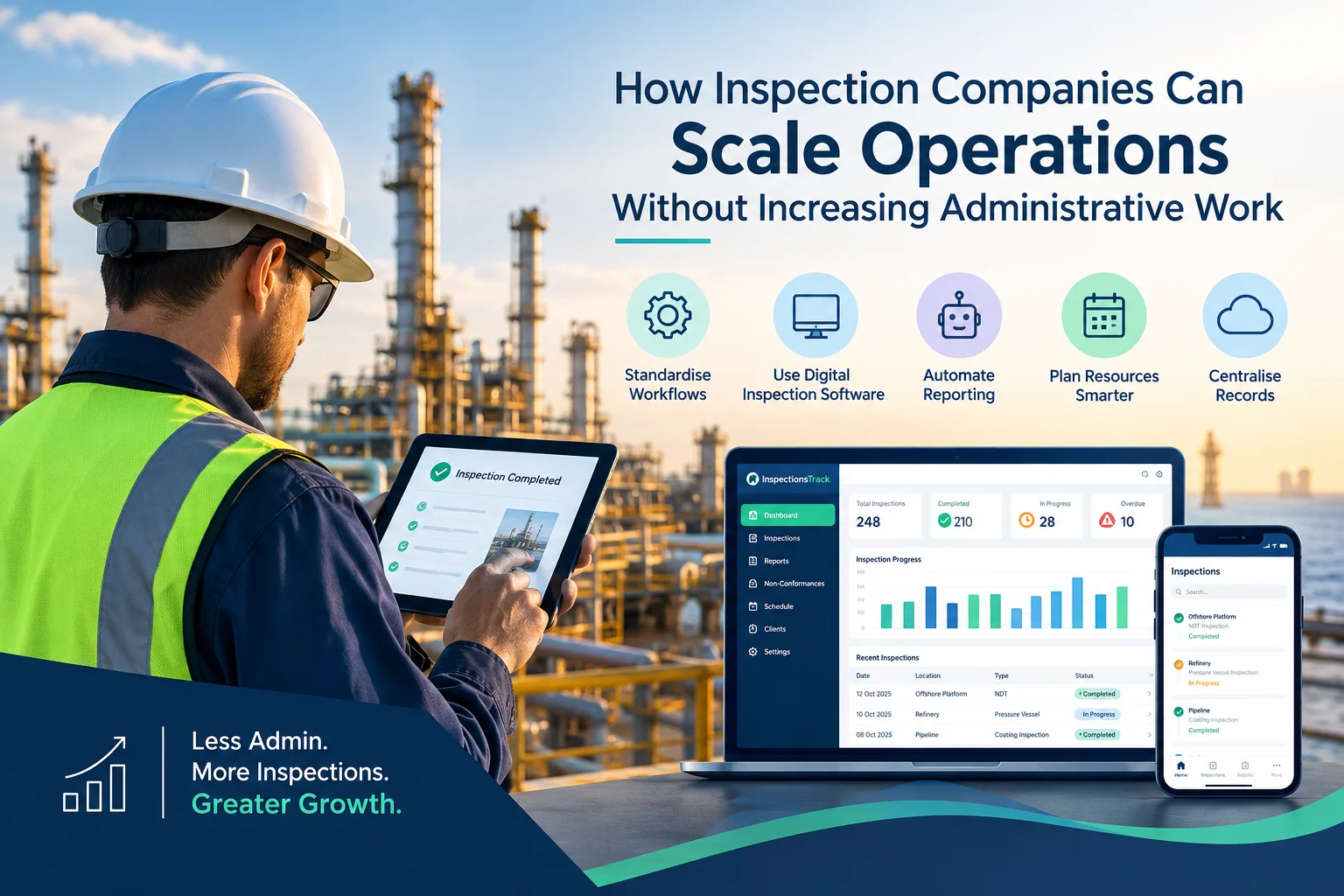
Inspection companies in the oil and gas industry face a common challenge: how to handle more inspections, manage larger projects, and meet client deadlines without increasing administrative workload. As businesses grow, inspection teams must manage…
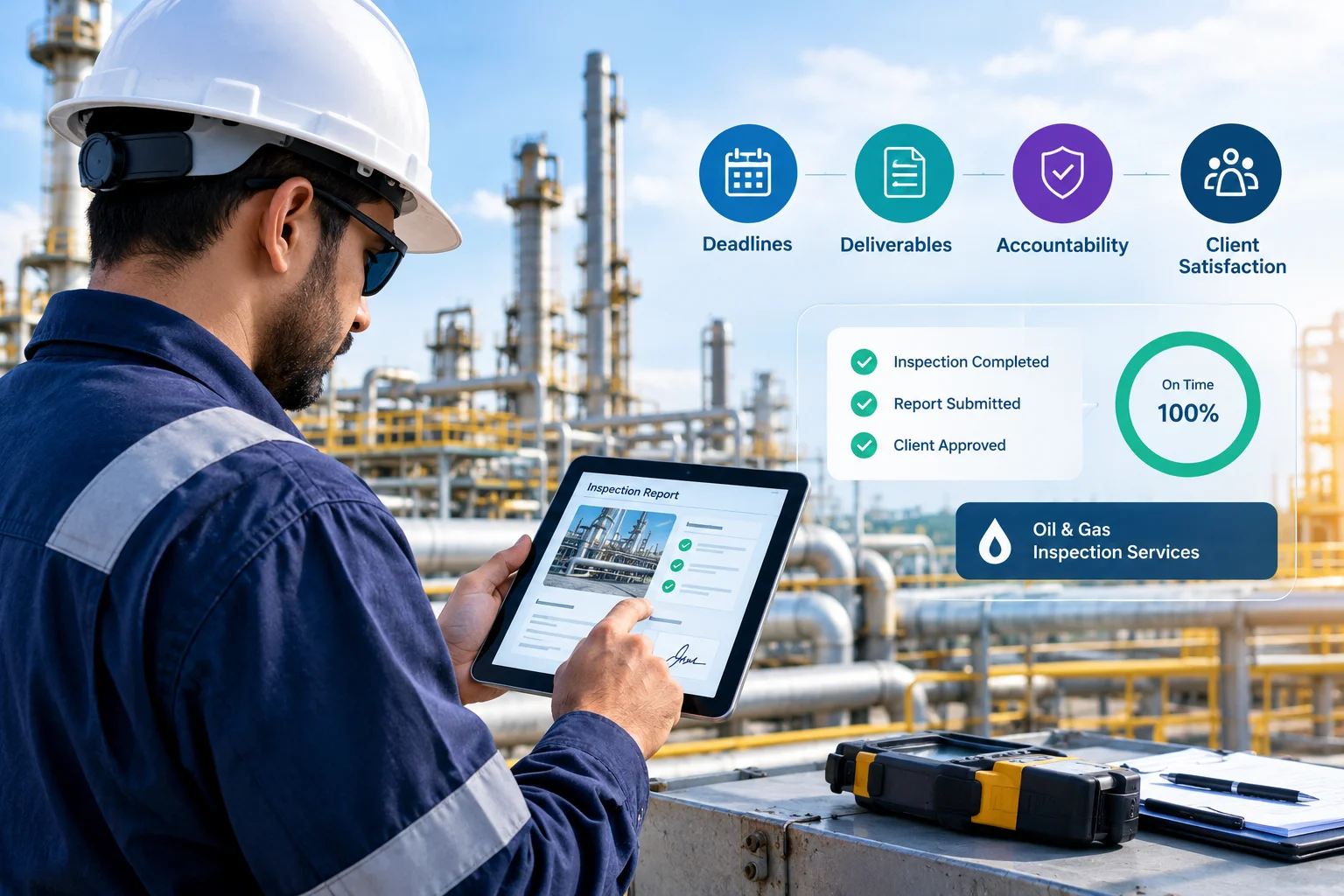
Meeting client Service Level Agreements (SLAs) is essential for inspection companies working in demanding industries such as oil and gas, energy, and industrial maintenance. Clients expect inspections to be completed on time, reports to be…


