
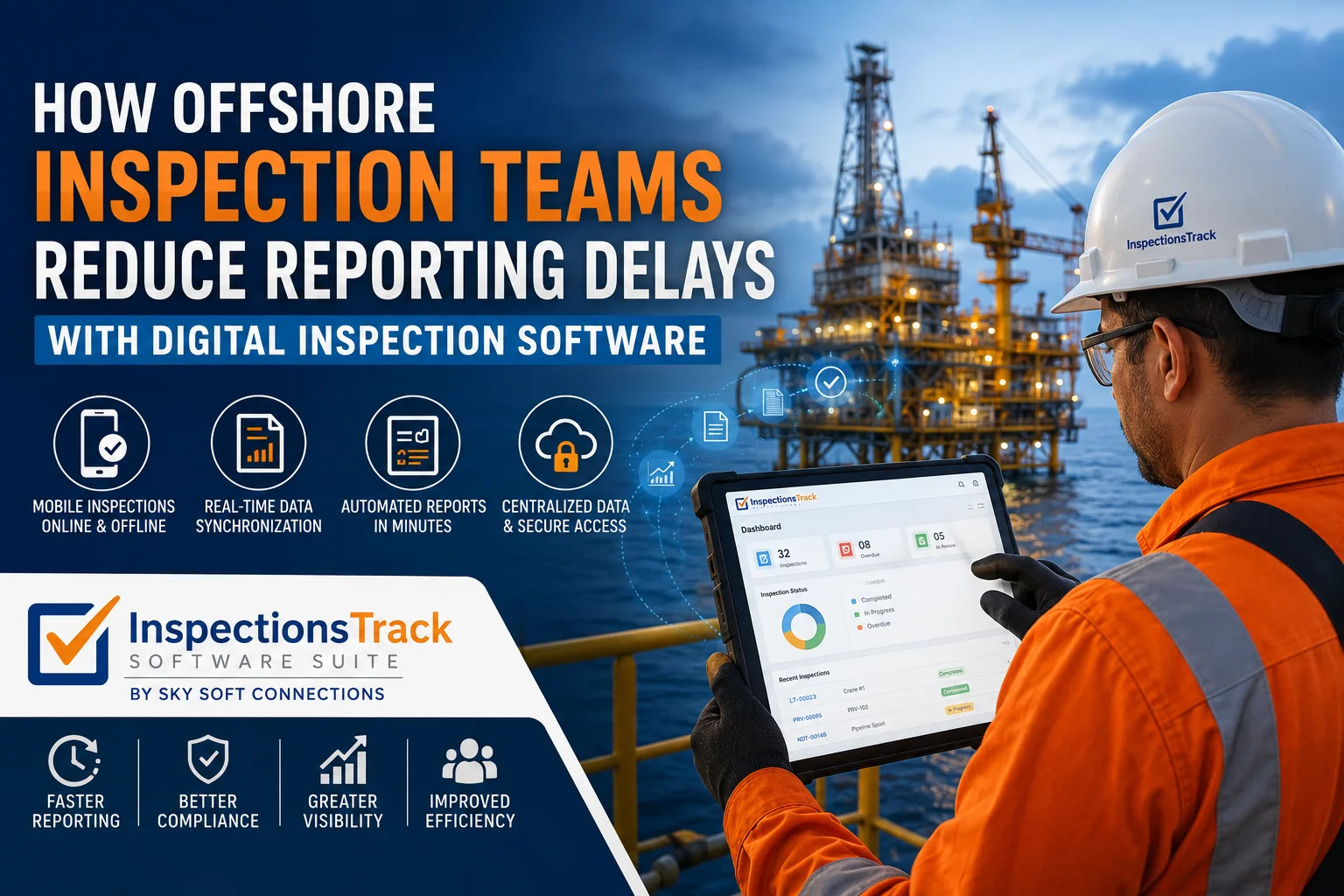
Offshore inspection teams operate in one of the world’s most demanding environments. From inspecting lifting equipment and pressure relief valves to conducting NDT surveys and planned inspections, these teams play a critical role in maintaining safety, regulatory compliance, and operational continuity.
However, despite technological advancements across the oil and gas industry, many offshore inspection processes still rely heavily on manual reporting methods. Paper forms, spreadsheets, disconnected systems, and delayed communication between offshore assets and onshore offices continue to create significant reporting bottlenecks.
The result is often delayed decision-making, reduced operational visibility, increased administrative burden, and heightened compliance risks.
As offshore operations become more complex, inspection companies are increasingly turning to digital inspection software to streamline reporting workflows and eliminate inefficiencies. Solutions such as the InspectionsTrack Software Suite by Sky Soft Connections are helping offshore teams transform inspection reporting from a time-consuming process into a real-time, data-driven operation.
This article explores the common causes of reporting delays in offshore inspections and how digital inspection software enables teams to overcome these challenges.
Reporting delays rarely stem from a lack of effort. Instead, they are often caused by outdated processes that struggle to keep pace with operational demands.
Common causes include:
These challenges can significantly extend the time required to produce final inspection reports.
Delayed reporting affects much more than administration.
Operations managers often require immediate access to inspection findings to make informed decisions regarding equipment usage, maintenance planning, and resource allocation.
Delayed reports limit this visibility.
Offshore operations are subject to strict regulatory and client-specific requirements.
Late reporting can result in:
If inspection findings are not communicated promptly, equipment may remain out of service longer than necessary.
This can impact productivity and increase operational costs.
Inspectors frequently spend significant amounts of time preparing reports instead of focusing on inspection activities.
Manual processes create unnecessary duplication of effort.
Historically, inspection teams relied on paper-based workflows because they were simple to implement.
However, modern offshore environments demand:
Traditional reporting systems struggle to meet these expectations.
As inspection volumes increase, manual approaches become increasingly difficult to manage effectively.
Digital inspection software addresses the root causes of reporting inefficiencies.
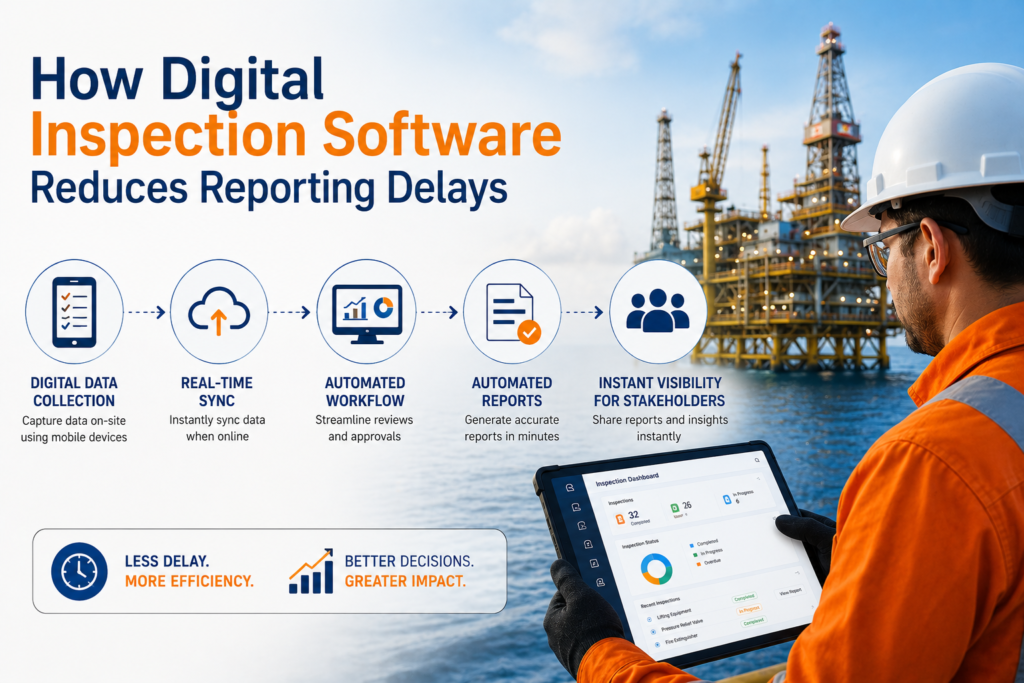
Rather than treating reporting as a separate administrative task, digital solutions integrate reporting directly into the inspection workflow.
One of the biggest sources of delay is transferring handwritten inspection findings into digital reports.
Digital inspection software allows inspectors to capture information directly through mobile devices.
Inspectors can:
This eliminates duplicate data entry and significantly reduces reporting time.
Connectivity challenges remain a reality in offshore environments.
Inspection teams often work in locations where internet access is limited or inconsistent.
Modern inspection software provides offline capabilities that enable inspectors to continue working without interruption.
Once connectivity is restored, data automatically synchronizes with centralized systems.
This ensures operational continuity regardless of network availability.
Inconsistent reporting formats often create delays during review processes.
Digital inspection software enables organizations to develop standardized templates for various inspection types.
Examples include:
Standardization improves report quality and reduces revision requirements.
Traditional reporting methods frequently create communication gaps between offshore and onshore teams.
Digital platforms provide centralized access to inspection information.
Stakeholders can monitor:
Real-time visibility enables faster decision-making.
Creating inspection reports manually can consume hours of administrative effort.
Digital inspection software automates much of this process.
Inspection data collected in the field is automatically compiled into structured reports.
This dramatically shortens report preparation time.
Organizations can deliver reports faster while maintaining accuracy and consistency.
The InspectionsTrack Software Suite by Sky Soft Connections was designed specifically to address the operational challenges faced by inspection companies and offshore teams.
The platform supports more than twenty specialized inspection types while providing a unified digital environment for inspection management.
Key capabilities include:
Inspectors can conduct inspections using mobile devices both online and offline.
Field personnel can capture findings instantly without relying on paper documentation.
InspectionsTrack enables organizations to generate professional inspection reports quickly.
This significantly reduces administrative workload and accelerates report delivery.
Managers gain immediate visibility into inspection activities.
Dashboards support monitoring of:
Clients can securely access inspection records and reports through dedicated portals.
This improves transparency and enhances client satisfaction.
InspectionsTrack maintains centralized records that support audit readiness.
Organizations can easily retrieve historical inspection information when required.
Inspectors can attach photographs and supporting documentation directly within inspection records.
This strengthens report quality and improves traceability.
Organizations can proactively manage inspection schedules and reduce the likelihood of missed activities.
Automated reminders help maintain compliance.
The reporting process becomes significantly more efficient when digital tools are integrated into daily operations.
Inspection activities are assigned within the platform.
Relevant templates are selected based on inspection type.
Inspectors complete inspections using mobile devices.
Data is recorded directly into digital forms.
Photographs and evidence are captured simultaneously.
Once internet connectivity becomes available, inspection records automatically synchronize.
Onshore teams gain immediate access.
Supervisors review submitted inspections for completeness and quality.
Any required actions can be assigned promptly.
Reports are automatically compiled using captured inspection data.
Delivery timelines are significantly reduced.
Reports are distributed through secure channels or made available through client portals.
Stakeholders receive timely access to critical information.
Although reducing delays is often the primary objective, digital inspection software delivers broader operational advantages.
These include:
Digital records support regulatory requirements and strengthen audit preparedness.
Direct field entry minimizes transcription errors.
Inspectors spend less time on administration and more time performing inspections.
Faster reporting improves responsiveness and builds trust.
Decision-makers gain access to actionable information in real time.
Digital workflows can support growing inspection volumes without increasing administrative burden.
Organizations considering digital transformation should focus on several key areas.
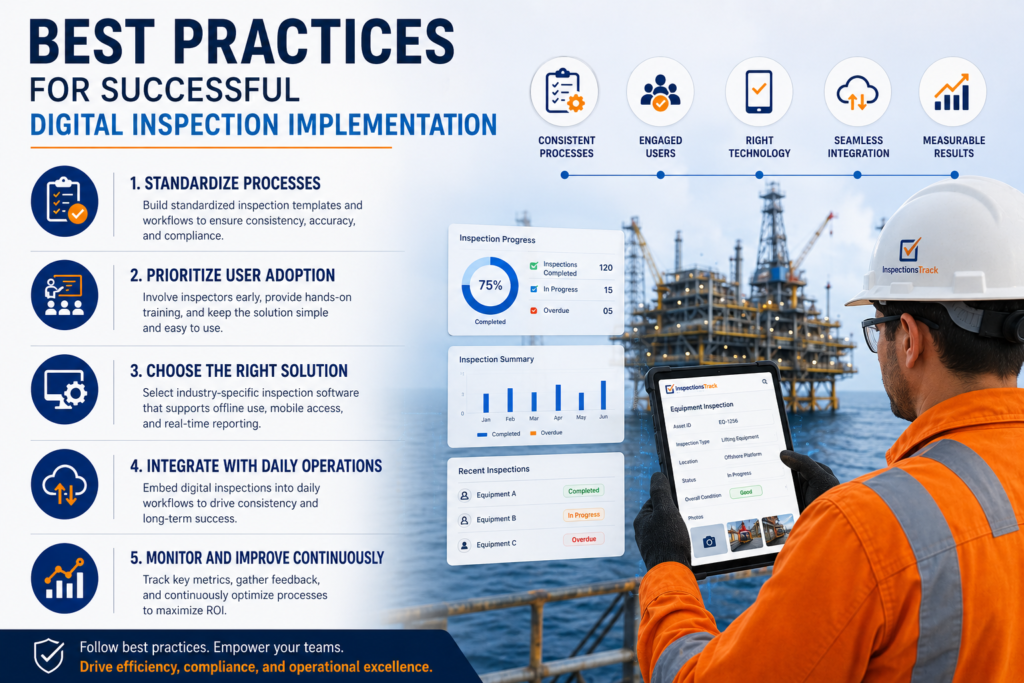
Develop consistent templates and reporting structures.
Provide inspectors with practical training and ongoing support.
Choose software designed for inspection workflows rather than generic form applications.
Avoid treating reporting as a separate activity.
Track indicators such as report turnaround time and inspection completion rates.
The offshore sector continues to evolve rapidly.
Organizations are increasingly prioritizing:
Digital inspection software is becoming an essential component of modern inspection programs.
Companies that continue relying on manual reporting methods may struggle to meet growing operational expectations.
Those embracing digital solutions are better positioned to improve productivity, strengthen compliance, and deliver greater value to their clients.
Reporting delays remain a persistent challenge for offshore inspection teams.
Manual processes, fragmented systems, and administrative inefficiencies often prevent organizations from achieving the responsiveness required in today’s operating environment.
Digital inspection software offers a practical solution.
By enabling mobile inspections, automated reporting, centralized visibility, and streamlined workflows, organizations can dramatically reduce reporting delays while improving operational performance.
The InspectionsTrack Software Suite by Sky Soft Connections provides offshore inspection companies with the tools needed to modernize inspection operations and deliver faster, more accurate reporting outcomes.
For organizations seeking to enhance efficiency, strengthen compliance, and improve client service, digital inspection management is no longer optional—it is becoming a strategic necessity.
Read more : Why Pressure Relief Valve Inspection Delays Create Major Operational Risks
Common causes include manual paperwork, duplicate data entry, inconsistent reporting formats, connectivity limitations, and lengthy report compilation processes.
Digital solutions automate data capture, enable offline inspections, standardize workflows, and generate reports faster using real-time inspection data.
Yes. Modern platforms such as InspectionsTrack support offline functionality, allowing inspectors to work without connectivity and synchronize data later.
InspectionsTrack supports numerous inspection categories, including lifting gear inspections, NDT surveys, pressure gauge calibration, PRV inspections, DROPS inspections, planned inspections, and other specialized offshore inspection activities.
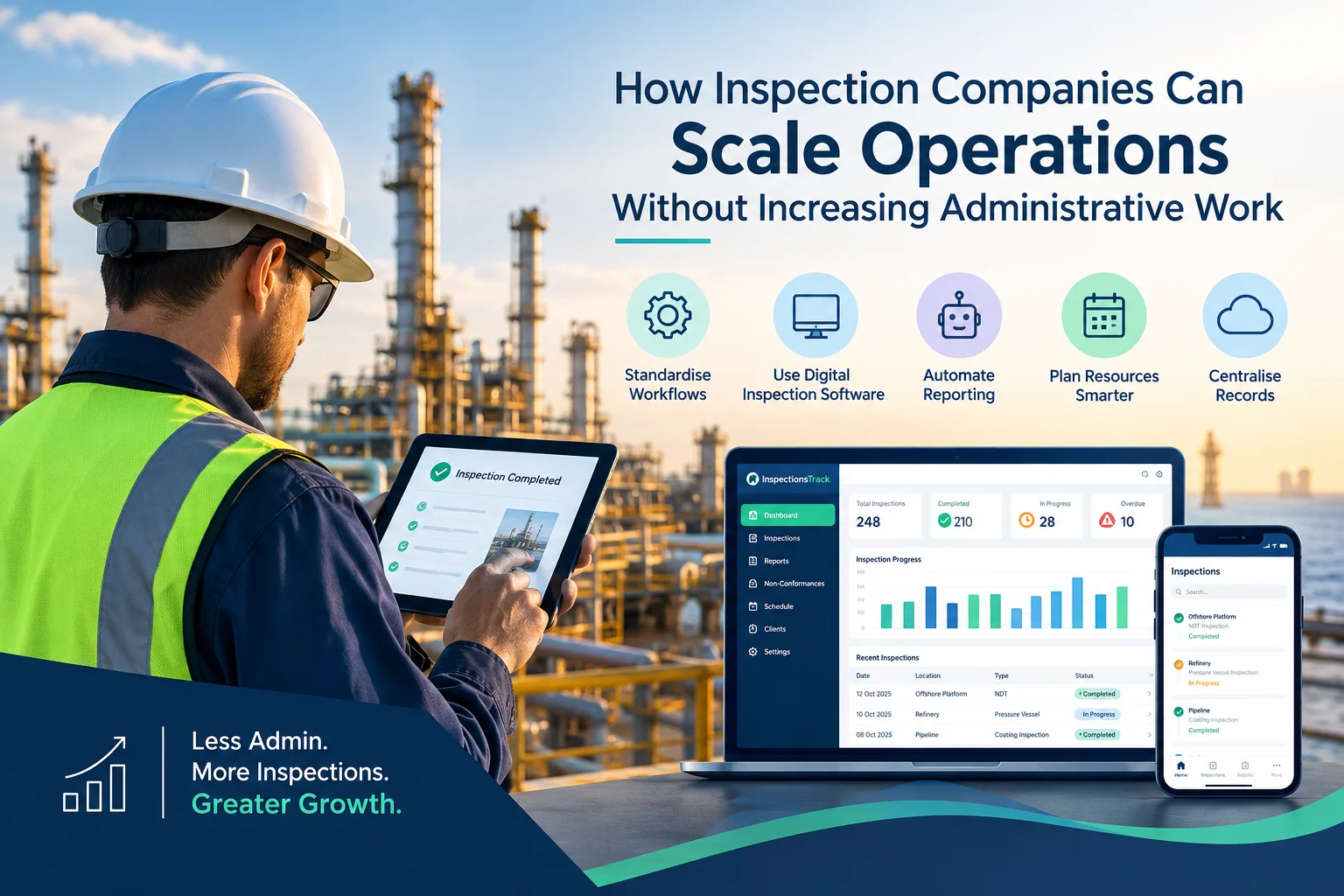
Inspection companies in the oil and gas industry face a common challenge: how to handle more inspections, manage larger projects, and meet client deadlines without increasing administrative workload. As businesses grow, inspection teams must manage…
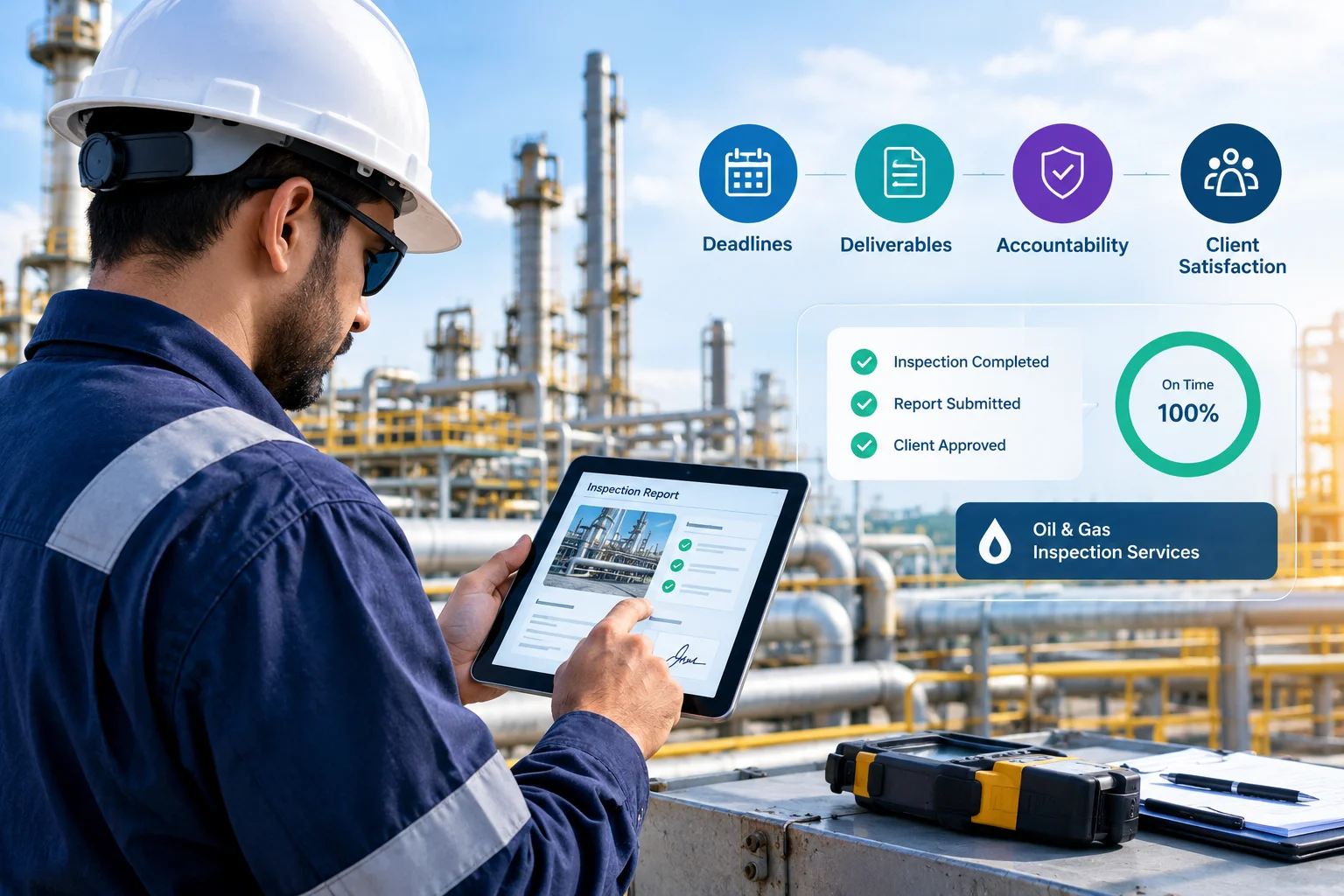
Meeting client Service Level Agreements (SLAs) is essential for inspection companies working in demanding industries such as oil and gas, energy, and industrial maintenance. Clients expect inspections to be completed on time, reports to be…


