
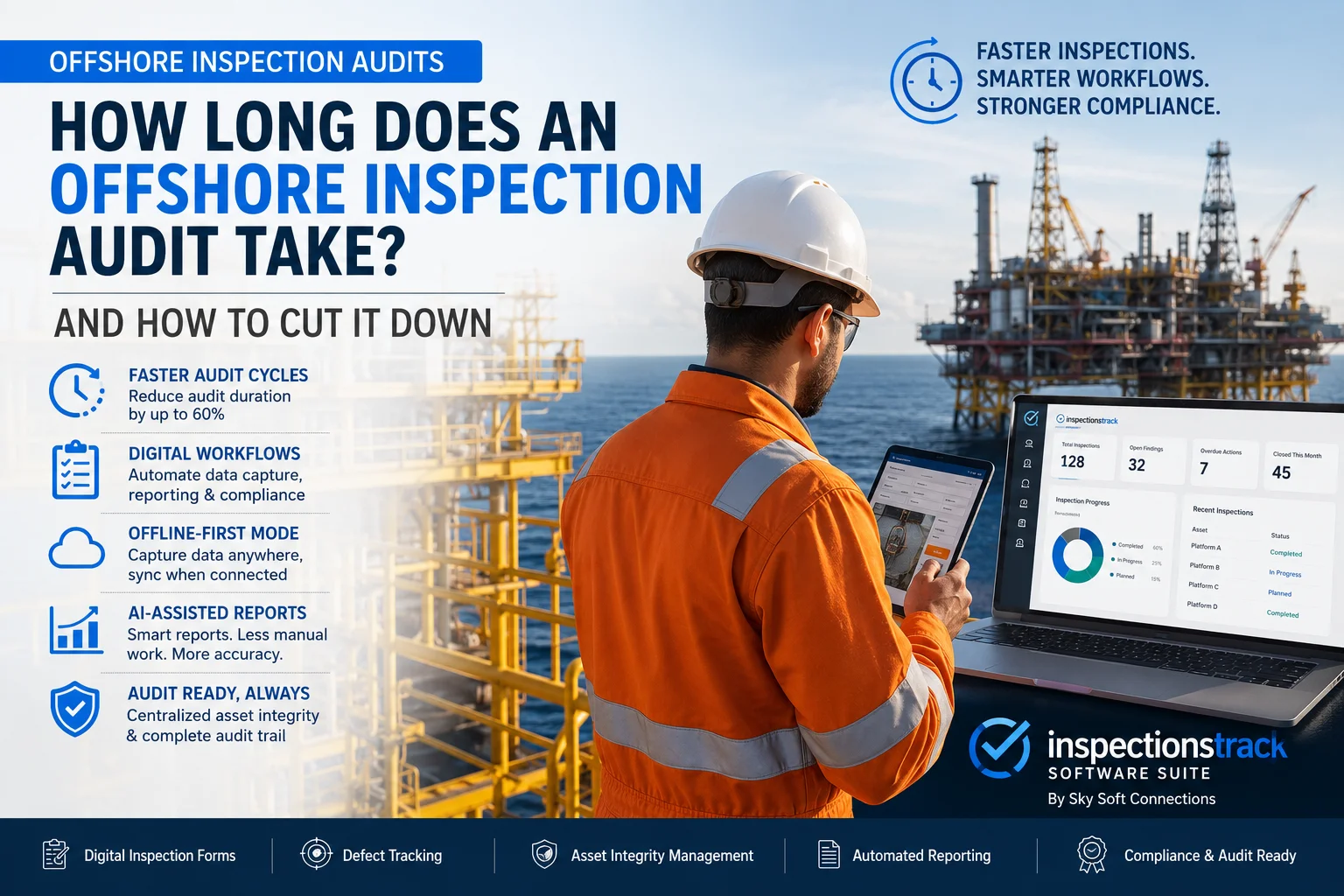
Offshore inspection audits are critical for maintaining asset integrity, regulatory compliance, and operational safety in oil & gas environments. However, one question consistently comes up in operations meetings:
“Why does an offshore inspection audit take so long—and how can we reduce it without risking compliance?”
The answer isn’t simple, because audit duration depends on multiple operational variables such as asset complexity, offshore accessibility, inspection method, and reporting efficiency. But what is clear is this:
Most offshore inspection audits take longer than necessary due to fragmented workflows, manual reporting, and disconnected inspection data systems.
Modern inspection teams are now reducing audit cycles significantly using digital inspection ecosystems like the InspectionsTrack Software Suite, built specifically for oil & gas inspection lifecycle management.
This article breaks down real offshore timelines, bottlenecks, and proven ways to cut audit duration without compromising compliance.
Offshore inspection audits are not single tasks—they are multi-phase operational cycles.
| Audit Phase | Typical Duration | Key Activities |
|---|---|---|
| Pre-audit planning | 2–5 days | Scope definition, permit planning, asset list preparation |
| Offshore mobilization | 1–3 days | Crew travel, safety induction, equipment setup |
| Field inspection | 3–10 days | NDT, visual inspection, structural checks |
| Data consolidation | 2–7 days | Report collation, image tagging, defect logging |
| Compliance reporting | 3–10 days | QA review, regulatory formatting, approvals |
| Close-out & documentation | 1–3 days | Final submission, audit trail archiving |
12 to 30+ days depending on complexity
However, in fragmented systems, audits often exceed this due to:
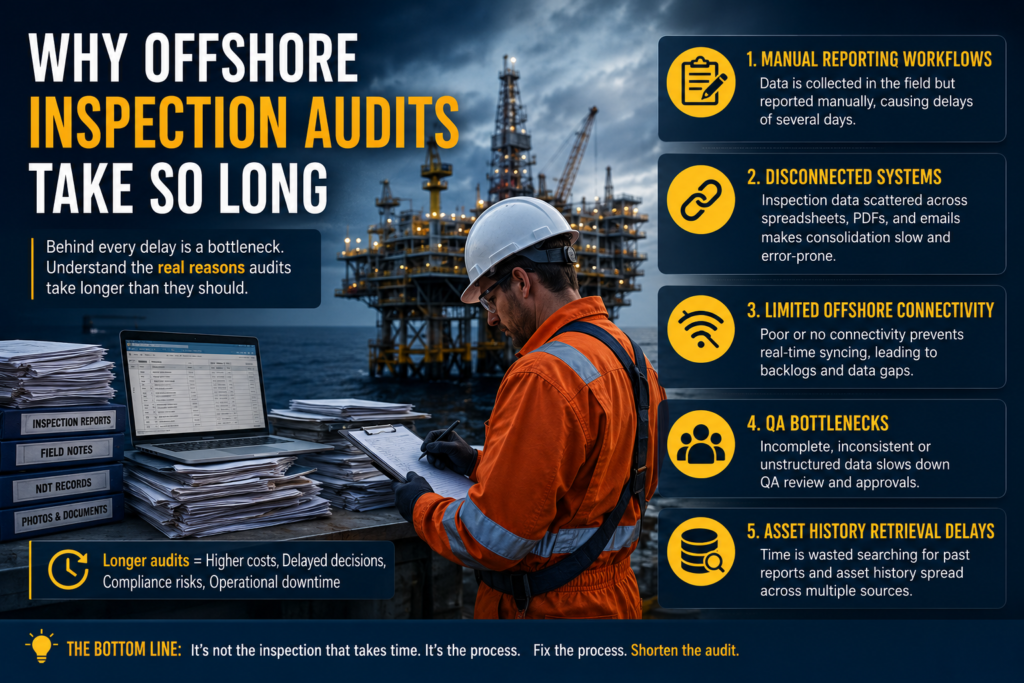
Understanding bottlenecks is the first step toward optimization.
Inspection engineers often collect data offshore but write reports onshore. This creates delays of several days.
When inspection data sits in spreadsheets, PDFs, and separate tools, consolidation becomes slow and error-prone.
Offshore environments often restrict real-time syncing, leading to backlog accumulation.
Compliance teams frequently wait for incomplete or inconsistent data sets.
Without centralized asset integrity records, inspectors repeatedly search for past reports.
Reducing audit duration is not about cutting corners—it is about eliminating inefficiencies.
Replace manual logs with structured digital inspection forms:
A single source of truth reduces time spent searching past inspection records.
Automated report generation can reduce reporting time by up to 60%.
Inspection teams should be able to:
Use pre-approved templates for:
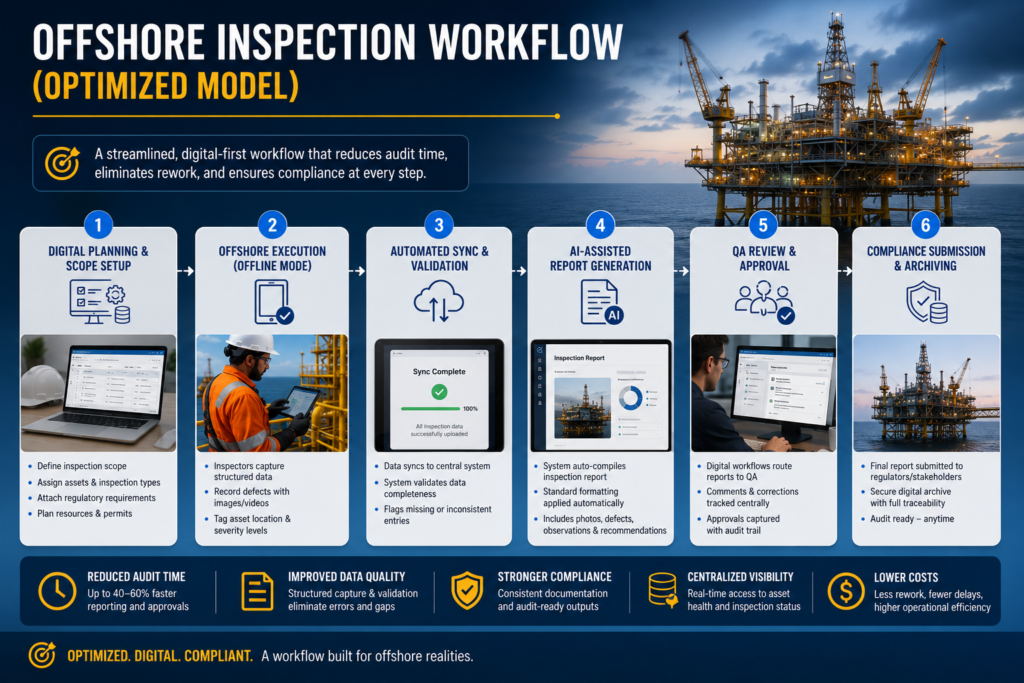
Below is a modernized workflow used in digitally mature inspection organizations:
| Factor | Traditional Process | Digital Workflow (InspectionsTrack) |
|---|---|---|
| Data collection | Paper / Excel | Mobile digital forms |
| Reporting time | 3–10 days | 1–2 days |
| Error rate | High (manual entry) | Low (structured data validation) |
| Offshore sync | None or delayed | Offline-first + auto-sync |
| QA process | Email-based loops | Workflow automation |
| Audit readiness | Reactive | Always ready |
With platforms like the InspectionsTrack Software Suite, inspection teams shift from reactive reporting to continuous audit readiness.
The InspectionsTrack Software Suite by Sky Soft Connections is designed specifically for offshore and oil & gas inspection environments.
Even experienced inspection teams fall into these traps:
Avoiding these alone can reduce audit time by 20–40% in many operations.
To optimize performance across inspection cycles:
Read more : IRATA vs SPRAT: A Rope Access Inspector’s Guide to Certification
Typically, offshore inspection audits take 12 to 30 days, depending on asset complexity, reporting structure, and offshore conditions.
The biggest delays come from manual reporting and fragmented inspection data systems.
Yes. Platforms like InspectionsTrack Software Suite significantly reduce reporting and QA cycles through automation and centralized data management.
The fastest improvement comes from digitizing field data capture and automating report generation workflows.
Offshore inspection audits are inherently complex, but long timelines are not inevitable.
Most delays come from process inefficiencies not inspection work itself.
By adopting structured workflows and digital platforms like the InspectionsTrack Software Suite, inspection teams can transition from slow, manual audit cycles to fast, traceable, and compliance-ready inspection operations.
In modern oil & gas environments, speed is no longer just efficiency it is a compliance advantage.
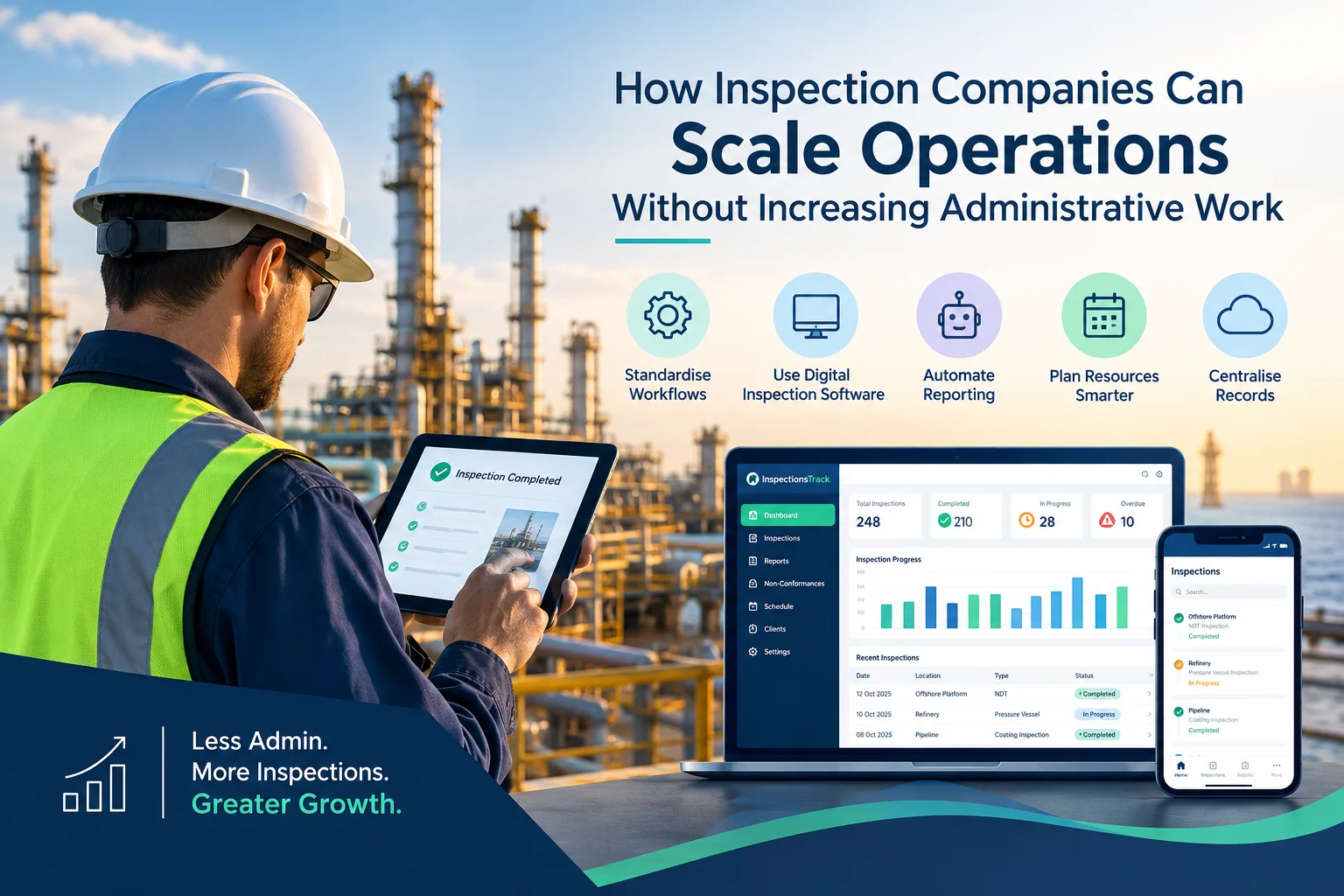
Inspection companies in the oil and gas industry face a common challenge: how to handle more inspections, manage larger projects, and meet client deadlines without increasing administrative workload. As businesses grow, inspection teams must manage…

Meeting client Service Level Agreements (SLAs) is essential for inspection companies working in demanding industries such as oil and gas, energy, and industrial maintenance. Clients expect inspections to be completed on time, reports to be…


