
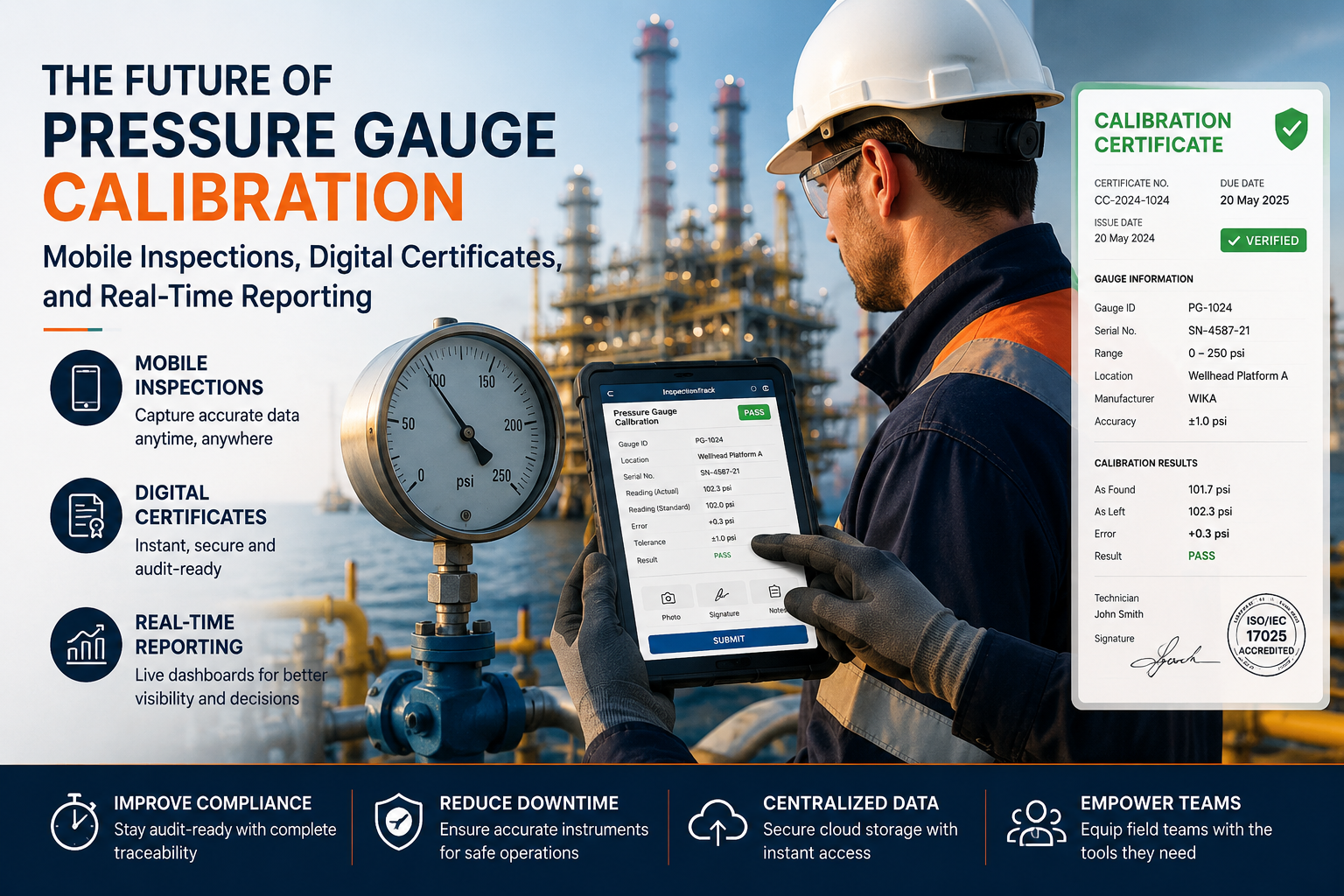
Pressure gauge calibration has long been treated as a routine compliance activity. However, for modern oil and gas inspection companies, it has become a critical operational function that directly affects safety, audit readiness, asset reliability, and client confidence.
Yet many inspection teams still rely on spreadsheets, paper certificates, disconnected databases, and manual follow-ups to manage calibration activities.
The result?
As inspection operations become more distributed and regulatory expectations continue to rise, the future of pressure gauge calibration is shifting toward mobility, digital documentation, and real-time decision-making.
This is where solutions such as the InspectionsTrack Software Suite by Sky Soft Connections are transforming how industrial inspection businesses manage calibration workflows.
Pressure gauges support critical operations across:
Consequently, maintaining accurate calibration records is not optional.
However, traditional approaches introduce several operational bottlenecks.
Calibration records often reside across:
Therefore, locating the latest certificate becomes time-consuming.
Field inspectors frequently complete inspections offshore or in remote locations.
Because reports require manual consolidation later, clients often wait days for final documentation.
Operations managers struggle to answer questions such as:
Without real-time dashboards, these answers require extensive manual effort.
Regulatory inspections increasingly demand:
Manual systems rarely provide this level of control consistently.
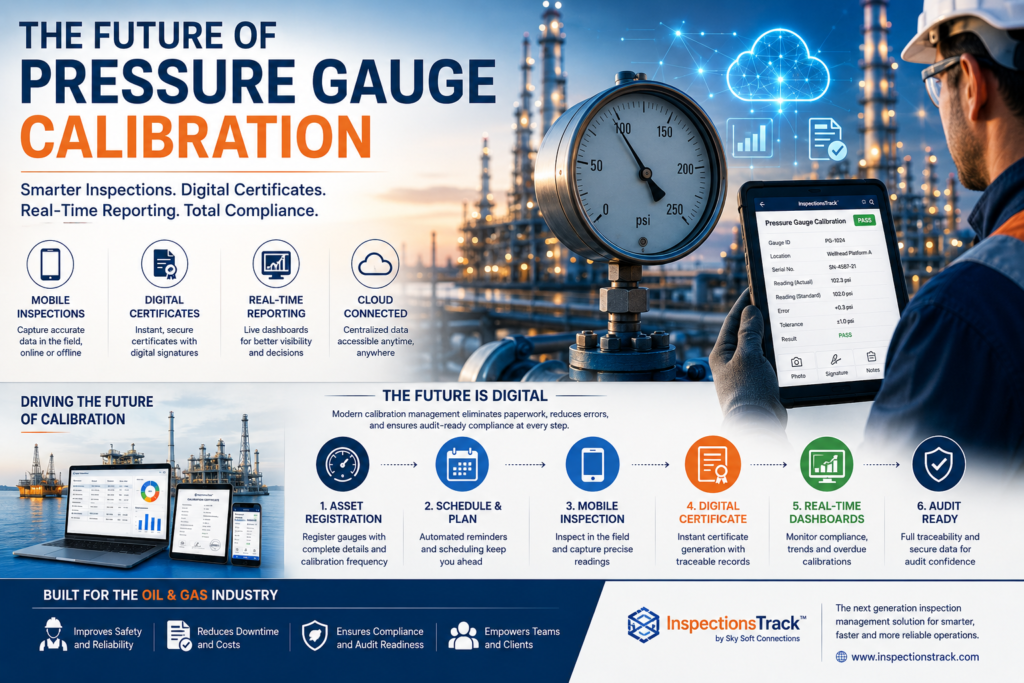
Modern inspection organisations are adopting three interconnected capabilities:
Together, these capabilities create a more resilient calibration management process.
Inspection technicians no longer need to rely on paper forms or post-job data entry.
Using mobile-enabled inspection software, calibration activities can be recorded directly at the point of execution.
Once connectivity becomes available, records automatically synchronise with central databases.
For offshore teams, this capability significantly reduces reporting delays.
An offshore inspection crew calibrates pressure gauges during a planned maintenance campaign.
Instead of completing handwritten forms, technicians use the InspectionsTrack Software Suite to:
As a result, the onshore compliance team receives completed records without waiting for technicians to return to base.
Paper certificates introduce unnecessary operational risks.
Common issues include:
Digital certificates eliminate these challenges.
Teams can retrieve certificates instantly.
Every certificate links directly to:
Inspection clients increasingly expect digital access to compliance evidence.
Auditors can review complete calibration histories without manual searching.
| Area | Traditional Methods | Digital Calibration Systems |
|---|---|---|
| Certificate Storage | Paper files | Centralised digital repository |
| Reporting Speed | Days or weeks | Immediate availability |
| Asset Traceability | Limited | Full historical tracking |
| Audit Preparation | Manual compilation | Instant retrieval |
| Field Data Collection | Paper forms | Mobile applications |
| Visibility | Reactive | Real-time dashboards |
| Certificate Sharing | Email attachments | Secure portal access |
Perhaps the greatest advantage of digital calibration management is visibility.
Instead of reacting after problems occur, organisations can proactively manage compliance risks.
Real-time dashboards help stakeholders monitor:
Consequently, managers gain operational control across multiple facilities.
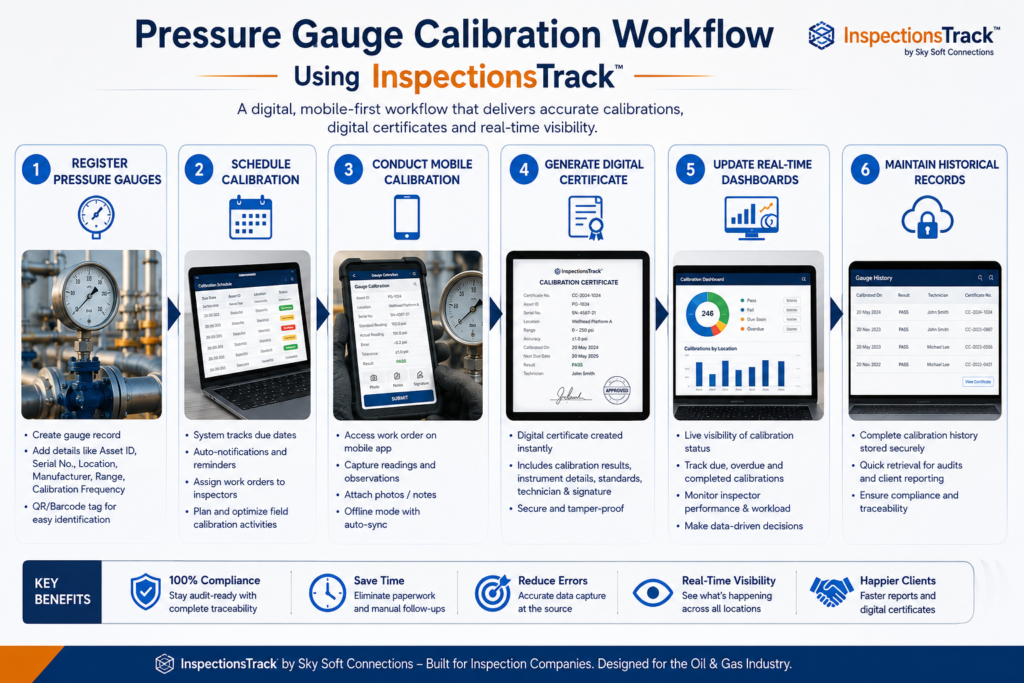
Each gauge receives a unique digital record containing:
The system automatically tracks upcoming due dates.
Notifications help teams prioritise workloads.
Inspectors capture results using mobile devices.
Photos and observations become part of the permanent record.
Digital inspections Certificates are created immediately after approval.
Management teams gain instant visibility into inspection status.
Every calibration event remains accessible for future audits and analysis.
When evaluating calibration management solutions, organisations should look for capabilities such as:
The InspectionsTrack Software Suite by Sky Soft Connections brings these capabilities together within a purpose-built inspection management platform designed specifically for industrial inspection environments.
Pressure gauge calibration failures can contribute to:
Therefore, calibration should no longer function as an isolated administrative task.
Instead, it must operate as part of a connected inspection ecosystem.
Organisations that embrace digital workflows position themselves to improve efficiency while strengthening compliance performance.
The lack of visibility and fragmented documentation often result in delayed reporting, missed due dates, and increased audit preparation efforts.
They provide immediate access to historical records, improve traceability, and reduce the risk of lost documentation.
Yes. Modern inspection platforms allow technicians to work offline and synchronise data when connectivity becomes available.
They enable proactive management of calibration schedules and provide instant insight into compliance performance.
Oil and gas, industrial inspection services, NDT operations, asset integrity programmes, manufacturing, and energy sectors all benefit from these capabilities.
The future of pressure gauge calibration is not simply about replacing paper certificates.
It is about creating connected workflows that support technicians in the field, empower managers with actionable insights, and provide clients with confidence in compliance outcomes.
Inspection companies that adopt mobile inspections, digital certificates, and real-time reporting today will be better equipped to handle tomorrow’s operational demands.
For organisations seeking to modernise their calibration processes, the InspectionsTrack Software Suite by Sky Soft Connections offers a practical pathway toward improved visibility, stronger compliance, and more efficient inspection operations.
Read more: Why Manual Pressure Gauge Calibration Tracking Is Failing Modern Inspection Teams
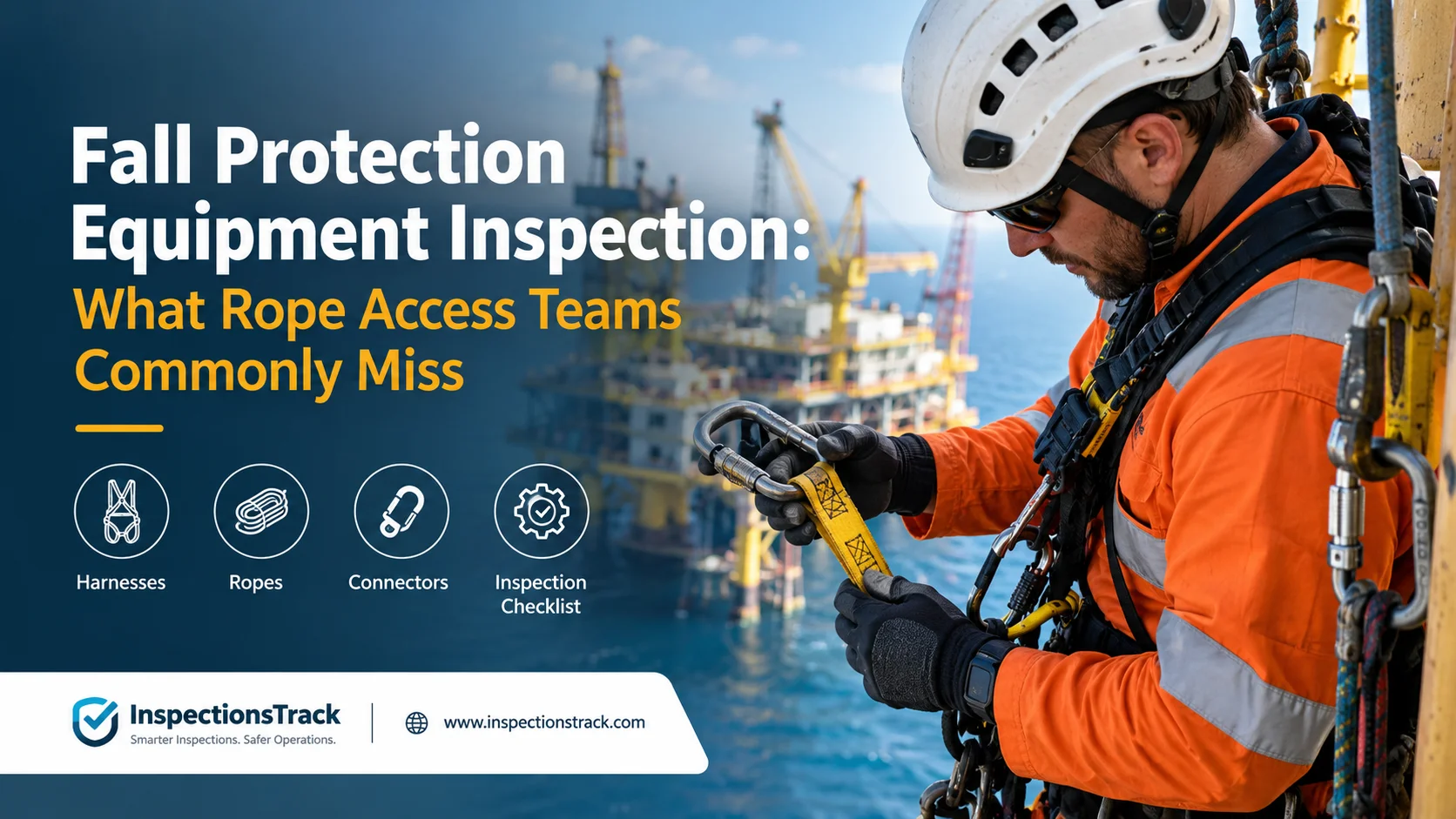
Working at height is one of the most demanding activities in industrial environments. For rope access teams, however, safety depends on more than having the right equipment. Fall protection equipment must also be inspected correctly,…
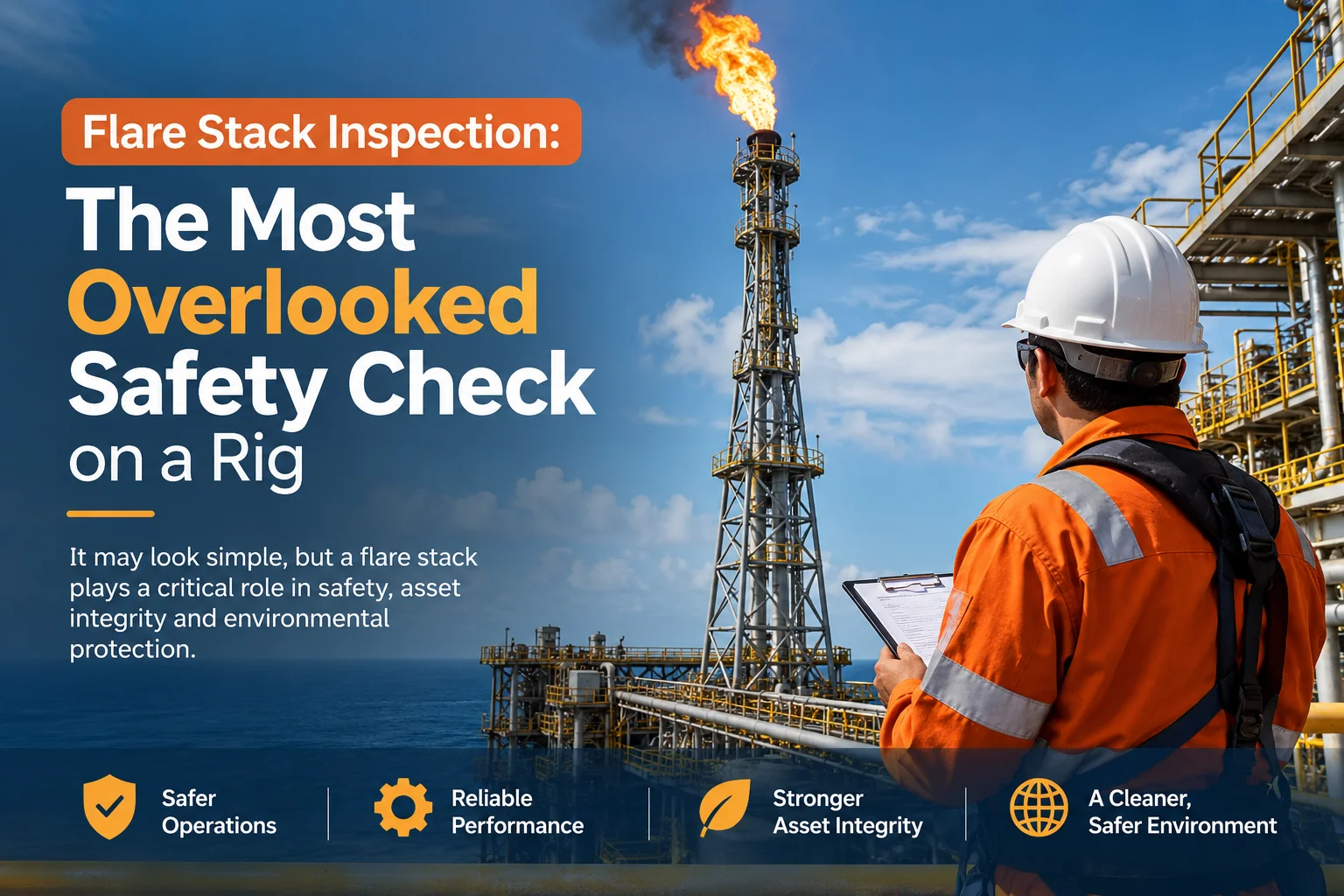
A flare stack may look like a simple vertical structure standing above a rig or production facility. In reality, it is one of the most important safety systems for handling flammable gases and relieving potentially…


