
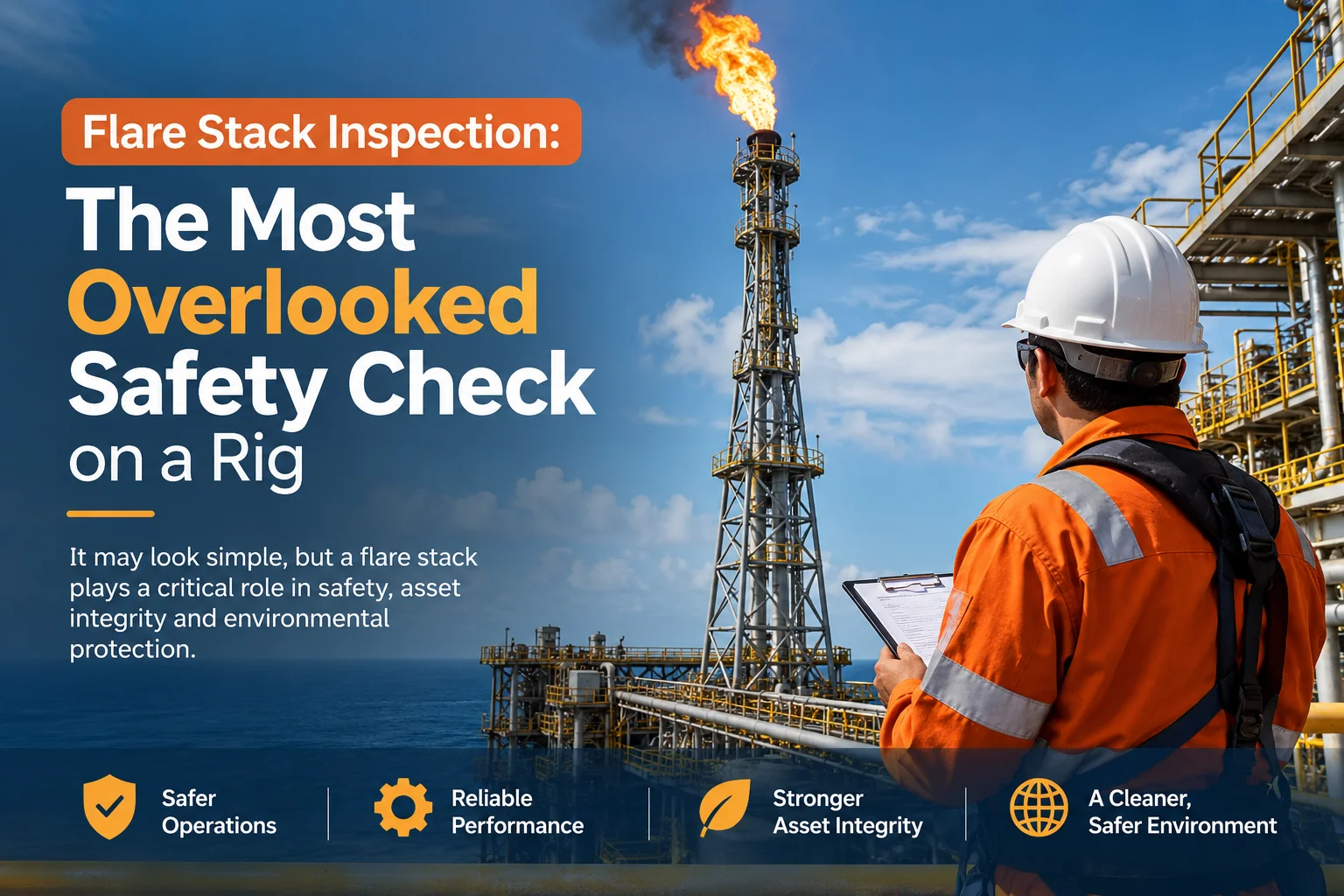
A flare stack may look like a simple vertical structure standing above a rig or production facility. In reality, it is one of the most important safety systems for handling flammable gases and relieving potentially dangerous pressure.
Yet, teams often overlook flare stack inspection compared with equipment such as pressure vessels, lifting gear, cranes, and drilling equipment.
That creates a serious gap in inspection and maintenance programs.
A damaged flare tip, corroded stack, blocked pilot system, failed ignition system, or structural weakness can affect the facility’s ability to safely dispose of hydrocarbon gases. Therefore, regular flare inspections on oil and gas rigs play a critical role in asset integrity and process safety, rather than serving as just another maintenance task.
A flare stack is an elevated combustion system used to safely burn excess or unwanted hydrocarbon gases.
It is commonly found at:
When process upsets, pressure relief, startup, shutdown, or emergencies require gas release, the flare system safely burns the gases in a controlled manner.
Consequently, the flare stack must remain mechanically sound and operationally reliable.
The primary purpose of a flare system is safety. However, the system itself operates in an environment involving high temperatures, corrosive gases, vibration, wind loading, and continuous exposure to harsh weather.
Over time, these conditions can cause deterioration.
A proper flare stack inspection can help identify:
| Inspection Area | What Inspectors Look For | Potential Concern |
|---|---|---|
| Stack structure | Cracks, deformation, corrosion | Structural failure |
| Flare tip | Damage, erosion, blockage | Poor combustion |
| Pilot system | Ignition and pilot condition | Flame failure |
| Guy wires | Tension, corrosion, damage | Loss of stability |
| Bolted connections | Loose or damaged bolts | Mechanical failure |
| Platforms & ladders | Corrosion and defects | Personnel safety risk |
| Piping | Leaks, corrosion, damage | Hydrocarbon release |
| Ignition system | Reliability and condition | Failed ignition |
| Flame monitoring | Sensor condition | Loss of flame detection |
Therefore, inspection should cover more than just the visible condition of the stack.
The exact inspection scope depends on the facility design, applicable standards, operating conditions, and inspection program. However, a typical inspection can include several key areas.
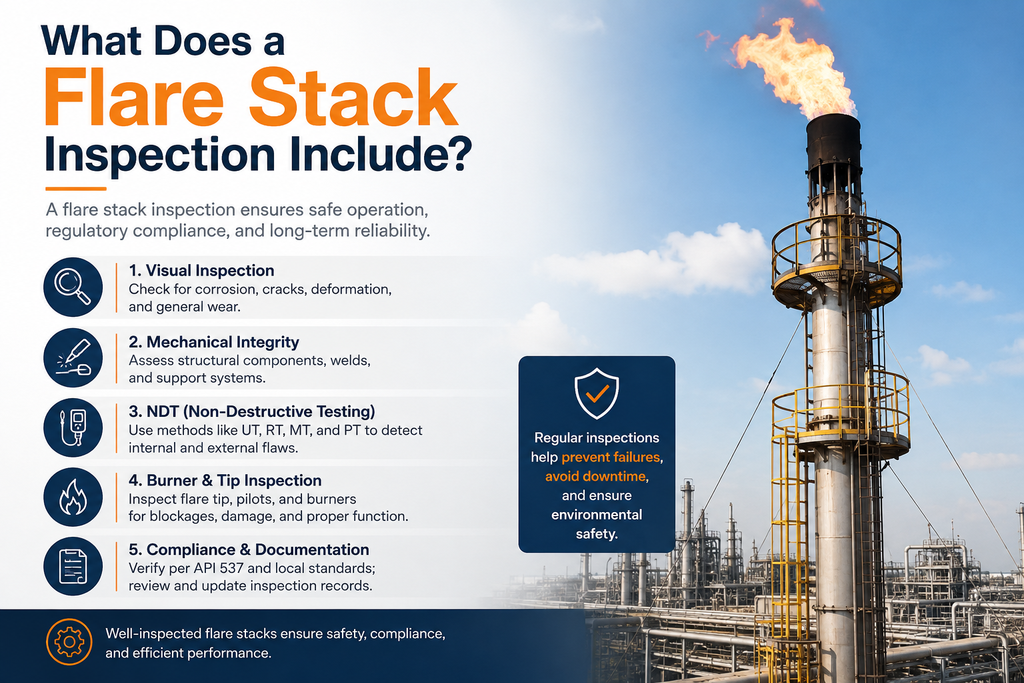
The structural integrity of the flare stack is critical.
Inspectors should look for:
Because flare stacks can be extremely tall, visual inspection alone may not always be sufficient. Depending on the risk and condition, facilities may require additional NDT or engineering assessment.
The flare tip operates under extreme conditions.
Inspectors should assess its:
A deteriorated flare tip can reduce combustion performance and potentially increase operational risk.
A flare is only effective when it can reliably ignite and maintain the required flame.
The inspection should therefore consider:
A failure in this area can become particularly important during an emergency release.
Include the piping leading to the flare in the inspection program as well.
Look for:
Include the piping leading to the flare in the inspection program as well. The surrounding flare system also affects overall reliability.
Even facilities with established inspection programs can miss important details.
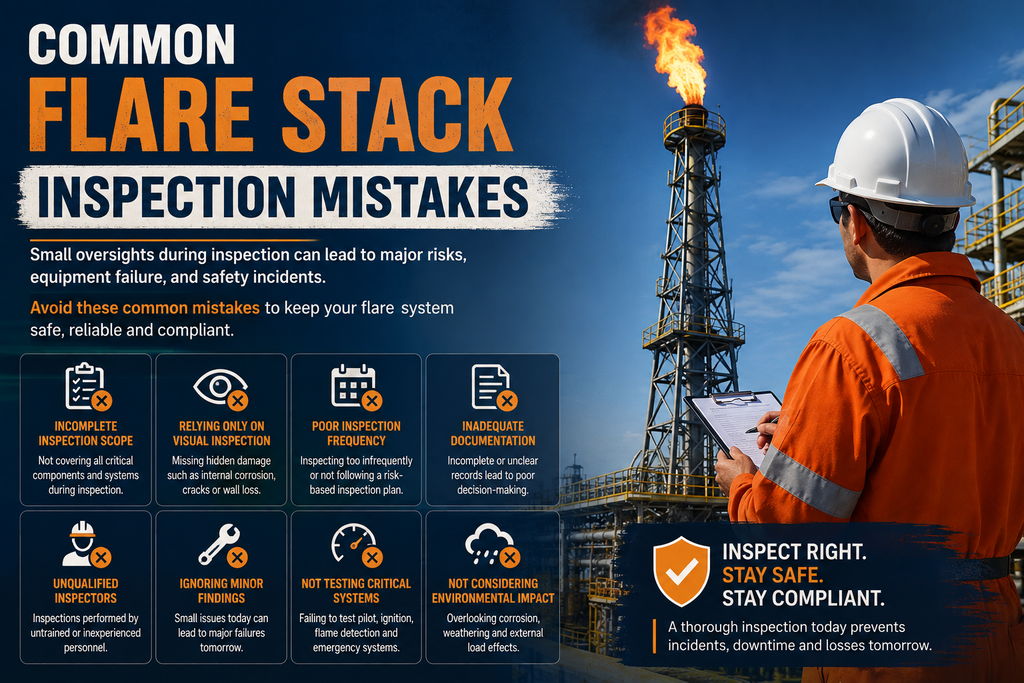
A visual check from ground level may identify obvious problems. However, it cannot provide a complete assessment of elevated components, flare tips, connections, and difficult-to-access areas.
Surface corrosion may indicate a deeper degradation mechanism. If you repeatedly record it without proper evaluation or trend analysis, the condition can gradually worsen.
Paper forms and disconnected spreadsheets can make it difficult to determine:
As a result, even a technically good inspection can become difficult to manage.
There is no single inspection interval that applies to every flare stack.
Determine the appropriate frequency based on factors such as:
In other words, flare stack inspection frequency should be risk-based rather than based on a one-size-fits-all schedule.
A practical checklist can help inspectors maintain consistency.
Before closing an inspection, consider whether the following have been assessed:
The checklist should also be adapted to the specific flare design and inspection procedure.
Managing inspections across multiple rigs, facilities, and assets becomes increasingly difficult when information is spread across paper forms and spreadsheets.
This is where digital inspection software can make a significant difference.
InspectionsTrack is an oil and gas inspection management platform designed to help inspection teams manage inspections, assets, checklists, reports, certificates, and corrective actions from one system.
InspectionsTrack can support inspection workflows through features such as:
For offshore and remote operations, offline capability is particularly useful because inspectors may not always have reliable connectivity.
Instead of searching through folders or spreadsheets after an inspection, teams can maintain a centralized digital record of inspection findings and follow-up actions.
Flare systems are connected to a facility’s broader process safety and asset integrity strategy.
A good inspection program does not simply identify defects. It helps organizations understand how equipment condition changes over time.
For example, inspection data can reveal:
Inspection → Finding → Risk Assessment → Corrective Action → Verification → Historical Trend
That information becomes much more valuable when it is stored consistently across inspection cycles.
Therefore, digital inspection records can help inspection managers move from reactive maintenance toward a more structured, risk-informed asset integrity approach.
Read more : PRV Inlet Piping Losses: How the 3% Rule Gets Misapplied in the Field
A flare stack inspection is a systematic assessment of the structural, mechanical, piping, ignition, pilot, and associated components of a flare system to identify defects, deterioration, and safety risks.
Flare systems are safety-critical components used to safely burn hydrocarbon gases. Inspection helps identify corrosion, structural damage, flare-tip deterioration, ignition problems, and other conditions that could affect system reliability.
Common findings can include corrosion, erosion, damaged structural components, loose connections, deteriorated guy wires, flare-tip damage, piping defects, vibration-related problems, and issues with pilot or ignition systems.
Inspection frequency depends on the equipment design, operating environment, risk, previous findings, applicable requirements, and the facility’s inspection strategy. A risk-based inspection program is generally more appropriate than a universal interval.
Yes. Digital inspection platforms can help teams standardize checklists, capture field findings, maintain asset history, attach evidence, manage corrective actions, and generate inspection reports.
A flare stack may stand quietly above a rig, but its role is anything but passive.
When an abnormal operating condition occurs, the flare system may become one of the facility’s most important safety barriers. Therefore, flare stack inspection should never be treated as an afterthought.
A structured inspection program, combined with reliable digital records, can help organizations identify deterioration earlier, maintain inspection traceability, and keep critical assets under better control.
For oil and gas inspection teams managing multiple assets and inspection disciplines, InspectionsTrack provides a centralized way to digitize inspections, reports, checklists, certificates, and follow-up actions—helping teams spend less time managing paperwork and more time managing asset integrity.
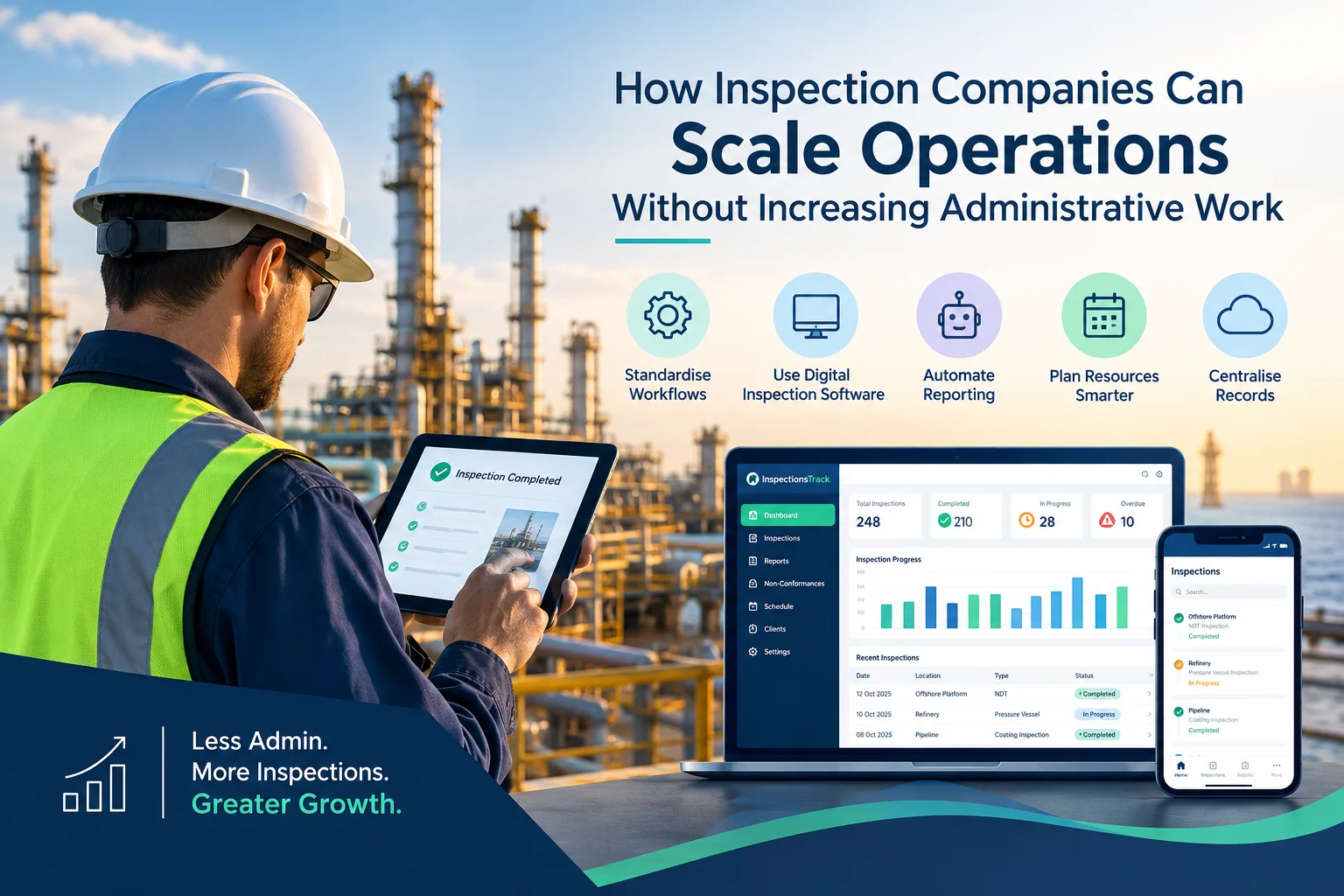
Inspection companies in the oil and gas industry face a common challenge: how to handle more inspections, manage larger projects, and meet client deadlines without increasing administrative workload. As businesses grow, inspection teams must manage…

Meeting client Service Level Agreements (SLAs) is essential for inspection companies working in demanding industries such as oil and gas, energy, and industrial maintenance. Clients expect inspections to be completed on time, reports to be…


