
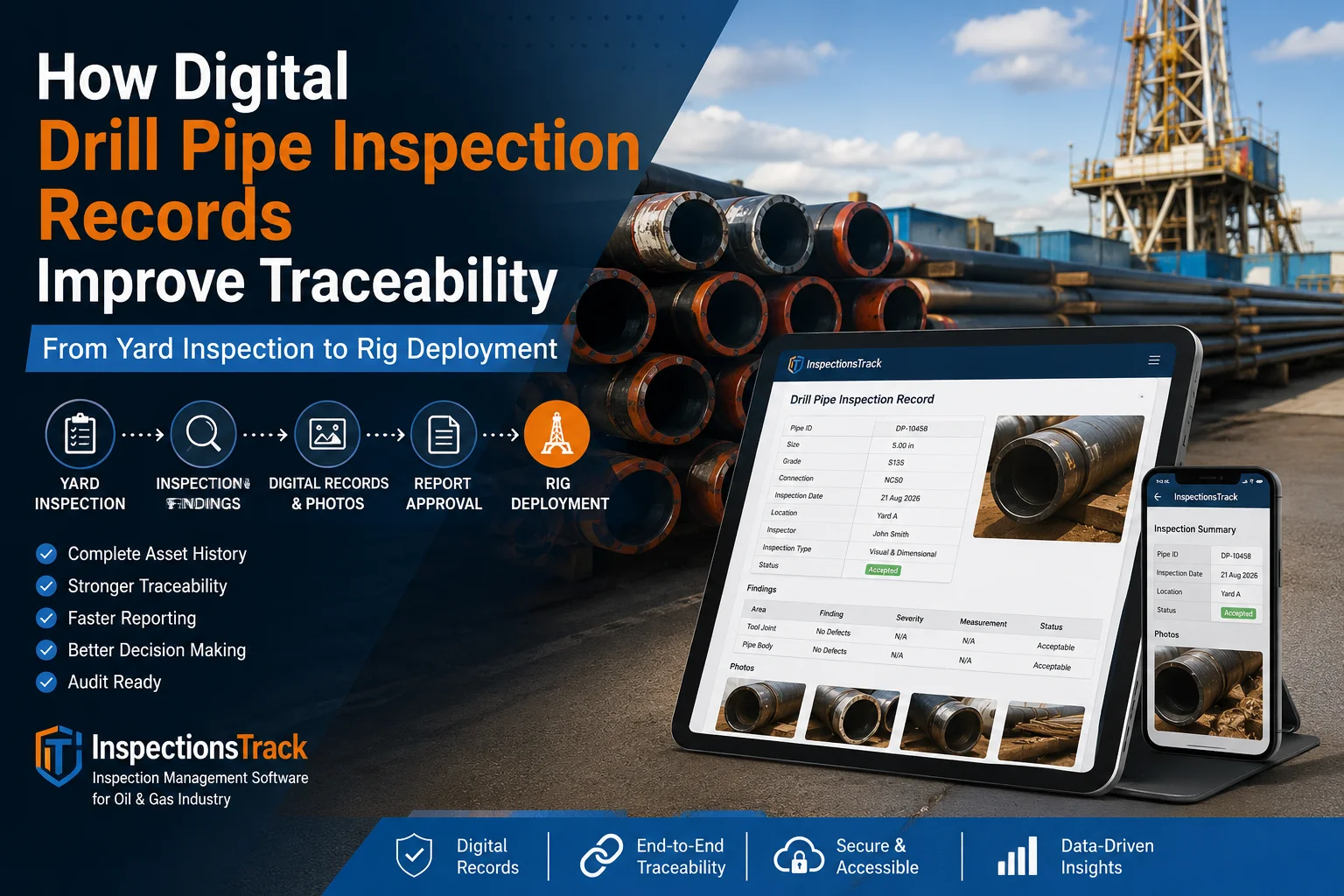
Drill pipe moves through multiple stages before it reaches the rig. It may be inspected in the yard, repaired or rejected, stored, transported, and finally deployed for drilling operations. At every stage, accurate inspection records are essential.
However, when drill pipe inspection data is managed through paper forms, spreadsheets, disconnected photos, or manual reports, traceability can quickly become difficult.
Digital drill pipe inspection records provide a more reliable way to connect inspection findings with individual drill pipe assets throughout their lifecycle. As a result, inspection teams, asset managers, and drilling operators can access a clearer history from yard inspection to rig deployment.
This article explains how digital inspection records improve drill pipe traceability, reduce data gaps, and support more efficient oil and gas inspection workflows.
Drill pipe inspection traceability is the ability to track an individual pipe and its inspection history throughout its operational lifecycle.
A traceable record can connect information such as:
Therefore, instead of treating every inspection as a separate document, companies can build a continuous digital inspection history for each drill pipe asset.
Many inspection teams still rely on a combination of paper forms, Excel spreadsheets, email attachments, and folders containing inspection photographs.
While these methods can work for small operations, they become increasingly difficult to manage as inspection volumes increase.
Consequently, the organization may have inspection data without having effective inspection traceability.
Digital inspection software creates a structured connection between the asset, inspection activity, findings, evidence, and final decision.
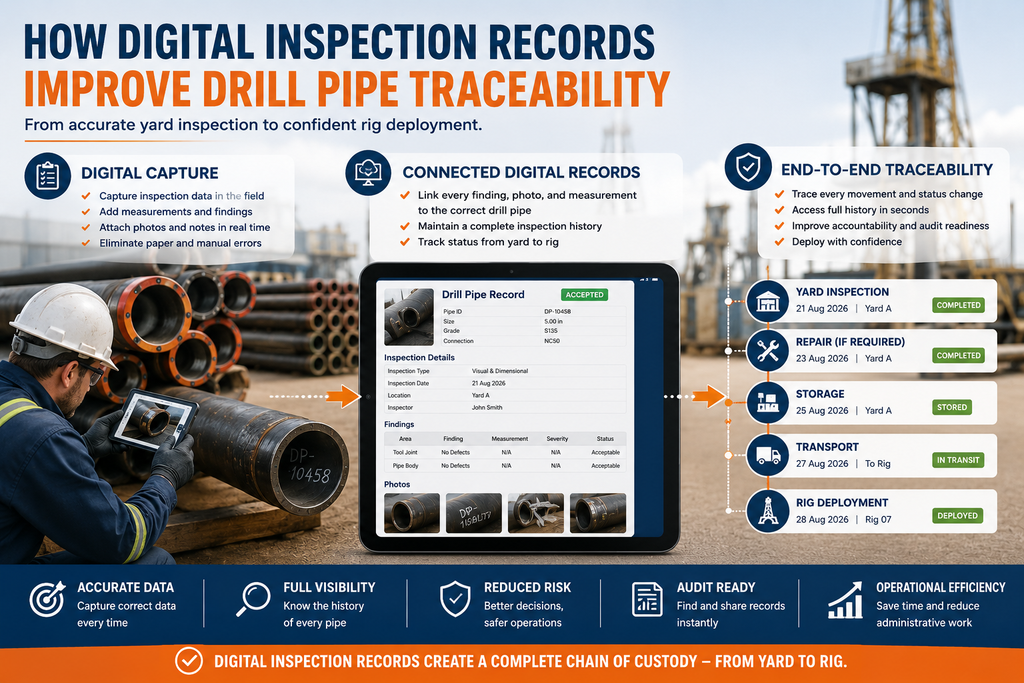
A digital inspection workflow can associate every inspection with a unique pipe identifier.
For example, a record may contain:
| Asset Information | Example |
|---|---|
| Pipe ID | DP-10458 |
| Inspection Location | Yard A |
| Inspection Date | 21 August 2026 |
| Inspection Type | Drill Pipe Inspection |
| Inspector | Certified Inspector |
| Inspection Status | Accepted |
| Findings | No critical indications |
| Photos | Attached to record |
| Deployment Status | Ready for Rig |
This structure makes it easier to identify the correct asset and retrieve its inspection history.
Inspection findings become more useful when they are connected to photographs, measurements, comments, and other inspection evidence.
Instead of storing an image as:
IMG_4587.jpg
the digital record can associate the image with:
DP-10458 → Tool Joint → Visual Finding → Photograph
As a result, inspectors and integrity teams can better understand what was found, where it was found, and which asset it belongs to.
A drill pipe may be inspected multiple times during its service life.
A digital system can maintain a chronological history such as:
Yard Inspection → Repair → Re-inspection → Storage → Pre-Deployment Inspection → Rig Deployment → Future Inspection
This historical chain is valuable because current inspection decisions can be supported by previous inspection information.
Moreover, teams can identify recurring defects, previous repairs, inspection frequency, and changes in asset condition.
A strong digital drill pipe inspection process should follow the asset throughout its operational journey.
The drill pipe is assigned or matched with a unique asset identifier.
Basic information can include:
Inspectors conduct the required inspection and record results directly into the digital workflow.
Depending on the inspection program, this may include visual inspection, dimensional checks, NDT methods, or other required examinations.
Inspection results are captured against the correct drill pipe record.
Instead of maintaining separate spreadsheets, findings remain connected to the asset.
Relevant photographs, measurements, documents, and inspection evidence can be linked to the inspection record.
This creates stronger digital inspection documentation and reduces the risk of losing supporting evidence.
The asset can be assigned an appropriate status, such as:
This status provides a clear indication of the asset’s inspection outcome.
Once the pipe leaves the inspection yard, its digital record should remain accessible.
When the pipe is prepared for rig deployment, teams can verify its inspection status and review relevant historical information before the asset is put into service.
| Area | Manual Records | Digital Inspection Records |
|---|---|---|
| Asset identification | Often spreadsheet-based | Structured asset records |
| Inspection history | Difficult to consolidate | Centralized history |
| Photos | Separate folders | Linked to inspection records |
| Reporting | Manual preparation | Faster digital reporting |
| Searchability | Limited | Quick record retrieval |
| Data consistency | Higher risk of duplication | Standardized workflows |
| Status tracking | Manual updates | Digital status tracking |
| Audit preparation | Time-consuming | Easier record access |
| Historical analysis | Difficult | More practical |
Therefore, digitalization is not simply about replacing paper. It is about creating a connected inspection data workflow.
For oil and gas inspection companies, managing inspection information across multiple assets, inspectors, locations, and inspection types can become complex.
InspectionsTrack is an inspection management software platform designed for the oil and gas inspection industry. Its inspection capabilities can help organizations digitize inspection workflows, centralize records, and improve access to inspection information.
For drill pipe inspection operations, a digital workflow can help teams organize:
The broader value is that inspection information can be organized within a structured digital environment rather than remaining distributed across disconnected files.
Traceability directly supports better asset integrity management.
When inspection teams can quickly access previous records, they can make more informed decisions about an asset’s condition.
For example, historical inspection data can help identify:
As a result, inspection history becomes more than a compliance record. It becomes a valuable source of asset integrity information.
A well-designed digital inspection workflow can provide several operational benefits.
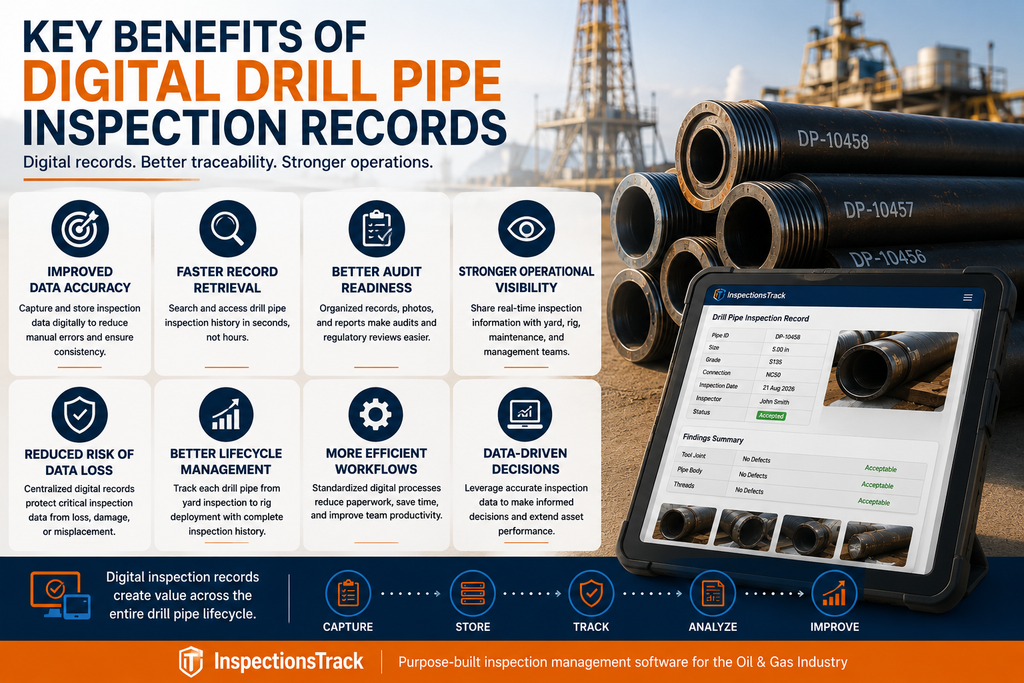
Standardized digital forms reduce unnecessary manual transcription and help ensure that required fields are completed consistently.
Instead of searching through folders and spreadsheets, teams can locate an asset’s inspection history through structured records.
Teams can maintain inspection records, findings, evidence, and reports in an organized format, making audits and reviews easier to manage.
Yard teams, inspection companies, asset managers, and drilling teams can work from more consistent information.
Centralized digital records reduce dependence on individual spreadsheets, paper forms, and local computer folders.
Most importantly, the inspection record follows the drill pipe throughout its lifecycle instead of ending when the team issues the inspection report.
To get the most value from digital inspection management, companies should establish clear processes.
Every drill pipe should have a unique and consistent identifier. This identifier should remain connected to inspection records throughout the asset lifecycle.
Digital forms should capture the information required for the specific inspection type while maintaining consistent terminology and workflows.
Inspectors should associate photographs, measurements, findings, and reports with the correct inspection and asset record.
Previous inspections should remain accessible so inspectors and integrity teams can review changes over time.
Clearly defined statuses help teams understand whether an asset is ready for deployment, requires repair, or needs further inspection.
The value of digital inspection data increases when authorized users can access relevant information when making operational decisions.
Oil and gas inspection programs are becoming increasingly data-driven. As inspection volumes grow, organizations need more than individual reports. They need connected and searchable inspection histories.
Digital drill pipe inspection records provide the foundation for this approach.
By connecting asset identification, inspection results, photographs, measurements, historical records, and deployment status, companies can create a stronger chain of traceability from the inspection yard to the rig.
Furthermore, structured inspection data can support future analytics, reporting, compliance activities, and asset integrity programs.
Drill pipe traceability should not stop when an inspection report is completed. The inspection record should remain connected to the asset as it moves from the yard to storage, transportation, and ultimately rig deployment.
Digital inspection management helps make that possible.
With structured asset records, linked inspection evidence, searchable histories, standardized workflows, and centralized reporting, companies can reduce information gaps and improve confidence in drill pipe inspection data.
For oil and gas inspection organizations looking to move away from disconnected spreadsheets and manual inspection records, InspectionsTrack provides a digital platform for managing inspection workflows and building a more connected inspection data environment.
Read more : From Thickness Readings to Tank Integrity: Building a Digital Inspection History for Every Asset
Drill pipe inspection traceability is the ability to track an individual drill pipe’s identity, inspection results, findings, evidence, and historical records throughout its lifecycle.
Digital records make inspection information easier to organize, search, update, and retrieve. They also help connect current inspection results with historical asset information.
Digital inspection software can standardize inspection workflows, connect findings with assets, store supporting evidence, improve reporting, and make historical records easier to access.
Yes When teams consistently maintain inspection records, findings, photographs, reports, and asset information, they can retrieve supporting documentation more efficiently during audits and reviews.
Inspection companies in the oil and gas industry face a common challenge: how to handle more inspections, manage larger projects, and meet client deadlines without increasing administrative workload. As businesses grow, inspection teams must manage…
Meeting client Service Level Agreements (SLAs) is essential for inspection companies working in demanding industries such as oil and gas, energy, and industrial maintenance. Clients expect inspections to be completed on time, reports to be…


Comment (1)
Third-Party Inspection vs In-House Inspection: Oil & Gas - inspectionstrack
Aug 25, 2026[…] Read more : How Digital Drill Pipe Inspection Records Improve Traceability From Yard Inspection to Rig Deploymen… […]
Comments are closed.