
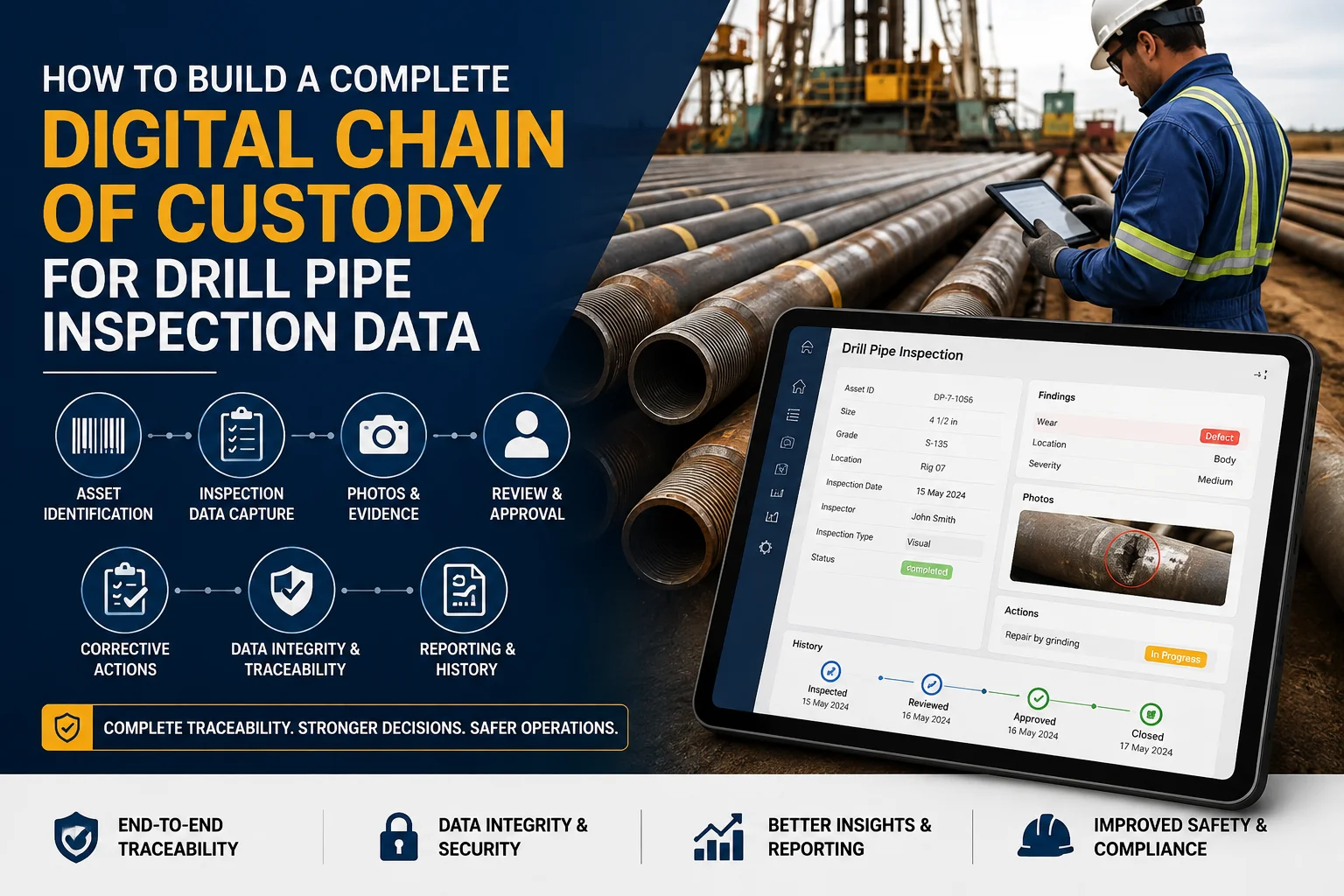
Drill pipe inspections generate critical information about equipment condition, defects, measurements, and inspection history. However, when this data is spread across paper forms, spreadsheets, emails, and separate photo folders, maintaining a clear record becomes difficult.
A digital chain of custody for drill pipe inspection data solves this problem by connecting every stage of the inspection process from asset identification and data collection to review, corrective action, and final reporting.
For oil and gas companies, this approach improves inspection traceability, data integrity, reporting accuracy, and audit readiness.
A digital chain of custody is a complete, traceable record of an inspection and everything that happens to the data afterward.
For drill pipe inspections, this can include:
Instead of storing these details separately, a digital inspection system keeps them connected to the relevant asset.
Drill pipes operate under demanding conditions and can experience wear, corrosion, fatigue, cracking, and mechanical damage. Therefore, inspection records need to be accurate and easy to retrieve.
A fragmented process can create several challenges:
Paper forms and spreadsheets can easily become misplaced or duplicated. As a result, teams may struggle to determine which record is the latest approved version.
Finding a defect is only part of the inspection process. Teams also need to know what action was taken, who reviewed it, and whether the issue was resolved.
When historical inspection information is stored across multiple systems, preparing documentation for clients or audits can take hours.
A centralized digital inspection record makes this process much more efficient.
A reliable digital workflow should cover the entire inspection lifecycle.
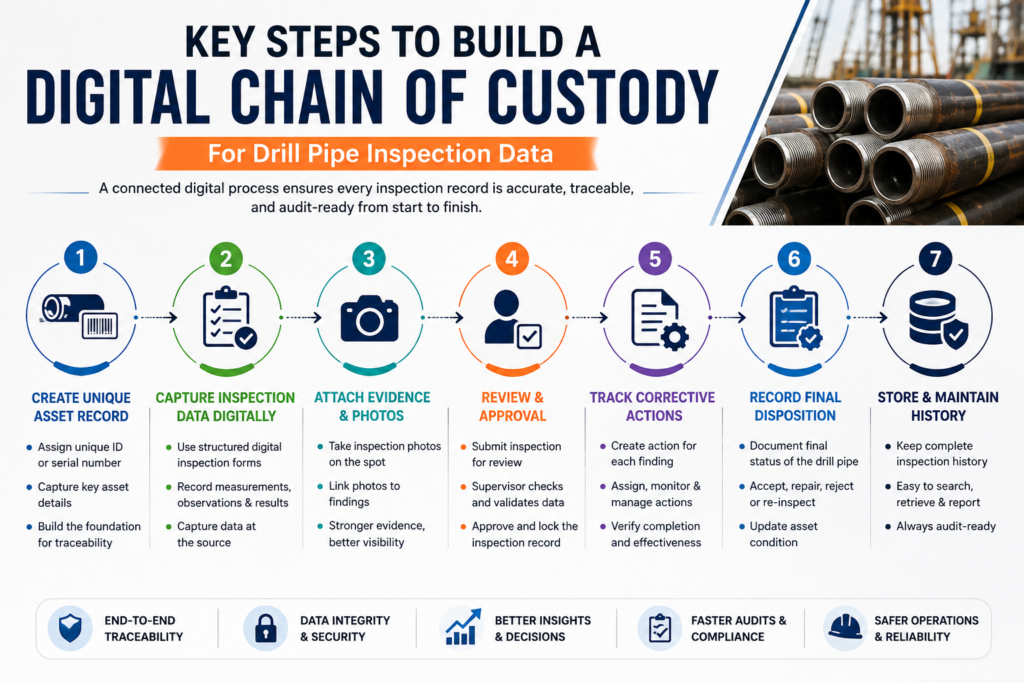
Start by giving every drill pipe a consistent digital identity.
Depending on your inspection requirements, the record may include:
This provides the foundation for reliable drill pipe inspection data management.
Inspectors should be able to record information directly through a structured digital inspection form.
Typical information includes:
Capturing information at the source reduces manual data entry and helps improve consistency.
Inspection photographs can provide valuable evidence, particularly when documenting defects.
Rather than keeping photographs in separate folders, connect them directly to the relevant inspection or finding.
This creates a clear relationship:
Asset → Inspection → Finding → Photograph → Action
Consequently, anyone reviewing the record can understand exactly what the photograph represents.
Not every inspection record should immediately become a final record.
A controlled workflow can move an inspection through stages such as:
Inspection → Submission → Review → Approval → Final Record
This helps organizations maintain better control over inspection data and identify who reviewed the information.
When an inspection identifies a problem, the digital record should continue beyond the inspection itself.
For example:
| Inspection Stage | Information Recorded |
|---|---|
| Inspection | Equipment inspected |
| Finding | Defect identified |
| Evidence | Photos and measurements |
| Review | Finding evaluated |
| Action | Repair or follow-up assigned |
| Verification | Action checked |
| Disposition | Final equipment status |
This creates a complete digital history rather than an isolated inspection report.
| Manual Process | Digital Inspection Process |
|---|---|
| Paper forms and spreadsheets | Structured digital forms |
| Photos stored separately | Evidence linked to records |
| Manual report preparation | Standardized reporting |
| Difficult historical searches | Searchable inspection history |
| Fragmented defect tracking | Connected findings and actions |
| Time-consuming audits | Faster record retrieval |
The goal is not simply to replace paper with software.
The goal is to create a connected inspection data lifecycle.
InspectionsTrack is inspection management software designed to support inspection workflows in the oil and gas industry.
It can help organizations manage different inspection activities, including drill pipe inspections, NDT inspections, audit inspections, rope access inspections, cranes and winches, derrick inspections, tank inspections, EX inspections, and other specialized inspection processes.
For drill pipe inspection, a digital workflow can help connect:
Asset Identification → Inspection → Findings → Evidence → Review → Corrective Action → Reporting → Inspection History
Instead of relying on disconnected spreadsheets and folders, inspection information can be managed through a structured digital environment.
This can help inspection teams improve data visibility while reducing the administrative effort involved in managing inspection records.
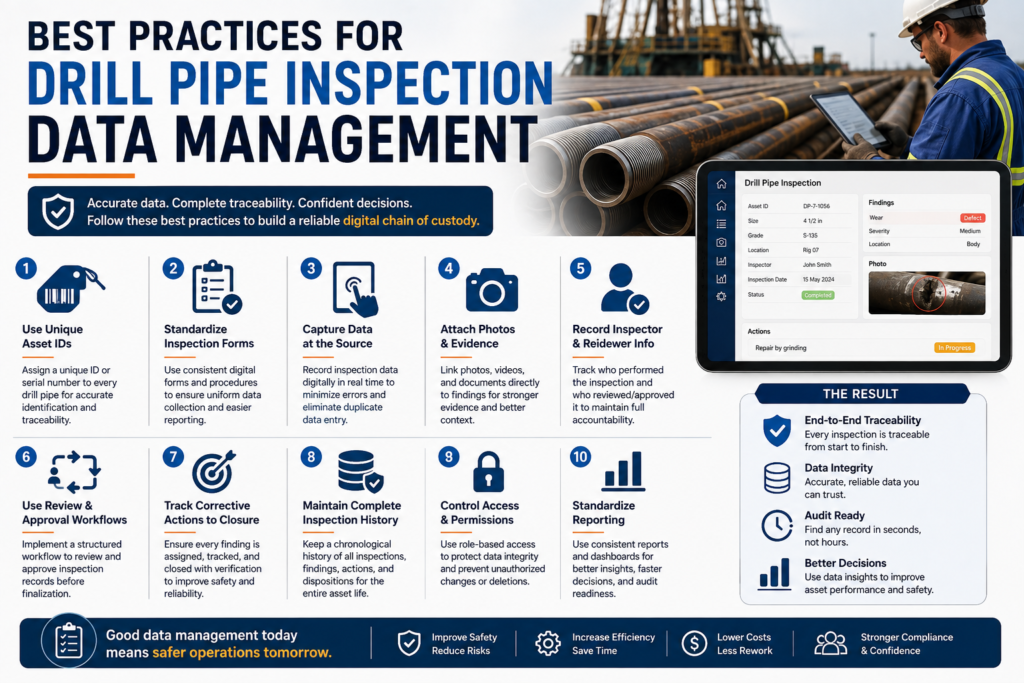
To build a reliable digital chain of custody, organizations should:
Most importantly, every inspection should remain connected to the asset throughout its inspection lifecycle.
Read more : Can You Trust Your Inspection Data? Here Is How to Tell
It is a traceable digital record that connects the equipment, inspection data, evidence, findings, reviews, corrective actions, and final disposition.
It helps organizations maintain accurate inspection histories, improve traceability, retrieve records faster, and support audit and client documentation requirements.
Yes. Centralized and searchable inspection records can make it significantly easier to locate historical inspection information and supporting evidence.
A record can include asset information, inspection details, inspector information, measurements, findings, photographs, review status, corrective actions, and final disposition.
InspectionsTrack provides a structured digital environment for managing inspection workflows and records across multiple oil and gas inspection activities, including drill pipe inspections.
A complete digital chain of custody gives oil and gas companies much more than a digital version of a paper inspection form.
It creates a connected record showing what was inspected, who inspected it, what was found, what evidence was collected, what action was taken, and how the inspection was finalized.
With a structured inspection management platform such as InspectionsTrack, companies can move away from fragmented inspection records and build a more reliable, searchable, and traceable digital inspection process.
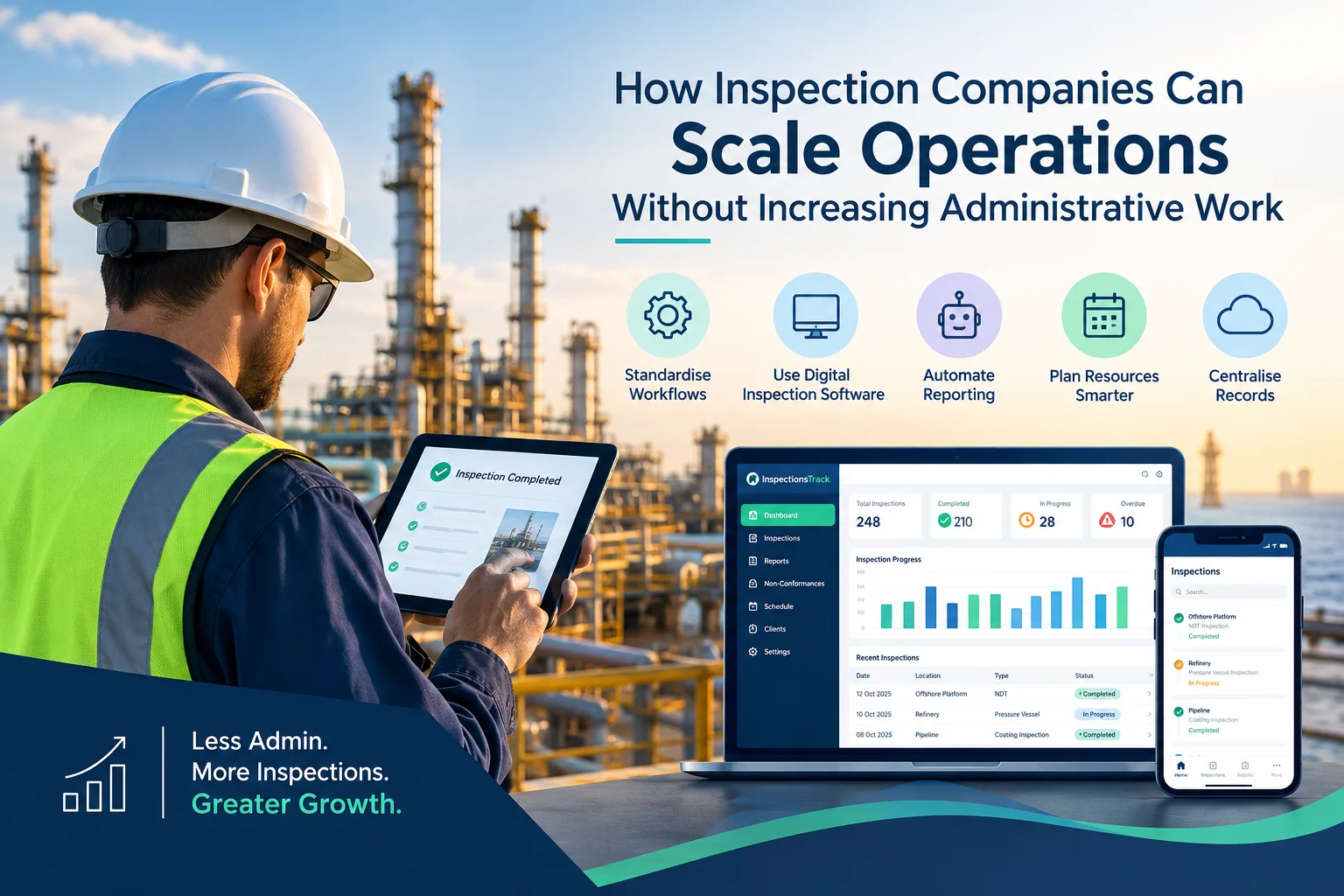
Inspection companies in the oil and gas industry face a common challenge: how to handle more inspections, manage larger projects, and meet client deadlines without increasing administrative workload. As businesses grow, inspection teams must manage…
Meeting client Service Level Agreements (SLAs) is essential for inspection companies working in demanding industries such as oil and gas, energy, and industrial maintenance. Clients expect inspections to be completed on time, reports to be…


Comment (1)
Tank Inspection Data: From Field to Integrity Decisions - inspectionstrack
Aug 19, 2026[…] Read more : How to Build a Complete Digital Chain of Custody for Drill Pipe Inspection Data […]
Comments are closed.