
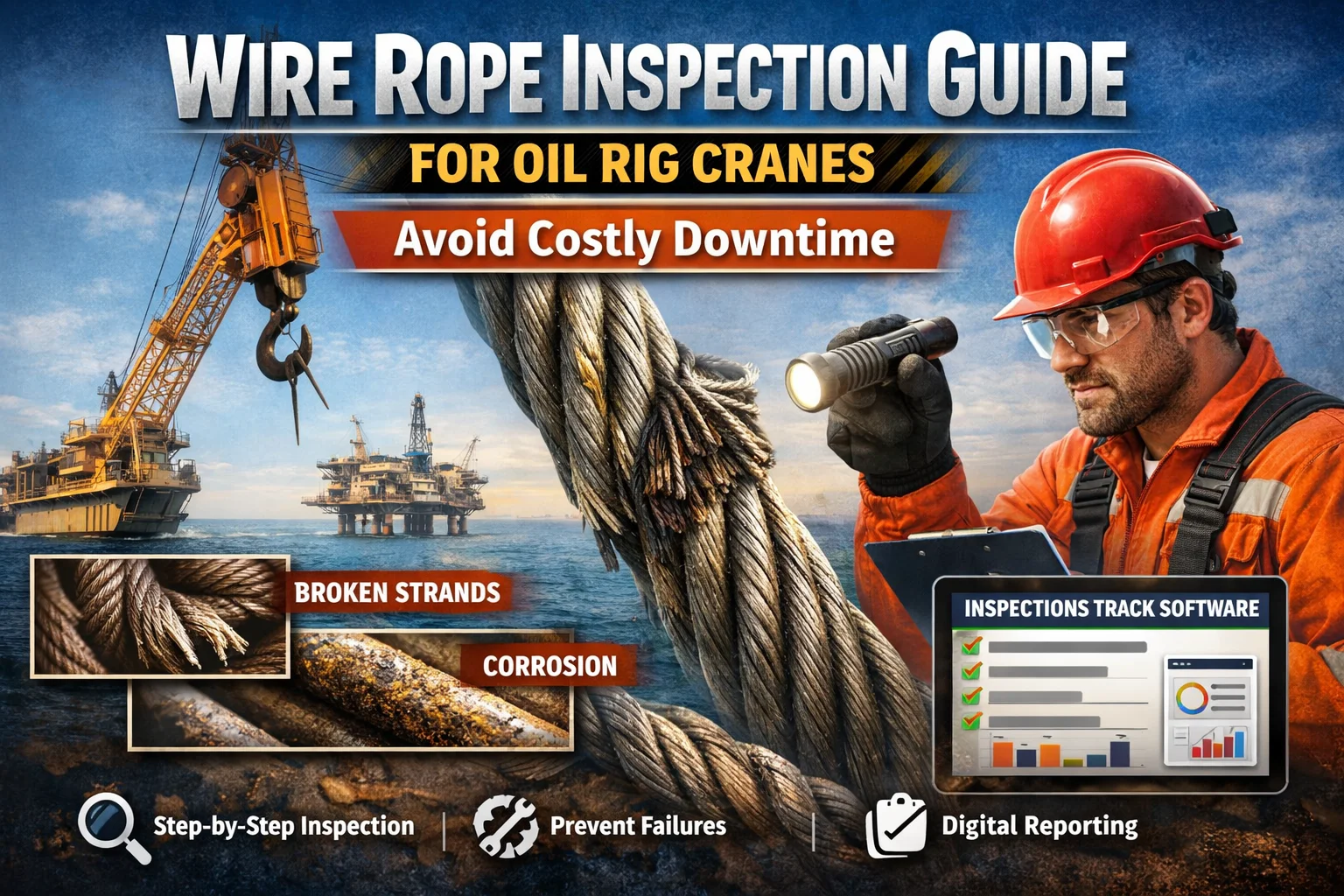
Wire ropes are the backbone of oil rig crane operations. However, when they fail, the consequences can be severe—ranging from costly downtime to serious safety risks. That’s why a structured wire rope inspection process is essential for every oil and gas operation.
In this guide, you’ll learn a step-by-step wire rope inspection method, practical tips, and how digital tools like Inspections Track software can streamline your entire inspection workflow.
First and foremost, wire ropes operate under extreme conditions—heavy loads, harsh weather, and constant stress. As a result, even minor defects can escalate quickly.
Therefore, regular inspection not only improves safety but also ensures operational efficiency.
Before diving into the steps, it’s important to understand the different inspection levels.
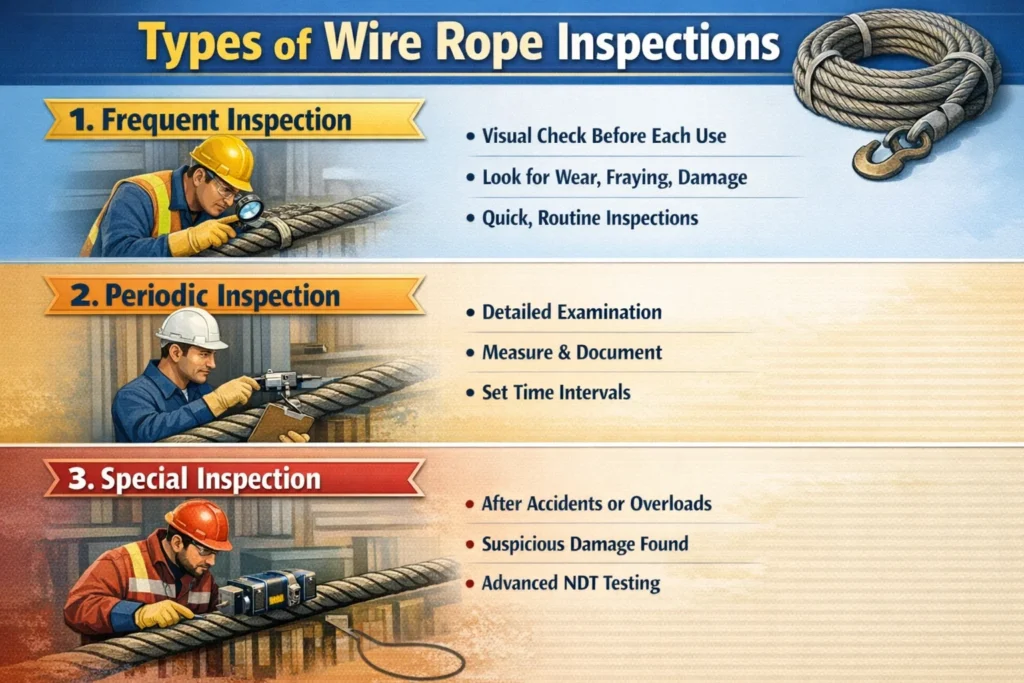
Now, let’s break down the process into actionable steps.
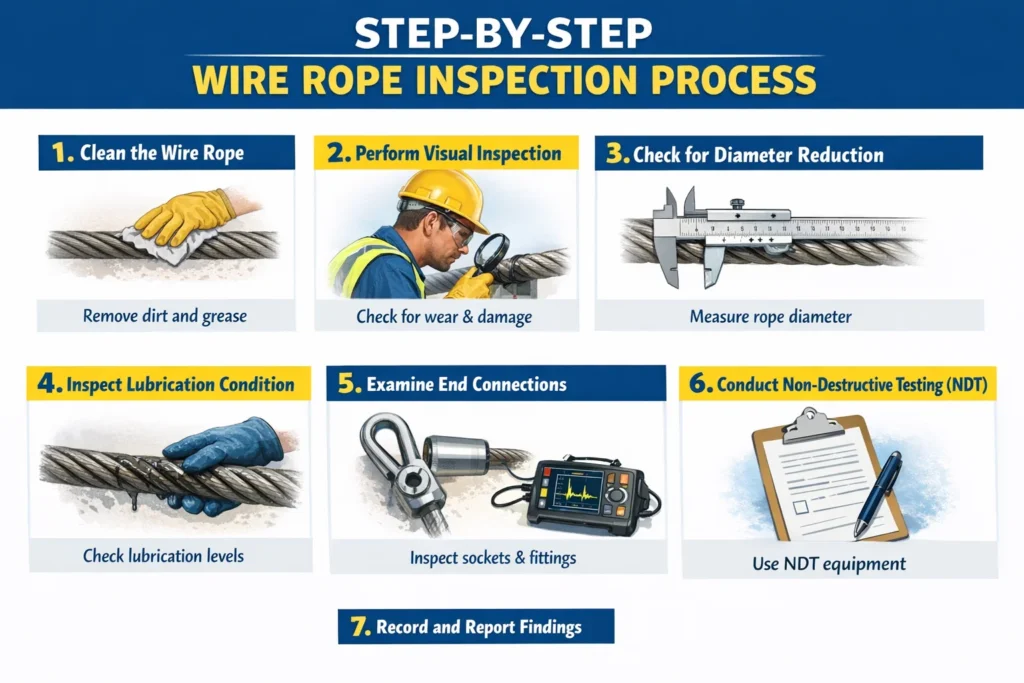
Before inspecting, ensure the rope is clean. Dirt and grease can hide defects.
Tip: Use a wire brush or appropriate cleaning solution to remove debris.
Next, carefully examine the rope along its entire length.
Because visual inspection is quick, it should be done frequently.
Over time, wire ropes lose diameter due to wear.
| Rope Condition | Action Required |
|---|---|
| Slight reduction | Monitor closely |
| Moderate reduction | Schedule maintenance |
| Severe reduction | Replace immediately |
Thus, measuring diameter regularly helps detect internal damage early.
Proper lubrication reduces friction and extends rope life.
Therefore, maintain a balanced lubrication schedule.
After that, inspect all end fittings and attachments.
If connections are weak, the entire system becomes unsafe.
For deeper analysis, use NDT techniques.
Common Methods:
These methods help detect internal flaws that are not visible externally.
Finally, document every inspection.
Include:
Accurate reporting ensures compliance and helps track rope condition over time.
To improve inspection accuracy, always stay alert for these issues:
Since these defects often develop gradually, early detection is critical.
In addition to regular inspections, follow these best practices:
As a result, you can significantly reduce unexpected failures.
While manual inspections are essential, managing them manually can be inefficient. This is where Inspections Track software becomes invaluable.
Moreover, for oil and gas companies operating in remote areas, this software ensures seamless data capture and reporting.
| Feature | Manual Inspection | Inspections Track Software |
|---|---|---|
| Data Recording | Paper-based | automated |
| Error संभावना | High | Low |
| Accessibility | Limited | Real-time access |
| Reporting Speed | Slow | Instant |
| Predictive Insights | No | Yes |
Clearly, digital solutions provide better accuracy and efficiency.
To sum up, a step-by-step wire rope inspection process is essential for maintaining crane safety and avoiding costly downtime in oil rig operations.
By combining regular inspections, proper maintenance, and digital tools like Inspections Track, you can enhance safety, improve efficiency, and extend the lifespan of your equipment.
Read more : eddy current testing for oilfield safety
Wire ropes should be inspected daily (frequent) and periodically depending on usage and conditions.
Fatigue and corrosion are the most common causes of failure.
No, but they significantly enhance accuracy, reporting, and predictive maintenance.
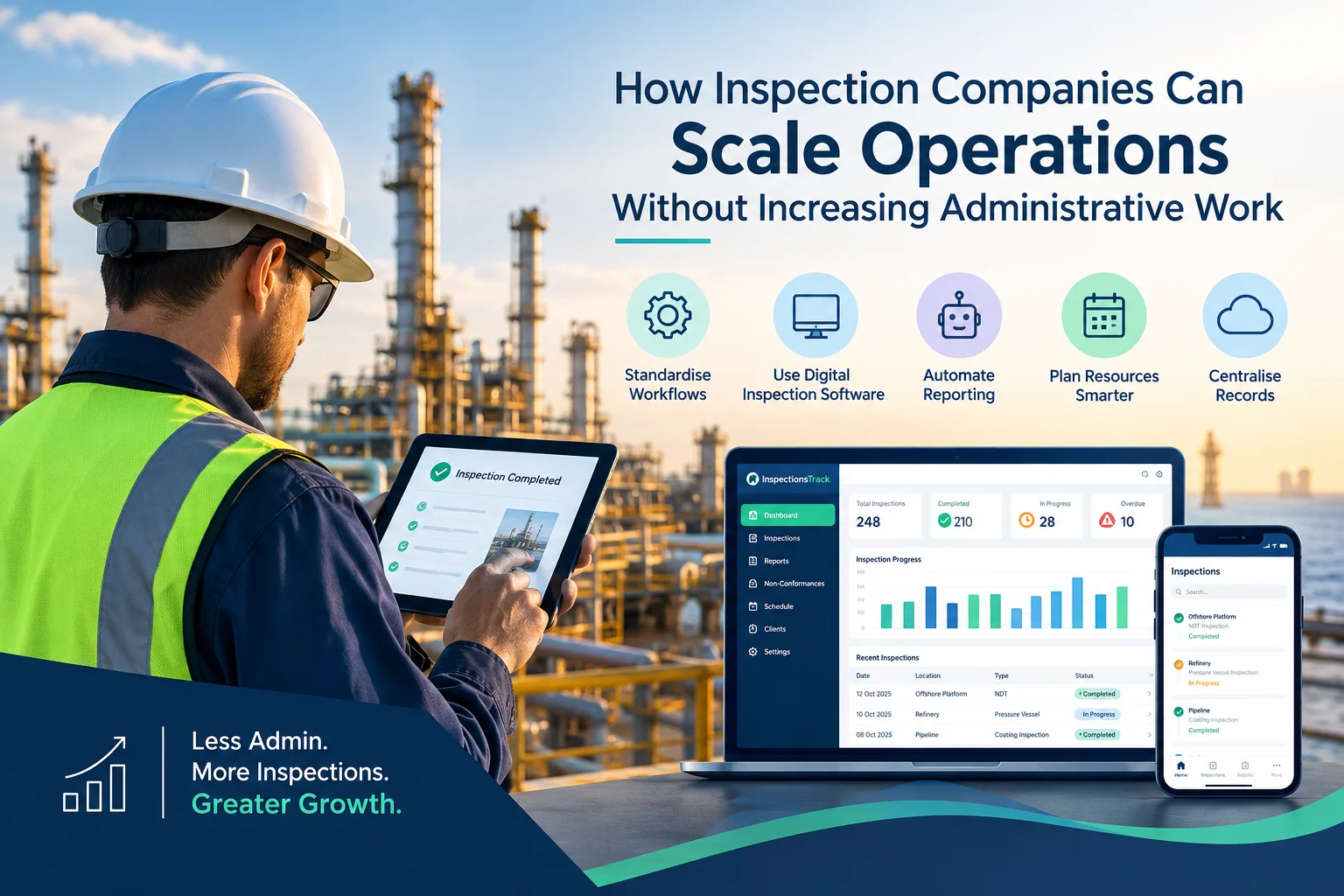
Inspection companies in the oil and gas industry face a common challenge: how to handle more inspections, manage larger projects, and meet client deadlines without increasing administrative workload. As businesses grow, inspection teams must manage…

Meeting client Service Level Agreements (SLAs) is essential for inspection companies working in demanding industries such as oil and gas, energy, and industrial maintenance. Clients expect inspections to be completed on time, reports to be…


