
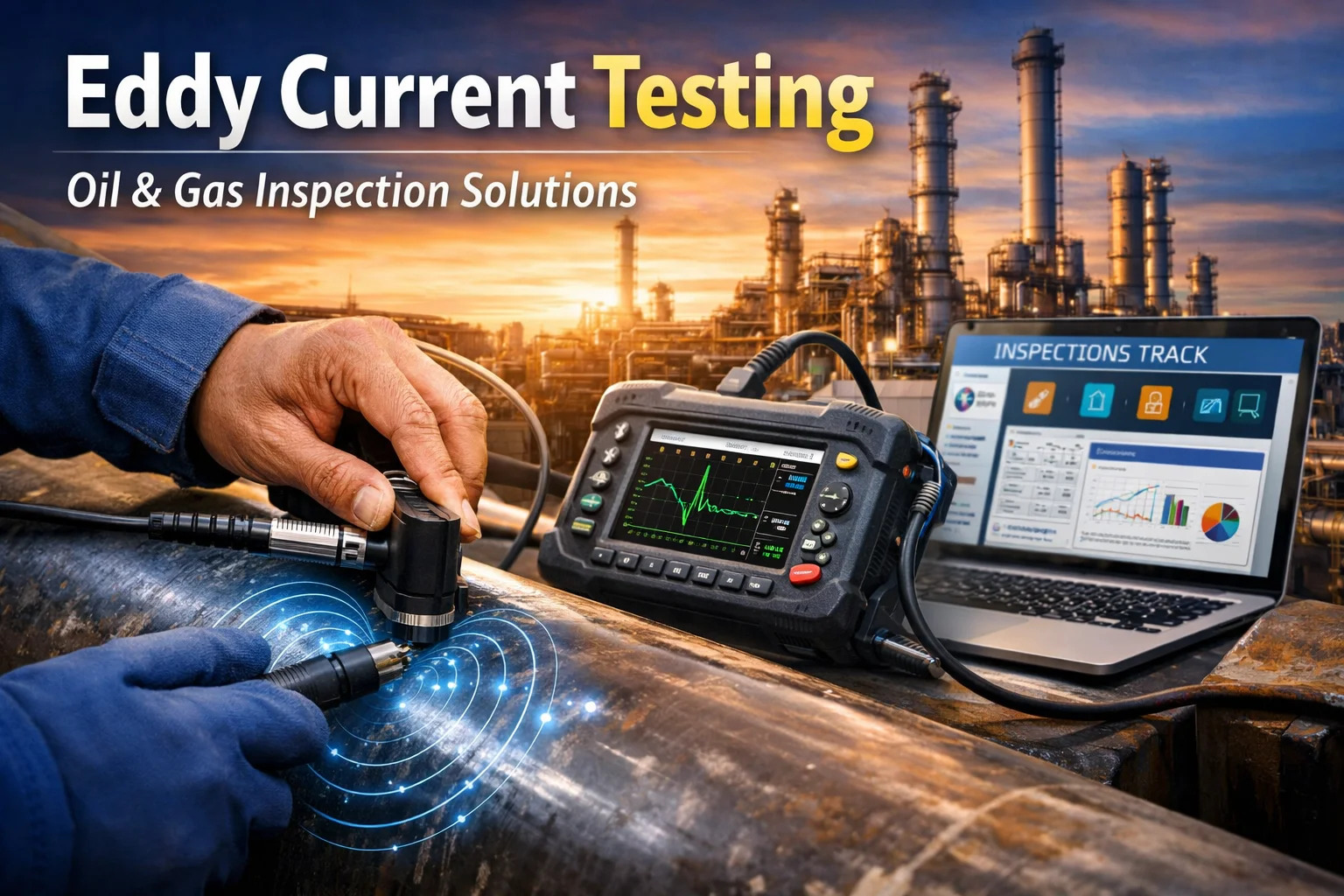
Eddy Current Testing (ECT) is one of the most widely used non-destructive testing (NDT) methods in the oil and gas industry. It is a fast, reliable, and precise technique for detecting surface and near-surface defects in conductive materials.
In this guide, we will explain:
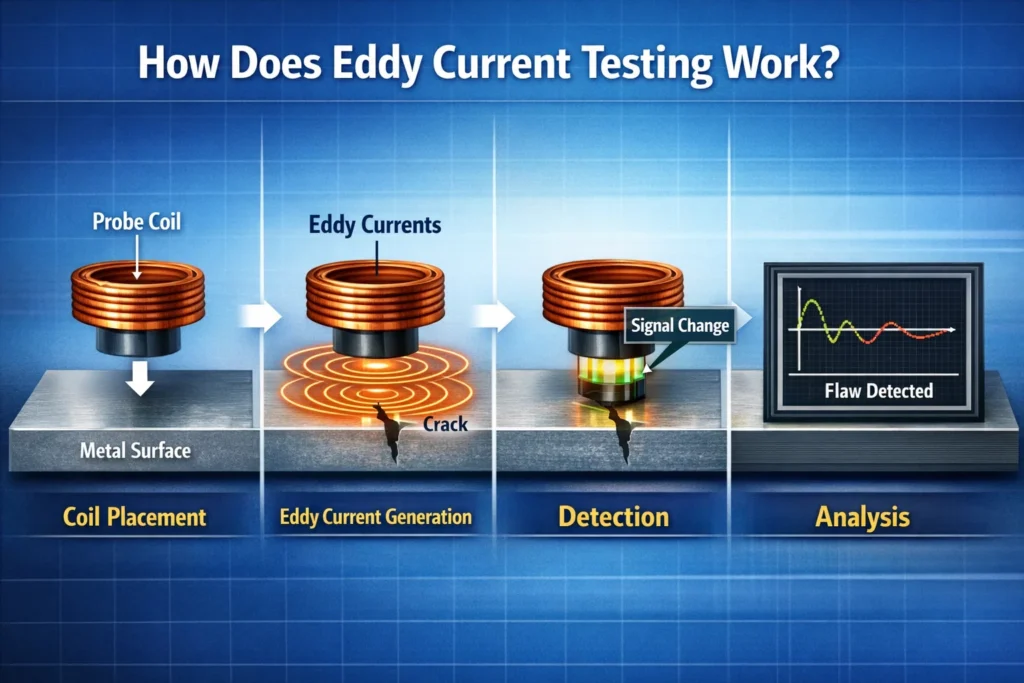
Eddy Current Testing is a non-invasive method that uses electromagnetic induction to detect flaws in metal components. It allows inspectors to find hidden issues without damaging equipment, which is critical for high-value oil and gas infrastructure.
ECT works on the principle of electromagnetic induction:
Eddy Current Testing is used in industries where safety, reliability, and precision are essential.
Manual ECT inspections can be time-consuming and prone to error. Inspection Track Software streamlines the process, providing:
| Feature | Benefits |
|---|---|
| Real-time Data Capture | Immediate recording of inspection results |
| Defect Tracking | Monitor defects and trends over time |
| Automated Reporting | Generate professional, customizable reports |
| Compliance Management | Ensure adherence to industry standards |
| Mobile Accessibility | Inspectors can capture data on-site using tablets or smartphones |
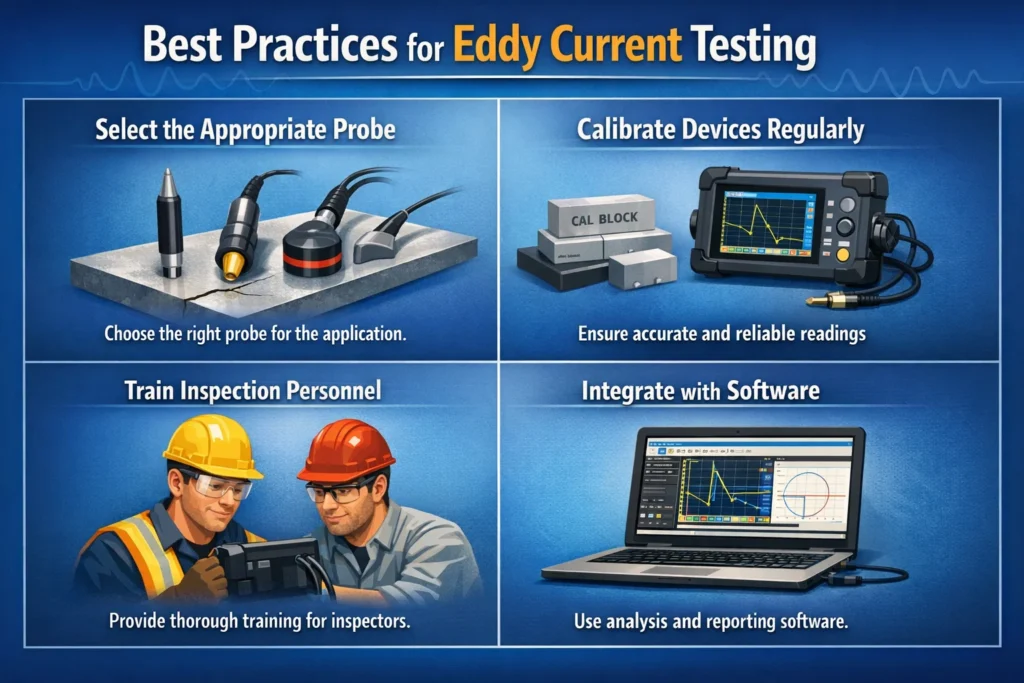
To ensure reliable results:
While ECT is highly effective, some challenges exist:
Pro Tip: These challenges can be minimized with proper training, advanced software, and routine calibration.
Eddy Current Testing is a powerful NDT method critical for the oil and gas industry. Combined with Inspection Track Software, it helps companies:
By integrating ECT technology and digital inspection management, organizations can maximize equipment reliability and safety.
Read more : inspect quarantine and rejected items effectively in oil and gas
ECT is mainly effective for surface and near-surface defects, not deep internal flaws.
Yes. ECT uses electromagnetic induction, not harmful radiation.
Software like Inspection Track provides real-time data capture, defect tracking, automated reports, and compliance management.
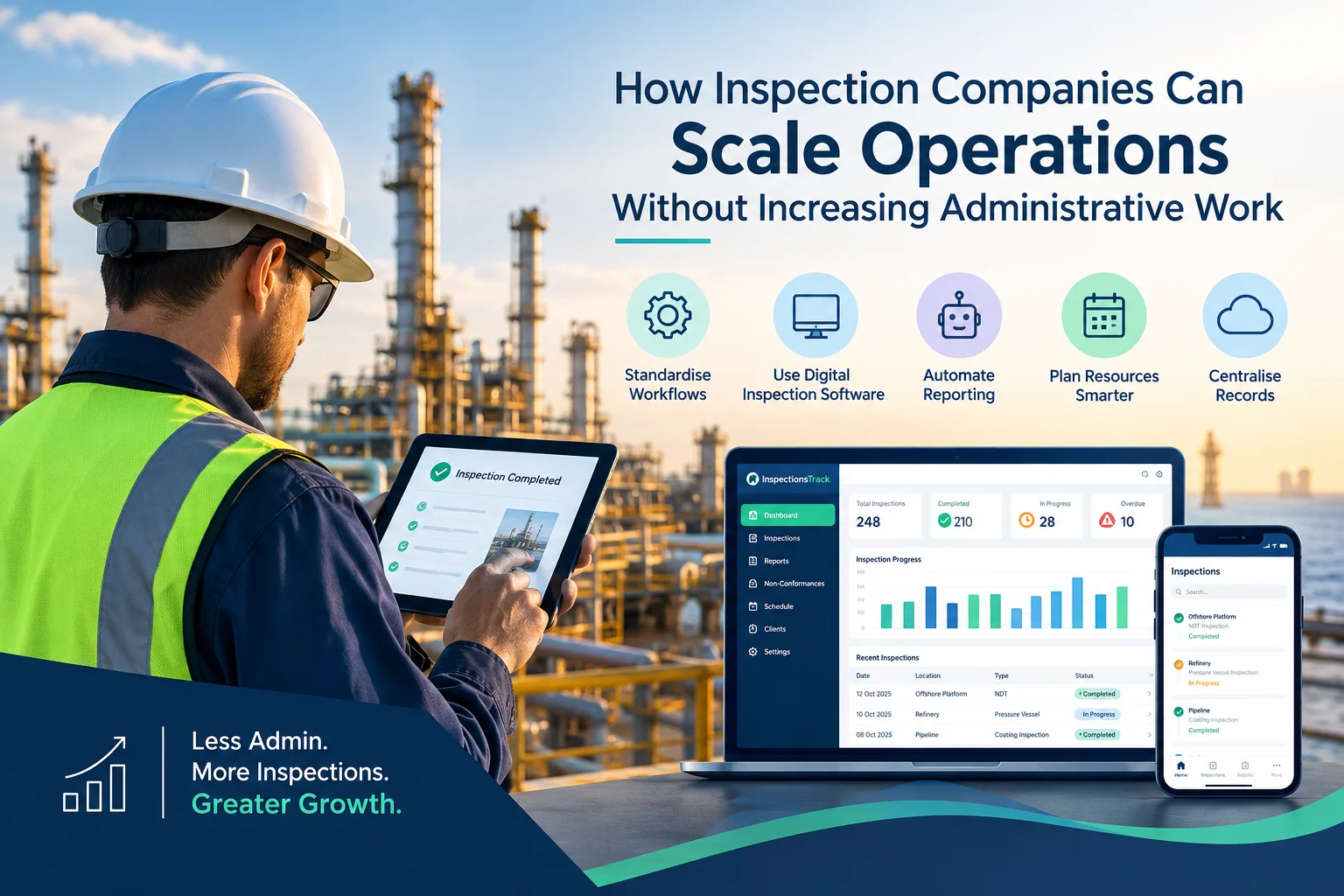
Inspection companies in the oil and gas industry face a common challenge: how to handle more inspections, manage larger projects, and meet client deadlines without increasing administrative workload. As businesses grow, inspection teams must manage…
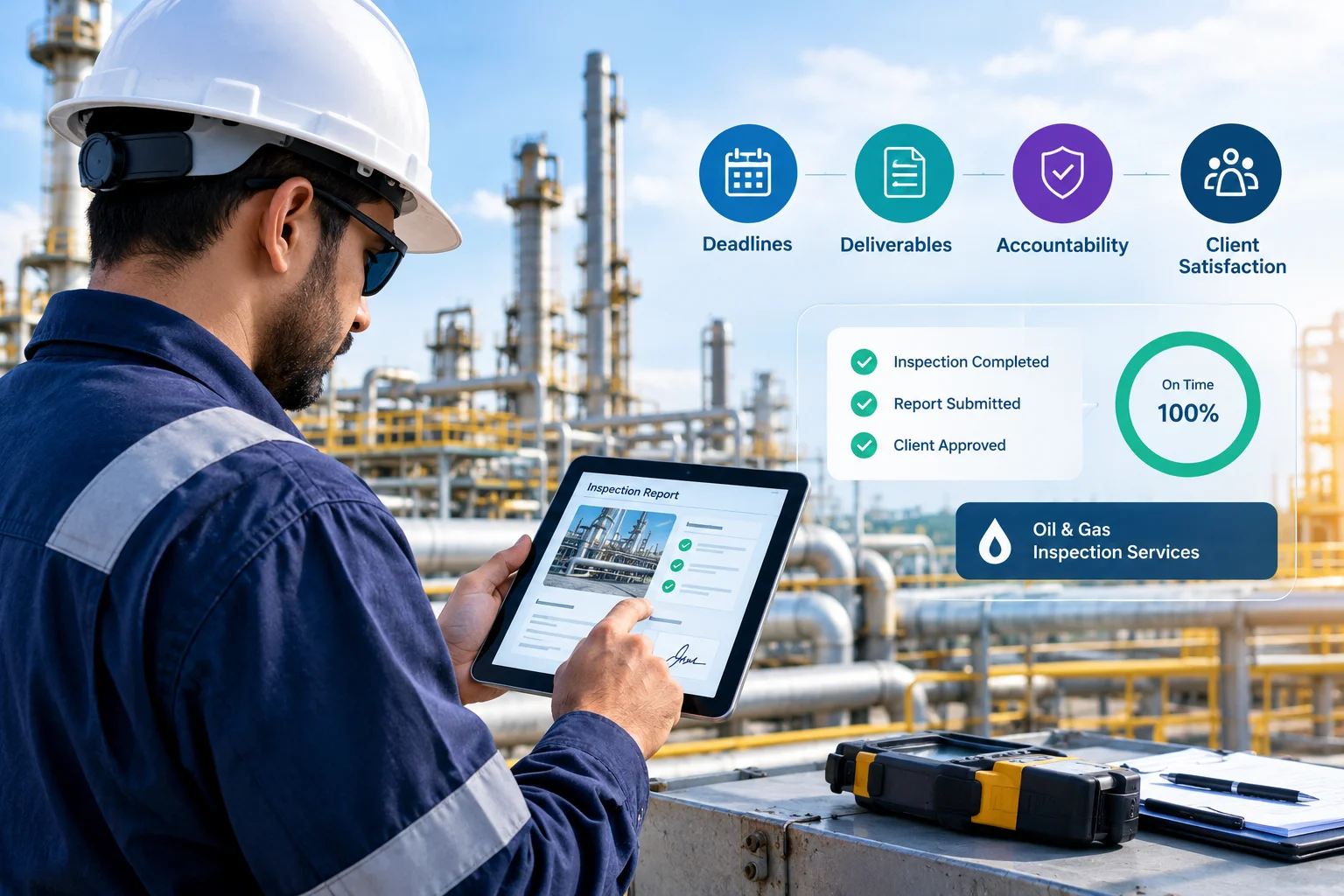
Meeting client Service Level Agreements (SLAs) is essential for inspection companies working in demanding industries such as oil and gas, energy, and industrial maintenance. Clients expect inspections to be completed on time, reports to be…


