
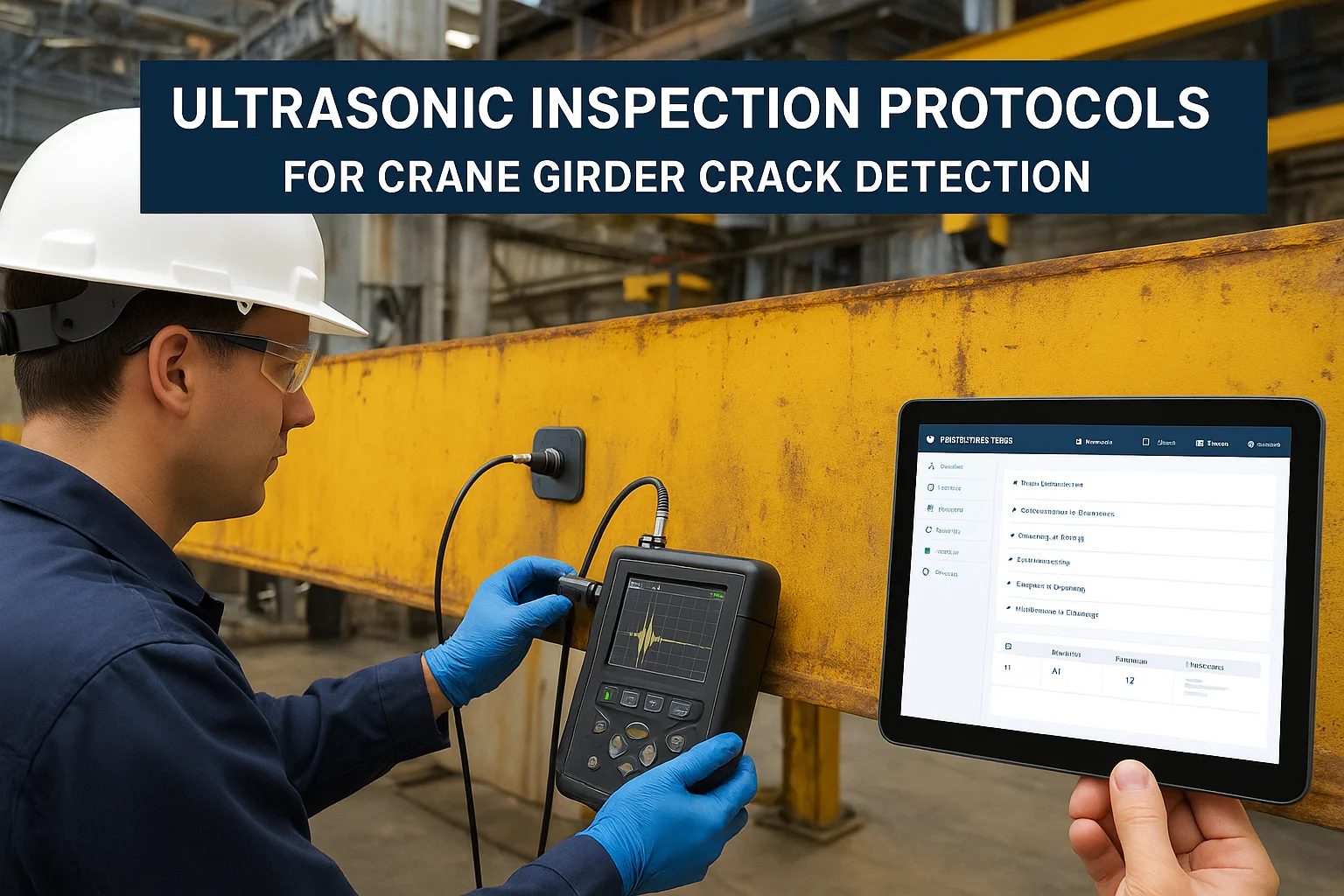
In the oil and gas industry, crane girders play a vital role in ensuring safe and efficient operations. Detecting cracks and defects early is critical to avoid catastrophic failures. Ultrasonic inspection (UT) is a proven non-destructive testing (NDT) method for identifying internal defects in crane girders. This blog explores ultrasonic inspection protocols and how software solutions like Inspections Track streamline the process for oil and gas inspections.
Ultrasonic inspection uses high-frequency sound waves to detect internal defects in metal structures. The waves penetrate the material, and reflections from cracks or voids are captured to generate a detailed internal map.

Crane girders in oil and gas facilities bear heavy loads and are exposed to harsh environments. Over time, these stresses can lead to micro-cracks that may develop into structural failures. Implementing regular ultrasonic inspections ensures:
Standardized inspection protocols ensure consistency and reliability of results. Below are widely accepted protocols in the oil and gas sector:
| Protocol Step | Description | Recommended Frequency |
|---|---|---|
| Visual Assessment | Initial visual inspection to detect surface cracks | Before each operational cycle |
| Calibration of UT Equipment | Ensures accuracy by using standard calibration blocks | Daily or before inspection |
| Scanning & Testing | Use longitudinal or shear waves to detect internal cracks | Monthly or per inspection schedule |
| Data Recording | Document readings, anomalies, and test locations | During inspection |
| Analysis & Reporting | Evaluate signals to identify crack size and location | Post-inspection |
| Maintenance & Follow-up | Repair or monitor detected cracks | As per analysis outcome |
Inspections Track is a digital solution designed for oil and gas inspections, streamlining ultrasonic testing workflows. Key features include:
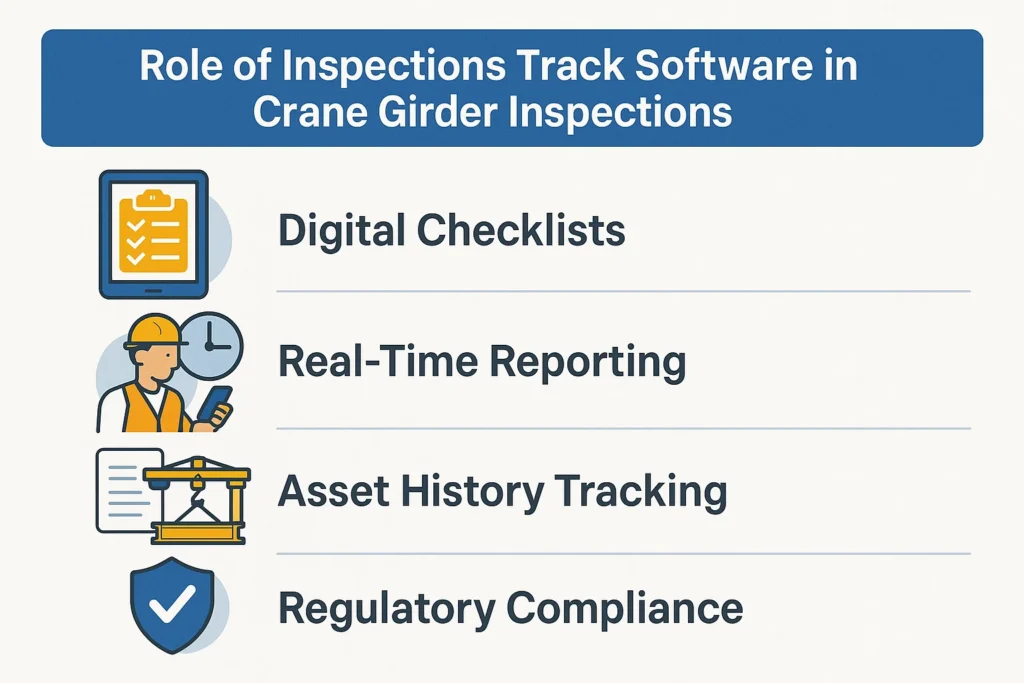
Using software like Inspections Track improves inspection accuracy, reduces human error, and supports proactive maintenance planning.
Read more : ultrasonic testing for drill pipe wall thickness
Regular inspection is crucial for preventing failures. Typical schedules include:
Tip: Combine ultrasonic inspection with other NDT methods like magnetic particle testing for thorough crack detection.
Yes, but UT is most effective for internal cracks. Surface defects may require visual or dye penetrant testing.
Yes, but UT is most effective for internal cracks. Surface defects may require visual or dye penetrant testing.
UT works effectively on most crane girders; probe type and frequency should match girder thickness.
Yes, it is non-destructive and poses no health risks when conducted correctly.
Ultrasonic inspection is a cornerstone of crane girder maintenance in the oil and gas industry. Following standardized protocols ensures accurate detection of cracks, prolongs asset life, and ensures operational safety. Leveraging digital solutions like Inspections Track further enhances efficiency, compliance, and data reliability.
Invest in ultrasonic inspections today to safeguard your cranes, optimize maintenance, and reduce unexpected downtime.
Read more : step by step guide to prv inspections for oil gas

Inspection companies in the oil and gas industry face a common challenge: how to handle more inspections, manage larger projects, and meet client deadlines without increasing administrative workload. As businesses grow, inspection teams must manage…

Meeting client Service Level Agreements (SLAs) is essential for inspection companies working in demanding industries such as oil and gas, energy, and industrial maintenance. Clients expect inspections to be completed on time, reports to be…


