
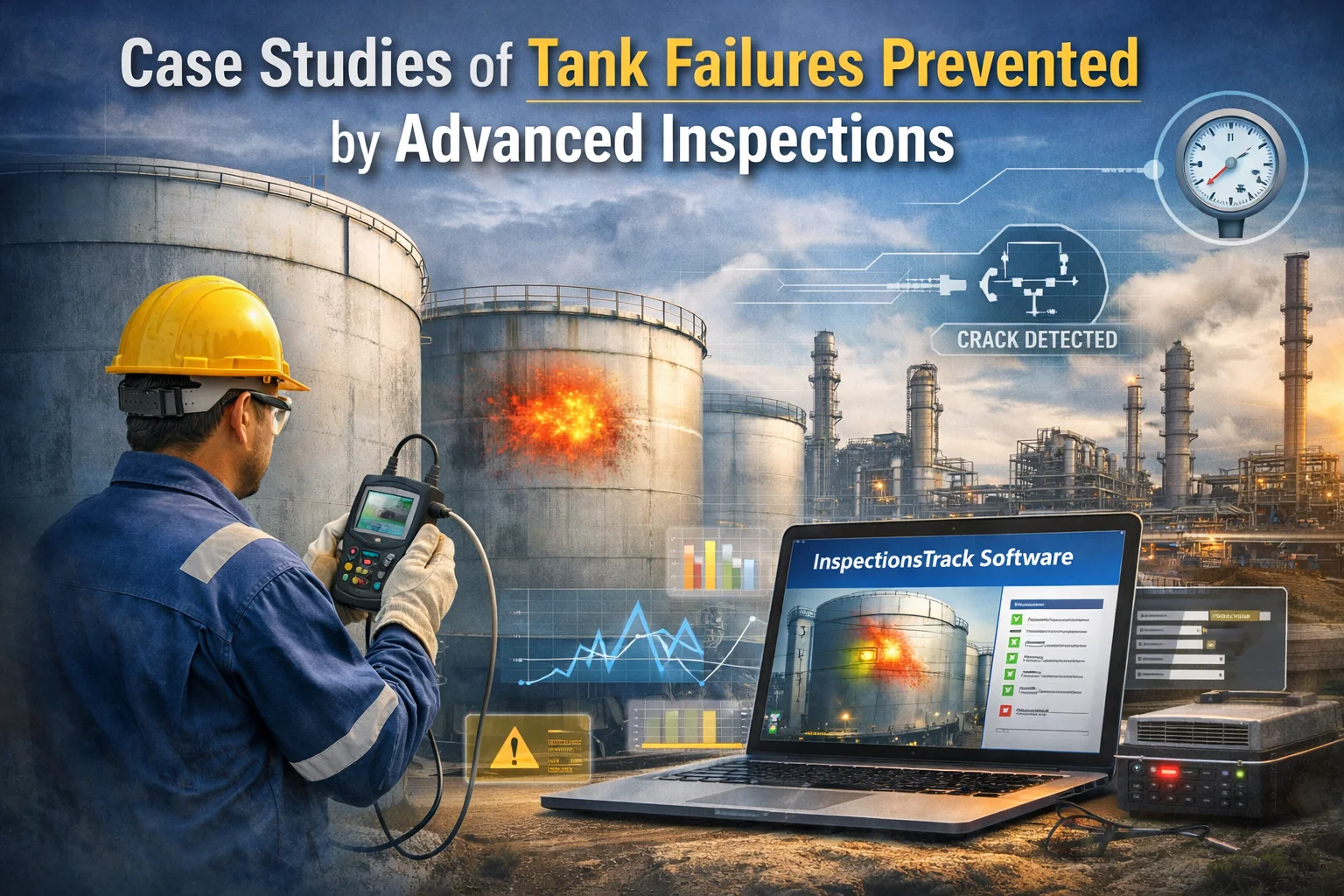
In the oil and gas industry, storage tank failures can result in catastrophic financial losses, environmental hazards, and safety risks. Fortunately, advanced inspection technologies and proactive maintenance strategies are changing the game. Companies leveraging Inspectionstrack Software have successfully detected potential failures before they escalate, ensuring operational continuity and compliance.
This blog explores real-life case studies demonstrating how advanced inspections prevented tank failures, highlighting best practices and lessons learned.
Advanced inspections go beyond visual checks and basic monitoring. They involve:
By integrating these methods with tools like Inspectionstrack Software, oil and gas operators can significantly reduce downtime and avoid costly failures.
Scenario: A 50,000-barrel crude oil storage tank showed early signs of corrosion. Traditional visual inspections missed subtle internal wall degradation.
Solution: Using Inspectionstrack Software, the inspection team implemented ultrasonic testing (UT) and corrosion mapping.
Scenario: An aging refinery tank was at risk of weld joint failures due to stress fatigue.
Solution: Advanced inspections included phased array ultrasonic testing (PAUT) integrated with Inspectionstrack Software, allowing real-time reporting and trend analysis.
Outcome:
| Risk Factor | Traditional Inspection | Advanced Inspection (with Inspectionstrack) |
|---|---|---|
| Corrosion Detection | Missed early signs | Detected micro-corrosion early |
| Weld Integrity | Manual checks | Real-time crack mapping |
| Downtime Risk | High | Minimal |
| Maintenance Costs | Reactive | Preventive |
Scenario: A petrochemical storage tank faced risk of leaks due to fluctuating internal pressures.
Solution: Inspectionstrack Software enabled continuous pressure monitoring and structural assessment using smart sensors and digital inspection reports.
Outcome:
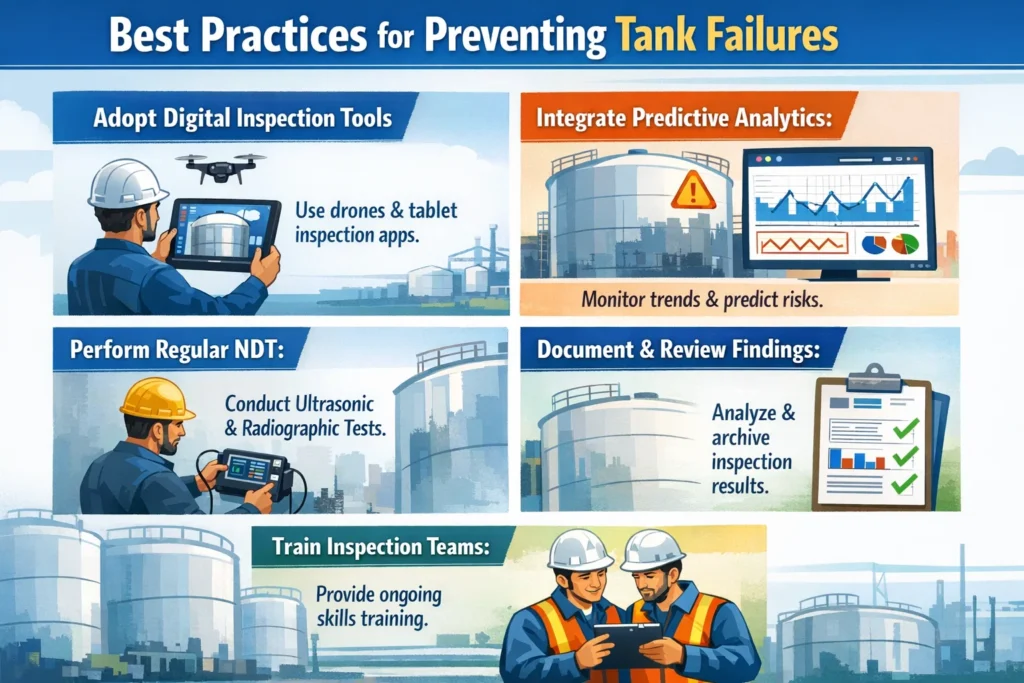
Implementing advanced inspection strategies requires a structured approach:
Real-world case studies demonstrate that advanced inspections, combined with smart inspection software like Inspectionstrack, can prevent catastrophic tank failures. Oil and gas operators benefit from improved safety, reduced downtime, and lower maintenance costs by moving from reactive to proactive inspection strategies.
By embracing digital tools, predictive analytics, and non-destructive testing, companies can protect both assets and the environment while maintaining operational excellence.
Read more : best practices for asset compliance inspections guide
Crude oil, petrochemical, water storage, and LPG tanks can all benefit from predictive inspections.
It centralizes inspection data, enables real-time monitoring, and supports predictive maintenance planning.
While initial costs may be higher, proactive inspections reduce long-term repair costs and prevent financial losses.
Frequency depends on tank type, age, and operational conditions. Regularly scheduled inspections with software tracking ensure optimal safety.
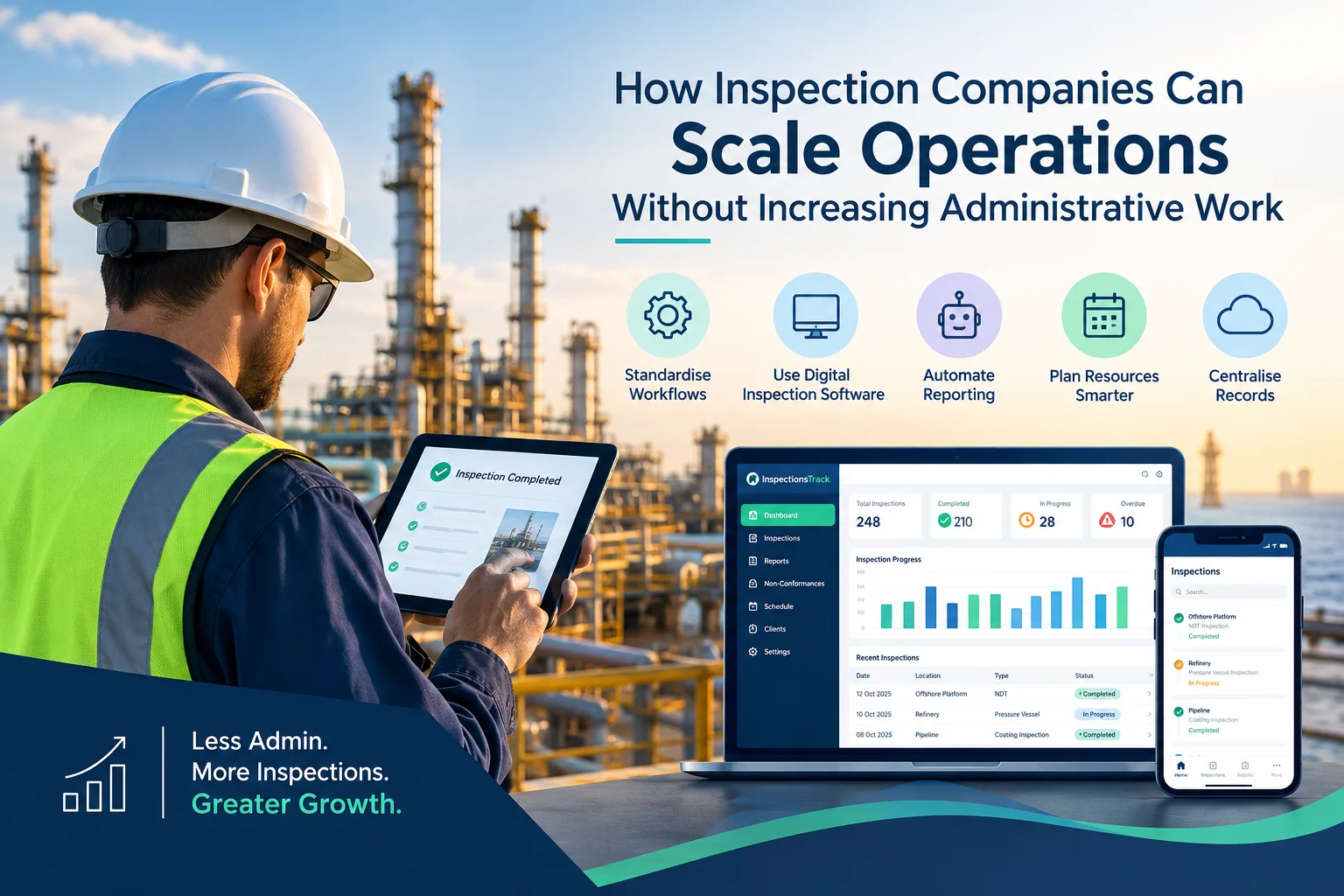
Inspection companies in the oil and gas industry face a common challenge: how to handle more inspections, manage larger projects, and meet client deadlines without increasing administrative workload. As businesses grow, inspection teams must manage…
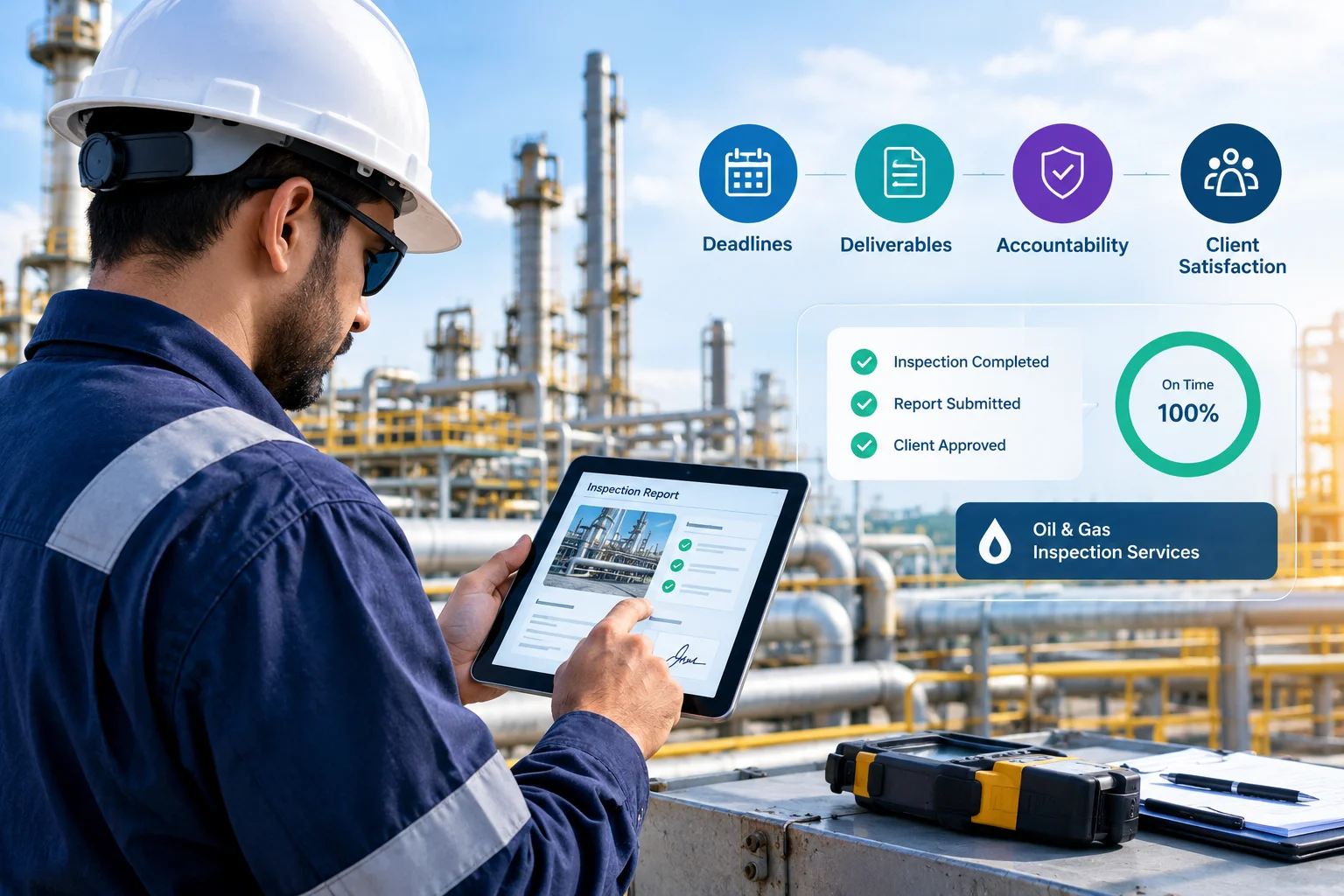
Meeting client Service Level Agreements (SLAs) is essential for inspection companies working in demanding industries such as oil and gas, energy, and industrial maintenance. Clients expect inspections to be completed on time, reports to be…


