
Large industrial facilities such as offshore platforms, refineries, petrochemical plants, LNG terminals, power stations, and drilling rigs require continuous inspections to maintain safety, reliability, and regulatory compliance. However, inspecting these assets is rarely a simple task. Different inspection disciplines often need to assess the same equipment, yet they traditionally operate independently.
As a result, companies frequently repeat access work, increase operational costs, and expose technicians to unnecessary risks.
This is where planning multi-discipline rope access inspections becomes a game changer.
Instead of sending multiple rope access teams at different times, organizations can combine several inspection disciplines into one carefully planned campaign. Consequently, they reduce downtime, improve safety, optimize manpower, and generate better inspection data.
In this guide, you’ll learn how to successfully plan integrated rope access inspections while leveraging modern inspection software like InspectionsTrack to streamline every stage of the process.
Multi-discipline rope access inspections combine several technical inspection activities during one rope access mobilization.
Rather than performing separate inspections, multiple specialists work together while accessing the same asset.
Common inspection disciplines include:
Because access is often the most expensive part of an inspection campaign, combining disciplines significantly reduces overall project costs.
Industrial assets continue operating under harsh environmental conditions.
These include:
Each facility contains thousands of assets requiring inspection throughout the year.
Without proper planning, organizations may experience:
| Challenge | Operational Impact |
|---|---|
| Duplicate rope access work | Higher labor costs |
| Poor communication | Missed defects |
| Multiple mobilizations | Increased downtime |
| Paper-based reporting | Delayed reports |
| Data silos | Limited asset history |
| Scheduling conflicts | Inspection delays |
| Manual planning | Human errors |
Therefore, integrated planning becomes essential rather than optional.
Safety remains the highest priority during rope access operations.
By reducing the number of access events, organizations significantly lower exposure to working-at-height risks.
Benefits include:
Mobilizing rope access teams is expensive.
When inspections are combined:
As a result, companies maximize the value of every mobilization.
Every shutdown affects production.
Coordinated inspection planning helps organizations:
Integrated inspections provide a complete picture of asset health.
Instead of reviewing multiple disconnected reports, engineers receive consolidated inspection records.
Consequently, maintenance decisions become more accurate.
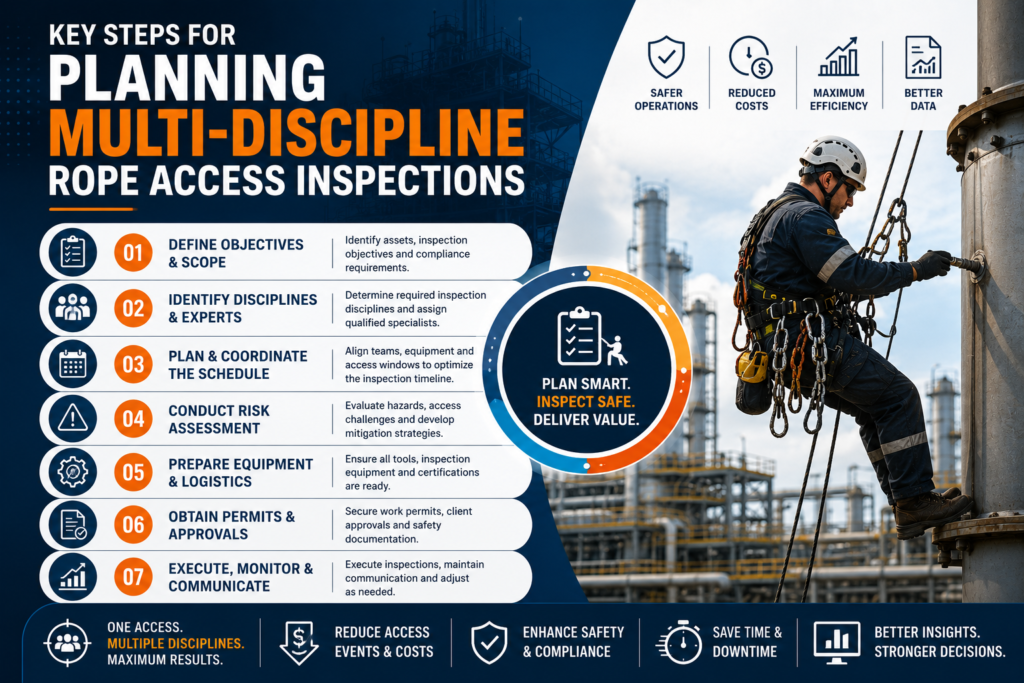
Before scheduling work, identify:
Clear objectives eliminate unnecessary work.
Not every asset carries the same level of risk.
Prioritize based on:
Risk-based planning ensures resources are allocated efficiently.
Successful campaigns require collaboration between:
Early coordination prevents scheduling conflicts.
Instead of repeatedly accessing the same structure:
This approach improves productivity throughout the project.
Paper checklists create unnecessary delays.
Digital inspection forms provide:
Therefore, inspection quality remains consistent across teams.
Modern mobile inspection software enables inspectors to:
Real-time data eliminates duplicate paperwork.
Large industrial inspections often face obstacles.
Multiple departments may compete for limited access windows.
Offshore operations frequently experience interruptions due to wind or sea conditions.
Disconnected teams may duplicate inspections or overlook critical defects.
Manual reports often delay project completion by several days.
Inspection information may be stored across multiple spreadsheets and systems.
Fortunately, digital inspection platforms solve many of these challenges.
Follow these proven practices:
These practices improve both efficiency and compliance.
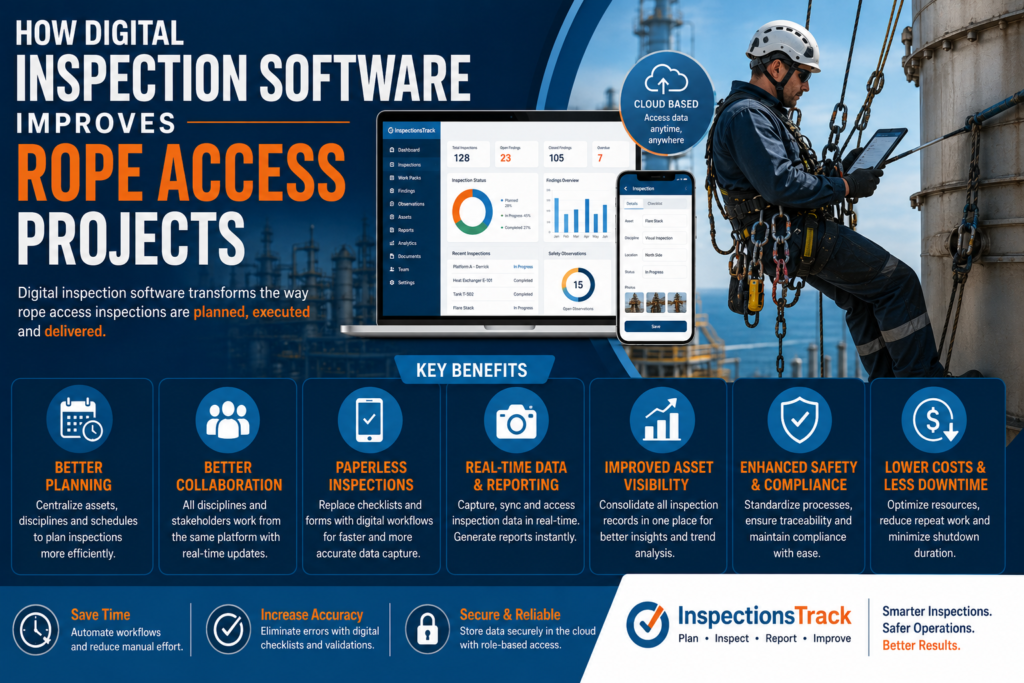
Traditional inspection methods struggle to keep pace with modern industrial operations.
Digital inspection software transforms every stage of the inspection lifecycle.
As a result, organizations reduce administrative work while improving inspection quality.
For companies operating in the oil & gas industry, inspection management requires more than basic checklist software.
InspectionsTrack is purpose-built for inspection companies performing complex industrial inspections across offshore and onshore facilities.
The platform supports a wide range of inspection activities, including:
Key capabilities include:
| Feature | Business Benefit |
|---|---|
| Mobile Inspection App | Perform inspections anywhere, even offline |
| QR Code Asset Tracking | Instantly access inspection history |
| Dynamic Report Generator | Produce professional reports in minutes |
| Digital Checklists | Standardize inspections across teams |
| Automated Workflows | Reduce manual administration |
| Asset History | View previous inspections instantly |
| Photo & Document Management | Maintain complete inspection evidence |
| Preventive Maintenance Tracking | Improve equipment reliability |
| Dashboard & Analytics | Monitor inspection performance in real time |
Because the software is designed specifically for the oil and gas inspection industry, organizations can manage thousands of assets while maintaining complete traceability and regulatory compliance.
Industrial inspections continue to evolve.
Emerging technologies include:
Organizations adopting these technologies will improve efficiency while reducing operational risk.
Read more : new dynamic final report generator in inspectionstrack
It is an inspection approach where multiple inspection disciplines such as visual inspection, NDT, corrosion assessment, and structural evaluation are completed during a single rope access campaign to improve efficiency and reduce costs.
Rope access typically requires less setup time, lowers project costs, minimizes disruption, and reduces the need for extensive scaffolding, especially in difficult-to-access industrial environments.
Digital inspection software enables inspectors to capture data in the field, work offline, attach photos, manage assets, track defects, and generate professional reports automatically.
Industries such as oil and gas, offshore energy, petrochemicals, power generation, mining, marine, and heavy manufacturing benefit the most due to the complexity and scale of their assets.
Yes. Modern platforms like InspectionsTrack can generate standardized inspection reports automatically, significantly reducing administrative effort while improving consistency and accuracy.
Planning multi-discipline rope access inspections is no longer simply a way to reduce costs—it has become a strategic approach to improving safety, operational efficiency, and asset reliability. By integrating multiple inspection disciplines into a single, well-coordinated campaign, organizations can minimize downtime, reduce repeated access, and make better-informed maintenance decisions.
Moreover, adopting a purpose-built digital solution like InspectionsTrack empowers inspection teams to manage complex oil and gas inspection projects with greater accuracy. From offline mobile inspections and QR code asset tracking to automated reporting and centralized asset histories, the platform simplifies every stage of the inspection lifecycle.
As industrial facilities continue to grow in complexity, companies that combine integrated inspection planning with modern inspection software will be better positioned to improve compliance, enhance productivity, and extend the life of critical assets.
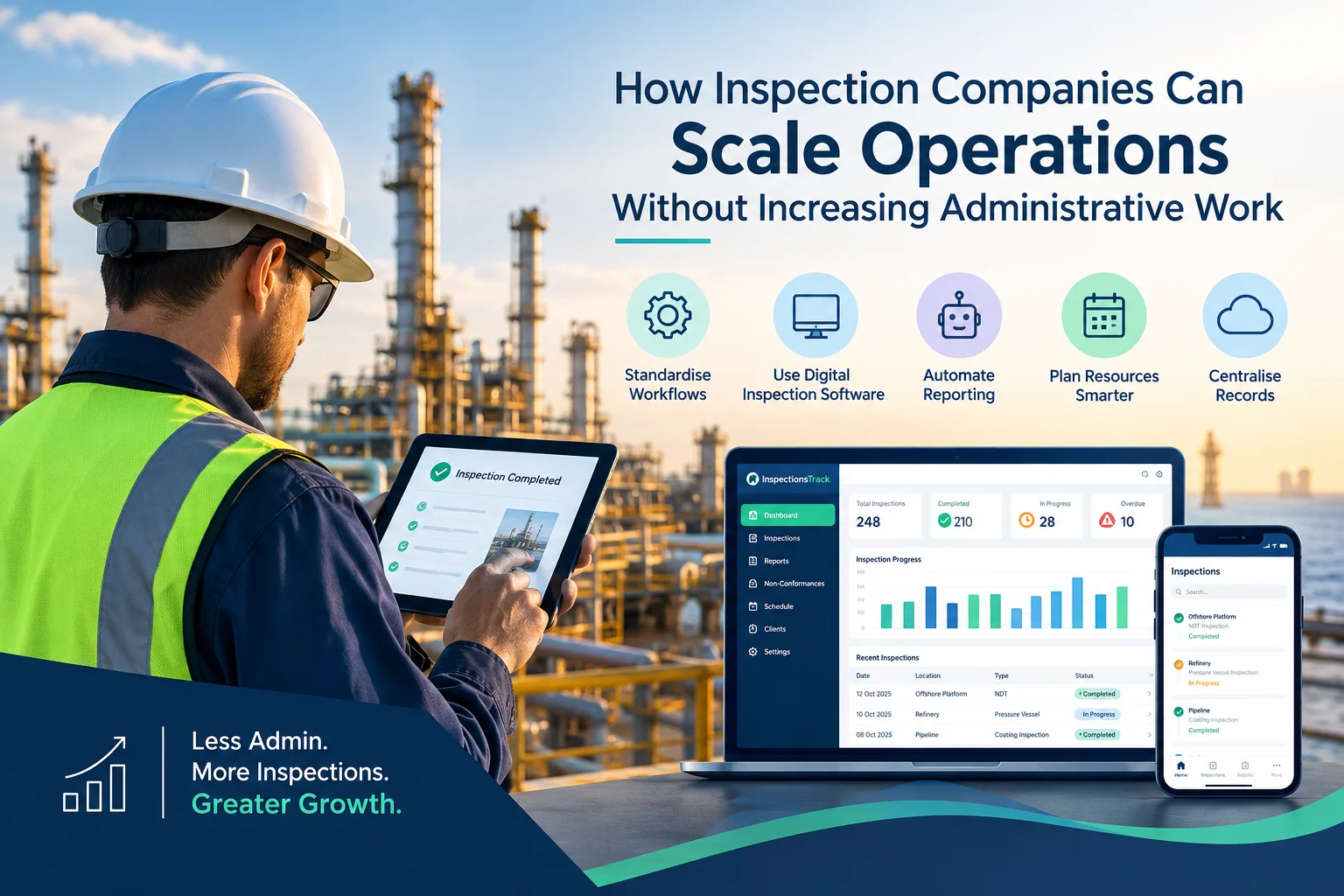
Inspection companies in the oil and gas industry face a common challenge: how to handle more inspections, manage larger projects, and meet client deadlines without increasing administrative workload. As businesses grow, inspection teams must manage…
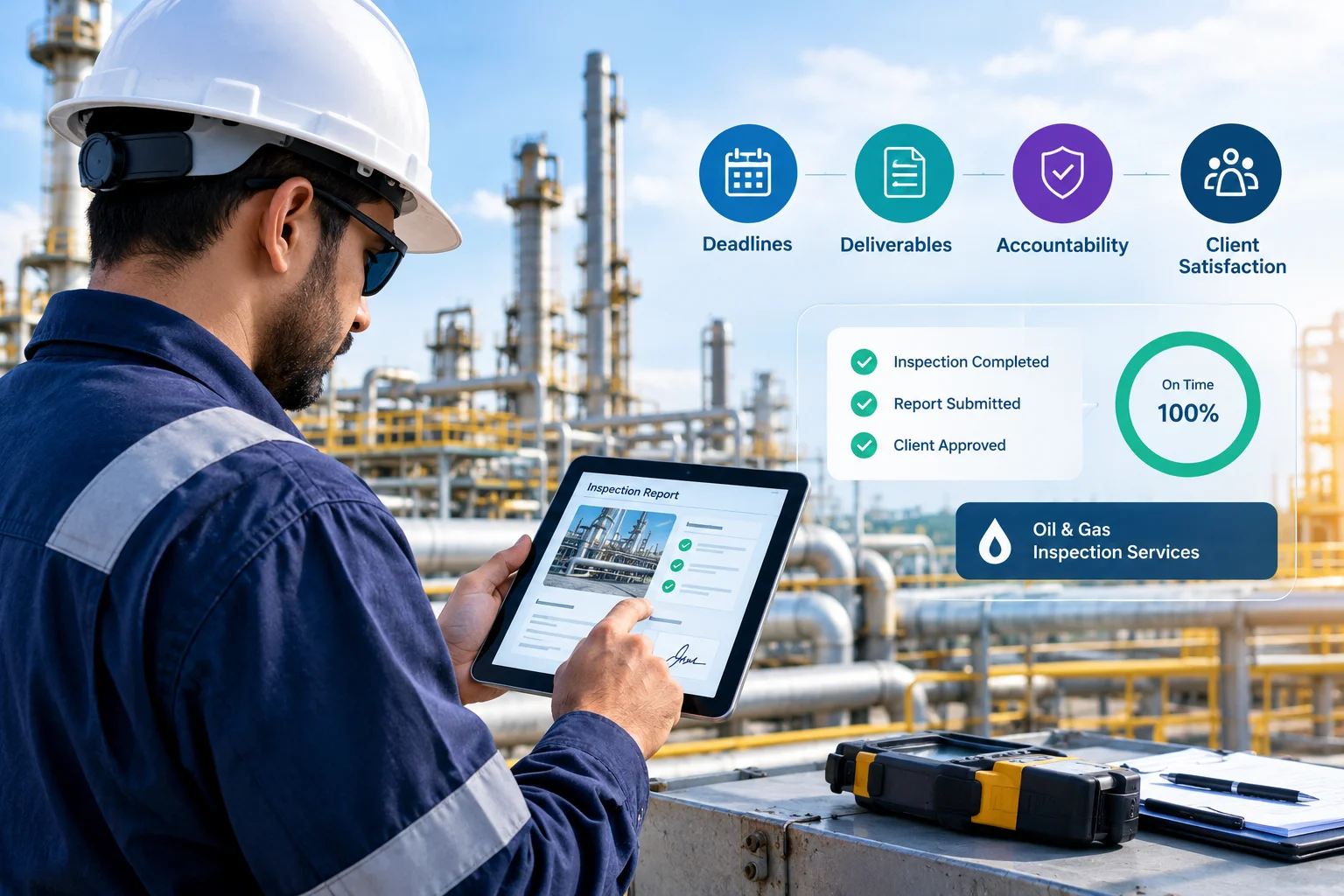
Meeting client Service Level Agreements (SLAs) is essential for inspection companies working in demanding industries such as oil and gas, energy, and industrial maintenance. Clients expect inspections to be completed on time, reports to be…


