
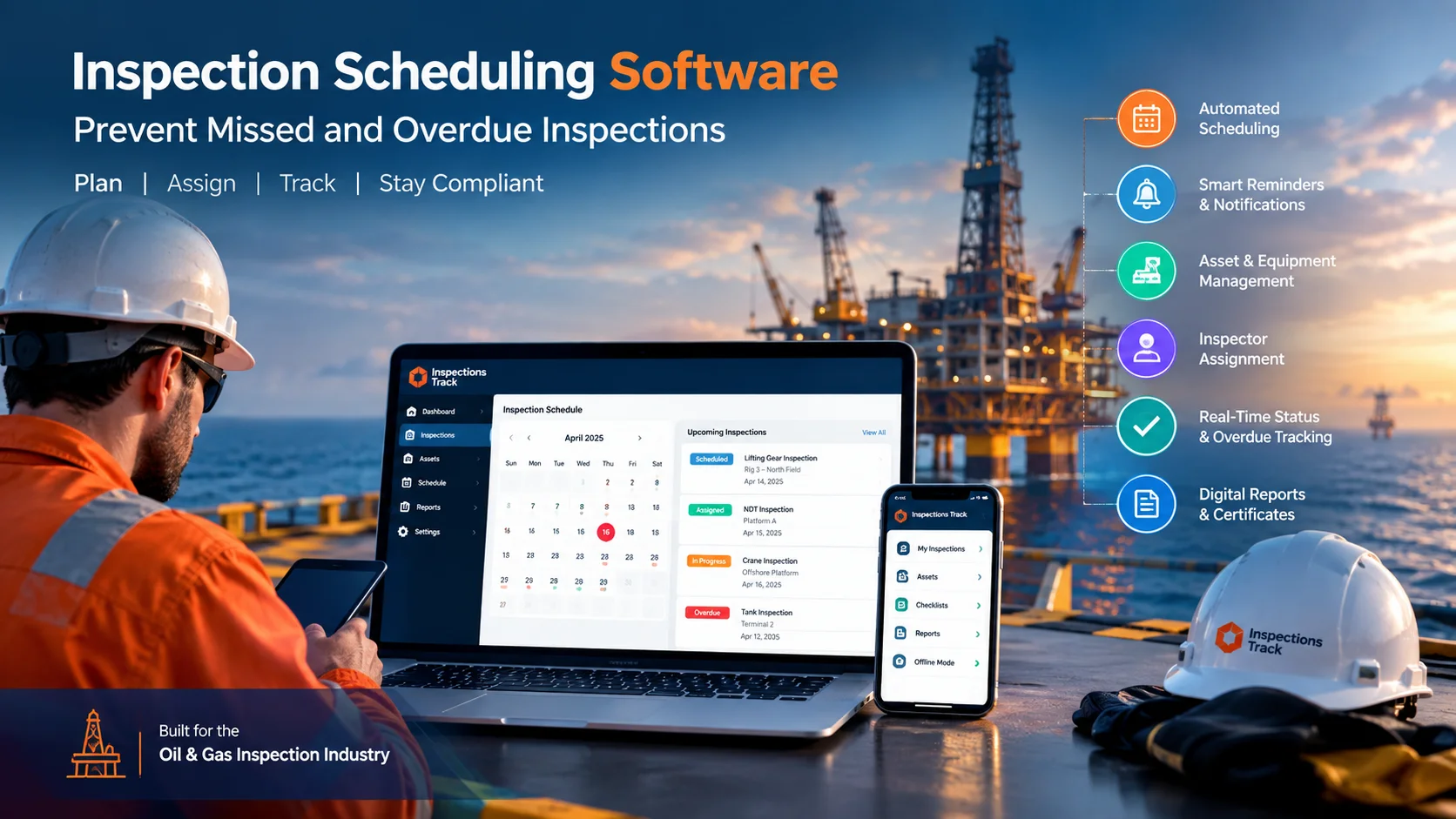
Missed and overdue inspections can create more than scheduling problems. In the oil and gas industry, delayed inspections can affect equipment availability, compliance records, maintenance planning, and operational visibility.
For inspection companies managing multiple assets, locations, inspectors, clients, and recurring inspection requirements, spreadsheets and calendar reminders can quickly become difficult to manage.
That is where inspection scheduling software can help. By centralizing inspection schedules, asset information, due dates, assignments, and reporting, inspection teams can reduce administrative work and gain better control over their inspection programs.
In this guide, we’ll explore how inspection scheduling software helps prevent missed and overdue inspections and what features inspection companies should look for.
Inspection scheduling software is a digital solution that helps organizations plan, assign, monitor, and manage inspections from a centralized system.
Instead of relying on spreadsheets, emails, paper forms, or separate calendars, teams can manage important information in one place, including:
More importantly, the system can provide visibility into upcoming, due, and overdue inspections.
An inspection schedule is more than a list of dates. It connects assets, people, inspection requirements, and operational deadlines.
For example, an oil and gas inspection company may need to manage inspections for:
When these activities are managed manually, it becomes easier for an inspection to be overlooked.
Before solving the problem, it is important to understand why inspection schedules fail.

Spreadsheets can work for smaller inspection programs. However, as the number of assets and clients increases, maintaining hundreds or thousands of inspection dates becomes difficult.
A date may be entered incorrectly, overlooked, or not updated after an inspection.
If inspectors and coordinators depend entirely on manual reminders, upcoming inspections can easily be missed.
Consequently, teams may discover an overdue inspection only after someone checks the spreadsheet.
Inspection companies often work across multiple locations and projects. Therefore, managers need to see the overall inspection workload rather than checking individual schedules.
Sometimes the schedule exists in one system while inspection forms and reports are stored somewhere else.
As a result, teams spend additional time checking whether an inspection was completed and whether the final report was issued.
Modern inspection management platforms can connect scheduling with the rest of the inspection lifecycle.
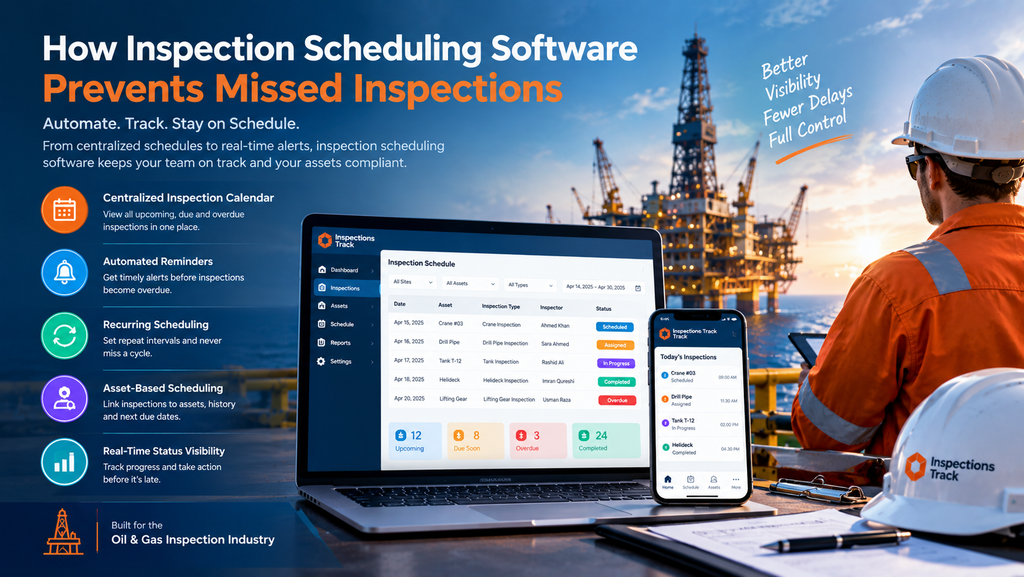
A centralized calendar gives managers a single view of upcoming and overdue inspections.
For instance, teams can organize inspections by:
This makes it easier to identify workload conflicts and upcoming deadlines.
Automated notifications can alert teams before an inspection becomes overdue.
For example, reminders can be configured around inspection due dates so that coordinators have time to assign inspectors, prepare documentation, and arrange site access.
Many oil and gas inspections are performed at defined intervals.
Rather than creating every inspection manually, scheduling software can support recurring inspection cycles.
This reduces repetitive administrative work while helping teams maintain consistent inspection schedules.
Connecting schedules directly to assets provides additional control.
Instead of simply recording:
“Crane inspection — March 15”
the system can associate the inspection with the specific crane, its inspection history, certificates, previous findings, and future due date.
This creates a clearer asset inspection history.
Managers can quickly identify whether an inspection is:
| Status | Meaning |
|---|---|
| Scheduled | Inspection has been planned |
| Assigned | Inspector has been allocated |
| In Progress | Inspection is currently being completed |
| Completed | Field inspection has been completed |
| Report Pending | Inspection is complete but reporting remains |
| Overdue | Required inspection has passed its due date |
This visibility helps teams take action before scheduling problems become operational problems.
When evaluating an inspection management system, scheduling should work together with field inspections, assets, reporting, and compliance.
Look for features such as:
The most useful solution is therefore not simply a digital calendar. It should support the complete inspection lifecycle.
Oil and gas inspection operations often involve complex assets, multiple inspection types, strict documentation requirements, and geographically distributed teams.
Therefore, inspection scheduling software should support field conditions rather than only office-based administration.
A suitable platform can help inspection companies coordinate:
Asset → Inspection Schedule → Inspector → Field Inspection → Findings → Report → Certificate → Next Due Date
This connected workflow helps reduce gaps between scheduling and inspection execution.
For field teams, offline functionality can also be important. Inspectors may need to complete inspections in locations where reliable internet connectivity is unavailable. With offline-capable inspection software, information can be captured in the field and synchronized when connectivity becomes available.
Inspections Track is an inspection management software suite designed to help inspection companies digitize and manage inspection operations, including workflows relevant to the oil and gas inspection industry.
Rather than managing schedules separately from field inspections and reporting, Inspections Track can bring key inspection activities into a centralized digital workflow.
The platform also supports mobile and offline workflows, helping field inspectors capture inspection information without depending entirely on paper-based processes.
As a result, managers can gain greater visibility from scheduled inspection to completed report.
An effective digital inspection workflow can look like this:
1. Add Asset
↓
2. Define Inspection Requirement
↓
3. Set Inspection Due Date
↓
4. Schedule & Assign Inspector
↓
5. Automated Reminder
↓
6. Complete Inspection on Mobile
↓
7. Record Findings & Corrective Actions
↓
8. Generate Inspection Report
↓
9. Update Next Inspection Due Date
This approach creates a continuous inspection cycle rather than treating every inspection as a separate administrative task.
| Manual Process | Digital Inspection Scheduling |
|---|---|
| Spreadsheet-based tracking | Centralized inspection management |
| Manual reminders | Automated notifications |
| Difficult overdue tracking | Real-time overdue visibility |
| Separate asset records | Asset-linked inspection history |
| Paper inspection forms | Digital mobile inspections |
| Manual report preparation | Faster report generation |
| Limited management visibility | Centralized dashboards |
| Higher administrative workload | Streamlined workflows |
Most importantly, digital scheduling gives inspection managers better visibility into what needs to happen, when it needs to happen, and who is responsible for it.
Software can significantly improve scheduling, but effective processes still matter.
Inspection companies should also:
Make sure every relevant asset has the correct inspection requirements and due dates.
Use dashboards or calendars to review upcoming work before inspections become urgent.
Every scheduled inspection should have a clearly assigned inspector or responsible team.
If an inspection is postponed, cancelled, or rescheduled, record the reason and establish a new due date.
An inspection should not simply disappear from the schedule after the field visit. Its report, findings, certificates, and next due date should also be tracked.
Read more : Tank Settlement Surveys: Why Foundation Monitoring Matters as Much as Shell Thickness
Inspection scheduling software helps organizations plan, assign, monitor, and track inspections while providing visibility into upcoming, completed, and overdue inspections.
It can centralize inspection schedules, provide automated reminders, track due dates, and show inspection status. Therefore, teams have greater visibility and less reliance on manual calendar or spreadsheet tracking.
Yes. Inspection management platforms can support asset-based inspection programs across areas such as lifting equipment, cranes, drill pipes, NDT, DROPS, Ex surveys, tanks, derricks, and other oil and gas inspection activities.
Platforms that support offline mobile inspections allow field teams to capture inspection information without continuous internet connectivity and synchronize data when connectivity is restored.
At minimum, organizations should consider scheduling, reminders, asset management, mobile inspections, offline capability, inspection checklists, findings, corrective actions, reporting, certificates, and management dashboards.
Missed and overdue inspections are often the result of fragmented processes rather than a lack of effort from inspection teams. When schedules, asset information, field inspections, and reporting are managed separately, important deadlines can become difficult to monitor.
Inspection scheduling software provides a more connected approach.
By combining automated scheduling, reminders, asset tracking, mobile inspections, real-time status visibility, and reporting, inspection companies can create a more structured inspection workflow.
For oil and gas inspection companies, a platform such as Inspections Track can help bring these activities together in one digital inspection management environment helping teams move from manually tracking inspection dates to managing the complete inspection lifecycle digitally.
Explore how Inspections Track can help your inspection team manage schedules, assets, field inspections, reports, and compliance workflows from one platform.
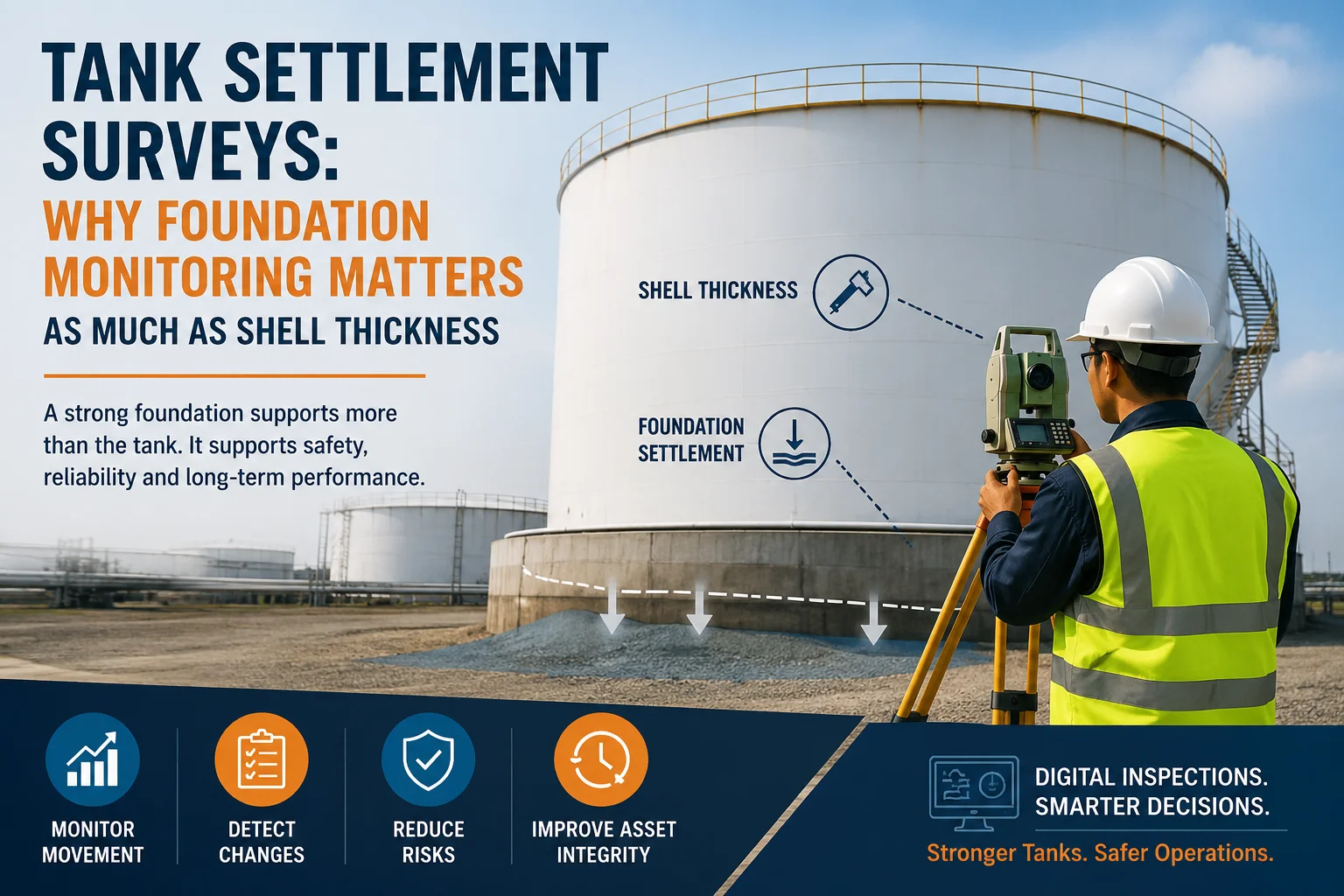
When inspecting an aboveground storage tank, shell thickness often gets the most attention. Inspectors measure corrosion, identify thinning areas, and compare results against minimum wall thickness requirements. However, tank integrity depends on more than shell…

A drilling rig derrick operates under demanding loads and harsh conditions. Therefore, confirming its structural integrity and rated capacity is essential for safe drilling operations. But how often does a derrick need to be recertified?…


