
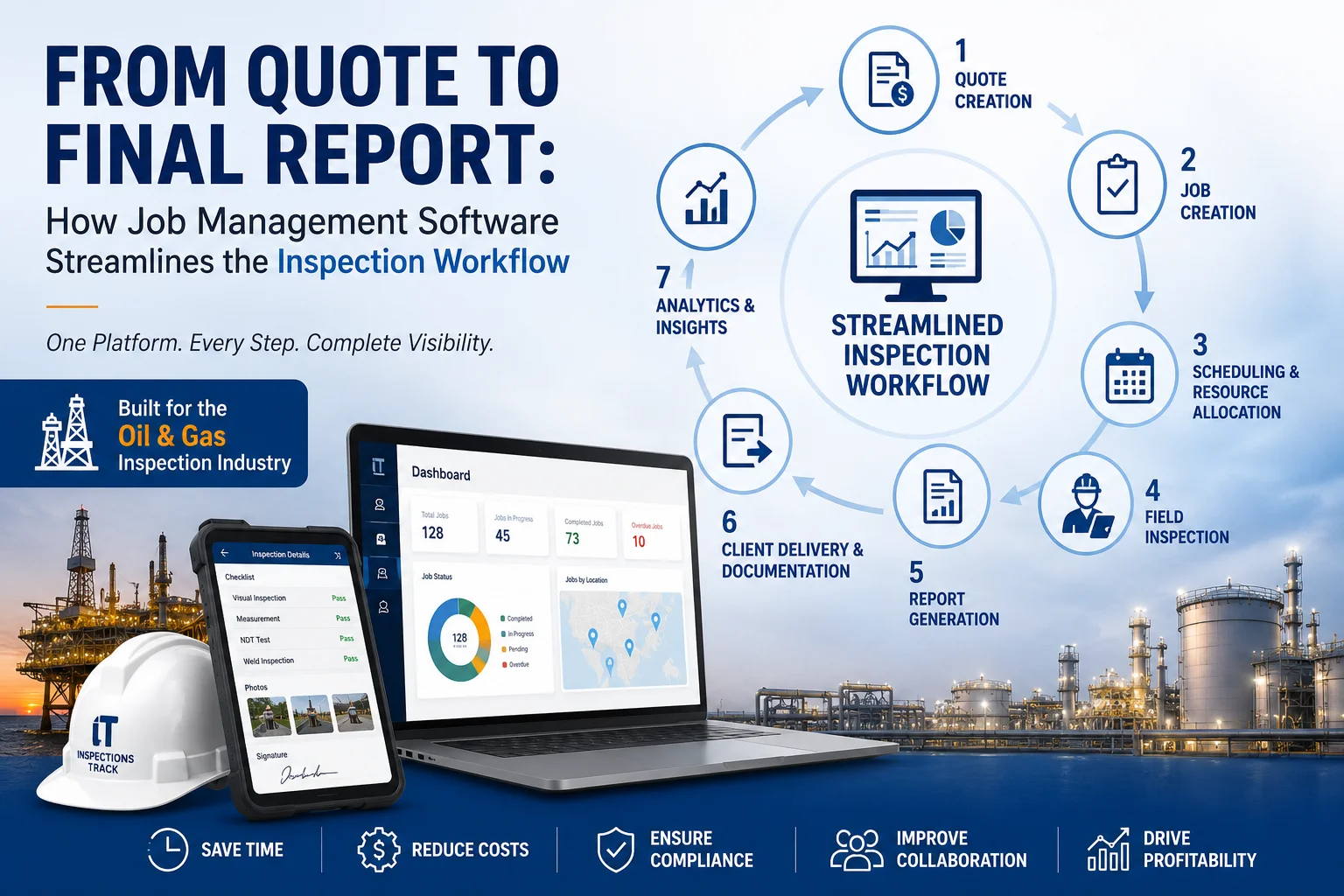
The inspection industry has evolved rapidly over the past few years. Today, inspection companies must manage multiple projects, coordinate field teams, track certifications, generate reports, and keep clients updated—all while meeting strict compliance requirements.
However, many organizations still rely on spreadsheets, emails, paper forms, and disconnected software. As a result, delays become common, communication suffers, and project profitability declines.
This is where job management software for inspection workflow transforms operations.
Instead of treating quoting, scheduling, inspections, reporting, and invoicing as separate processes, modern inspection software connects every stage into one seamless workflow.
For companies operating in the oil and gas industry, this integrated approach is no longer optional—it’s essential.
In this guide, you’ll learn how job management software streamlines the entire inspection lifecycle and why Inspections Track has become a preferred solution for inspection companies worldwide.
Many inspection companies still manage projects through multiple disconnected systems.
For example:
Although each tool performs a specific task, none of them communicate with each other.
Consequently, companies experience:
| Traditional Process | Common Challenges |
|---|---|
| Manual quoting | Slow approvals and pricing errors |
| Separate scheduling | Double bookings and resource conflicts |
| Paper inspections | Missing information and delayed reporting |
| Manual report creation | Inconsistent formatting and longer turnaround times |
| Email communication | Lost information and poor visibility |
| Spreadsheet tracking | Limited project oversight |
| Manual invoicing | Billing delays and revenue leakage |
Ultimately, teams spend more time managing administration than completing inspections.
Job management software is a centralized platform that manages every stage of an inspection project—from the initial client inquiry to the final inspection report and project completion.
Instead of switching between different applications, users work within one connected system.
Typical capabilities include:
Most importantly, every department works from the same real-time information.
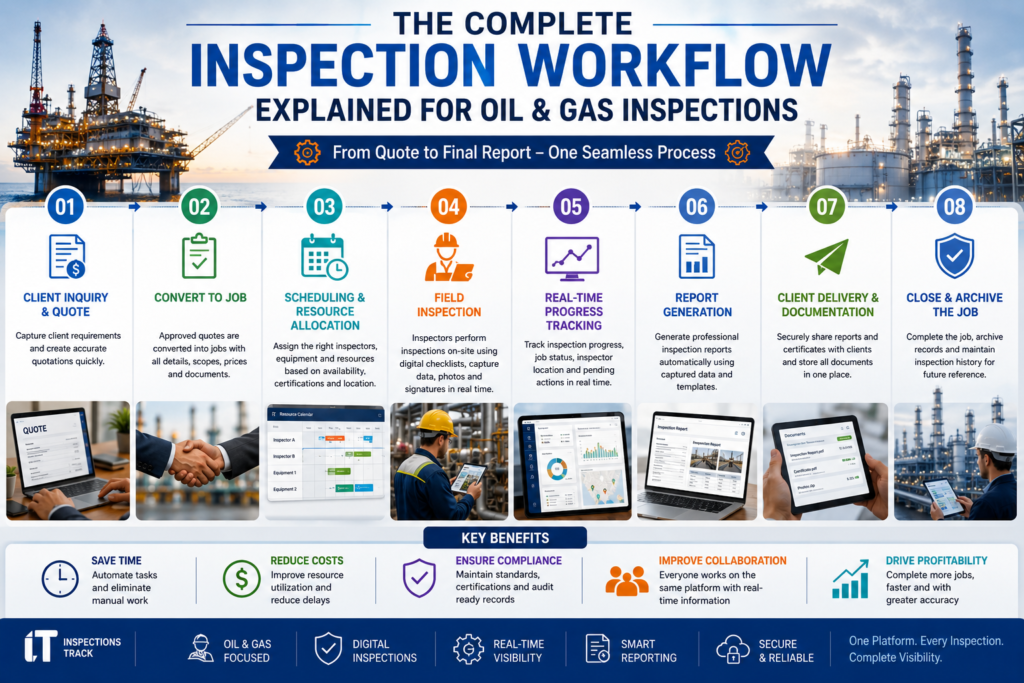
Every inspection project starts with a client request.
Without automation, creating quotations often involves:
This process consumes valuable administrative time.
With job management software, quotation templates automatically populate project details, pricing structures, inspection scopes, and client information.
As a result:
Once a client approves the quotation, many companies manually recreate the project inside another system.
This duplication increases the risk of errors.
Modern inspection management software eliminates this problem.
Instead, approved quotes instantly become active jobs.
The system automatically transfers:
Therefore, teams avoid repetitive data entry while improving accuracy.
Scheduling inspectors is often one of the biggest operational challenges.
Managers must consider:
Without centralized planning, scheduling conflicts become inevitable.
Job management software simplifies this process by providing:
Consequently, projects begin on time with the right personnel.
Once inspectors arrive on-site, they need immediate access to project information.
Instead of carrying paper documents, inspectors use mobile devices to access:
Moreover, digital forms ensure standardized inspections across every project.
Benefits include:
Project managers often struggle to answer one simple question:
“Where does this inspection currently stand?”
Without centralized software, obtaining this information requires multiple phone calls and emails.
Job management software solves this by providing live dashboards.
Managers can instantly view:
As a result, decision-making becomes much faster.
Inspection reporting is one of the most time-consuming parts of the workflow.
Engineers often spend hours formatting documents rather than analyzing findings.
Modern inspection software automatically generates reports using:
Therefore, reports are produced more quickly while maintaining consistency.
After approval, reports can be securely shared with clients.
Instead of searching through folders, every project document remains linked to the inspection record.
Clients receive:
Additionally, organizations maintain complete audit trails.
| Department | Benefits |
|---|---|
| Sales | Faster quotations and improved conversion rates |
| Operations | Better scheduling and resource utilization |
| Inspectors | Mobile inspections and less paperwork |
| Project Managers | Real-time project visibility |
| QA/QC Teams | Standardized reporting and compliance |
| Finance | Faster billing and improved cash flow |
| Management | Better reporting and operational insights |
Oil and gas inspections involve strict regulations, remote locations, specialized equipment, and highly qualified inspectors.
Therefore, operational efficiency directly impacts profitability.
Job management software helps organizations manage:
Furthermore, digital workflows improve traceability throughout every inspection.
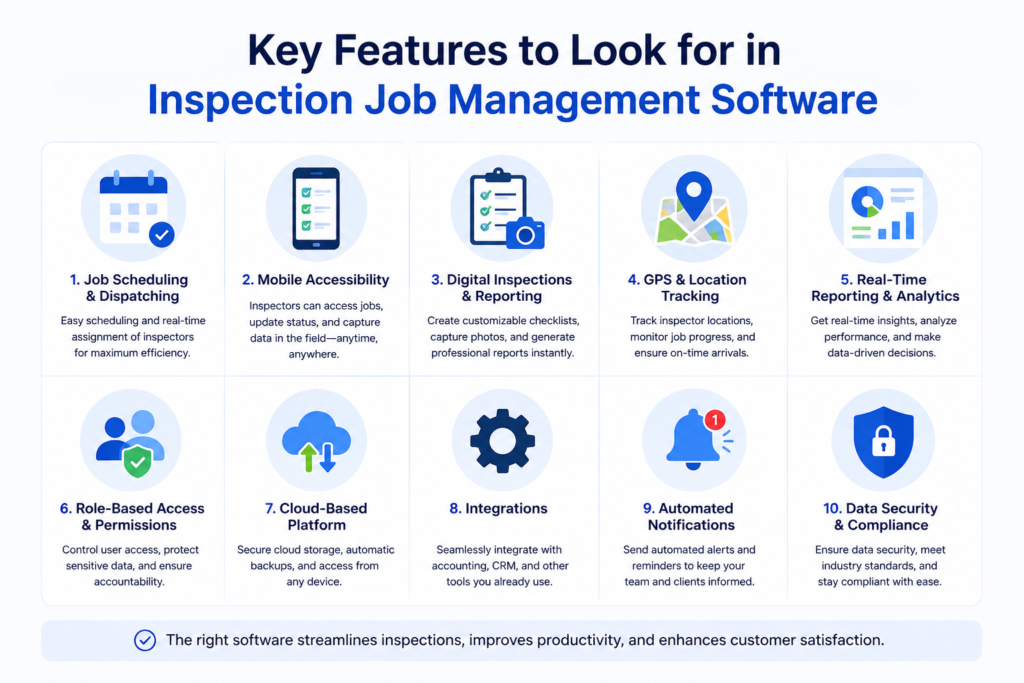
When evaluating solutions, consider software that offers:
Unlike generic project management software, Inspections Track is specifically developed for inspection companies operating in the oil and gas industry.
The platform connects every stage of an inspection project into one integrated system.
With Inspections Track, organizations can:
From quotation through project completion, every activity remains connected.
Assign inspectors, equipment, vehicles, and assets using centralized scheduling tools.
Inspectors can complete inspections digitally using standardized templates while capturing photos, signatures, and inspection data in real time.
Automatically convert inspection findings into consistent, client-ready reports.
Managers can monitor project status, inspector productivity, equipment utilization, and business performance through interactive dashboards.
Inspections Track includes specialized modules for:
By combining these capabilities, the platform helps inspection companies reduce administrative work while improving efficiency, compliance, and customer satisfaction.
Organizations implementing modern job management software often experience:
| Business Outcome | Operational Impact |
|---|---|
| Faster quote turnaround | Improved win rates |
| Better scheduling | Higher inspector utilization |
| Digital inspections | Reduced paperwork |
| Automated reports | Faster project completion |
| Centralized data | Better decision-making |
| Improved compliance | Lower audit risk |
| Real-time dashboards | Greater operational visibility |
| Standardized processes | Consistent service quality |
To maximize the value of inspection job management software:
These practices help organizations achieve faster adoption and long-term operational improvements.
Job management software helps inspection businesses manage quotations, scheduling, field inspections, reporting, documentation, and project tracking within one centralized platform.
Oil and gas inspections require strict compliance, detailed documentation, and efficient coordination of personnel and equipment. Job management software improves visibility, reduces manual work, and supports regulatory requirements.
Yes. Modern inspection software can generate professional reports using predefined templates, captured inspection data, photos, and digital signatures, significantly reducing reporting time.
Absolutely. It enables managers to assign inspectors based on availability, certifications, location, equipment, and project priorities while preventing scheduling conflicts.
Yes. Inspections Track is purpose-built for the oil and gas inspection industry and supports workflows for crane inspections, NDT, EX surveys, derrick surveys, preventive maintenance, mobilization planning, RFID asset tracking, and digital reporting.
Managing inspection projects through disconnected spreadsheets, emails, and paper forms no longer meets the demands of today’s inspection industry. As client expectations rise and compliance requirements become more stringent, businesses need a unified solution that connects every stage of the workflow.
Job management software transforms the inspection process by eliminating repetitive tasks, improving collaboration, increasing visibility, and accelerating report delivery. From the initial quote to the final client report, every step becomes faster, more accurate, and easier to manage.
For organizations in the oil and gas sector, Inspections Track delivers an industry-focused platform that streamlines operations, enhances compliance, and empowers teams to complete inspections more efficiently. By adopting a centralized inspection management system, companies can reduce administrative overhead, improve project profitability, and deliver a superior client experience.
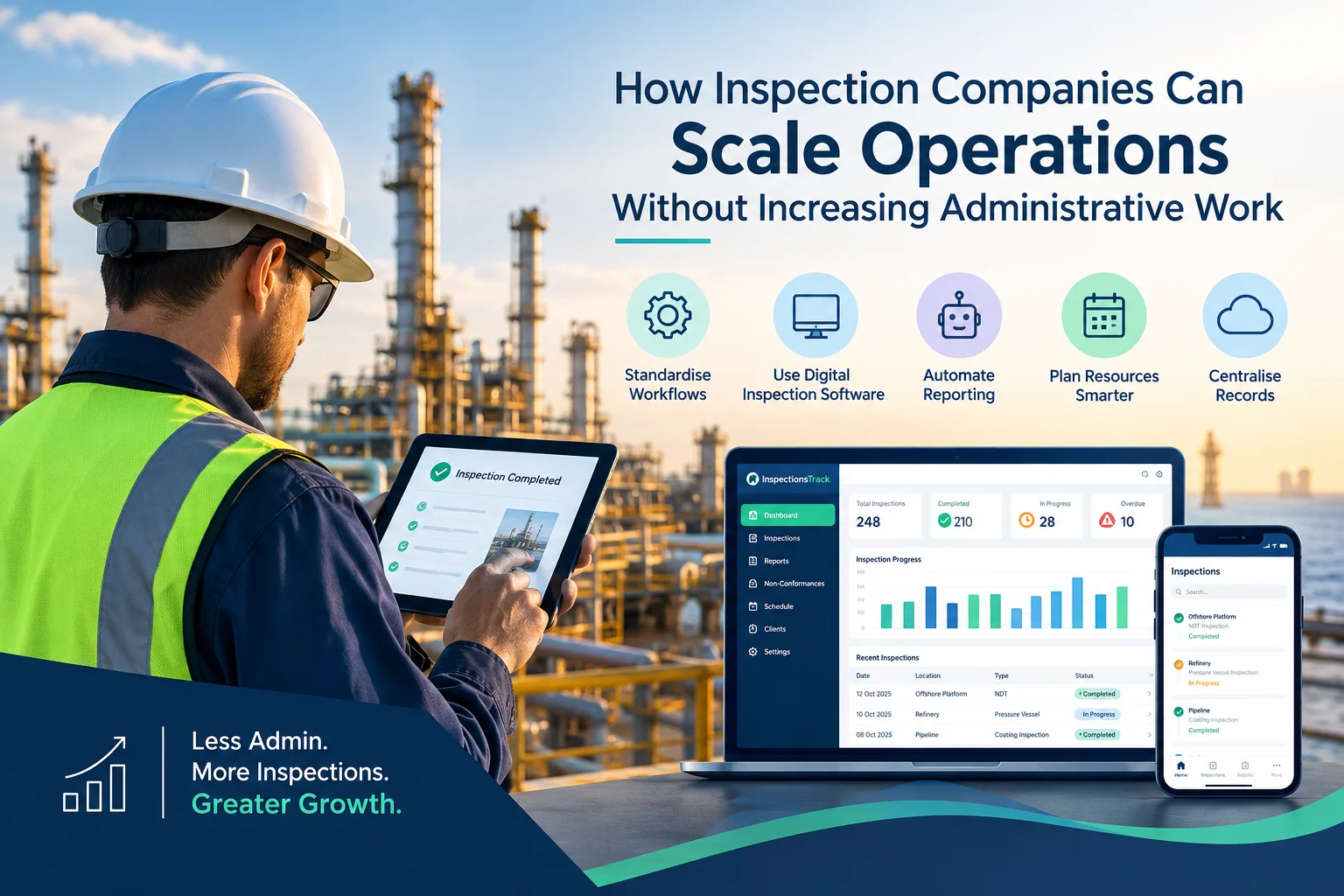
Inspection companies in the oil and gas industry face a common challenge: how to handle more inspections, manage larger projects, and meet client deadlines without increasing administrative workload. As businesses grow, inspection teams must manage…

Meeting client Service Level Agreements (SLAs) is essential for inspection companies working in demanding industries such as oil and gas, energy, and industrial maintenance. Clients expect inspections to be completed on time, reports to be…


