
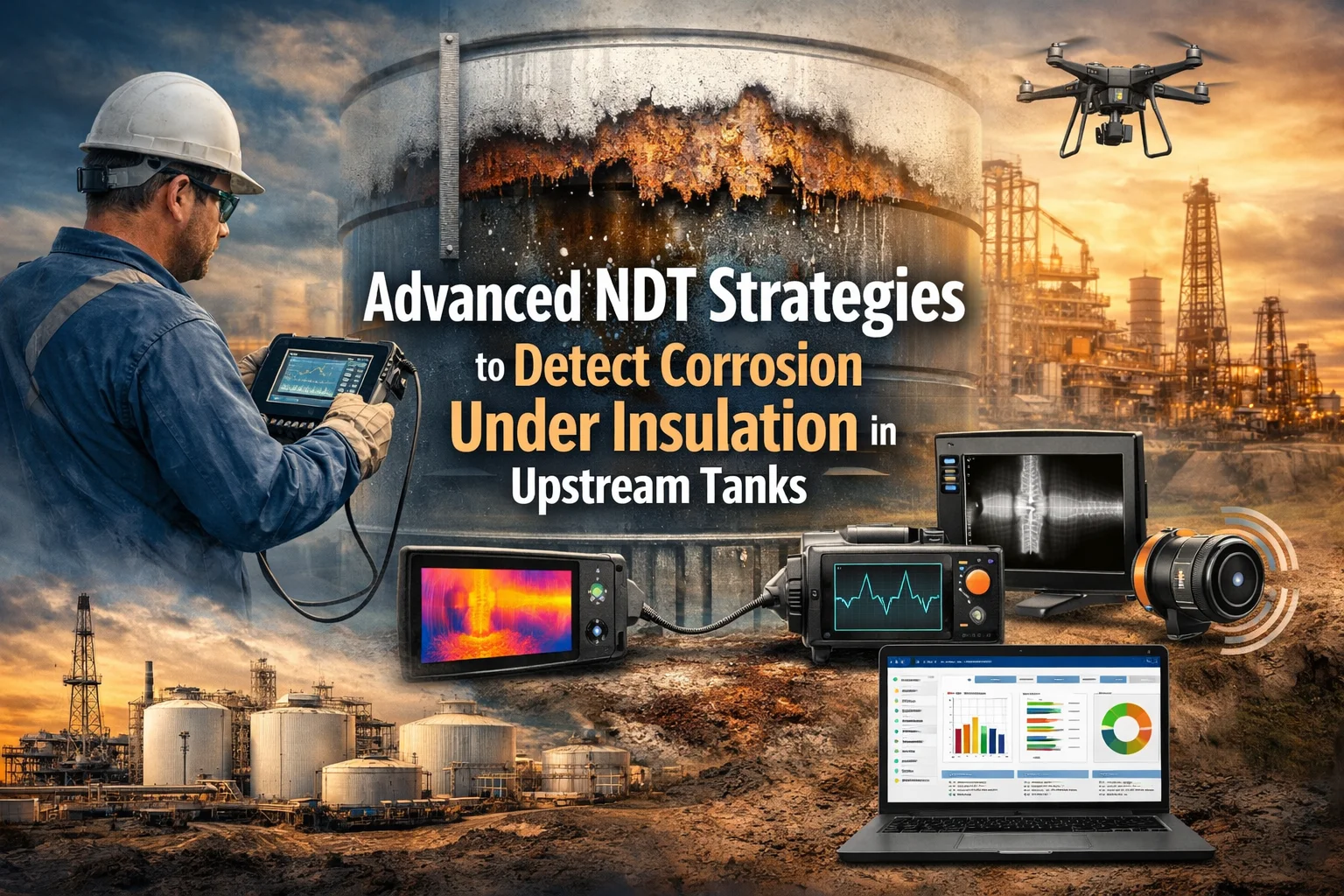
Corrosion Under Insulation (CUI) is one of the most costly and difficult-to-detect challenges in upstream oil and gas operations. Because it develops beneath insulation layers, it often goes unnoticed until severe damage occurs. However, with advanced Non-Destructive Testing (NDT) strategies, operators can now detect early-stage corrosion, reduce downtime, and ensure compliance.
In this guide, we’ll explore cutting-edge NDT techniques, best practices, and how digital inspection tools like Inspectionstrack software can transform your corrosion management strategy.
CUI occurs when moisture becomes trapped between insulation and metal surfaces, leading to corrosion over time. It is especially common in:
Therefore, adopting advanced NDT inspection methods is critical for early detection and mitigation.
Before diving into solutions, it’s important to understand why CUI is so difficult to identify:
As a result, companies need non-invasive and highly accurate NDT strategies.
Modern inspection technologies have significantly improved detection capabilities. Let’s explore the most effective methods.
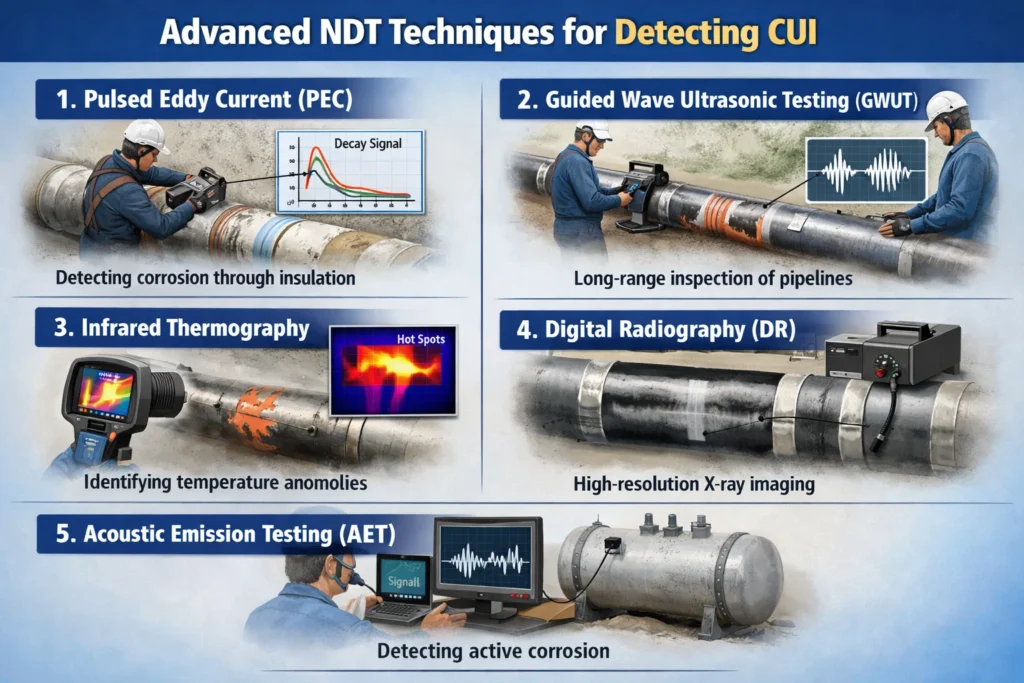
Pulsed Eddy Current is widely used for detecting corrosion through insulation without removal.
Benefits:
Best Use Case:
Upstream storage tanks with thick insulation layers.
This technique sends ultrasonic waves along the structure to detect anomalies.
Advantages:
Thermal imaging identifies temperature variations caused by moisture and corrosion.
Why it works:
However, it works best when combined with other NDT methods for accuracy.
Digital radiography provides detailed internal images of the tank structure.
Key Features:
This method detects sound waves generated by active corrosion processes.
Use Cases:
| Technique | Insulation Removal Required | Coverage Area | Accuracy Level | Best For |
|---|---|---|---|---|
| Pulsed Eddy Current (PEC) | No | Medium | High | Thick insulation tanks |
| Guided Wave UT | No | Large | Medium-High | Long pipelines & tank walls |
| Infrared Thermography | No | Large | Medium | Moisture detection |
| Digital Radiography | Partial | Small | Very High | Detailed internal analysis |
| Acoustic Emission Testing | No | Very Large | Medium | Real-time monitoring |
Detecting CUI is only half the battle. You also need a proactive mitigation strategy.
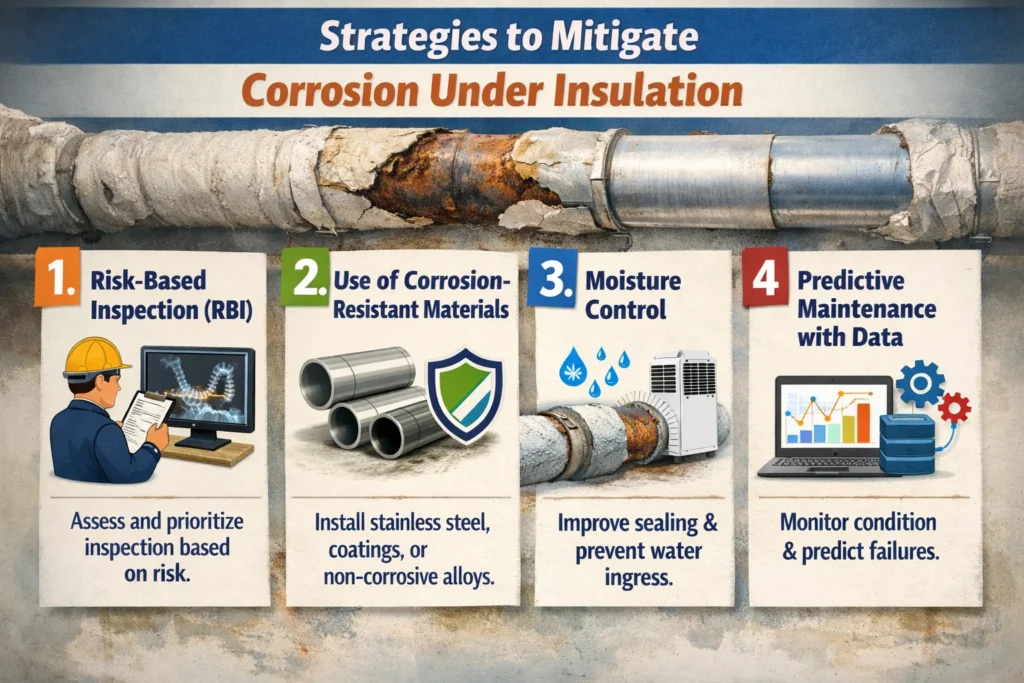
First, prioritize high-risk areas based on:
Next, upgrade materials where possible:
Since moisture is the root cause of CUI:
Moreover, data-driven insights allow you to:
While advanced NDT tools are essential, digital inspection management platforms take efficiency to the next level.
Inspectionstrack is specifically designed for the oil and gas industry, helping companies streamline inspection workflows.
Key Benefits:
As a result, organizations can move from reactive to predictive maintenance strategies.
To maximize effectiveness, follow these proven practices:
Even with advanced tools, mistakes can reduce effectiveness:
Therefore, a holistic approach combining NDT + software + strategy is essential.
Looking ahead, the industry is rapidly evolving:
These innovations will further improve accuracy, safety, and cost efficiency.
Corrosion Under Insulation remains a serious threat in upstream tank operations. However, with advanced NDT strategies like PEC, GWUT, thermography, and acoustic emission testing, companies can detect issues early and act proactively.
Moreover, when combined with Inspectionstrack software, businesses gain full visibility, better control, and improved compliance across their inspection processes.
Ultimately, investing in the right technology and strategy not only protects your assets but also ensures long-term operational efficiency and safety.
Read more : roof to foundation tank leak detection audits guide
Pulsed Eddy Current (PEC) is considered one of the most effective methods because it can measure wall thickness through insulation without removal. However, combining multiple techniques like infrared thermography and guided wave ultrasonic testing provides more accurate results.
Inspection frequency depends on risk factors such as operating temperature, environment, and insulation type. A risk-based inspection (RBI) approach is recommended, where high-risk assets are inspected more frequently to prevent failures.
Digital tools like Inspectionstrack software centralize inspection data, track corrosion trends, and automate reporting. This helps teams detect issues earlier, improve decision-making, and ensure compliance with industry standards.
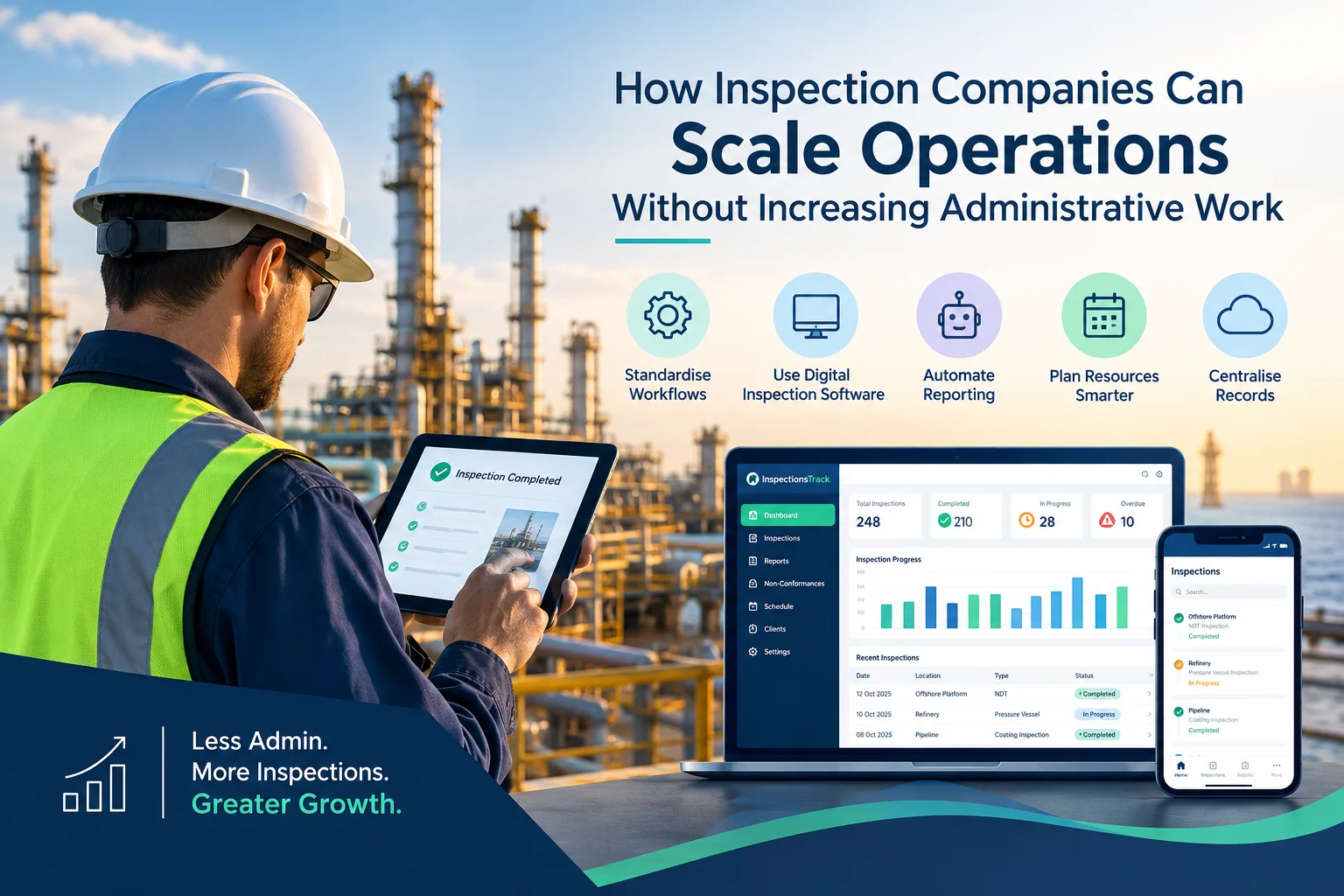
Inspection companies in the oil and gas industry face a common challenge: how to handle more inspections, manage larger projects, and meet client deadlines without increasing administrative workload. As businesses grow, inspection teams must manage…
Meeting client Service Level Agreements (SLAs) is essential for inspection companies working in demanding industries such as oil and gas, energy, and industrial maintenance. Clients expect inspections to be completed on time, reports to be…


