
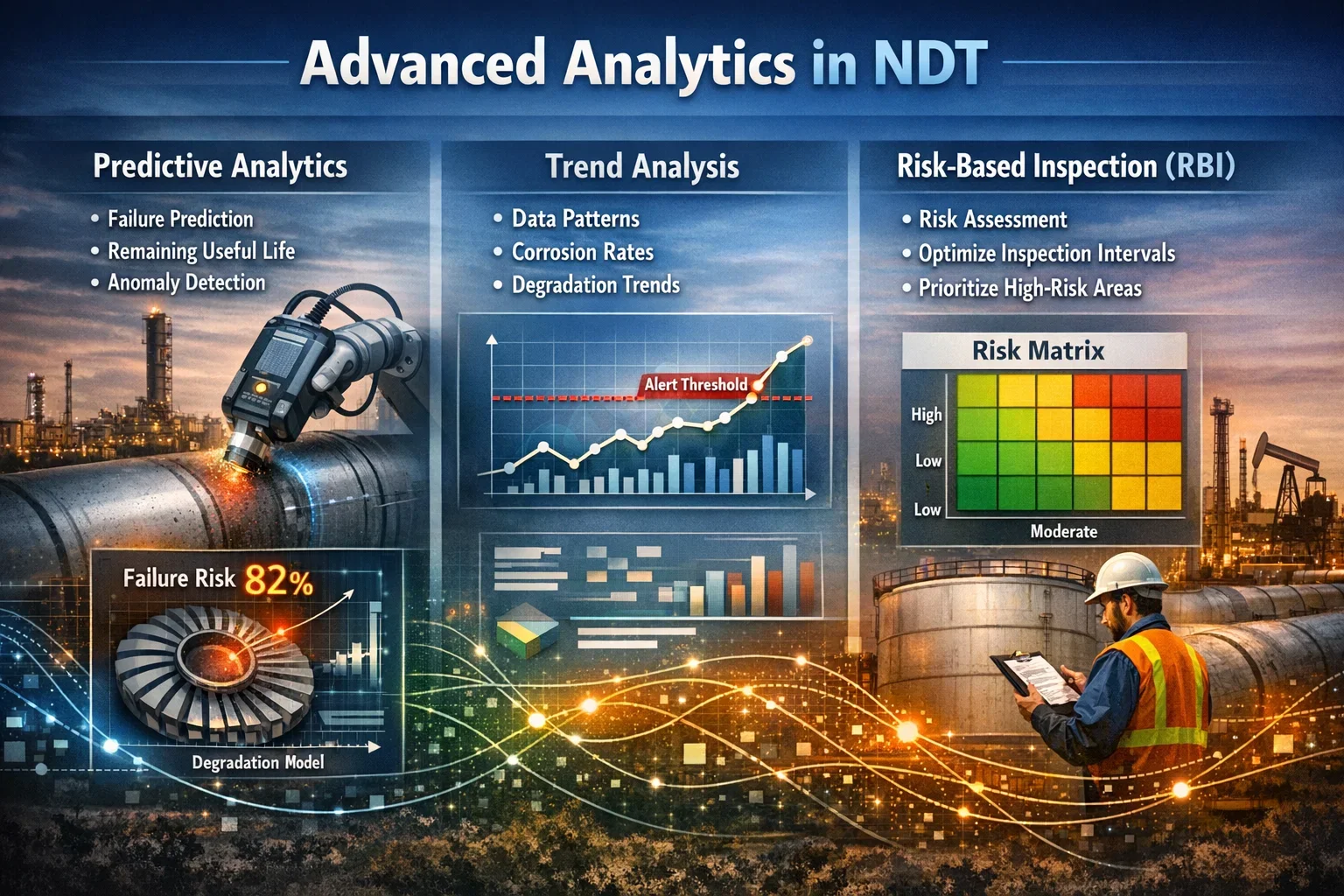
Non-Destructive Testing (NDT) plays a critical role in ensuring the safety, reliability, and compliance of assets in industries like oil and gas. However, simply collecting inspection data is not enough. NDT data analysis is what turns raw inspection results into meaningful insights that drive smarter decisions.
In this guide, we’ll explore how NDT data analysis works, why it matters, and how modern tools like Inspection Track software help streamline the entire process.
NDT data analysis refers to the process of collecting, organizing, interpreting, and visualizing inspection data gathered through non-destructive testing methods such as:
By analyzing this data, companies can detect defects early, predict failures, and ensure compliance with safety standards.
First of all, NDT data analysis improves asset reliability. Secondly, it enhances safety and compliance. Moreover, it helps reduce costly downtime.
As a result, businesses can move from reactive maintenance to a predictive maintenance strategy.
Different NDT methods generate different types of data. Therefore, understanding these data types is essential for effective analysis.
| NDT Method | Data Type | Purpose |
|---|---|---|
| Ultrasonic Testing | Thickness measurements | Detect corrosion & thinning |
| Radiographic Testing | Image data | Identify internal defects |
| Magnetic Particle Test | Surface defect indicators | Detect cracks |
| Dye Penetrant Testing | Visual inspection results | Identify surface flaws |
Consequently, combining these datasets provides a comprehensive view of asset health.
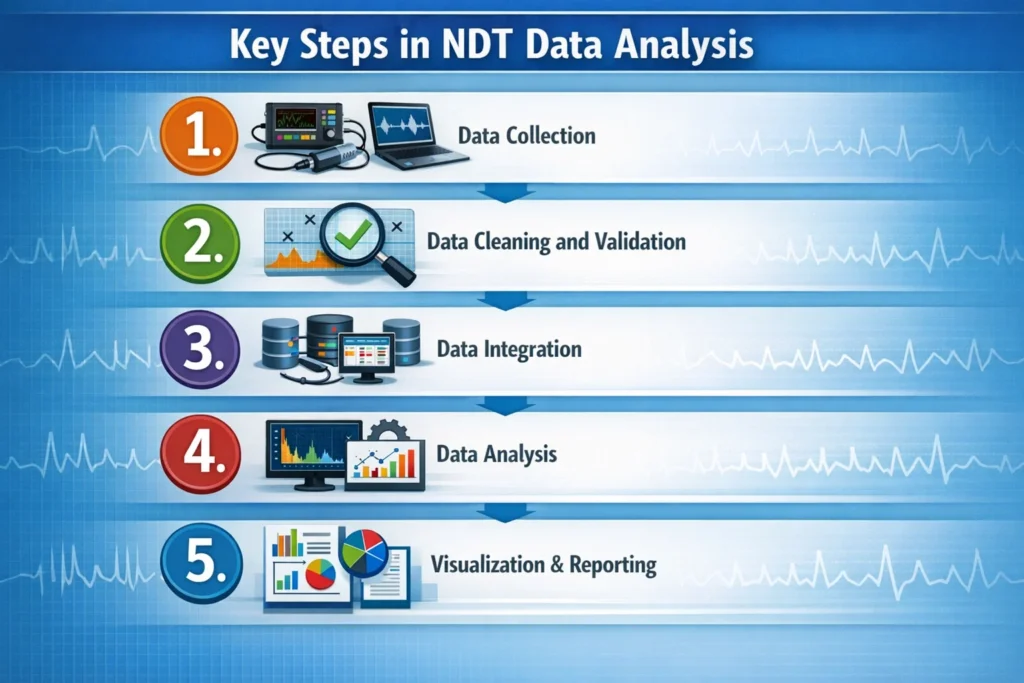
Initially, inspectors gather data using various NDT techniques. However, manual collection often leads to errors.
Next, the data is cleaned to remove inconsistencies. This step ensures accuracy before analysis.
After that, data from multiple sources is combined into a centralized system.
Then, advanced analytics are applied to identify trends, anomalies, and risks.
Finally, dashboards and reports present insights in an easy-to-understand format.
Although NDT is essential, traditional methods often come with limitations:
Therefore, many companies struggle to fully utilize their inspection data.
Modern solutions like Inspection Track software for oil and gas inspections solve these challenges effectively.
As a result, inspectors and managers can access accurate data anytime, anywhere.
Today, companies are going beyond basic analysis. In addition, they are adopting advanced techniques such as:
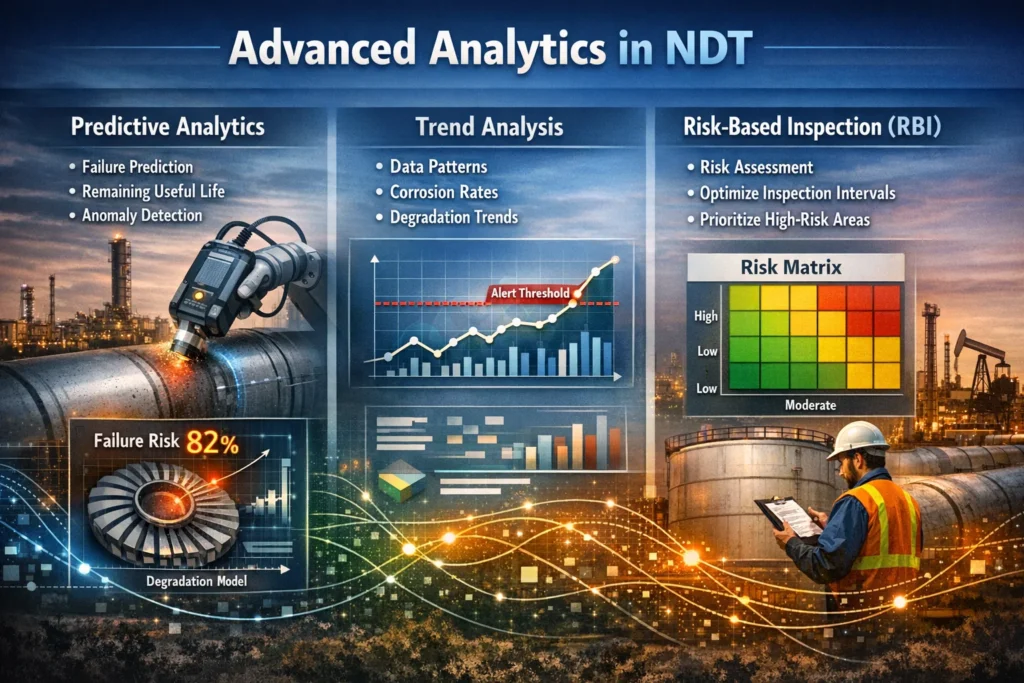
Therefore, advanced analytics significantly improves operational efficiency.
To maximize results, follow these best practices:
Moreover, integrating NDT data with enterprise systems further enhances insights.
In the oil and gas sector, inspection accuracy is critical. That is why Inspection Track software is designed specifically to handle complex inspection workflows.
Consequently, companies can ensure 100% visibility and control over inspections.
Looking ahead, NDT data analysis will continue to evolve. For instance:
Thus, organizations that adopt these technologies will gain a competitive advantage.
In conclusion, NDT data analysis is no longer optional it is essential for modern industrial operations. While traditional methods fall short, advanced solutions like Inspection Track software enable faster, smarter, and more accurate analysis.
Ultimately, by leveraging data effectively, businesses can improve safety, reduce downtime, and make better decisions.
Read more : ex inspection regulations and frequency requirements
The main goal is to identify defects, predict failures, and improve asset reliability using inspection data.
It automates data collection, centralizes information, and provides real-time insights through dashboards and analytics.
Industries like oil & gas, manufacturing, aerospace, and construction benefit significantly from NDT data analysis.

In hazardous environments such as oil and gas facilities, safety is not optional—it is regulated. Ex inspections (Explosion Protection Inspections) ensure that electrical and mechanical equipment installed in explosive atmospheres remains safe, compliant, and operational….
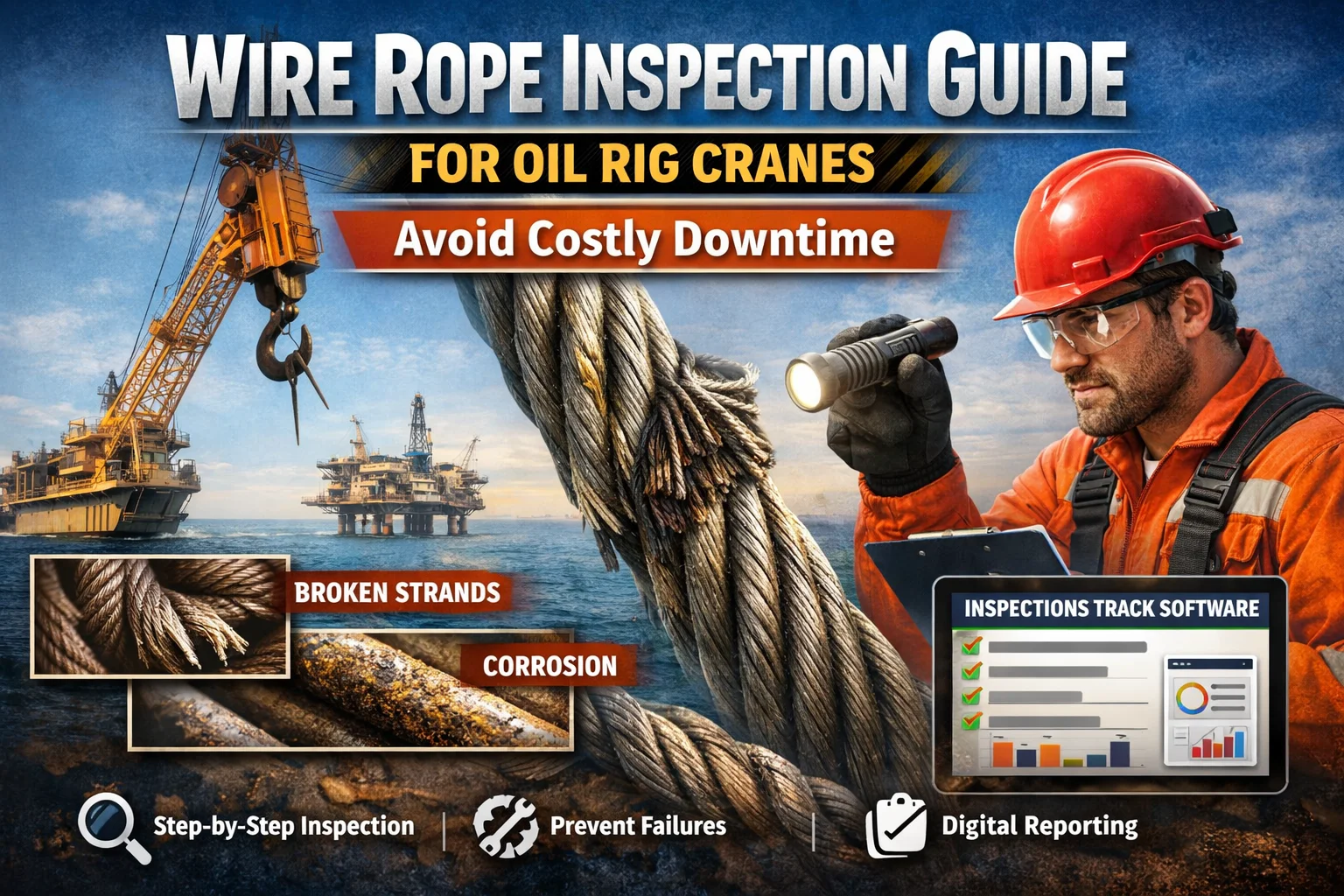
Wire ropes are the backbone of oil rig crane operations. However, when they fail, the consequences can be severe—ranging from costly downtime to serious safety risks. That’s why a structured wire rope inspection process is…


