
In the high-risk environment of oil and gas operations, derrick inspections are not just a routine task—they are a critical safety and compliance requirement. From traditional visual checks to advanced data-driven analytics, modern derrick inspection processes are evolving rapidly. Therefore, mastering these inspections is essential for maintaining structural integrity, ensuring worker safety, and optimizing operational performance.
In this guide, we’ll explore best practices, advanced inspection strategies, and how digital tools like Inspection Track software are transforming derrick inspections in the oil and gas industry.
Derricks are exposed to extreme environmental conditions, heavy loads, and continuous operational stress. As a result, regular inspections are vital to:
Moreover, a well-structured inspection program directly contributes to operational safety and risk mitigation.
Visual inspections are the first line of defense. Inspectors examine visible components to detect:
Although visual inspections are essential, they should be supported by advanced testing methods for deeper insights.
NDT techniques help detect hidden defects without damaging the structure. Common methods include:
These methods ensure internal integrity and provide more reliable inspection results.
Load testing evaluates how derrick structures perform under operational stress. Consequently, it helps verify whether the structure can safely handle the required load limits.
| Inspection Approach | Key Features | Limitations | Benefits |
|---|---|---|---|
| Traditional Inspections | Manual recording, visual checks | Prone to human error | Simple and quick |
| Digital Inspections | Mobile apps, real-time reporting | Requires digital setup | Accurate & efficient |
| Data-Driven Analytics | Predictive insights, trend analysis | Requires data integration | Preventive maintenance |
Clearly, data-driven inspections provide deeper insights and long-term reliability.
A comprehensive derrick inspection checklist should include:
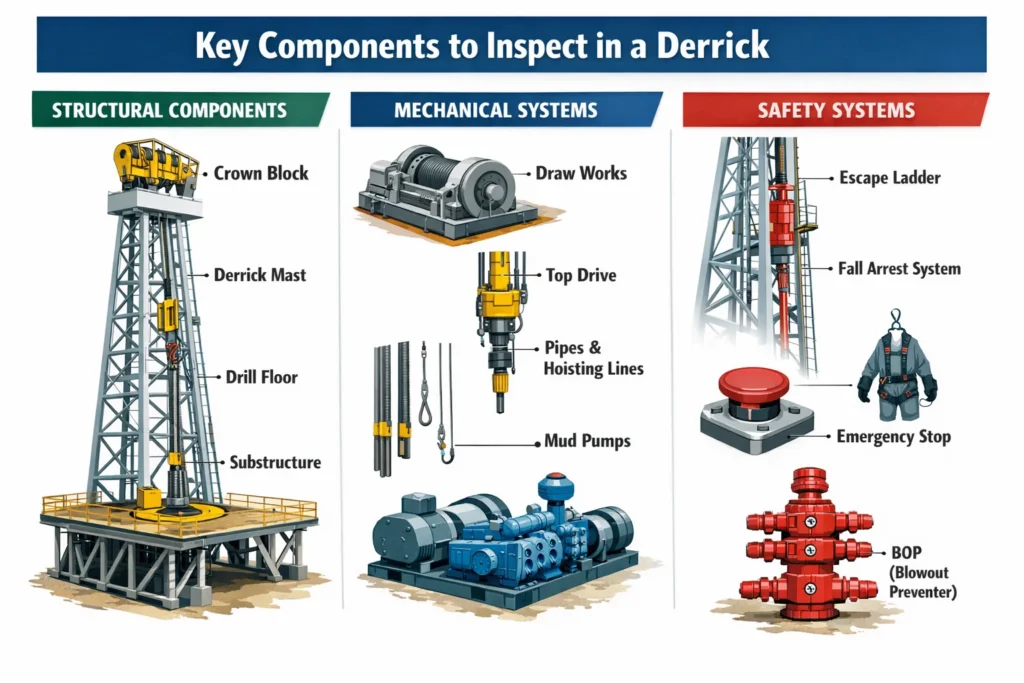
By covering all these areas, operators can ensure full compliance and operational safety.
With digital transformation, inspection data can now be analyzed to predict failures before they occur.
Furthermore, analytics dashboards allow managers to monitor trends and identify recurring issues quickly.
Modern inspection operations require smart tools. Inspection Track software is designed specifically for oil and gas inspections, including derrick surveys and lifting equipment assessments.
As a result, inspection teams can perform faster, more accurate inspections with full traceability.
To achieve maximum efficiency and safety, companies should follow these best practices:
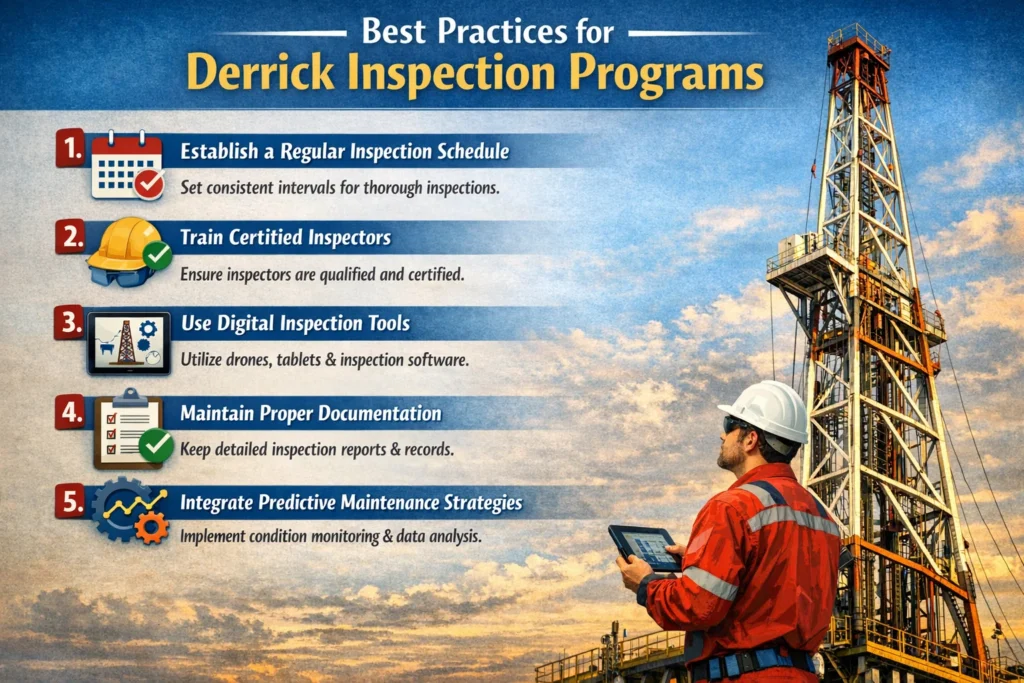
Routine inspections prevent unexpected failures and ensure compliance with regulations.
Qualified inspectors bring expertise and accuracy to inspection processes.
Switching from manual to digital inspection systems significantly reduces errors.
Accurate records help in audits, compliance checks, and maintenance planning.
Using analytics helps detect potential issues before they escalate.
Read more : how digital derrick survey tools reduce human error and cost
Despite technological advancements, inspection teams often face challenges such as:
However, digital inspection platforms can effectively address these challenges.
The future of derrick inspections lies in automation and intelligent data systems. Emerging technologies include:
Consequently, companies that adopt these technologies will gain a significant competitive advantage.
Mastering derrick inspections requires a combination of traditional expertise and modern digital solutions. While visual inspections and NDT remain essential, integrating data-driven analytics and software like Inspection Track takes inspection efficiency and safety to the next level.
By implementing structured inspection protocols, leveraging digital tools, and adopting predictive maintenance strategies, oil and gas companies can ensure safer operations, reduce downtime, and extend the life of critical derrick structures.
Read more :
Derrick inspections should be carried out regularly based on operational intensity, environmental conditions, and regulatory standards. Typically, visual inspections are done daily or weekly, while detailed inspections and NDT assessments are conducted periodically or after major operational loads.
Skipping derrick inspections can lead to structural failures, equipment breakdowns, safety hazards, and regulatory non-compliance. Consequently, this can result in costly downtime, accidents, and potential legal penalties.
Digital tools like Inspection Track software streamline inspections by enabling real-time data capture, automated reporting, and predictive analytics. As a result, companies can detect issues early, improve compliance, and enhance overall operational safety.

Falling objects in industrial sites are a serious safety concern. Every year, thousands of workers suffer injuries due to objects falling from heights, loose equipment, or poorly secured materials. Understanding the causes of these incidents…
In high-pressure oil and gas operations, lifting gear failures can lead to catastrophic incidents, costly downtime, and regulatory penalties. Therefore, performing a comprehensive lifting gear risk assessment is not optional—it is critical. This guide explains…


Comment (1)
Digital Revolution in Ex Inspections Tools - inspectionstrack
Feb 20, 2026[…] Read more : mastering derrick inspections for oil rig safety […]
Comments are closed.