
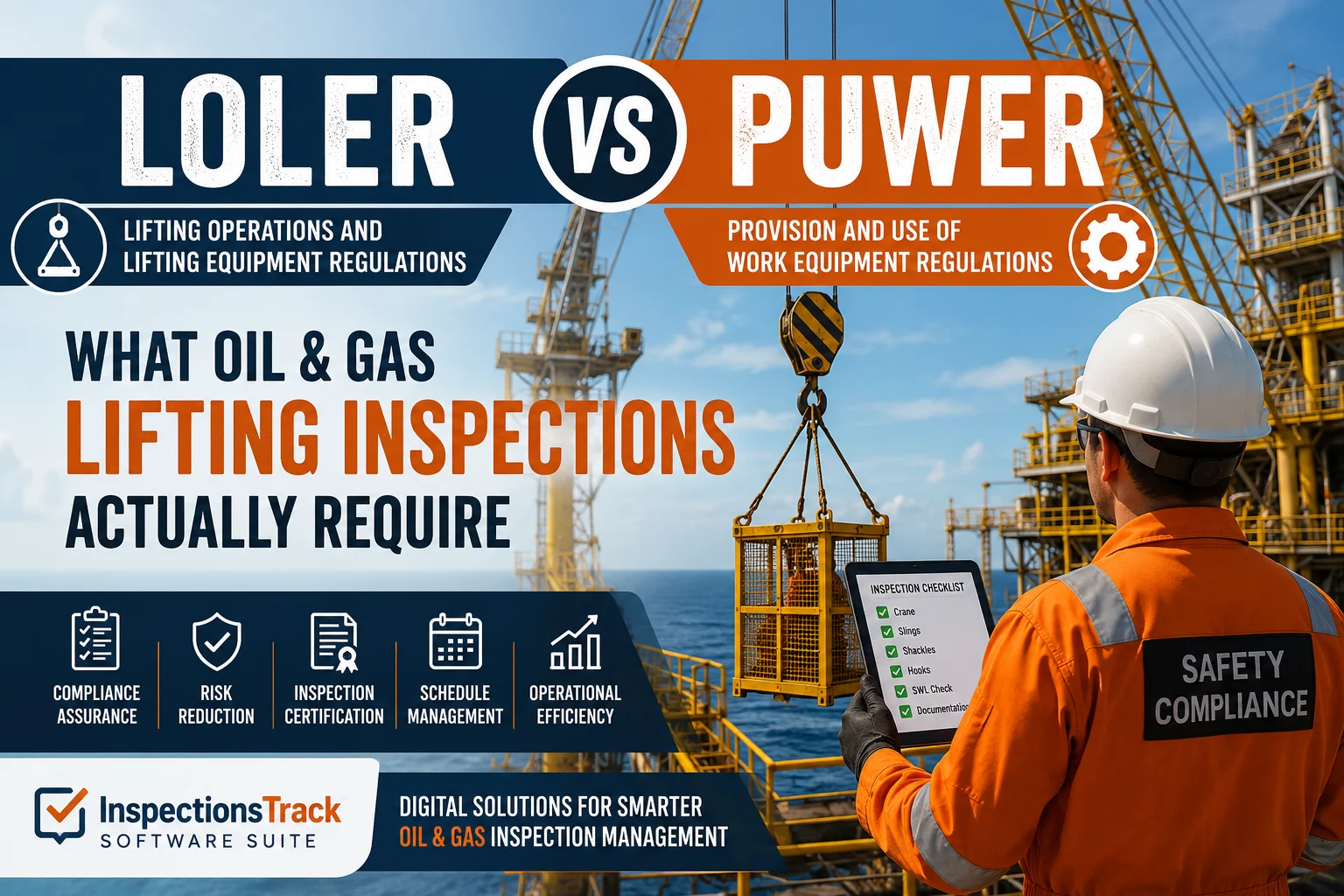
In many oil and gas operations, lifting equipment inspections become complicated because teams are unsure whether a particular asset falls under LOLER, PUWER, or both. This confusion often leads to inconsistent inspection frequencies, incomplete documentation, and increased compliance risk during audits.
For offshore operators, drilling contractors, and inspection companies, understanding the distinction between these regulations is essential for maintaining safety, operational continuity, and regulatory compliance.
Inspection coordinators frequently encounter questions such as:
When these questions remain unanswered, organizations often experience:
For asset integrity teams and offshore operators, understanding the relationship between LOLER and PUWER is not simply a regulatory exercise it directly impacts personnel safety and equipment reliability.
The Lifting Operations and Lifting Equipment Regulations 1998 (LOLER) specifically govern lifting operations and lifting equipment.
LOLER focuses on ensuring that lifting equipment is:
Typical oil and gas assets covered under LOLER include:
LOLER places significant emphasis on thorough examination performed by a competent person.
The Provision and Use of Work Equipment Regulations 1998 (PUWER) apply to virtually all work equipment used by employees.
PUWER ensures equipment is:
Examples of equipment commonly covered under PUWER include:
PUWER primarily focuses on the overall safety, maintenance, and operational suitability of equipment.
| Requirement | LOLER | PUWER |
|---|---|---|
| Primary Purpose | Safe lifting operations | Safe use of work equipment |
| Applies To | Lifting equipment and accessories | Almost all workplace equipment |
| Main Inspection Type | Thorough Examination | Safety Inspection |
| Competent Person Required | Yes | Yes (where appropriate) |
| Focus | Lifting safety and load integrity | Equipment condition and safe operation |
| Inspection Frequency | Defined by regulation or examination scheme | Risk-based |
| Record Keeping | Mandatory examination reports | Inspection and maintenance records |
In most oil and gas environments, the answer is yes.
A pedestal crane offshore provides a good example.
Consequently, many lifting assets are simultaneously subject to both regulations.
Managing lifting compliance manually becomes increasingly difficult when hundreds or thousands of assets exist across multiple facilities.
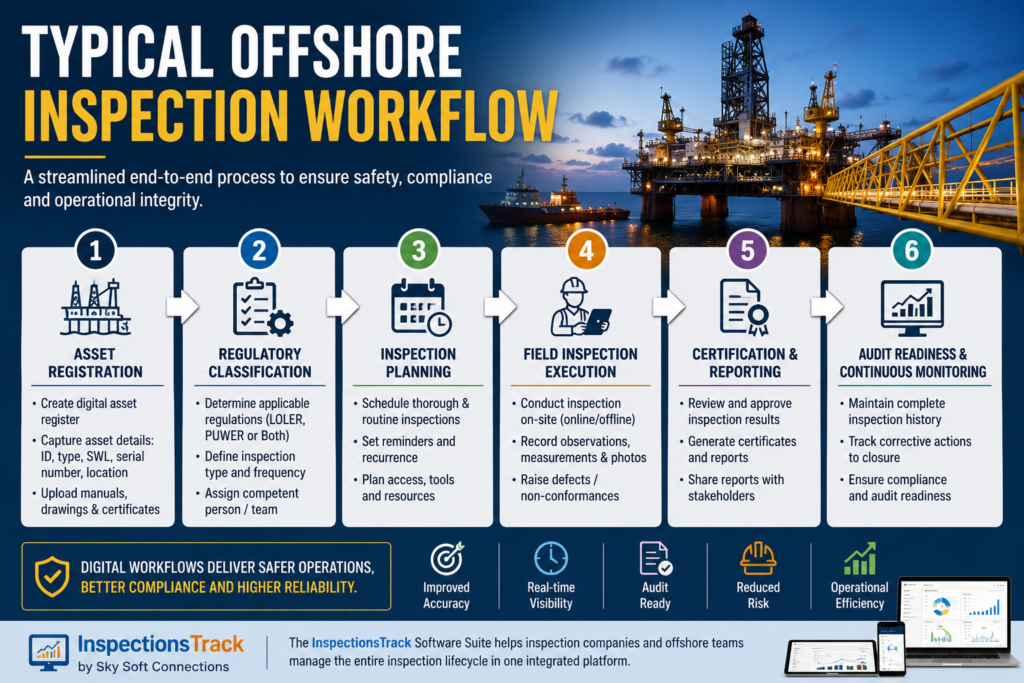
A practical inspection workflow often includes:
Create a digital register containing:
Determine whether assets require:
Schedule:
Inspectors perform assessments using mobile devices, even in offline environments offshore.
Generate:
Maintain complete digital histories for regulators, clients, and internal audits.
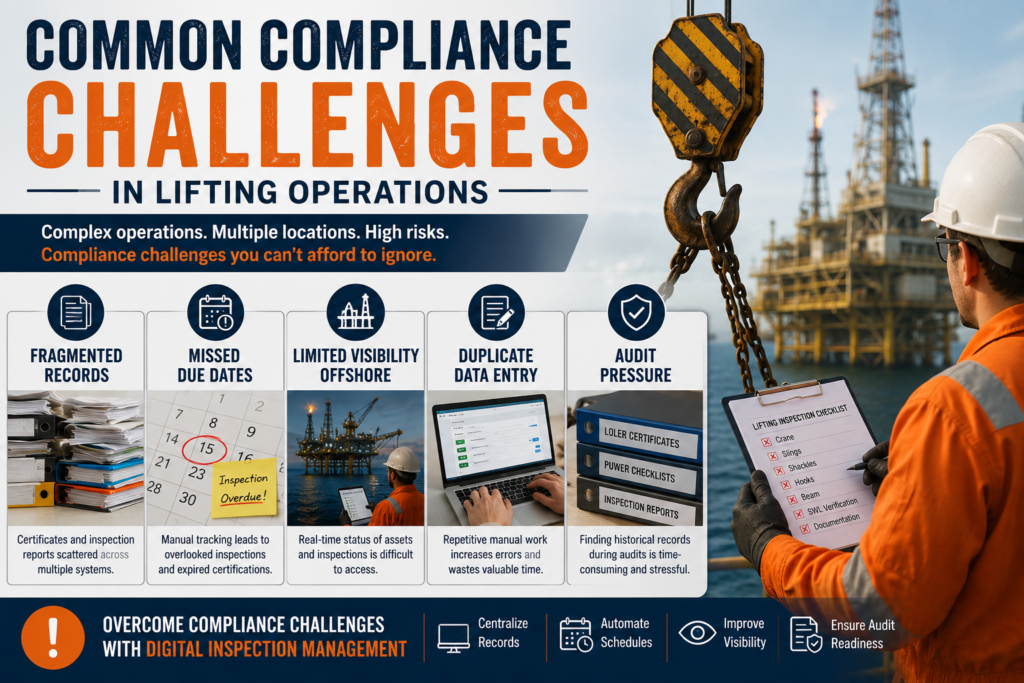
Inspection teams regularly face challenges such as:
Certificates, spreadsheets, and paper forms often reside in different systems.
Without automated reminders, examination intervals can easily be overlooked.
Operations managers frequently lack real-time visibility into inspection status.
Manual reporting significantly increases administrative workload.
Producing historical inspection records during client audits can consume considerable time.
Modern inspection organizations increasingly adopt digital inspection platforms to streamline lifting equipment management.
The InspectionsTrack Software Suite by Sky Soft Connections enables organizations to manage lifting inspection activities from a centralized platform.
Key capabilities include:
For offshore inspection companies, these capabilities help reduce reporting delays while improving compliance visibility across assets.
Consider an offshore drilling contractor managing 40 pedestal cranes across multiple rigs.
Using a digital workflow, the organization can:
As a result, operations teams spend less time managing paperwork and more time focusing on safety and asset integrity.
LOLER and PUWER should not be viewed as competing regulations. Instead, they work together to ensure lifting equipment remains safe, reliable, and compliant throughout its lifecycle.
For most oil and gas lifting assets, compliance requires understanding where both regulations overlap and implementing inspection processes that provide complete visibility.
Organizations that digitize lifting inspections, certification management, and compliance workflows are significantly better positioned to reduce operational risk, improve audit readiness, and maintain safe lifting operations.
Solutions such as the InspectionsTrack Software Suite by Sky Soft Connections provide inspection companies and offshore operators with the tools required to manage LOLER and PUWER obligations efficiently across complex operations.
Read more : How Leading Operators Manage Tank Inspections More Efficiently
Yes. Offshore cranes used for lifting loads or personnel generally require LOLER thorough examinations performed by competent persons.
Yes. Most lifting equipment must comply with PUWER requirements relating to safe use, maintenance, and operator training.
Yes. Slings, shackles, hooks, spreader beams, and other lifting accessories require periodic thorough examination under LOLER.
Digital inspection software centralizes asset records, automates scheduling, generates certificates, and maintains audit-ready compliance histories.
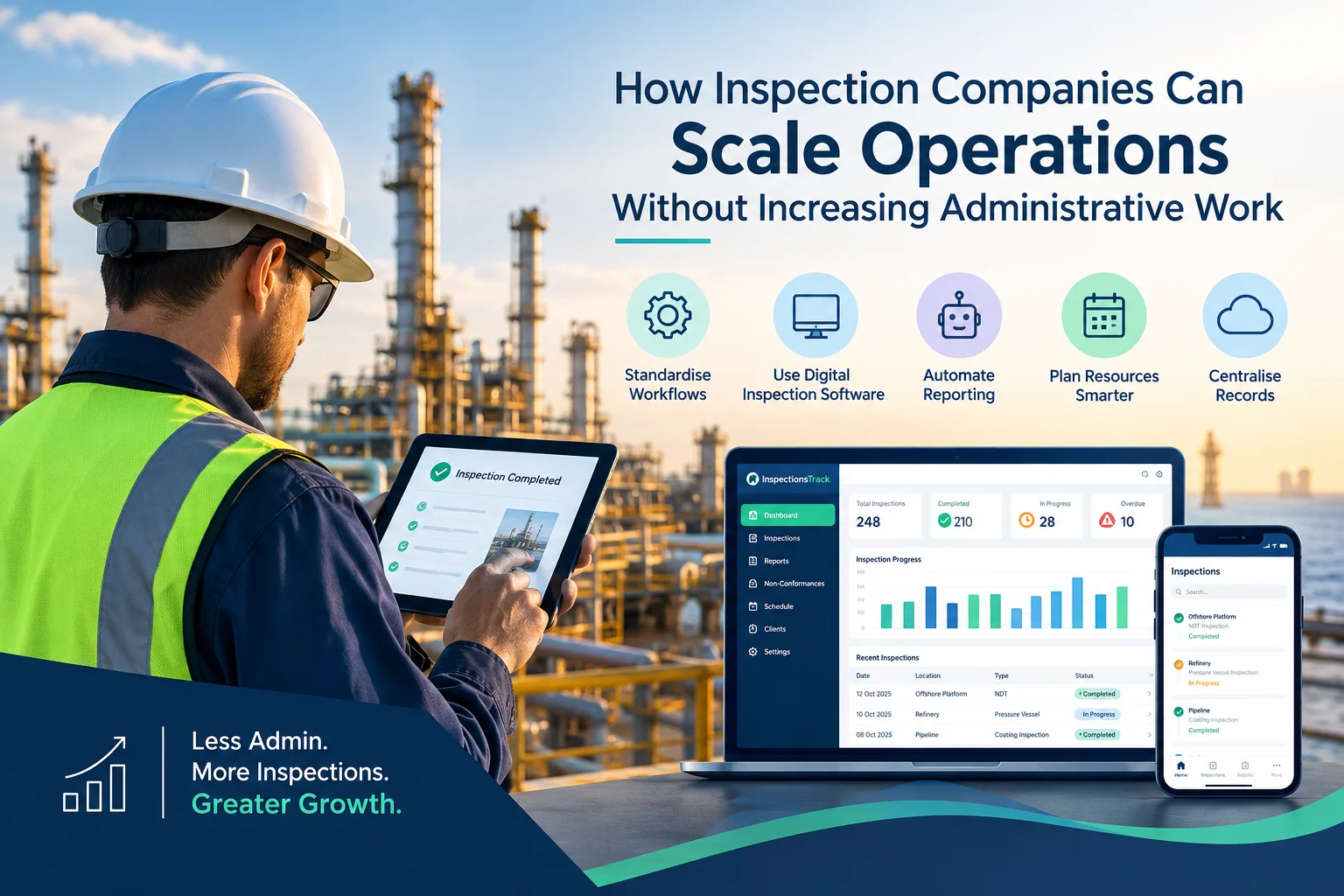
Inspection companies in the oil and gas industry face a common challenge: how to handle more inspections, manage larger projects, and meet client deadlines without increasing administrative workload. As businesses grow, inspection teams must manage…
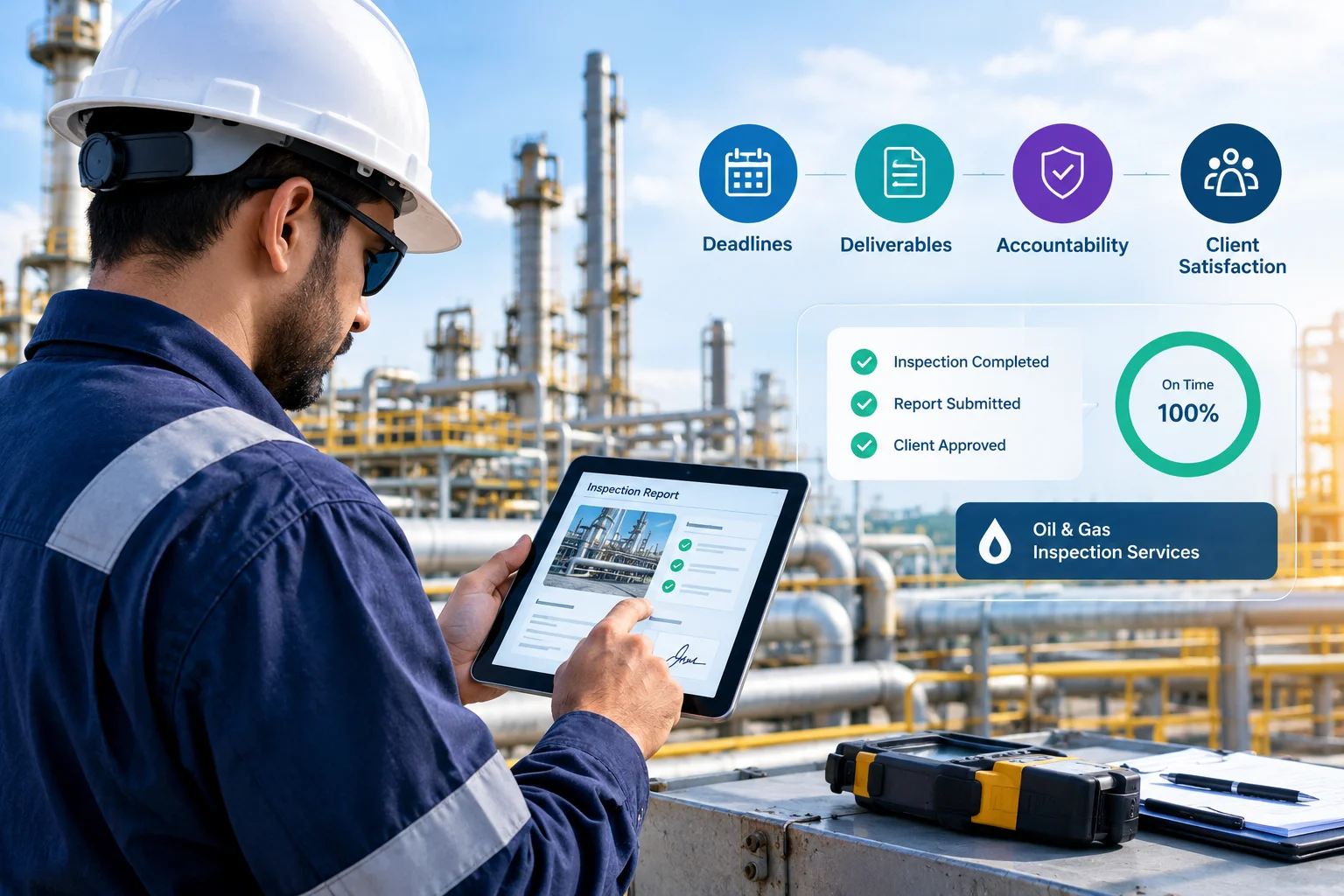
Meeting client Service Level Agreements (SLAs) is essential for inspection companies working in demanding industries such as oil and gas, energy, and industrial maintenance. Clients expect inspections to be completed on time, reports to be…


