
Lifting appliances inspection in the oil and gas industry is critical for ensuring operational safety, regulatory compliance, and equipment reliability. Because lifting operations involve heavy loads and high-risk environments, even a minor failure can lead to severe accidents, costly downtime, and legal consequences.
In this guide, you’ll learn everything about lifting appliance inspections, including types, standards, procedures, and how digital tools like inspection software can streamline the process.
Lifting appliances refer to equipment used for lifting, lowering, or moving loads. These are commonly used across offshore platforms, refineries, and drilling sites.
Since these tools operate under heavy loads, regular inspection is essential to prevent failure.
First and foremost, inspections ensure safety. However, they also provide several other benefits.
Moreover, regular inspections help identify wear and tear early, which reduces repair costs over time.
Different inspection types are required depending on usage, environment, and regulations.
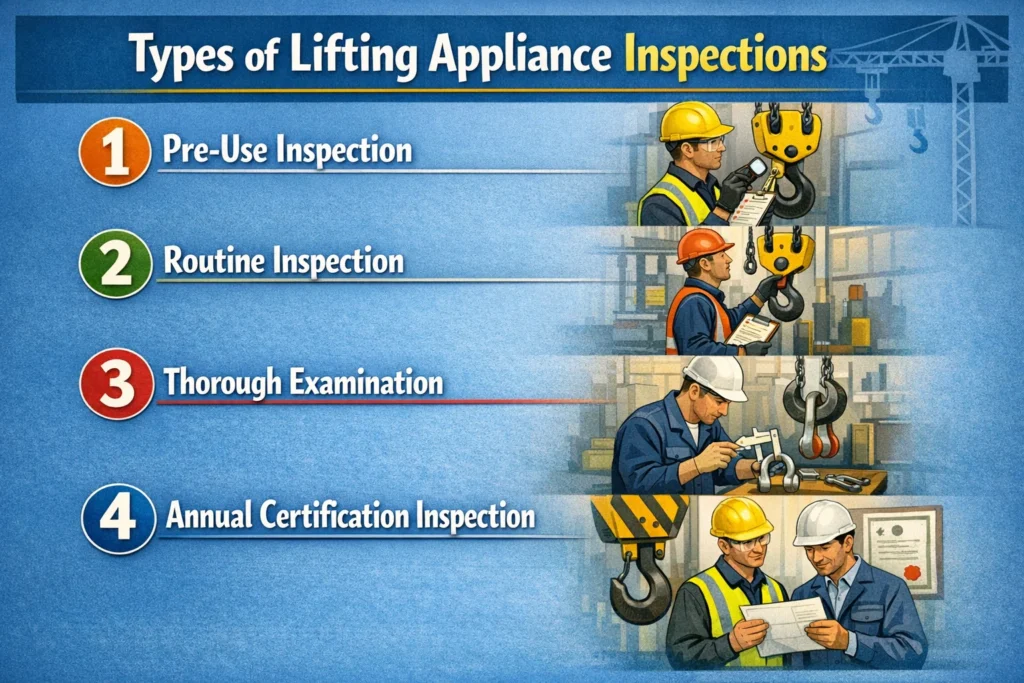
Before each use, operators must visually check equipment for:
These inspections are conducted periodically (weekly or monthly). They focus on:
This is a detailed inspection carried out by certified inspectors.
Finally, yearly inspections ensure compliance with legal and industry standards.
A structured checklist ensures consistency and accuracy. Below is a sample checklist used in oil and gas inspections.
| Inspection Area | What to Check | Frequency |
|---|---|---|
| Structural Components | Cracks, corrosion, deformation | Monthly |
| Wire Ropes | Fraying, kinks, lubrication | Weekly |
| Hooks | Wear, latch functionality | Daily |
| Brakes | Proper functioning | Monthly |
| Safety Devices | Limit switches, alarms | Monthly |
| Load Testing | Safe load limits verification | Annually |
As a result, using a checklist improves inspection accuracy and ensures nothing is missed.
To maintain compliance, organizations must follow international standards.
Additionally, companies must follow internal safety protocols tailored to their operations.
Despite the importance of inspections, many companies still rely on manual processes.
Consequently, these issues can lead to compliance gaps and operational risks.
To overcome these challenges, digital solutions like Inspection Track Software are transforming the oil and gas inspection process.
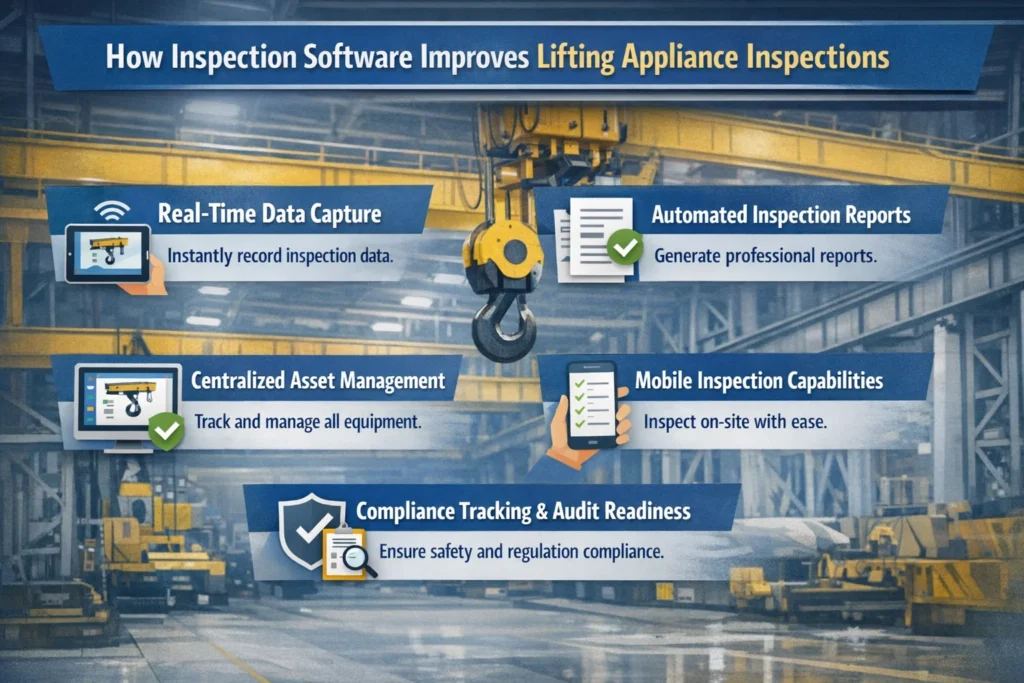
Furthermore, inspectors can easily log findings, attach images, and generate reports instantly, improving efficiency.
Because of these features, companies can streamline inspections and improve decision-making.
To ensure effective inspections, follow these best practices:
In addition, always address defects immediately to prevent escalation.
As the oil and gas industry evolves, inspection processes are becoming more advanced.
Therefore, companies adopting modern solutions gain a competitive advantage.
Lifting appliances inspection in oil and gas is not just a regulatory requirement—it is a critical component of workplace safety and operational efficiency. By implementing structured inspection processes and leveraging advanced tools like Inspection Track Software, companies can significantly reduce risks, improve compliance, and enhance productivity.
Ultimately, a proactive inspection strategy ensures safer operations and long-term success in the oil and gas industry
Read more : what is eddy current testing
It depends on usage, but typically includes daily checks, monthly inspections, and annual thorough examinations.
The equipment must be removed from service immediately and repaired or replaced before reuse.
It digitizes the process, reduces errors, provides real-time insights, and ensures compliance tracking.
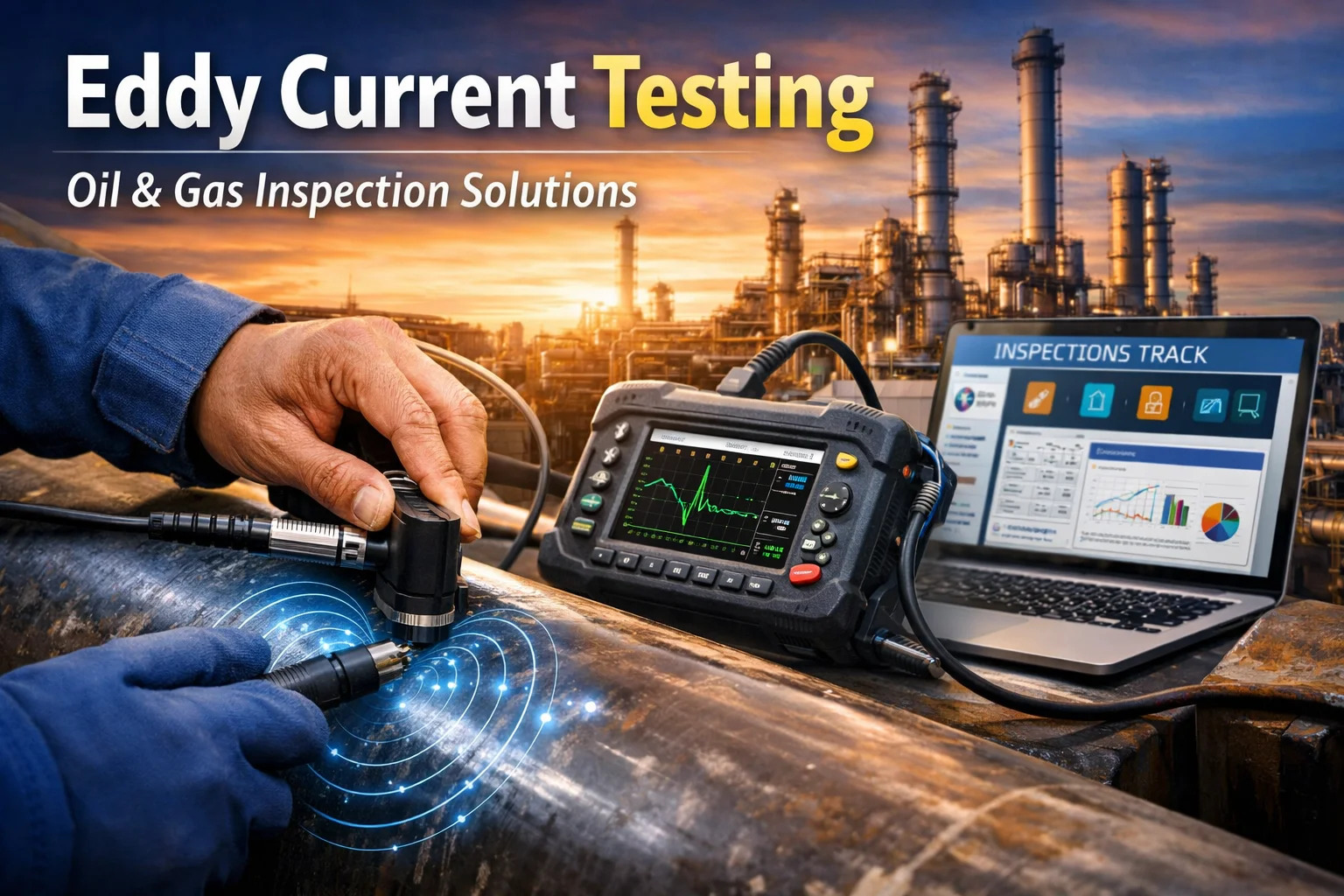
Eddy Current Testing (ECT) is one of the most widely used non-destructive testing (NDT) methods in the oil and gas industry. It is a fast, reliable, and precise technique for detecting surface and near-surface defects…
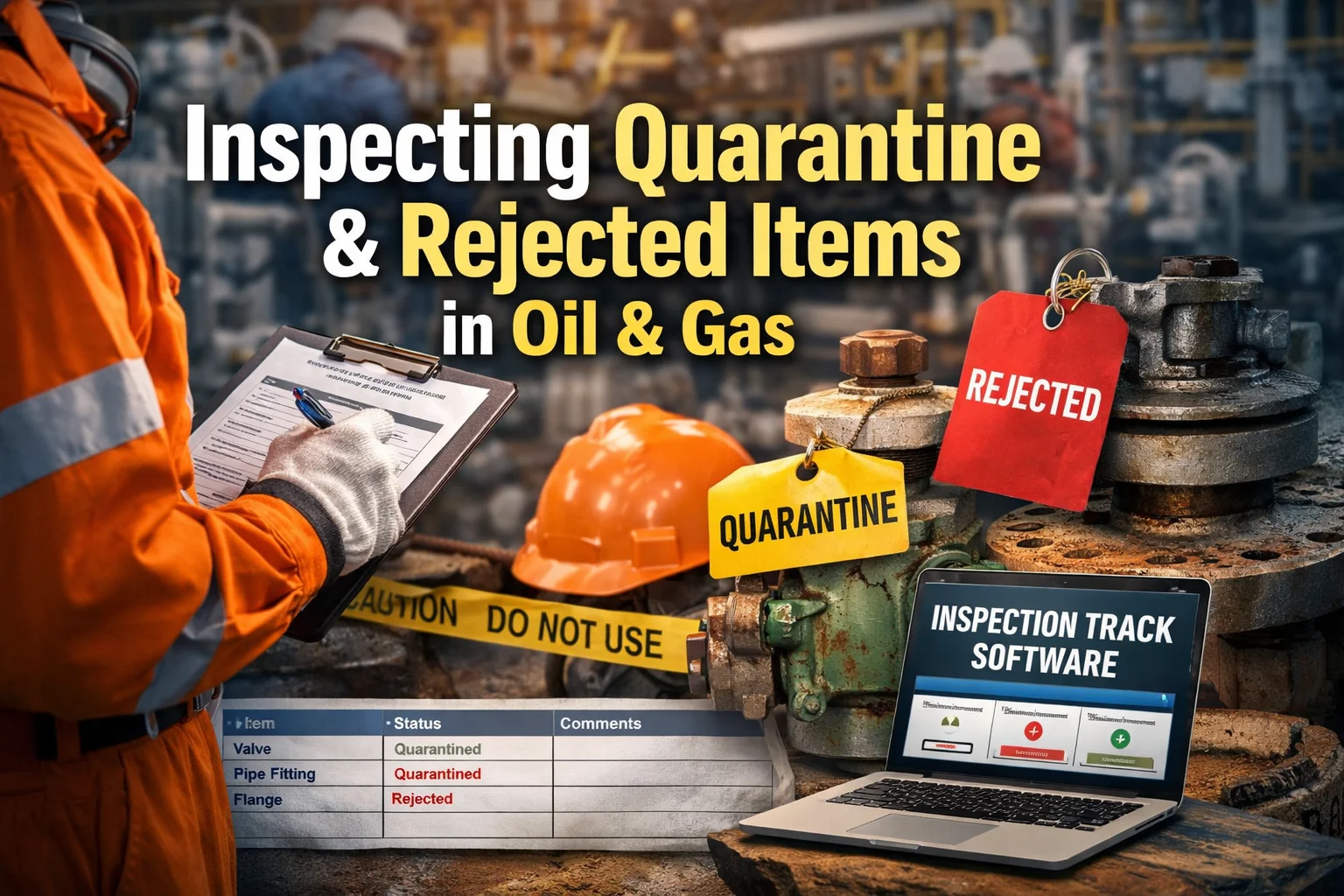
Introduction In the oil and gas industry, maintaining quality control and safety is paramount. Quarantine and rejected items can pose significant risks if not managed properly. Proper inspection ensures compliance, prevents accidents, and protects your…


