
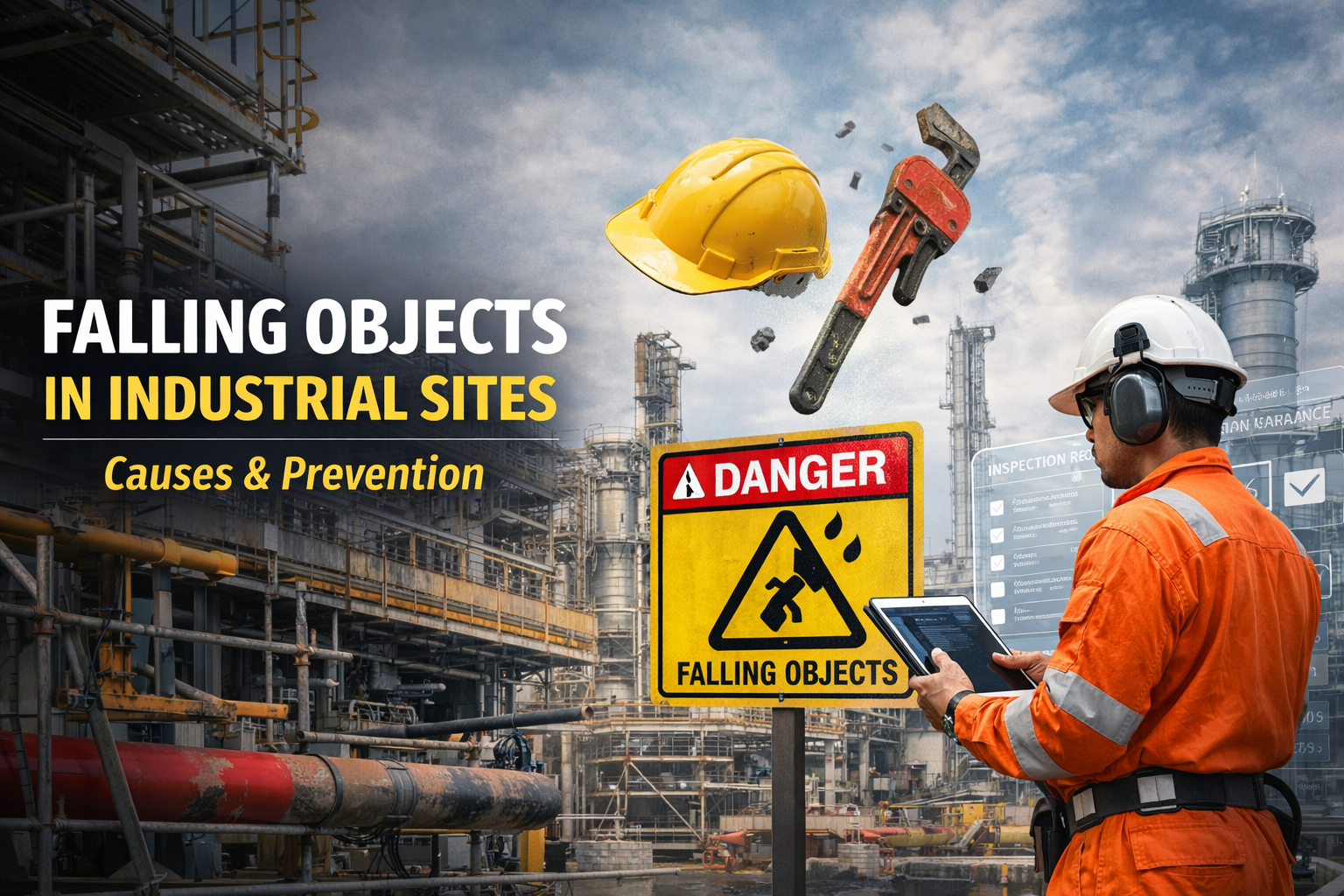
Falling objects in industrial sites are a serious safety concern. Every year, thousands of workers suffer injuries due to objects falling from heights, loose equipment, or poorly secured materials. Understanding the causes of these incidents is essential for preventing accidents and improving workplace safety.
In this post, we’ll explore the most common causes of falling objects in industrial environments, with a focus on preventive strategies, the role of inspections, and how modern inspections track software can help the oil and gas industry reduce risks.
Falling objects can result in severe injuries or fatalities. According to OSHA, objects falling from even modest heights can cause serious harm. The consequences include:
Because of these risks, companies in industries like oil and gas, construction, and manufacturing prioritize preventive measures and regular inspections.
Based on expert studies and field reports, the primary causes of falling objects include:
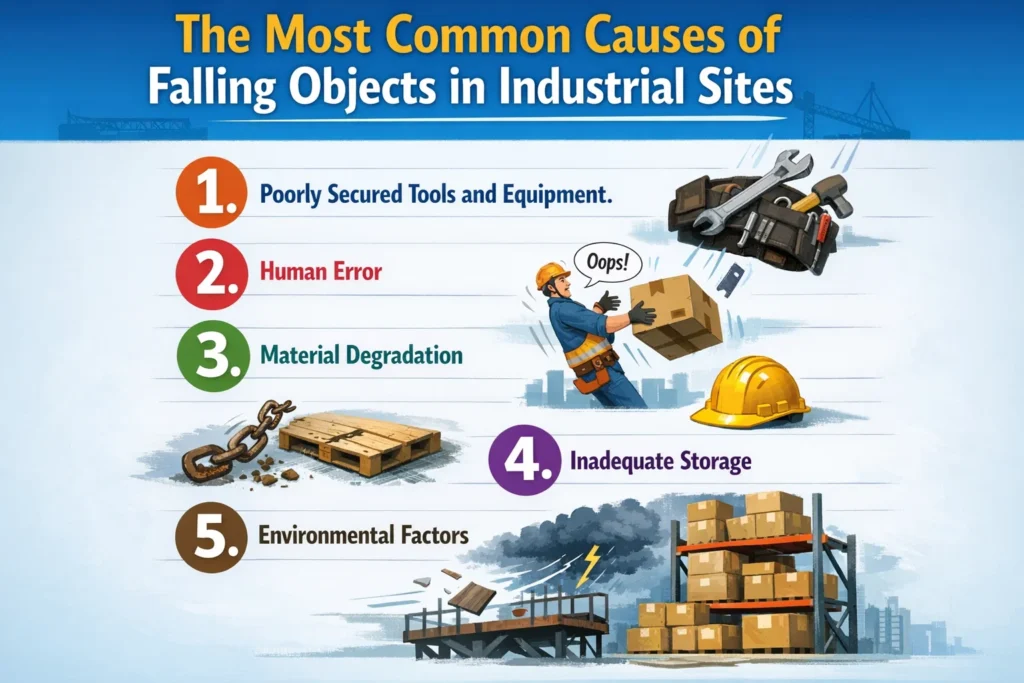
Tools left unsecured on scaffolds, platforms, or machinery can easily fall, especially in windy or high-traffic areas.
Workers may accidentally knock over objects, especially when handling heavy equipment without proper support or supervision.
Ropes, chains, hooks, and other lifting equipment may weaken over time due to corrosion, rust, or wear, leading to unexpected failures.
Materials stacked improperly or without safety restraints can slip and fall, posing risks to workers below.
Strong winds, vibrations from nearby machinery, or unstable surfaces increase the chances of objects falling.
| Cause | Preventive Measure |
|---|---|
| Poorly secured tools | Use tool lanyards, safety nets, and organized storage |
| Human error | Conduct training and enforce safety protocols |
| Material degradation | Regular inspection and timely replacement of worn equipment |
| Inadequate storage | Implement structured storage systems and safety barriers |
| Environmental factors | Monitor weather conditions and secure materials during adverse conditions |
In the oil and gas industry, inspections play a crucial role in preventing falling object incidents. Manual inspections are time-consuming, error-prone, and difficult to track. This is where inspections track software comes in:
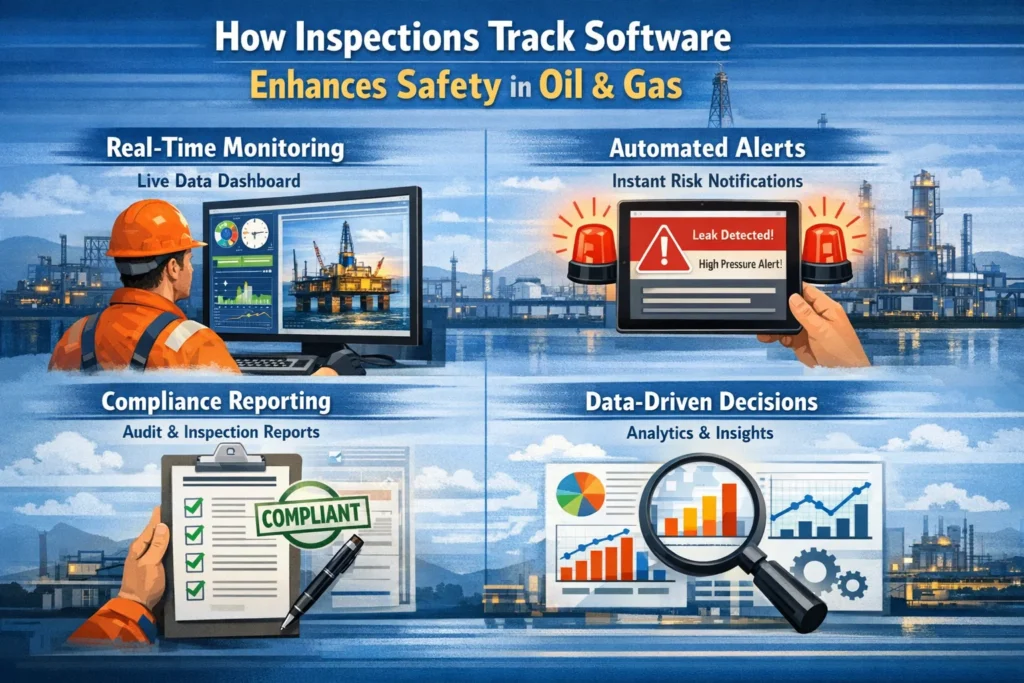
By adopting inspections track software, companies can ensure that all tools, machinery, and materials are regularly checked, reducing the likelihood of accidents caused by falling objects.
Here are expert-recommended strategies:
Falling objects remain one of the most common causes of industrial accidents, but they are highly preventable. The combination of proper safety practices, worker training, and advanced inspections track software ensures a safer industrial environment, especially in high-risk sectors like oil and gas.
By identifying risks, maintaining equipment, and leveraging modern inspection tools, companies can dramatically reduce workplace accidents, protect employees, and improve operational efficiency.
Read more : lifting gear risk assessment in oil and gas
1. What is the leading cause of falling objects in industrial sites?
The most common cause is poorly secured tools, equipment, and materials, often combined with human error or lack of proper storage.
2. How can falling object accidents be prevented?
Regular inspections, proper tool tethering, secure material storage, safety barriers, and worker training are key preventive measures.
3. Can software help reduce falling object incidents?
Yes. Inspections track software helps monitor equipment conditions, schedule maintenance, and ensure compliance, minimizing risks in industrial sites.
4. Why is the oil and gas industry at high risk for falling objects?
Oil and gas sites involve heavy machinery, elevated platforms, and frequent material handling, which increases the chance of objects falling if proper safety measures are not followed.
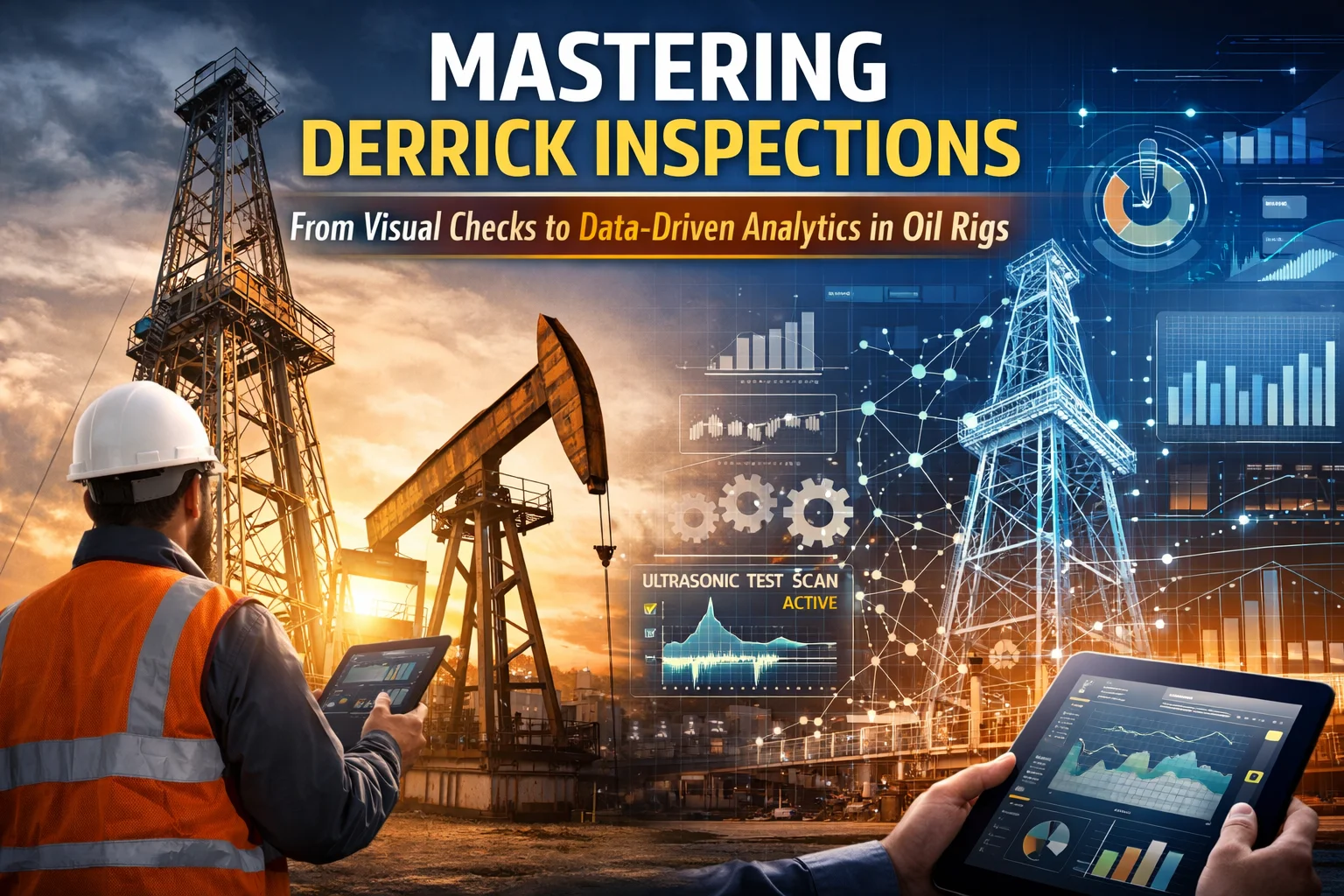
In the high-risk environment of oil and gas operations, derrick inspections are not just a routine task—they are a critical safety and compliance requirement. From traditional visual checks to advanced data-driven analytics, modern derrick inspection…
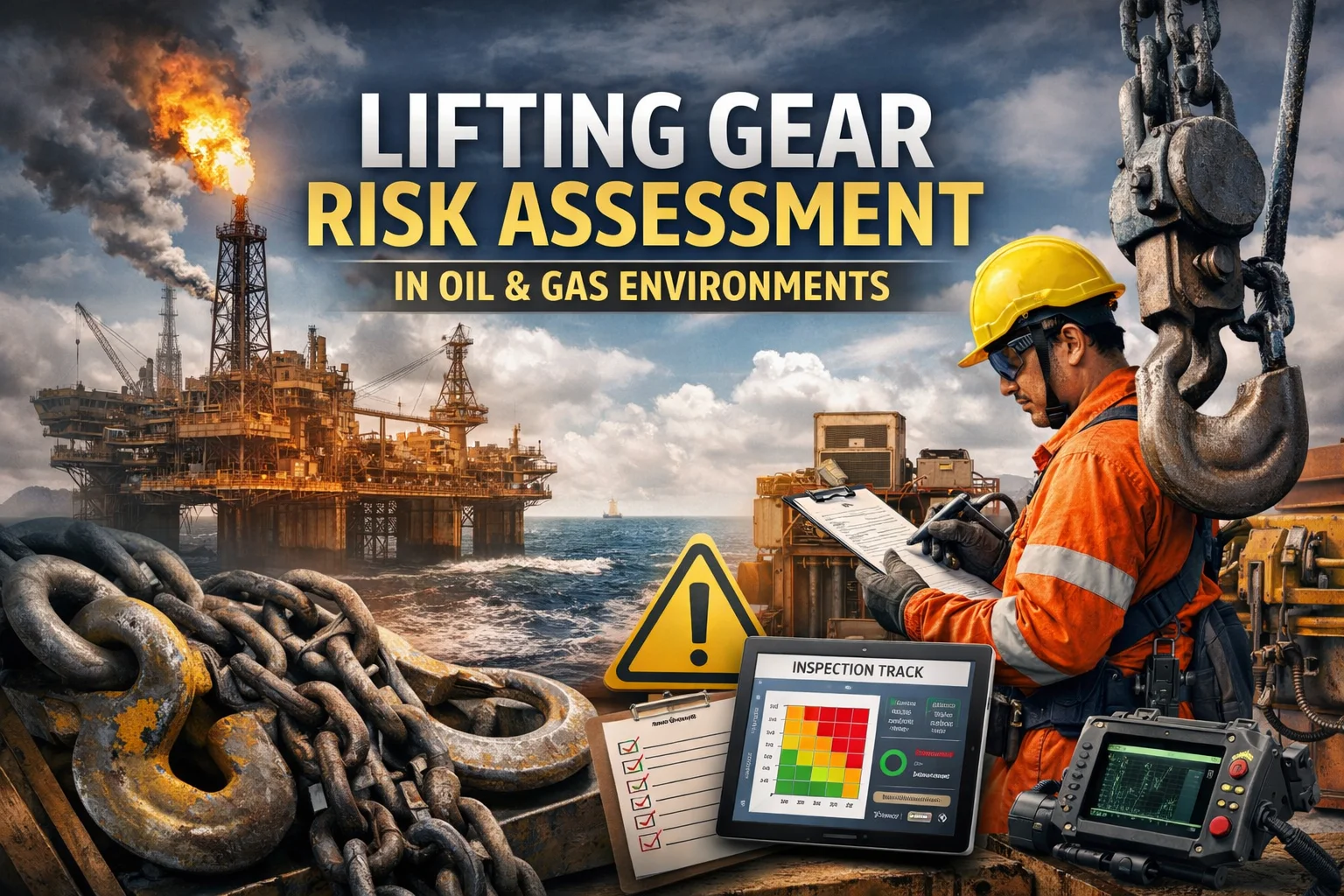
In high-pressure oil and gas operations, lifting gear failures can lead to catastrophic incidents, costly downtime, and regulatory penalties. Therefore, performing a comprehensive lifting gear risk assessment is not optional—it is critical. This guide explains…


