
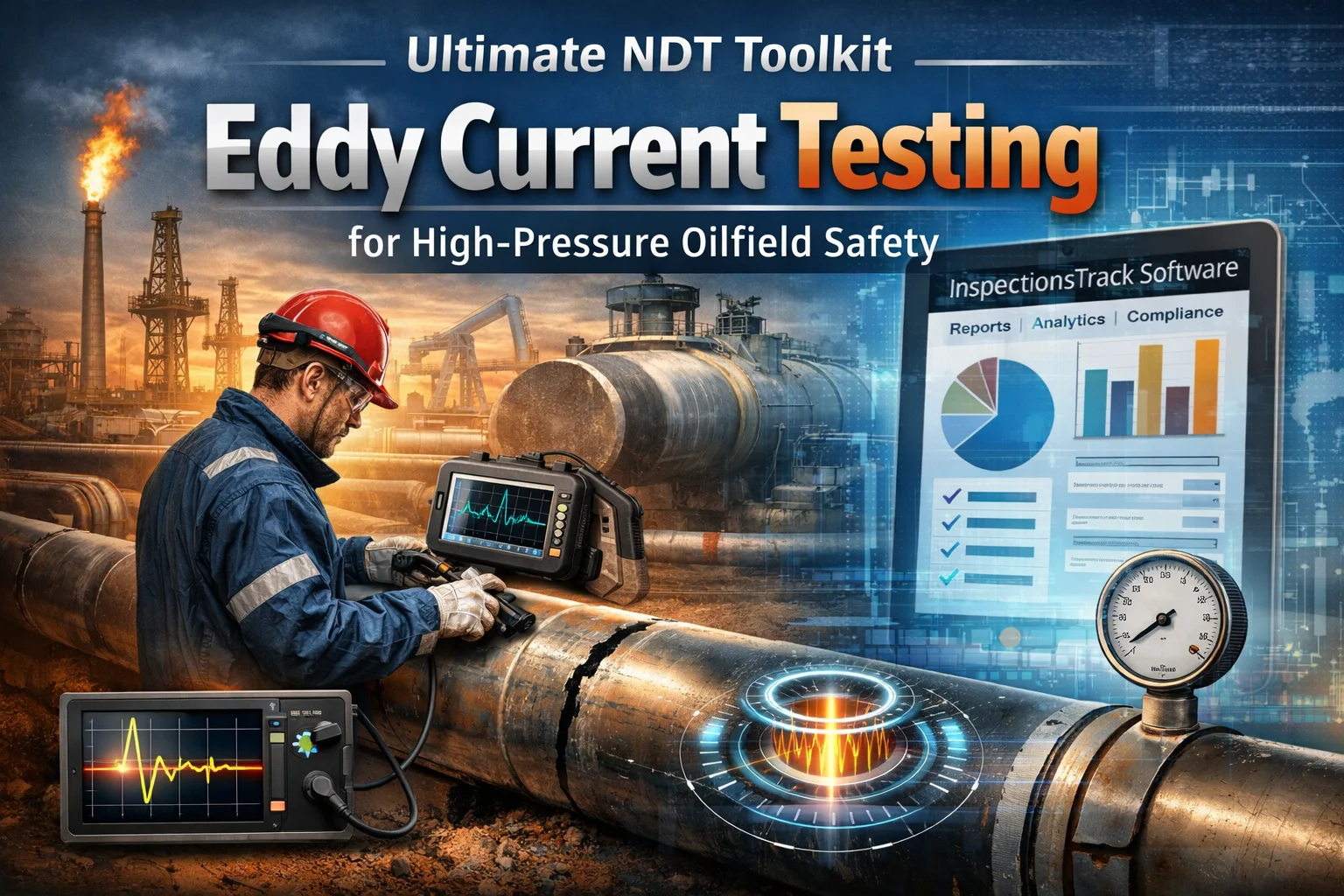
In high-pressure oilfield environments, safety is not optional—it’s critical. Equipment failure can lead to costly downtime, environmental hazards, and even loss of life. That’s why Eddy Current Testing (ECT) has become an essential part of modern Non-Destructive Testing (NDT) strategies.
In this guide, you’ll learn how Eddy Current Testing works, why it’s vital for oilfield safety, and how digital tools like Inspectionstrack software can enhance inspection accuracy and compliance.
Eddy Current Testing is an advanced NDT method used to detect surface and near-surface defects in conductive materials. It works by inducing electromagnetic currents into the material and analyzing how those currents behave.
As a result, inspectors can identify defects without damaging the equipment.
High-pressure oilfield equipment operates under extreme stress. Therefore, even minor defects can escalate quickly.
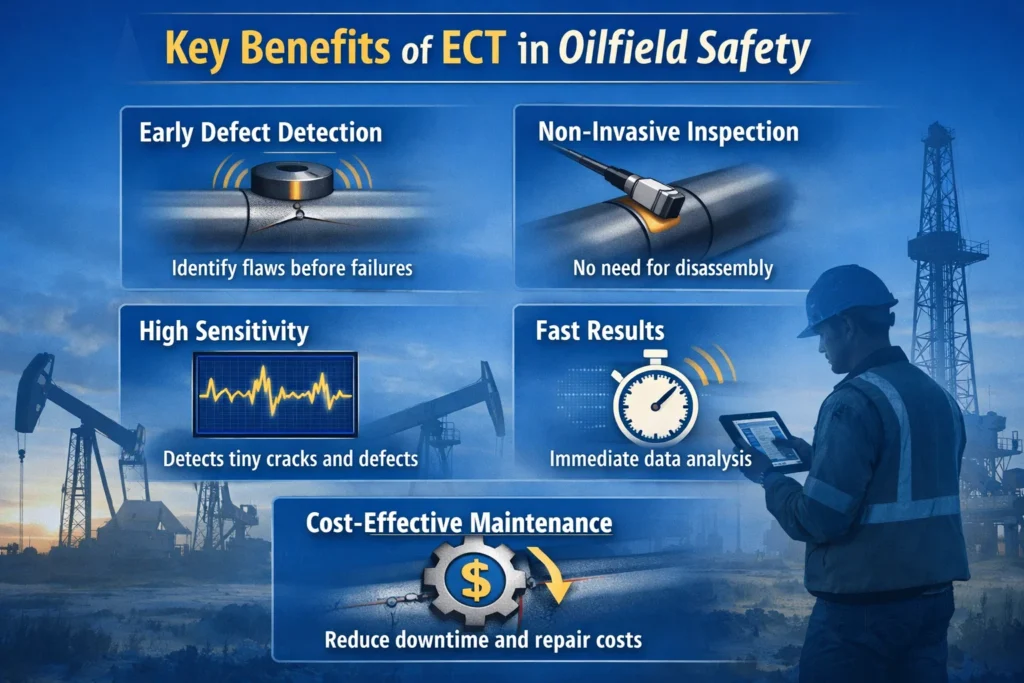
Moreover, Eddy Current Testing is ideal for inspecting:
To better understand its value, let’s compare ECT with other common NDT techniques:
| NDT Method | Best For | Limitations |
|---|---|---|
| Eddy Current Testing | Surface & near-surface defects | Limited to conductive materials |
| Ultrasonic Testing | Internal defects | Requires coupling medium |
| Radiographic Testing | Deep internal imaging | Safety concerns, expensive |
| Magnetic Particle Test | Surface cracks (ferrous only) | Limited material scope |
Clearly, ECT stands out for speed, precision, and safety, especially in high-pressure environments.
Eddy Current Testing plays a vital role across multiple oilfield operations.
Furthermore, it supports preventive maintenance strategies, which significantly reduce unplanned outages.
While ECT is powerful, it comes with some challenges. However, these can be managed effectively.
This is where smart inspection platforms become essential.
Digital transformation is reshaping NDT inspections. Inspectionstrack software, designed specifically for the oil and gas industry, brings efficiency, accuracy, and compliance into one platform.
Consequently, combining Eddy Current Testing with Inspectionstrack creates a powerful, data-driven inspection ecosystem.
Readmore : eddy current inspection tool revolutionizing ndt
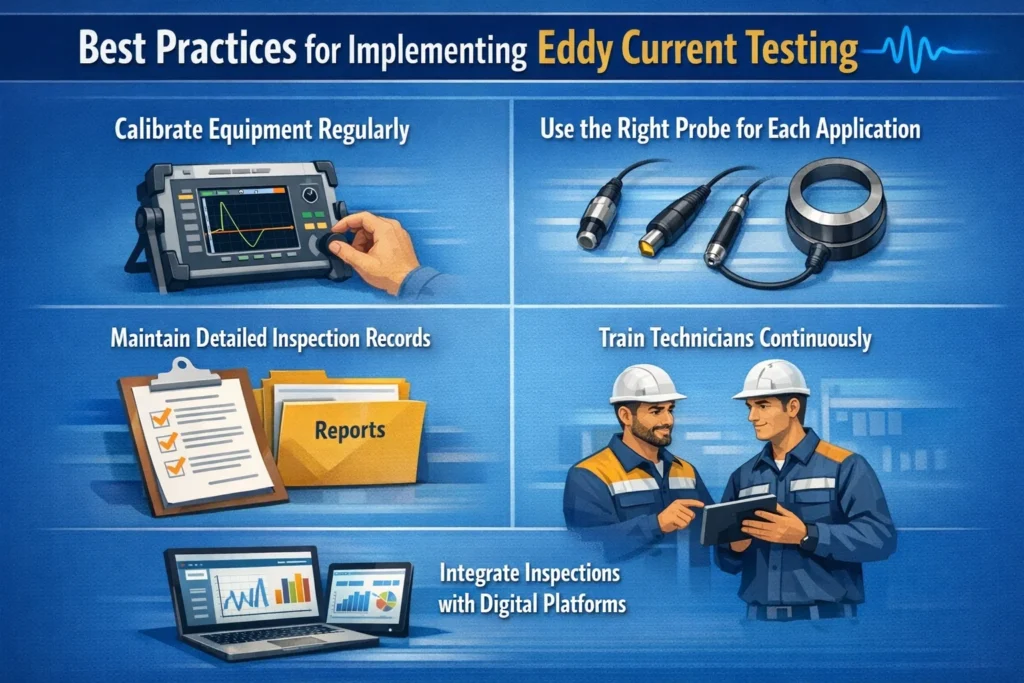
To maximize results, follow these proven strategies:
The future of NDT is digital, automated, and data-driven. Eddy Current Testing is evolving with:
As a result, oilfield operators can move from reactive to proactive safety management.
Eddy Current Testing is a cornerstone of modern oilfield safety. It enables fast, accurate, and non-destructive inspection of critical equipment operating under high pressure.
However, to unlock its full potential, companies must combine ECT with digital tools like Inspectionstrack software. This integration not only improves inspection accuracy but also ensures compliance, efficiency, and long-term reliability.
Ultimately, investing in the right NDT toolkit today means safer, smarter, and more efficient oilfield operations tomorrow.
Read more : pressure gauge calibration for harsh oilfield sites
Eddy Current Testing is used to detect surface cracks, corrosion, and material degradation in conductive components like pipelines and tubing.
Yes, it is completely non-destructive and does not involve radiation, making it safer than many other NDT methods.
Inspectionstrack digitizes inspection workflows, improves data accuracy, automates reporting, and ensures compliance with industry standards.
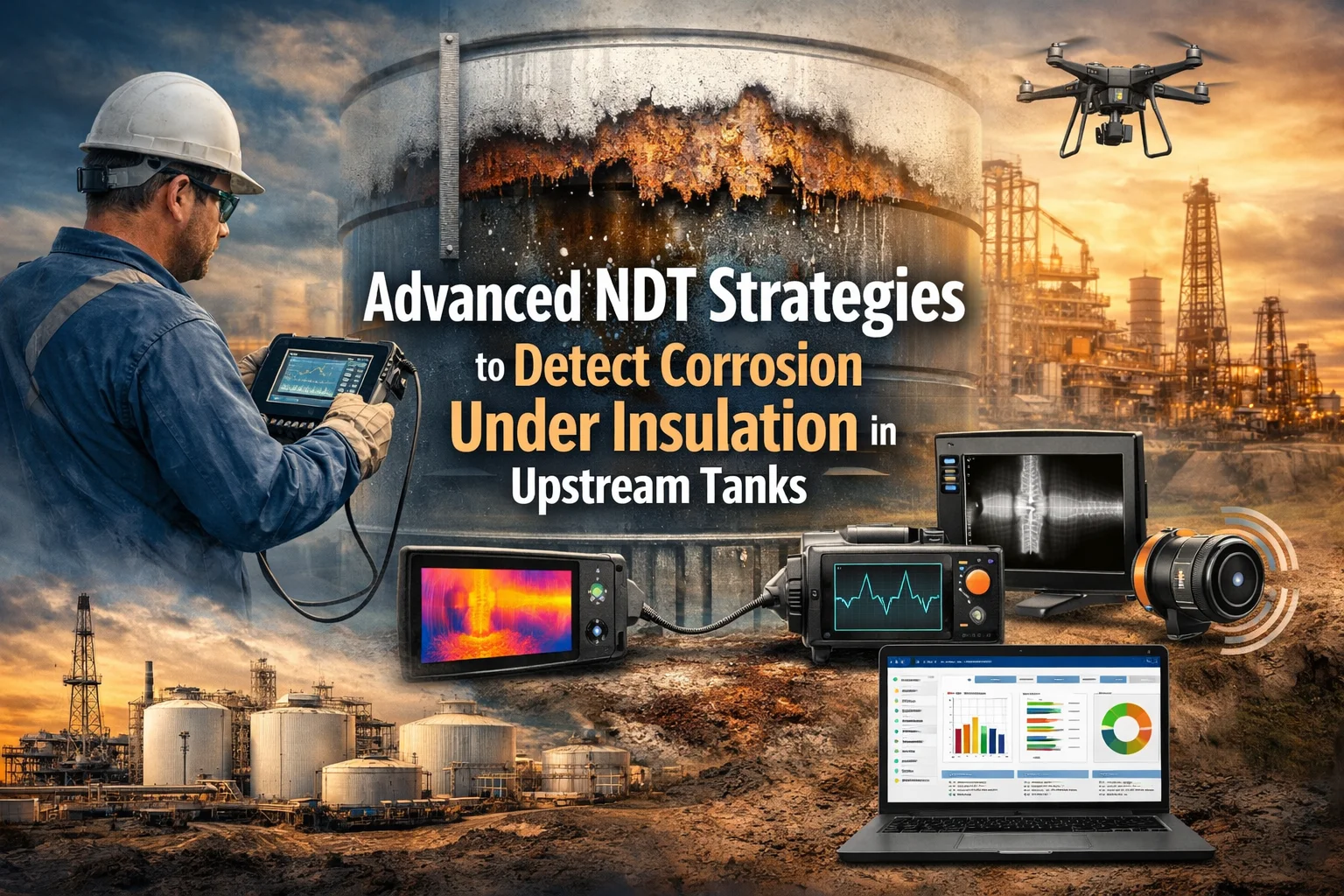
Corrosion Under Insulation (CUI) is one of the most costly and difficult-to-detect challenges in upstream oil and gas operations. Because it develops beneath insulation layers, it often goes unnoticed until severe damage occurs. However, with…

Industrial storage tanks are critical assets in industries such as oil & gas, petrochemicals, and energy production. However, even a small leak can lead to product loss, environmental damage, safety hazards, and costly downtime. Therefore,…


