
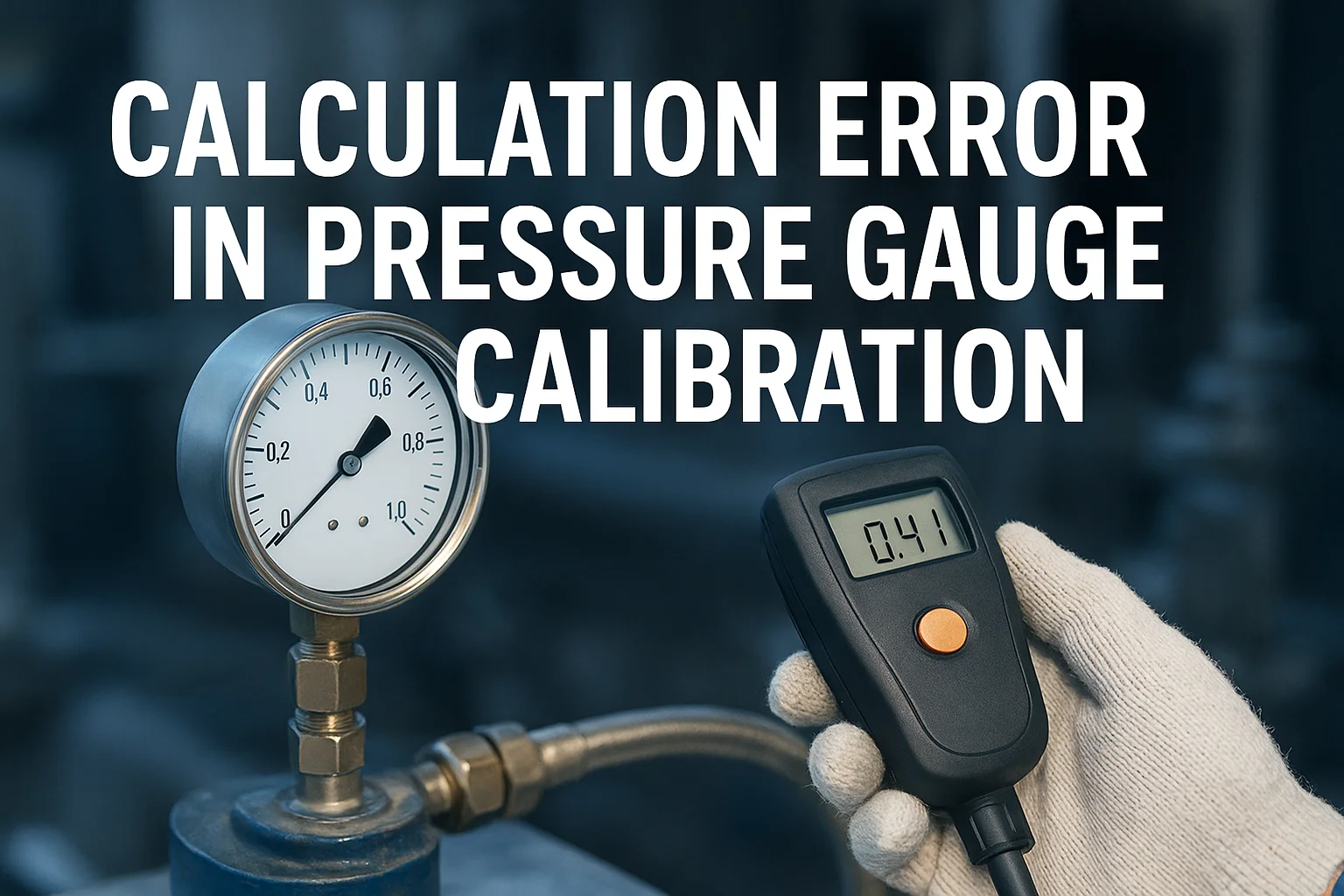
Pressure gauge calibration is a critical step in ensuring accurate measurements across oil and gas operations. However, calculation errors during calibration remain one of the most common—and costly—issues technicians face. These errors can lead to unsafe pressure readings, equipment damage, and operational downtime. Fortunately, with the right processes, tools, and software, you can significantly reduce these mistakes.
In this blog, we’ll explore the causes of calculation errors in pressure gauge calibration, how to avoid them, and how Inspectionstrack, a digital inspections platform for the oil and gas industry, helps technicians achieve accuracy with every calibration.
Even the smallest miscalculation can produce inaccurate readings. In high-risk environments like oil and gas plants, such inaccuracies may lead to:
Because calibration accuracy is directly linked to safety and efficiency, eliminating calculation errors becomes essential.
Understanding why these errors happen is the first step toward preventing them.
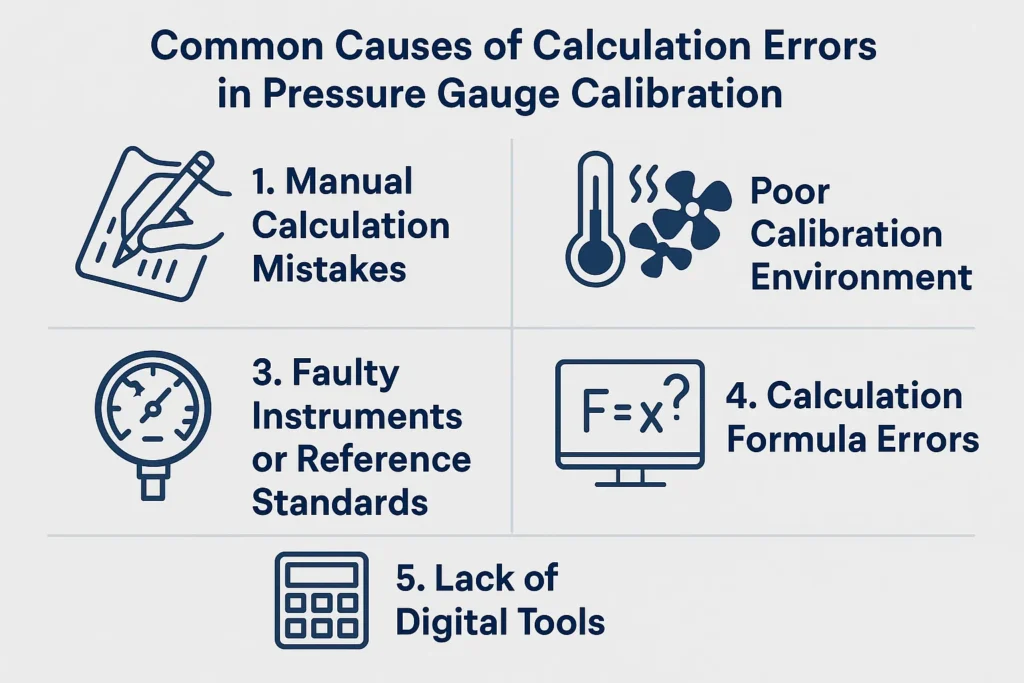
Technicians often rely on manual readings and conversions. Consequently, this increases the chances of human error—especially during busy inspections.
Calibration accuracy can be affected by environmental conditions. Often, factors like temperature, vibration, or humidity may distort readings.
If the reference gauge isn’t calibrated properly, all output readings will naturally be incorrect.
Technicians sometimes use outdated formulas or apply them incorrectly, resulting in wrong pressure differentials or error percentages.
Paper-based processes make it difficult to track errors. Without digital validation or automated calculations, mistakes remain undetected.
Although calculation errors are common, they are entirely avoidable when the right practices are followed.
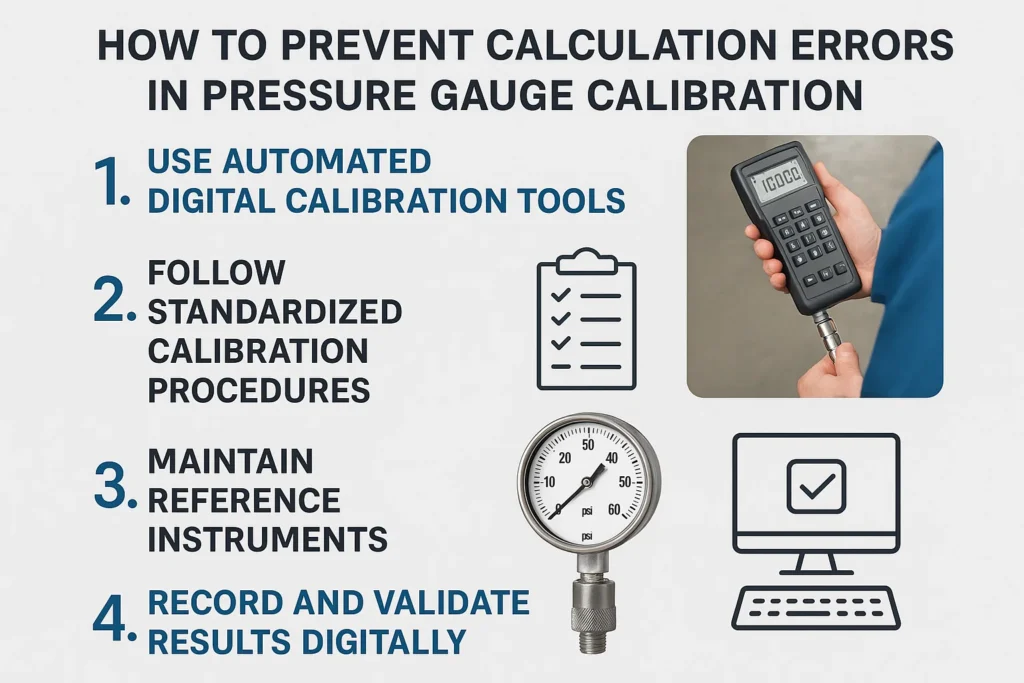
Automated tools eliminate manual math and calculate error values instantly. This alone reduces error rates dramatically.
Clear SOPs (Standard Operating Procedures) help technicians maintain consistency.
Regular calibration of master gauges ensures accuracy across all processes.
Digital records help in quick verification and comparison across calibration cycles.
read more : digital vs analog pressure gauges calibration techniques
| Feature | Manual Calibration | Digital Calibration (with Inspectionstrack) |
|---|---|---|
| Error rate | High | Extremely low |
| Calculations | Done manually | Auto-calculated |
| Data recording | Paper-based | Cloud-based logs |
| Compliance | Needs manual checks | Automated |
| Time required | Longer | Faster |
Inspectionstrack, designed specifically for oil and gas inspection environments, ensures your pressure gauge calibration workflow becomes error-free, compliant, and much faster.
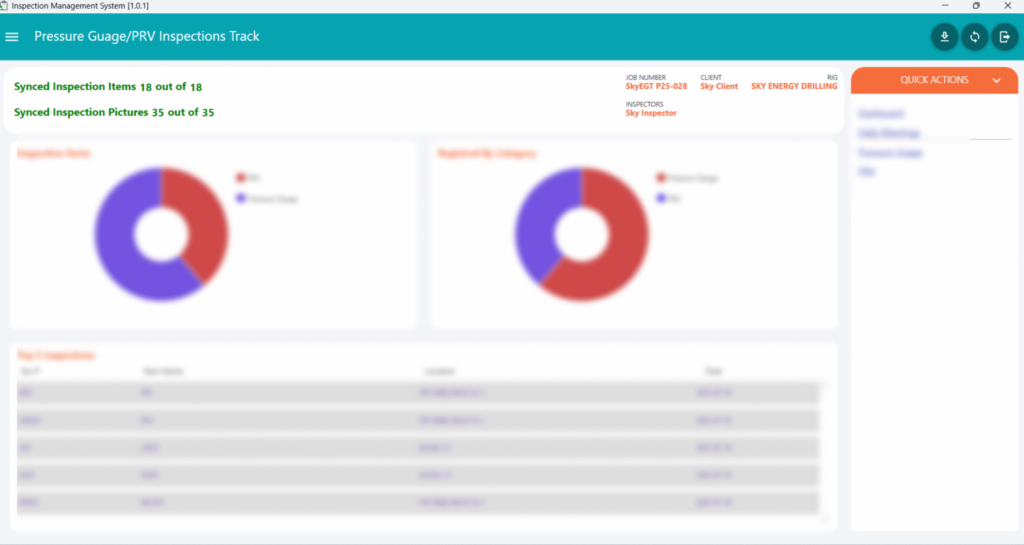
Because the platform uses automated logic, it significantly reduces human error, ensuring reliable pressure gauge calibration every single time.
To further enhance measurement accuracy, follow these practices:
✔ Always calibrate using a certified master gauge
✔ Allow instruments to stabilize before recording readings
✔ Perform zero checks frequently
✔ Store gauges in controlled environments
✔ Use digital calibration systems like Inspectionstrack
Calculation errors in pressure gauge calibration can lead to serious safety and operational issues. However, by adopting digital tools, following standardized processes, and eliminating manual calculations, you can achieve highly accurate and reliable readings.
With Inspectionstrack, oil and gas companies gain a smarter, faster, and mistake-proof way to handle pressure gauge calibrations. Not only does this improve accuracy, but it also boosts efficiency and compliance across the entire inspection process.
Read more : utm measurements in oil and gas complete industry guide
Calculation errors usually occur due to manual math mistakes, incorrect unit conversions, faulty reference gauges, or environmental factors affecting readings.
You can reduce errors by using digital tools, following standardized calibration procedures, and ensuring reference gauges are regularly calibrated.
Digital calibration automates calculations, reduces human error, stores data safely, and ensures greater accuracy and compliance.
Inspectionstrack automates calculations, validates readings in real time, generates digital certificates, and minimizes human error during calibration workflows.
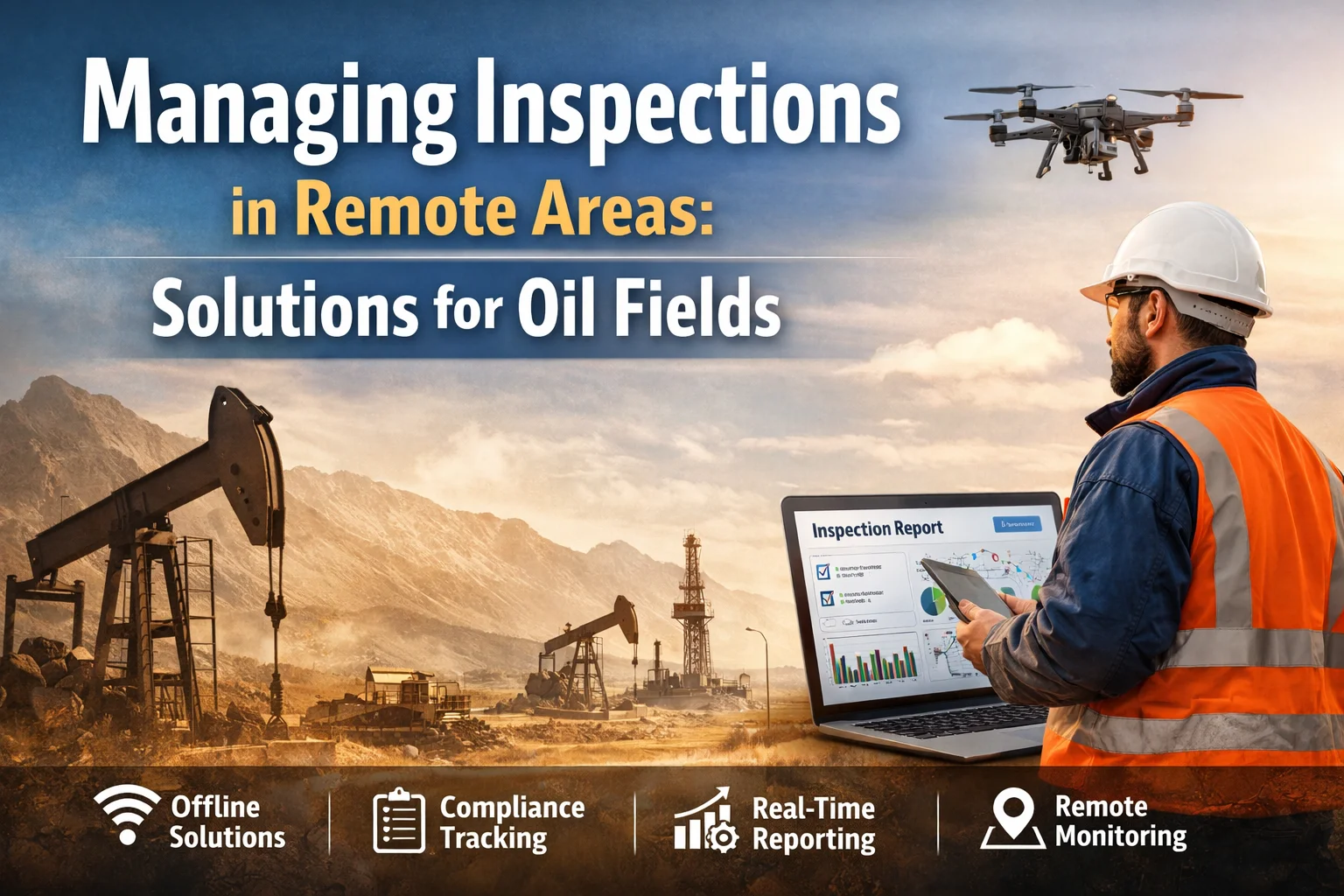
Managing inspections in remote oil fields presents unique challenges. Harsh environments, limited connectivity, and logistical difficulties can slow down inspection processes, increase safety risks, and impact operational efficiency. However, with the right tools and strategies,…
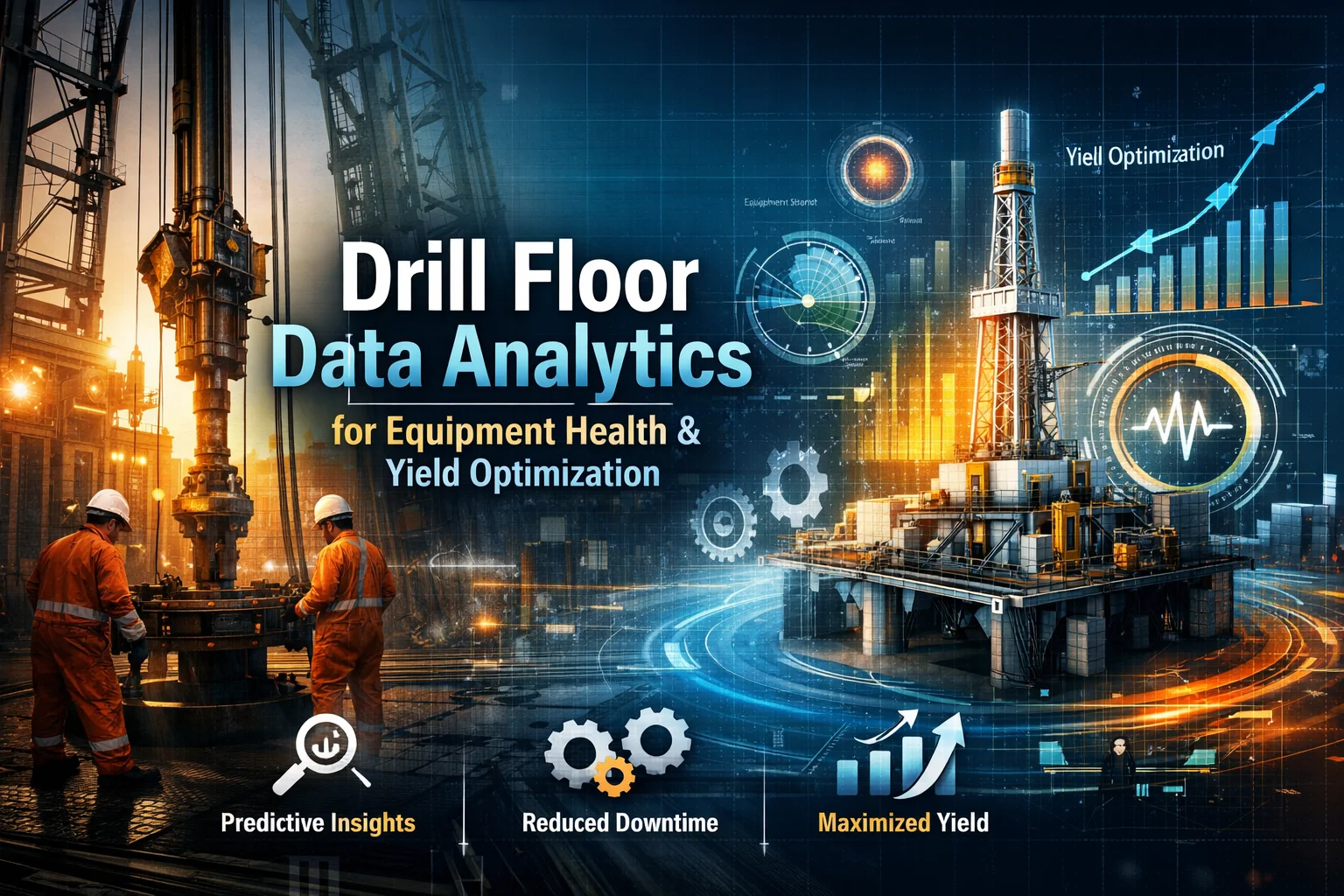
The modern drill floor generates massive volumes of operational data every second. However, without the right analytics strategy, most of this data remains underutilized. Advanced drill floor analytics now allow oil and gas operators to…


