
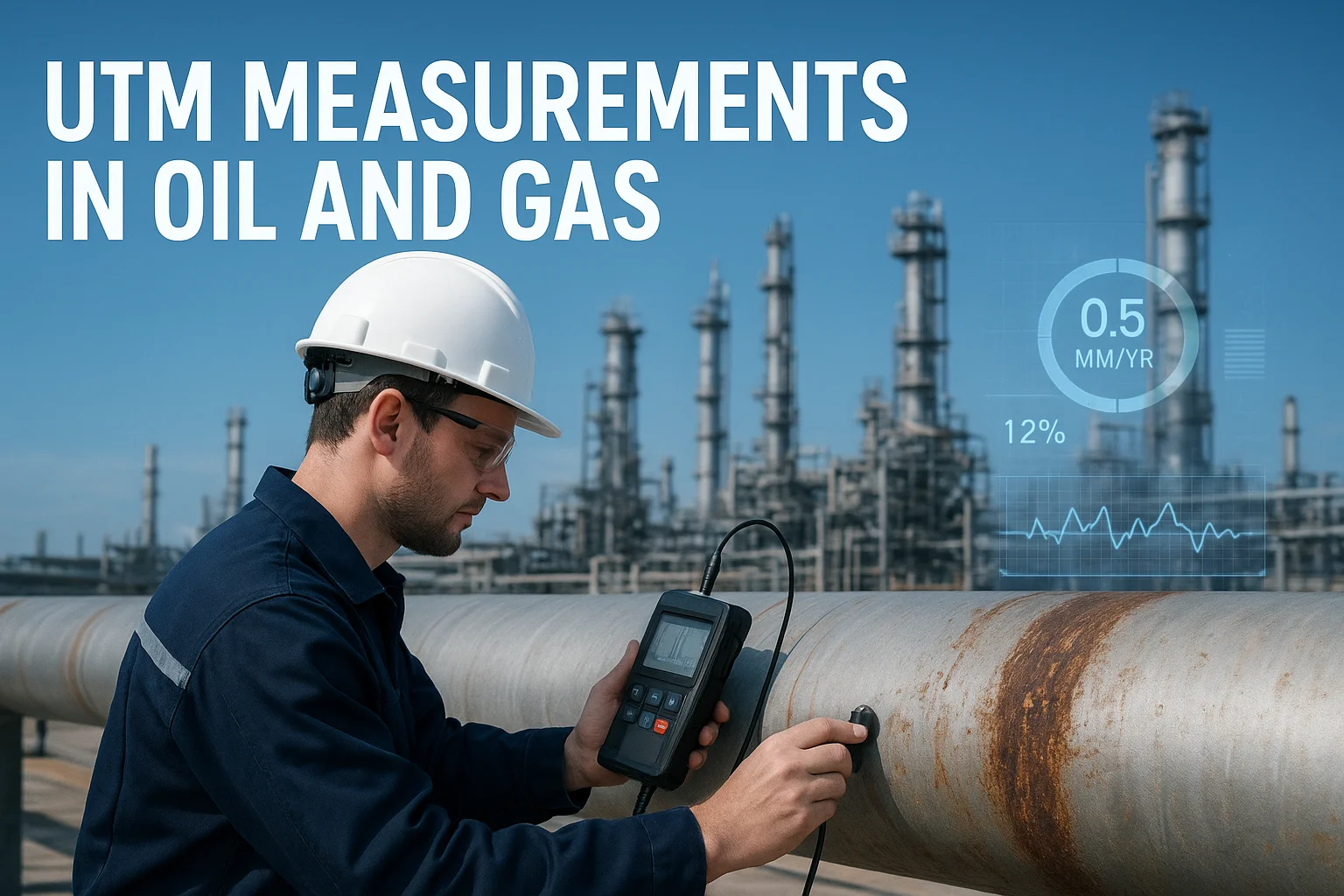
Understanding asset integrity is non-negotiable in the oil and gas industry. One technique that plays a critical role in maintaining safety and preventing costly downtime is UTM (Ultrasonic Thickness Measurement). But what exactly is UTM, why does it matter, and how can digital inspection tools streamline the process?
This guide breaks it all down — clearly, practically, and in a way that’s optimized for SEO and real users.
Ultrasonic Thickness Measurement (UTM) is a non-destructive testing (NDT) method used to measure the thickness of metal components. It helps engineers detect corrosion, erosion, and material degradation without cutting, drilling, or dismantling equipment.
It’s widely used on:
In simple terms, UTM shows whether equipment walls are thinning, enabling teams to take early action.
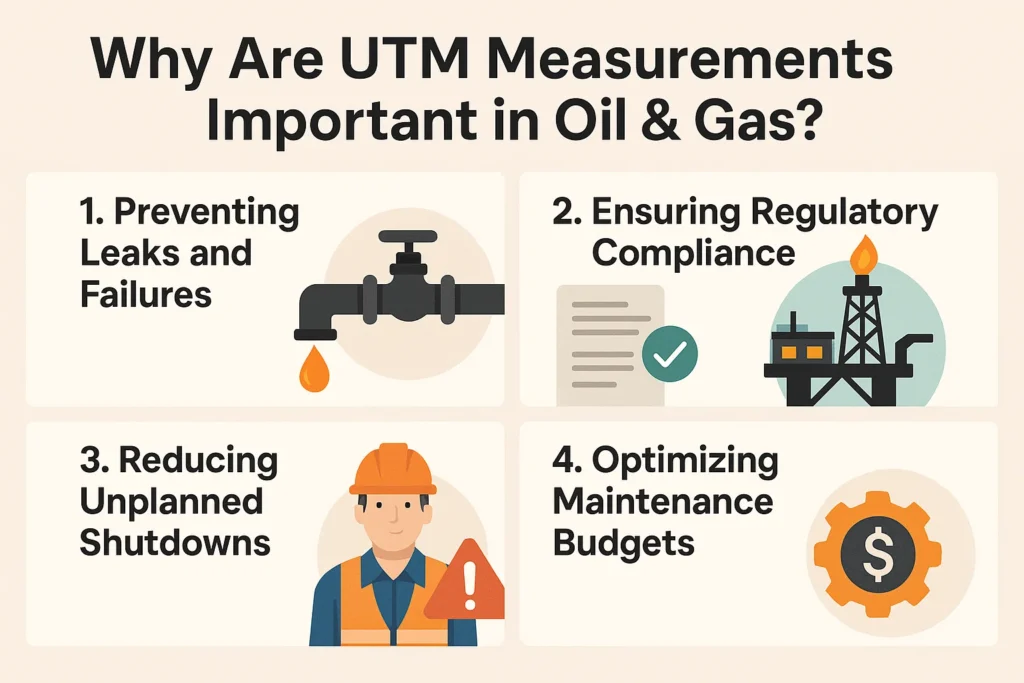
Oil and gas assets operate under extreme conditions. Therefore, understanding their structural condition is essential for:
Thinning walls lead to leaks, spills, and structural failures. UTM detects these issues before they escalate.
Authorities require periodic thickness inspections to ensure safety and environmental protection.
Proactive thickness monitoring keeps assets running longer — reducing downtime and emergency repairs.
UTM helps companies focus maintenance on the right areas instead of guessing.
UTM uses high-frequency sound waves to measure metal thickness. Here’s how it typically works:
Because it’s non-destructive, the method is safe, fast, and accurate.
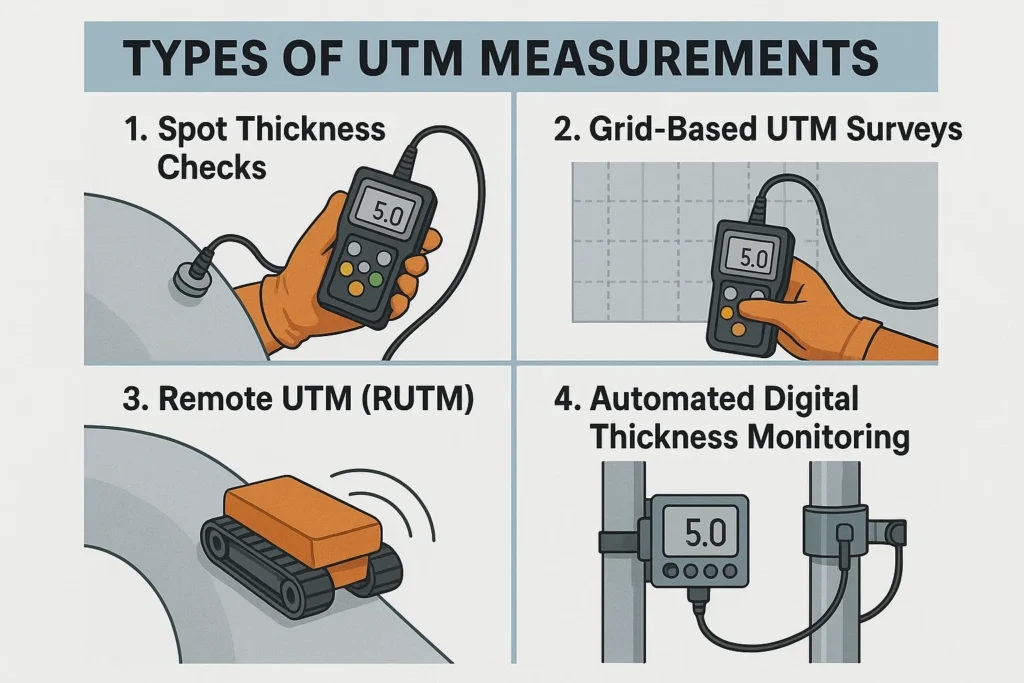
Used for high-risk areas or suspected corrosion zones.
Technicians create structured grids to analyze the entire surface.
Performed using drones or robotic crawlers — ideal for offshore and high-risk locations.
Real-time sensors send continuous readings to inspection teams.
UTM plays a role in many inspection programs, including:
Below is a sample reference table often used in oil and gas inspections:
| Asset Type | Typical Thickness Range (mm) | UTM Frequency Range | Inspection Interval |
|---|---|---|---|
| Pipeline (Carbon Steel) | 5–30 mm | 2–10 MHz | Every 1–3 years |
| Storage Tank Shell | 6–40 mm | 2–5 MHz | Annually |
| Pressure Vessel | 10–60 mm | 1–5 MHz | Every 1–2 years |
| Offshore Structural Steel | 8–50 mm | 2–10 MHz | Annually |
Ranges vary based on design codes and operating conditions.
Although UTM is essential, traditional processes often involve:
Fortunately, modern digital inspection systems solve these gaps.
Oil and gas companies are shifting from manual inspection workflows to modern digital systems — and Inspections Track Software is leading this transformation.
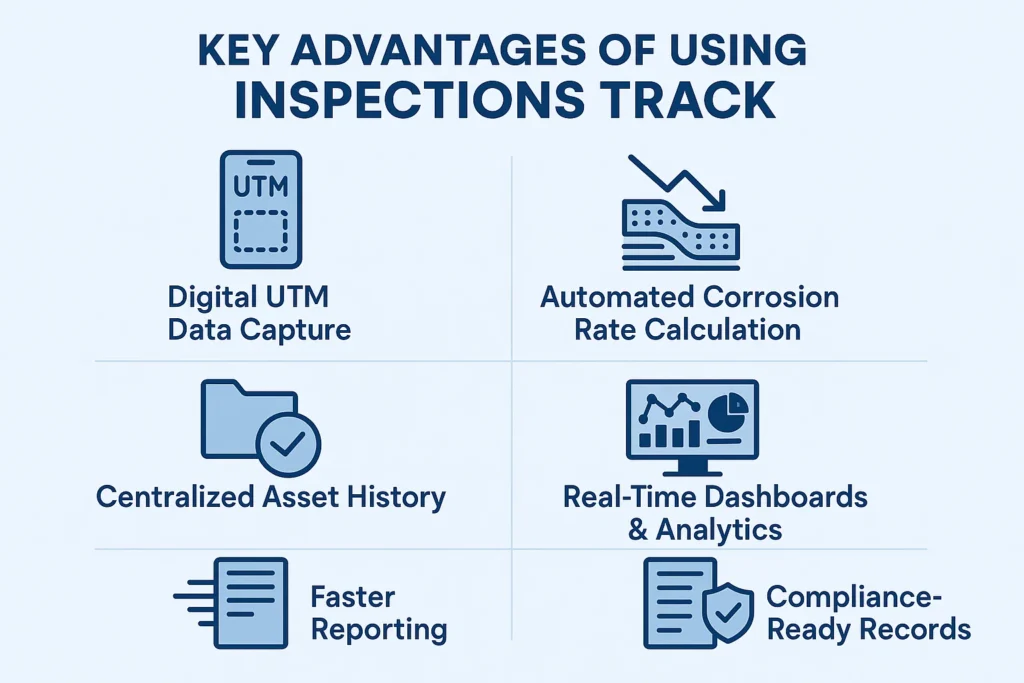
Technicians can enter thickness readings directly into mobile devices, even offline.
The system instantly calculates metal loss trends and predicts future conditions.
All UTM readings, NDT reports, and photos remain stored in one secure platform.
Managers get instant visibility into asset health, risk areas, and overdue inspections.
Generate structured reports in minutes — not days.
Supports industry standards like API, ASME, and ISO requirements.
Read more : digital utm tank inspection workflow
UTM measurements are a critical part of ensuring asset integrity in the oil and gas industry. By detecting corrosion early and optimizing maintenance strategies, companies reduce risk, downtime, and operational costs.
However, the real efficiency boost comes when UTM data is paired with a modern inspection platform like Inspections Track Software. With digital workflows, automated analytics, and real-time reporting, inspection teams can work faster, safer, and smarter.
Rread more : inspection mindset on the drill floor beyond the checklist
UTM (Ultrasonic Thickness Measurement) is a method used to measure metal thickness to detect corrosion and erosion.
Most companies perform UTM surveys annually, but it varies based on asset risk and regulations.
Thickness gauges, ultrasonic probes, couplants, and digital inspection software like Inspections Track.
Industrial storage tanks are critical assets in industries such as oil & gas, petrochemicals, and energy production. However, even a small leak can lead to product loss, environmental damage, safety hazards, and costly downtime. Therefore,…
High-risk industrial environments such as oil refineries, offshore platforms, storage tanks, and petrochemical plants demand frequent inspections to maintain safety and compliance. However, traditional inspection methods often involve scaffolding, heavy equipment, and long shutdowns, which…


Comment (1)
Calculation Error in Pressure Gauge Calibration Guide - inspectionstrack
Dec 10, 2025[…] Read more : utm measurements in oil and gas complete industry guide […]
Comments are closed.