
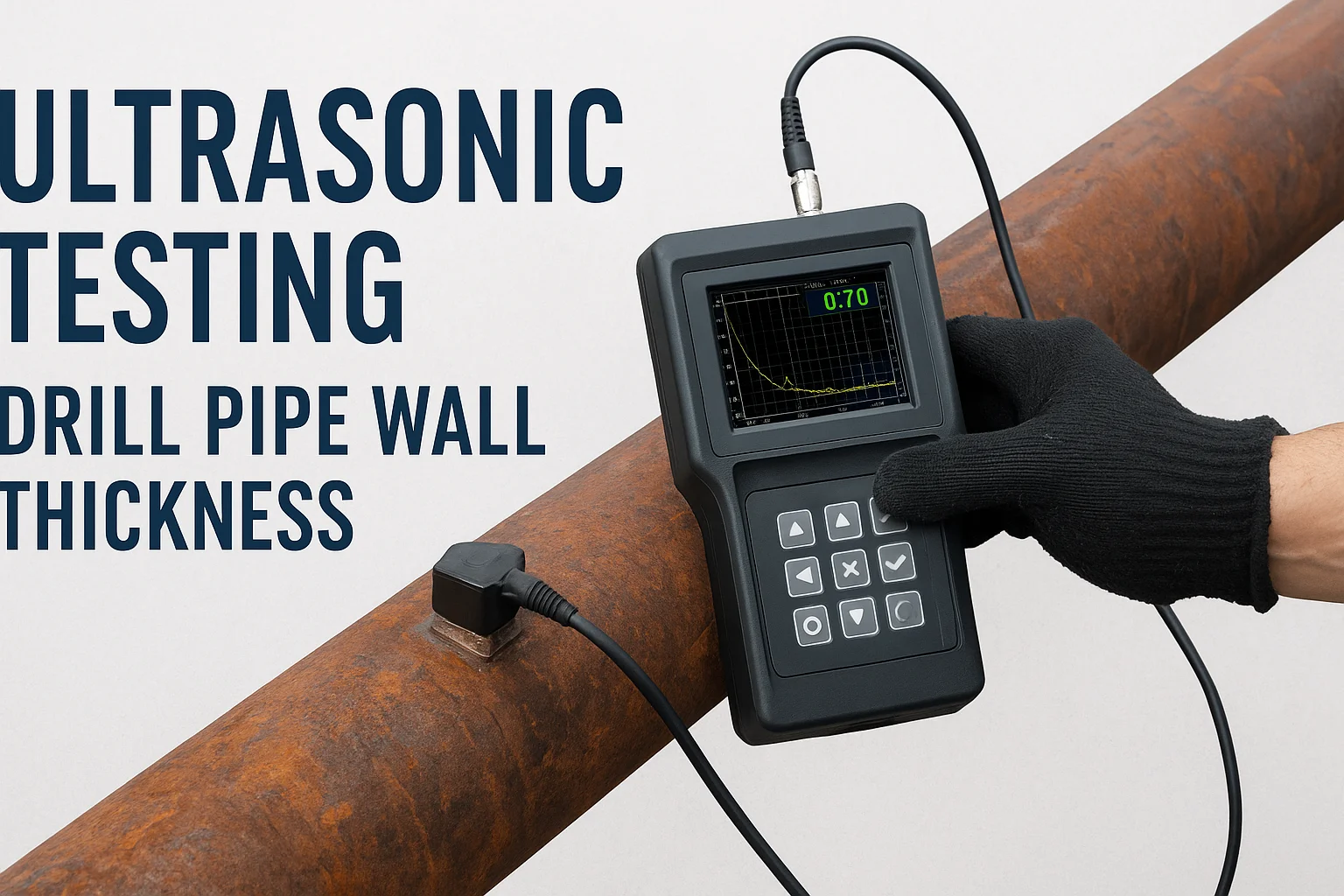
Drill pipes are among the most critical assets in the oil and gas industry. Over time, they face extreme pressure, corrosion, and wear. One weak point in a pipe can lead to costly downtime, safety risks, and even environmental hazards. This is where Ultrasonic Testing (UT) comes in — a precise, non-destructive way to measure drill pipe wall thickness.
In this blog, we’ll break down how ultrasonic testing works, why it’s reliable, and how Inspections Track Software makes managing such inspections easier.
Ultrasonic Testing is a non-destructive testing (NDT) method that uses high-frequency sound waves to detect flaws or measure thickness. Instead of cutting or damaging the drill pipe, inspectors can “see” inside the metal using sound.
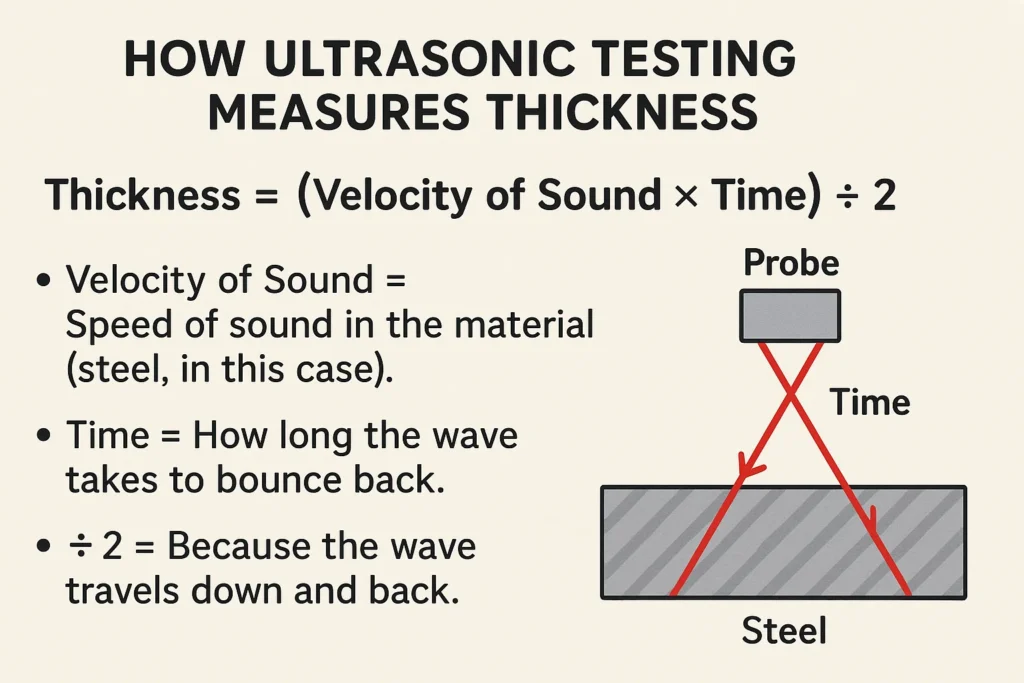
Here’s how it works step by step:
It’s like using sound as a ruler — but with extreme accuracy.
Wall thickness directly affects the pipe’s ability to handle high pressure and resist cracking. If the walls are too thin, the risk of failure increases.
By regularly monitoring wall thickness with UT, companies can prevent accidents and extend the lifespan of drill pipes.
The formula behind UT is simple but powerful:
Thickness = (Velocity of Sound × Time) ÷ 2
For example, if the speed of sound in steel is 5,900 m/s and the echo returns in 1 microsecond, the wall thickness can be calculated precisely.
| Feature | Benefit |
|---|---|
| Non-destructive method | No damage to the pipe during testing |
| High accuracy | Can detect even tiny thickness variations |
| Fast and portable | Results are immediate and on-site |
| Cost-effective | Prevents expensive failures and downtime |
| Versatile | Works on pipes, tanks, and other equipment |
While ultrasonic testing is highly effective, managing inspection data manually can be overwhelming. Companies often face:
This is where digital inspection software becomes a game-changer.
Inspections Track, designed for the oil and gas industry, helps streamline ultrasonic testing by:
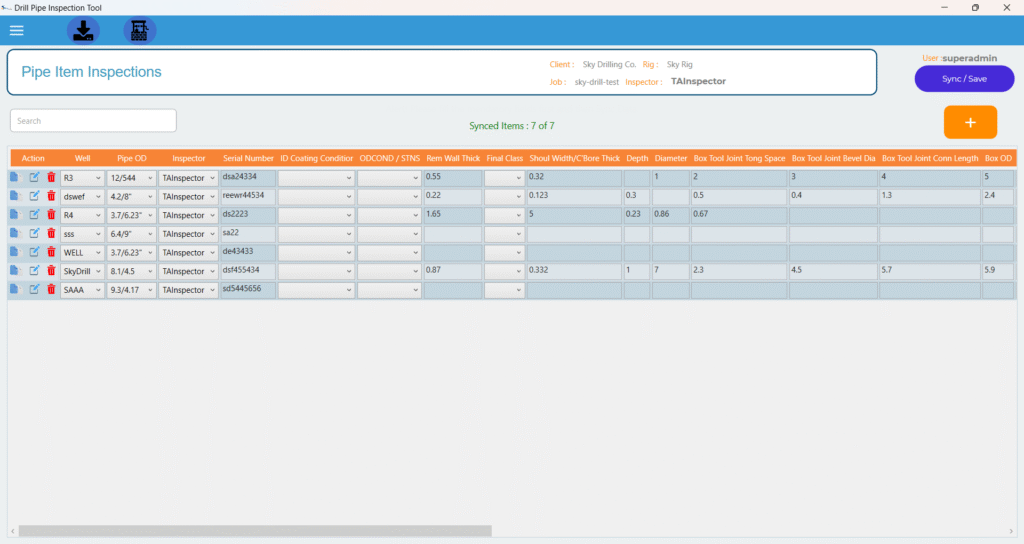
With automation and data-driven insights, companies can maintain compliance, improve safety, and reduce costs.
Read more : ultimate checklist for drill pipeline inspections
The science of sound makes ultrasonic testing one of the most dependable tools in maintaining drill pipe integrity. By measuring wall thickness accurately, companies can avoid failures, cut costs, and improve safety.
When paired with Inspections Track Software, the entire process becomes more efficient and reliable. Instead of struggling with paperwork and scattered data, teams can access real-time reports, track trends, and ensure their drill pipes remain fit for purpose.
👉 If your company deals with oil and gas inspections, adopting a modern inspection management system like Inspections Track can transform the way you handle ultrasonic testing.
Read more : accreditation criteria for lifting equipment inspections
Ultrasonic testing uses high-frequency sound waves to measure drill pipe wall thickness without causing any damage.
It ensures drill pipes can withstand high pressure, reduces failure risks, and helps avoid costly downtime in oil and gas operations.
It centralizes UT results, tracks inspections, and ensures standardized, reliable reporting for safer drill pipe management.
In high-pressure oilfield environments, safety is not optional—it’s critical. Equipment failure can lead to costly downtime, environmental hazards, and even loss of life. That’s why Eddy Current Testing (ECT) has become an essential part of…
Corrosion Under Insulation (CUI) is one of the most costly and difficult-to-detect challenges in upstream oil and gas operations. Because it develops beneath insulation layers, it often goes unnoticed until severe damage occurs. However, with…


Comments (9)
The X-Ray Rig: Seeing Beyond the Surface of Oil & Gas - inspectiontrack
Aug 27, 2025[…] Read more : ultrasonic testing for drill pipe wall thickness […]
Ultrasonic Inspection Protocols for Crane Cracks - inspectionstrack
Dec 15, 2025[…] Read more : ultrasonic testing for drill pipe wall thickness […]
Dye Penetrant Inspection in Oil and Gas Explained - inspectionstrack
Jan 01, 2026[…] Ultrasonic Testing […]
Avoiding corrosion detection errors in oil storage tanks - inspectionstrack
Jan 13, 2026[…] Ultrasonic Thickness Testing (UT) […]
Destructive and Non-Destructive Testing Explained - inspectionstrack
Feb 02, 2026[…] Ultrasonic Testing (UT) […]
NDT Inspection Software for Oil & Gas Industry - inspectionstrack
Feb 11, 2026[…] Ultrasonic Testing (UT) […]
Non-Destructive Testing for Lifting Slings : Advanced techniques - inspectionstrack
Feb 13, 2026[…] 3. Ultrasonic Testing (UT) […]
Mastering Derrick Inspections for Oil Rig Safety - inspectionstrack
Feb 19, 2026[…] Ultrasonic testing […]
NDT Helipad Inspections for Offshore Compliance - inspectionstrack
Feb 27, 2026[…] Ultrasonic Testing (UT) combined with Eddy Current Testing (ET) provides the most accurate results for early corrosion detection. […]
Comments are closed.